




Congressmen Call for Hearing on School Bus Safety
U.S. representatives from Tennessee and Maryland cite concerns from recent high-profile school bus crashes in their states.

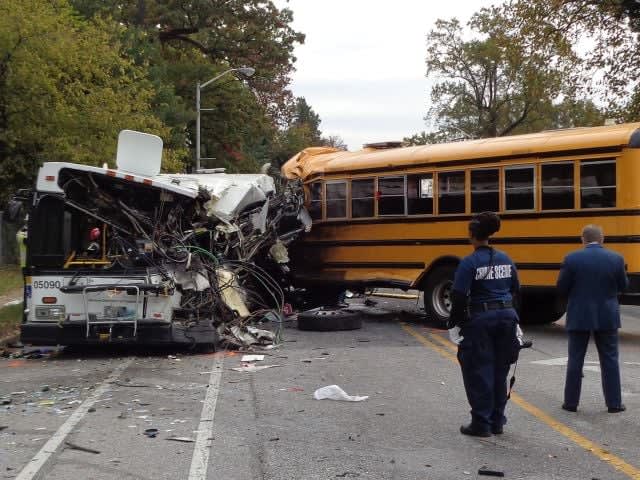
In a letter calling for a school bus safety hearing, U.S. representatives from Tennessee and Maryland cite concerns from recent crashes, including the Nov. 1 crash in Baltimore shown here. Photo courtesy Maryland Transportation Authority Police
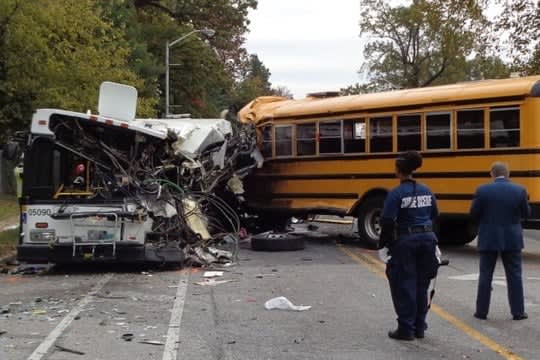
In a letter calling for a school bus safety hearing, U.S. representatives from Tennessee and Maryland cite concerns from recent crashes, including the Nov. 1 crash in Baltimore shown here. Photo courtesy Maryland Transportation Authority Police
WASHINGTON, D.C. — Three congressmen from Tennessee and Maryland have requested a hearing on school bus safety in response to recent high-profile crashes in their states.
The call came in a letter sent on Wednesday from U.S. Reps. Elijah Cummings (D-Md.), John “Jimmy” Duncan Jr. (R-Tenn.), and Steve Cohen (D-Tenn.) to Reps. Bill Shuster (R-Pa.) and Peter DeFazio (D-Ore.), the chairman and ranking member of the House Committee on Transportation and Infrastructure.
“Despite a decent safety record, accidents still happen and they jeopardize the lives of our students,” Cummings, Duncan, and Cohen wrote. “Recent fatal school bus crashes in Maryland and Tennessee have raised urgent questions about the oversight of commercial school bus operators, including the adequacy of current procedures for assessing drivers’ medical fitness for duty and the safety history of companies that operate school buses.”
In the Nov. 21 crash in Chattanooga, Tennessee, six students were killed and more than 20 were injured. School bus driver Johnthony Walker, 24, was arrested and faces multiple charges.
The National Transportation Safety Board (NTSB) is continuing to investigate the Chattanooga crash. The agency said in early December that it expected to publish a preliminary report within the following few weeks. That report has not yet been issued.
In their letter, the three congressmen also cited the Nov. 1 crash in Baltimore in which a school bus collided with a car and a transit bus, killing six people. The NTSB’s preliminary report on that crash found that the school bus driver had a history of seizures, diabetes, and hypertension. He had also been involved in at least 12 crashes or incidents while operating a school bus or personal vehicle in the past five years, investigators found.
“While the NTSB investigations of these horrific crashes are ongoing, the facts in the cases that have come to light raise serious concern,” Cummings, Duncan, and Cohen wrote. “We urge the Committee [on Transportation and Infrastructure] to utilize its authority over the Federal Motor Carrier Safety Administration and the National Highway Traffic Safety Administration to probe what more can be done to protect the nation’s schoolchildren, and whether any changes to federal law are warranted.”
The three representatives asked Shuster and DeFazio to hold a congressional hearing in which members can examine the topic of school bus safety.
To read the full letter, click here.
Cohen also recently introduced a bill that would create federal grants to equip school buses with lap-shoulder belts, among other measures targeting pupil transportation.
In response to the congressmen’s call for a hearing, the National Association for Pupil Transportation (NAPT) noted the safety record of school buses — 50 times safer for students than traveling in a passenger car, according to NHTSA — while pledging to work with the legislators on potential improvements.
“Despite our strong safety record, we know there is always more that can be done to improve student transportation safety,” NAPT Executive Director Mike Martin said, adding that the association continues to express its condolences to those impacted by the Chattanooga and Baltimore crashes. “The loss of even one life has a devastating impact on the professional women and men in school transportation who are dedicated to keeping our nation’s children safe.”
Martin said that NAPT appreciates the congressmen’s efforts to address safety concerns. The association has “offered our services to help them, their staff, and other interested members of Congress ensure we meet our shared goal of improving school bus safety.”
More Safety

How to Build a Better School Bus Driver Training Program
Is it time to strengthen your driver training? Here’s how to pick the right talent and improve recruitment, retention, and safety. This video is brought to you by IC Bus.
Read More →
Recent School Bus Accidents Leave 2 Dead, 2 Injured
Four school bus crashes in Florida, Illinois, and Georgia highlight risks in transportation lots, at bus stops, and during student loading and unloading.
Read More →
When Every Second Matters, Clarity Keeps Routes Moving
From routine delays to urgent incidents, strong communication practices help drivers, dispatchers, schools, and families respond with confidence.
Read More →

What Happens When a School Bus Catches Fire — and What Can Help
School bus fires are rare but can be devastating. Learn how advances in fire suppression and asset protection help fleets detect fires earlier, reduce damage, and improve safety.
Read More →
Geotab Launches Tool to Help Fleets Investigate Road Incidents
Geotab Investigations combines telematics data, video, documents, and other evidence to help fleets reconstruct incidents, resolve claims, and determine what happened.
Read More →
Texas Sixth Grader Wins 2026 National School Bus Safety Poster Contest
Sai Darshana Yekolu of Moseley Middle School in Prosper, Texas, was named the newest winner for her artwork, bringing the theme of “Safe Rides, Everyday Heroes” to life.
Read More →
Doing More With Less: How Transportation Directors Can Prioritize Safety Amid Budget Uncertainty
With diesel prices soaring and nearly one-third of transportation directors expecting budget cuts, maintaining student safety has never been more challenging. Download this guide to learn how leading districts are prioritizing risk, funding critical safety technology, and building stronger budget cases with data.
Read More →
Walton County Schools Adds Gatekeeper Stop-Arm Enforcement System
The Florida district will deploy Gatekeeper’s updated Student Protector technology, which now incorporates AI to improve video evidence.
Read More →
How To Build a More Secure School Bus Yard During and After Hours
As thefts and overnight security threats continue, school transportation leaders are combining stronger operational practices with AI-enabled surveillance to better protect buses, facilities, and staff.
Read More →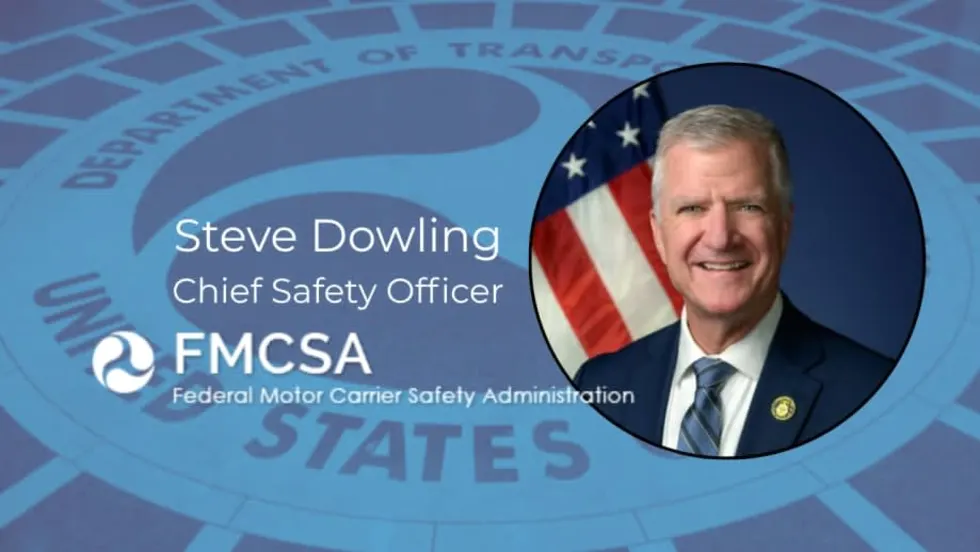
FMCSA Names New Chief Safety Officer: What School Bus Operators Should Know
Steve Dowling is set to lead the federal agency's efforts to advance commercial motor vehicle safety and reduce crashes, fatalities, and injuries on the nation's roadways.
Read More →