




NAPT News & Views — Response to NTSB's recommendations
We believe our response to NTSB’s recommendations documents a position that seeks the clarity and facts your community and state policymakers demand when making important decisions affecting school bus operations.
How can we make children even safer when riding in large school buses? It is a question we have been debating as an industry for years.
In the interest of finally getting an answer everyone can understand and act upon constructively, the National Association for Pupil Transportation (NAPT) and the National School Transportation Association (NSTA) collaborated on a response to the recent National Transportation Safety Board (NTSB) recommendations to our industry following the board’s investigations of school bus crashes with fatalities in Chesterfield, N.J., and Port St. Lucie, Fla.
In brief, the board recommended we develop guidelines “to assist schools in training bus drivers, students and parents on the importance and proper use of school bus seat belts” (H-13-35) and to provide our members with educational materials on lap and shoulder belts providing “the highest level of protection for school bus passengers” in addition to advising states or school districts to consider this “added safety benefit” when purchasing “seat belt equipped-school buses” (H-13-36).
In our Dec. 9 response, NSTA and NAPT wholeheartedly supported recommendation H-13-35; it is critical that children and parents understand the importance of belt fit and correct use in the six states that currently require belts to be installed in large school buses as well as smaller school buses.
We respectfully declined to support at this time the board’s recommendation H-13-36. Instead, we offered that the recommendation be the starting point for “further collaboration to bring an important topic with a long and difficult history to a conclusion that our industry and the communities we serve can understand and embrace.
“Our intent is to provide the best possible information and clarity so everyone can make informed decisions about the efficacy of belts in the school bus operational environment, and how to best allocate resources among safety priorities.”
In the public arena, we face a significant challenge. The commonly held opinion is that “if my car has seat belts, so should my child’s school bus,” which is one of the reasons calls for seat belts in school buses make headlines after every serious crash.
There has been very little public education from federal officials about the important differences between the family car and large school buses that led the National Highway Traffic Safety Administration (NHTSA) in 1977 to require all school buses in America to have compartmentalized seating.
We acknowledged in the letter our appreciation for the NTSB’s work in the Chesterfield and Port St. Lucie crash investigations, providing additional information about school bus crash kinematics and safety belts.
However, the conclusions and recommendations also added to our conundrum as trade associations that must understand and represent many differing state and local views.
For example, NTSB asked us to “Provide your members with educational materials on lap and shoulder belts providing the highest level of protection for school bus passengers, and advise states or school districts to consider this added safety benefit when purchasing seat belt-equipped school buses.”
How do we know for sure that this is true?
In February 2007, NAPT petitioned NHTSA for rulemaking to establish “a safety system that will definitively enhance the current passenger crash protection for all children that ride a school bus” and called for NHTSA to conduct dynamic crash tests of school buses as they do routinely and repeatedly with other passenger vehicles. To our knowledge, no such testing has been conducted.
Consider the following quotes from NHTSA’s subsequent 2010 rulemaking on school bus passenger crash protection:
“Given that very few school bus-related serious injuries and fatalities would be prevented by a requirement mandating seat belts on large school buses, we could not assure that overall safety would not be adversely affected, particularly given the many competing demands on school resources and widely varying and unique circumstances associated with transporting children. …
“After considering all available information, including the comments to the [Notice of Proposed Rulemaking], we cannot conclude that a requirement for seat belts on large school buses will protect against an unreasonable risk of accidents or an unreasonable risk of death or injury in an accident. …
“NHTSA has been repeatedly asked to require belts on buses, has repeatedly analyzed the issue, and has repeatedly concluded that compartmentalization provides a high level of safety protection that obviates the safety need for a Federal requirement necessitating the installation of seat belts.”
We believe our response to NTSB’s recommendations documents a position that seeks the clarity and facts your community and state policymakers demand when making important decisions affecting school bus operations. We urge you to read our letter carefully to fully understand the professional concerns we raised on your behalf, and our reasons for doing so. A copy of our letter is available on our websites, www.yellowbuses.org and www.naptonline.org.
NAPT and NSTA intend to work collaboratively on this matter from this point forward. We will seek input from our members, who are the front line responsible for safely transporting nearly 26 million children to and from school every school day, to identify best practices for the proper use of safety belts in buses and thereafter develop recommended policies and procedures that can be implemented locally and nationally well before NTSB’s suggested 2015 deadline.
Both NSTA and NAPT have a long public record of strong advocacy for elevating this discussion to a national level and for seeking a science-based rather than emotion-driven or “directionally correct” conclusion. We believe research and its results, rather than emotion, should guide decisions about the use of safety belts on buses.
Transporting children safely is our sole business, and we share NTSB’s passion for action. But we cannot in good faith advise our members, or the public, on this issue until the significant and conflicting policy differences between the two federal safety agencies are resolved, hopefully with the added science of dynamic crash testing that is customary and routine for all other motor vehicle recommendations and requirements.
More Safety
Illegal School Bus Passing Drops 24% in New York Districts
With fewer than 5% of citations involving repeat offenders, Westchester County officials said enforcement, education, and community partnerships are helping change driver behavior.
Read More →
School's Back. Here's What Happened to Traffic, Speeding & Distraction
What happens to traffic when school resumes? New data analysis examines changes in distracted driving, congestion, and speeding around schools.
Read More →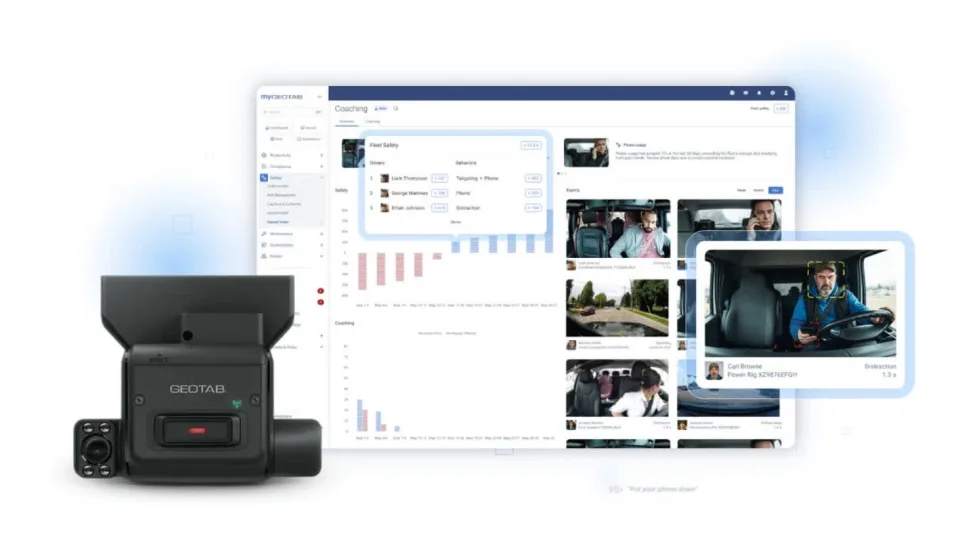
Geotab Expands Fleet Safety Tools With Video Coaching, Risk Insights
New safety and video capabilities aim to help fleet managers assess risk, support drivers, and take targeted action through video coaching, red-light violation detection, and more.
Read More →

How to Build a Better School Bus Driver Training Program
Is it time to strengthen your driver training? Here’s how to pick the right talent and improve recruitment, retention, and safety. This video is brought to you by IC Bus.
Read More →
Recent School Bus Accidents Leave 2 Dead, 2 Injured
Four school bus crashes in Florida, Illinois, and Georgia highlight risks in transportation lots, at bus stops, and during student loading and unloading.
Read More →
When Every Second Matters, Clarity Keeps Routes Moving
From routine delays to urgent incidents, strong communication practices help drivers, dispatchers, schools, and families respond with confidence.
Read More →
What Happens When a School Bus Catches Fire — and What Can Help
School bus fires are rare but can be devastating. Learn how advances in fire suppression and asset protection help fleets detect fires earlier, reduce damage, and improve safety.
Read More →
Geotab Launches Tool to Help Fleets Investigate Road Incidents
Geotab Investigations combines telematics data, video, documents, and other evidence to help fleets reconstruct incidents, resolve claims, and determine what happened.
Read More →
Texas Sixth Grader Wins 2026 National School Bus Safety Poster Contest
Sai Darshana Yekolu of Moseley Middle School in Prosper, Texas, was named the newest winner for her artwork, bringing the theme of “Safe Rides, Everyday Heroes” to life.
Read More →
Doing More With Less: How Transportation Directors Can Prioritize Safety Amid Budget Uncertainty
With diesel prices soaring and nearly one-third of transportation directors expecting budget cuts, maintaining student safety has never been more challenging. Download this guide to learn how leading districts are prioritizing risk, funding critical safety technology, and building stronger budget cases with data.
Read More →