




IC Bus Exec Trish Reed Talks Propane, School Bus Sales
Reed discusses the benefits of IC Bus’ new propane school bus, which the manufacturer sees tying in to projected growth in alternative fuels.


Trish Reed joined IC Bus at a significant time for the school bus manufacturer. As Reed took over the role of vice president and general manager in late August, IC Bus was preparing to unveil its new propane school bus.
The bus, which debuted at the National Association for Pupil Transportation (NAPT) trade show in Kansas City, Missouri, in November, is the manufacturer’s first to be fueled by propane autogas. It will be powered by a Power Solutions International (PSI) 8.8-liter propane engine.
The propane CE Series school bus is slated to be ready for delivery in the summer, in time to hit the road for the 2015-16 school year.
In a recent interview with SBF, Reed discussed the new propane model, her experience with pupil transportation customers and the state of school bus sales.
Propane benefits
Reed calls propane a “logical choice” for many school bus operations.
“The local infrastructure and availability and the low cost of the fueling stations seem to be what makes propane an easier choice for our customers at this point in time,” she says.
Referring specifically to IC Bus’ new propane model, Reed cites its “diesel-like performance” as an attractive feature for school bus operations. The PSI 8.8-liter engine is engineered for high torque at low speed, with a rating of 565 lb.-ft. at 1,500 rpm. That can come in handy for stop-and-start applications, enabling quick acceleration and strong hill-climbing capability.
Reed points to other benefits of the propane engine for school bus drivers as well as for shop staff.
“We’ve had customers visit our engine partner, and they talk about the [reduced] noise. For the driver, that makes it much easier to hear what’s going on, especially in loading and unloading,” Reed says. “Also, there’s the lower cost of maintaining a propane engine versus a diesel.” For example, revving is reduced, which in turn reduces engine wear and oil usage.
Alternative-fuel vehicles are a fairly small percentage of the school bus market, with diesel still making up the vast majority. However, IC Bus sees more growth ahead for “green” buses.
“We forecast [alternative-fuel school buses] getting above 15% of the industry by the time we come around to 2017,” Reed says. “There are a lot of variables in that, like the current dynamic of fuel prices. But I think it’s good to offer our customers an alternative to diesel.
“The feedback we’ve gotten on our purpose-built propane bus is that some customers might have been looking at [propane] but didn’t want to sacrifice diesel performance. On our option, you don’t have to sacrifice that.”
[PAGEBREAK]

IC Bus’ CE Series school bus (pictured) will be available in a propane version in time for the 2015-16 school year. Reed points to the propane model’s “diesel-like performance” as a key feature.
Industry experience
Reed says that the new propane model generated “a lot of booth activity” at the NAPT trade show, which was her first. Overall, she says, the conference and trade show was an opportunity for her to meet customers and learn about key issues that pupil transporters are dealing with.
“I got to sit in on some of the seminars, including the live-action event,” Reed says, referring to the session that informed attendees about violent encounters on the school bus and included a demonstration of a SWAT team responding to an active shooter. “That was very impressive.”
While this was Reed’s first trip to the NAPT Summit, her experience with the bus industry runs much further back than her current role at IC Bus. Reed is a 25-year veteran of Navistar, the parent company of IC Bus.
Her prior positions include president of Navistar’s UpTime Parts, where she was credited with driving improved customer satisfaction and nearly double-digit sales growth. Reed has also served in various roles, including vice president of business operations, at Navistar Financial Corp.
It was at Navistar Financial that Reed first began working with the school bus industry, particularly in leasing options for school districts and contractors.
“Most of my roles at Navistar Financial were interfacing with dealers and customers, and school bus customers and dealers were a big part of that,” Reed says.
During her tenure at UpTime Parts, Reed launched a “one-stop shop” parts program for mostly national accounts, including some large school bus contractors.
Now, Reed says she is excited to be playing a more direct role in the school bus industry.
“It’s a fantastic industry to be a part of,” she says. “It’s an important mission to get kids to and from school every day. It’s just thrilling to be 100% involved in that.”
Sales indicators
School Bus Fleet’s research found that school bus sales in North America (specifically the U.S. and Canada) increased 4.4% in 2014 compared to 2013. That was the third year in a row that sales increased, after five years of declining sales.
Reed notes that the recent increase in sales points more to a need to replace old buses than to an improvement in the funding situation for school districts.
“I don’t think we’ve seen anything that would indicate that funding has gotten any better,” Reed says. “There’s a lot of pent-up demand. Fleets are looking at the cost to maintain old buses vs. new. They need to replace those old buses.”
For 2015, Reed says that IC Bus expects school bus sales to be flat compared to 2014.
“We don’t see anything that tells us funding will drastically change,” she says. “We could see a bump [in sales] again this year, but at this time, we don’t expect anything significant.”
More Management

Changing Lanes: BusWhere, EverDriven, InterMotive, Summit School Services, Switzer-Carty & Thomas Built Buses
Check out who's been hired, promoted, and appointed to leadership positions at various school transportation suppliers, contractors, and manufacturers.
Read More →
The Most Expensive Thing You Do Before Selling a School Bus: Wait
When should you sell an aging school bus? Learn how maintenance, mileage, corrosion, specifications, and timing can affect resale value long before the auction.
Read More →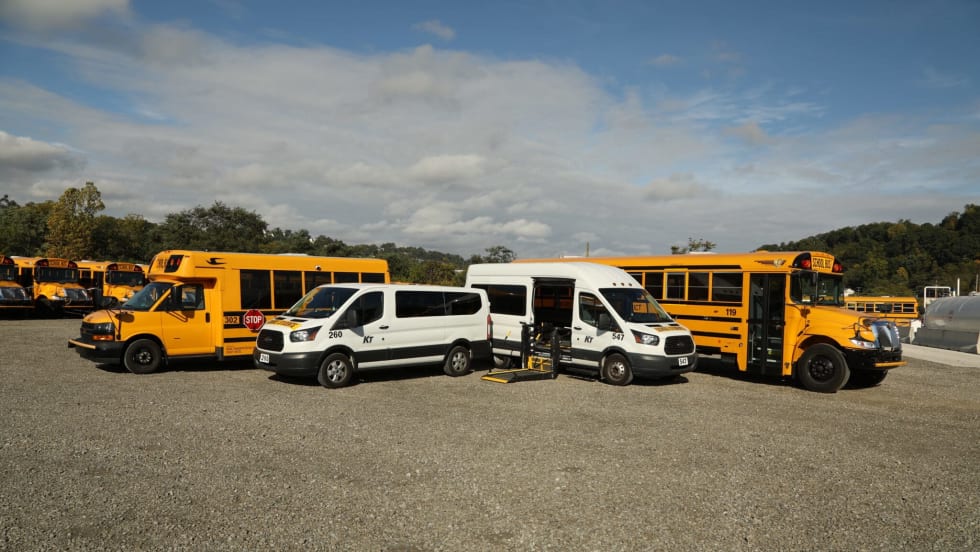
American Student Transportation Partners Acquires AJ Myers and Sons
A new deal brings a 75-year Pennsylvania student transportation provider into one of the nation’s largest private school bus contracting groups.
Read More →

What I Brought Home From SBFX: Relationships, Leadership, and Preparing What's Next
Who could lead your transportation operation tomorrow if you couldn't? Bernando Brown explores succession planning, mentorship, and preparing emerging leaders to step up.
Read More →
Inside School Bus Fleet ConneX 2026: Industry Leaders Connect in Scottsdale [Photos]
See highlights from SBFX 2026 in Arizona, where school bus operators and suppliers gathered for meetings, education, networking, awards, and more.
Read More →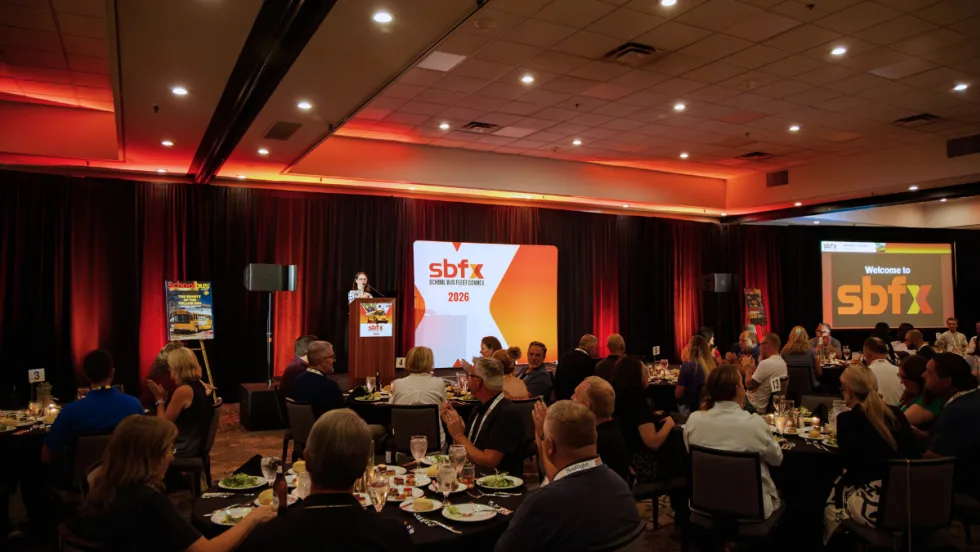
School Transportation’s Biggest Pressures and Opportunities: SBFX Attendees Weigh In
School bus operators point to rising costs, staffing, and vehicle prices as immediate pressures while identifying technology, training, and routing as opportunities for growth.
Read More →
STA Acquires Sunrise Transportation
Student Transportation of America expands in Illinois and Connecticut through Sunrise's fleet of nearly 1,000 vehicles.
Read More →
EPA Opens $180M DERA Funding Round for Diesel Upgrades
The 2026 Diesel Emissions Reduction Act program seeks applications from eligible organizations to accelerate the retirement of legacy diesel vehicles.
Read More →
HopSkipDrive’s CareEngine Targets the ‘Exceptions’ in Student Transportation
The new platform works alongside districts’ existing transportation management systems to coordinate specialized rides, automate last-minute changes, and turn ride data into operational improvements.
Read More →
The Right Ride for Every Student: Navigating the New Student Transportation Ecosystem
How should districts blend school buses with small-vehicle transportation and other options? EverDriven CEO Mitch Bowling discusses safety, costs, partnerships, and strategy.
Read More →