



Writing an effective special-needs transportation manual
At one point or another in our professional lives we've all been handed an employee manual filled with regulatory code and overly complex explanations...

At one point or another in our professional lives we've all been handed an employee manual filled with regulatory code and overly complex explanations that put us to sleep before we even got a hint of their meaning. We certainly never learned to do our job better by reading that overbearing manual. Employee manuals should not read like an IRS instruction book. Instead, they should be written in a language that is accessible to your specific audience. This means you need to know your workers and their average level of reading comprehension in order to cater your instruction book to them.
Ted Finlayson-Schueler, executive director of the Pupil Transportation Safety Institute in Syracuse, N.Y., led a session on writing an effective special-needs transportation manual at the National Conference and Exhibition on Transporting Students with Disabilities in March. This point he could not stress enough — use "plain English" for memos, manuals and training documents. According to Finlayson-Schueler, 75 percent of the U.S. population reads at the eighth grade level, and we need to write at or below that level.
Use 'plain English' guidelines
Finlayson-Schueler says using "plain English" means selecting simple alternatives to the complex or technical terminology commonly used in manuals (see "language resources" below). For example, in the school bus industry we use terms like "compartmentalization" and cite codes like "FMVSS 213." Without defining these terms, we're excluding a large portion of our audience. "You can develop a work vocabulary," he explains. "But you have to provide access to that vocabulary." First, teach the terms. Then you can use them in your manual. However, you should still avoid using complex sentence structure or complicated wording. Here are some of Finlayson-Schueler's tips:
Set the thesaurus or spellchecker features of your word processing software to the grade level you are targeting and the software will help you select vocabulary for your audience.
If you know an employee has a language problem, match him or her up with a buddy who understands the language.
If you find you're writing at too high a grade level, shorten your sentence length and reduce multi-syllabic words. Aim for 15- to 20-word sentences, with an average of 1.5 syllables per word. Use a maximum of five sentences per paragraph.
Avoid preambles such as "In light of," "It would appear that" and "It is interesting to note that." These phrases are unnecessary and can be eliminated.
Get together a group of your employees and find out what their needs are. Get a feel for how to communicate with them. According to Finlayson-Schueler, using "plain English" does not equate to "dumbing it down." "If you analyze Hemingway's stories, they come out at the fourth-grade level, and no one ever accused Hemingway of being dumb," he says.
Value 'looks' as well as content
Finally, Finlayson-Schueler points out that design and layout also play roles in reading comprehension. Don't cram your manual so full of information that there is no white space left on the pages. Select a font of readable size (12- to 14-point sans serif) and leave ample margins and other areas of clear space so that the content is not overbearing in its density. Avoid using all caps, over-bolding or italicizing or using other type treatments. Use pictures or diagrams when possible to illustrate ideas. Bulleted and numbered lists are also helpful. Though the manual should be a collaborative effort, Finlayson-Schueler recommends having one person take charge of writing the document. This makes for a consistent writing style throughout.Language resources on the Web
These Websites can help you select simple alternatives to complicated vocabulary or complex terminology.
www.plainlanguagenetwork.org
www.plainenglish.co.uk
www.fog-free.com
More Special Needs Transportation

What More Than Two Million Rides Reveal About School Transit
More than two million student trips. Nearly 28million miles. Here's what that data reveals about the future of alternative student transportation.
Read More →
HopSkipDrive Launches New Safety, Driver Consistency Features for 2026-27 School Year
The company’s free ride recording, live ride tracking, and consistent driver assignments aim to improve safety and continuity for diverse student transportation needs.
Read More →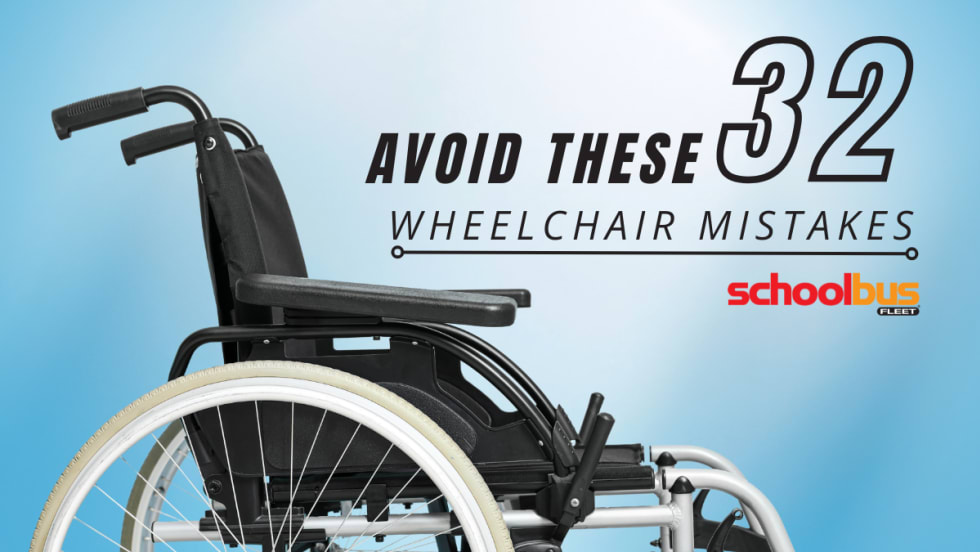
The Most Common Wheelchair Securement Mistakes on School Buses (and How to Fix Them)
Small missteps in wheelchair securement can have serious consequences. Here are 32 tips from experts to reduce risk and increase student safety on the bus.
Read More →
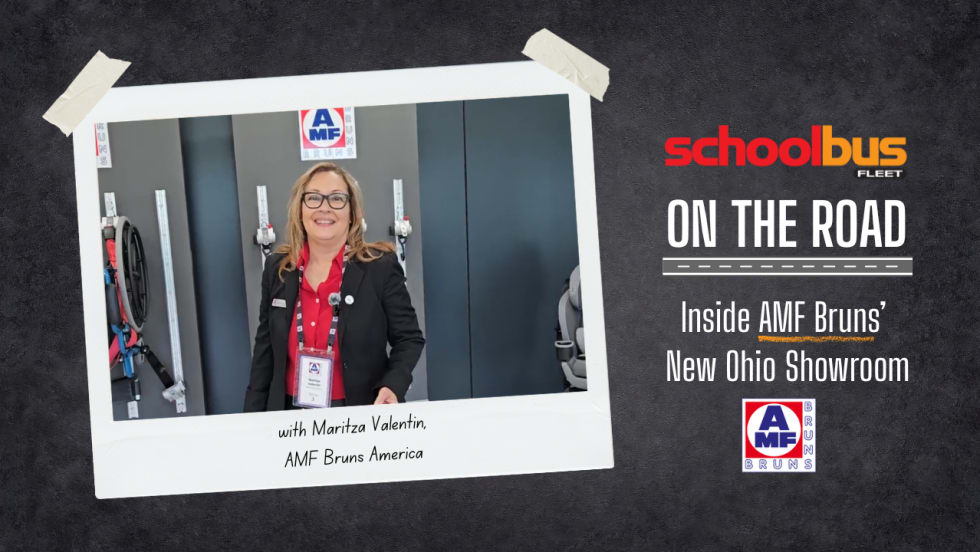
Inside AMF Bruns’ New Showroom: School Bus Securement Solutions Explained
Go inside AMF Bruns America’s new Ohio showroom with Maritza Valentin to see its FutureSafe technology, driver training tools, securement systems, and seating innovations.
Read More →
What AMF Bruns’ New Facility Means for Customers [Video]
Inside AMF Bruns’ new Stow, Ohio, operations: See how expanded space and innovation will enhance customer support and operations.
Read More →
2026 State of Student Transportation Report
Student transportation teams are being asked to do more with less, facing driver shortages, rising costs, and increasing safety expectations. This report uncovers how fleets are adapting, where technology is making the biggest impact, and why student ridership tracking is emerging as a top priority. Download the report to explore the key trends shaping 2026 and what they mean for your operation.
Read More →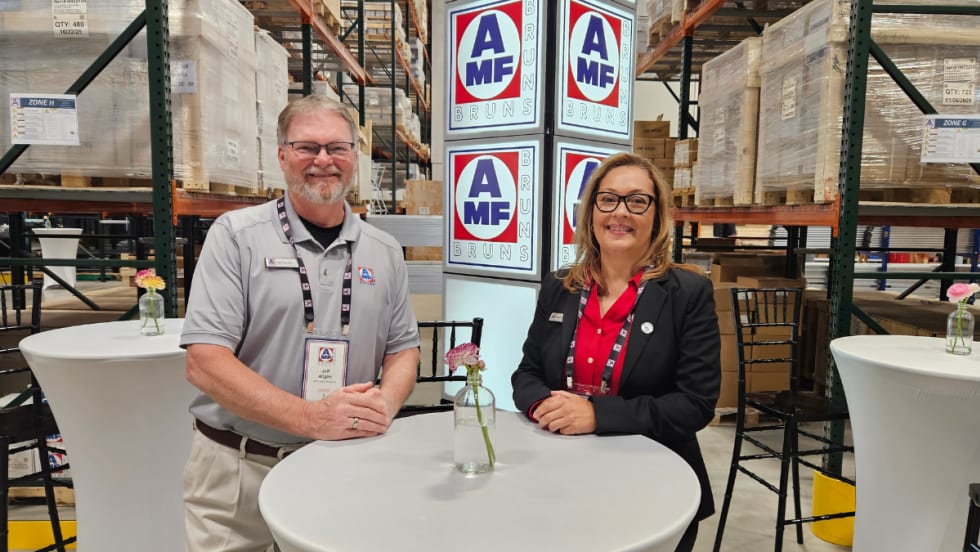
AMF Bruns Expands in Ohio, Investing in Growth and Community
With expanded production space, local investment, and a growing workforce, AMF Bruns is scaling its U.S. presence. Here’s an exclusive first look inside the new Stow, Ohio, HQ.
Read More →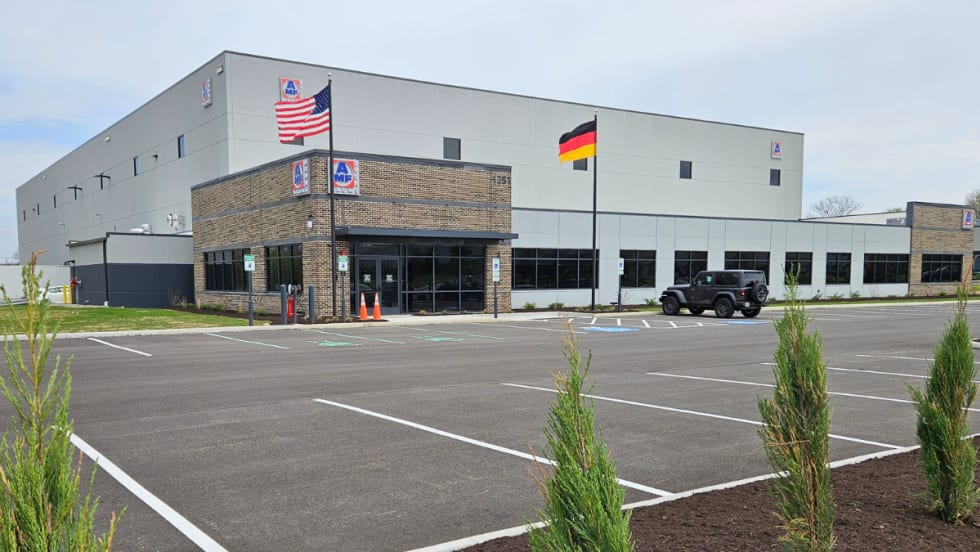
Inside AMF Bruns of America’s New Ohio Manufacturing Facility [Photos]
Take a behind-the-scenes look at AMF Bruns of America’s new 41,000-square-foot Stow, Ohio, headquarters, featuring advanced manufacturing, expanded space, and future-ready mobility solutions.
Read More →
First Student Boosts Student Support in Wichita & Texas
First Student and Wichita Public Schools are using behavioral support strategies to improve student ride experiences, while a separate initiative expands access to after-school programs through a bus donation.
Read More →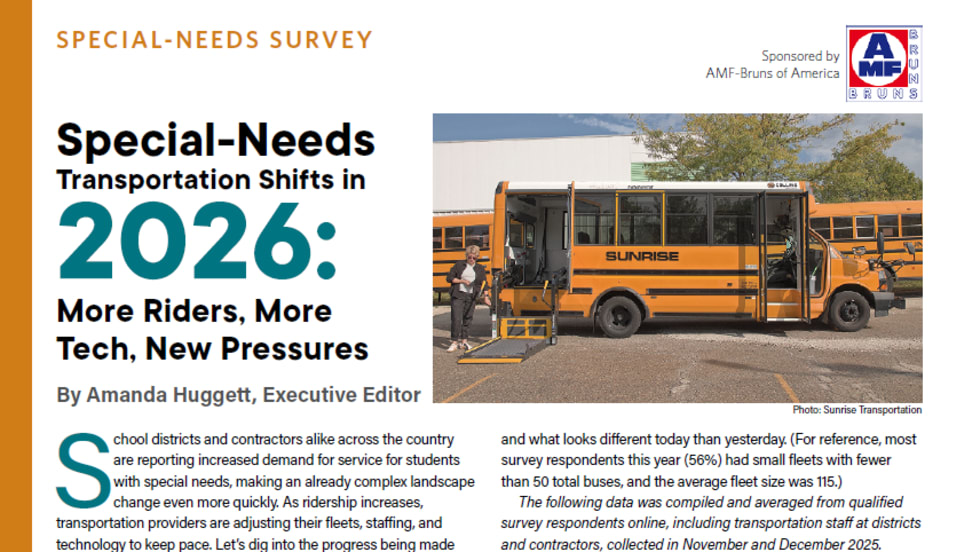
2026 Special-Needs Transportation Survey
What’s changing in special-needs transportation? This year, student transportation operators report a rising need, easing driver shortages, growing tech adoption, and evolving challenges. Sponsored by AMF Bruns of America.
Read More →