




On the Flip Side: Managing Angry Parents
What to do when students act out
Expanding discipline policies to cover both transportation and campus life, providing crisis intervention training to staff and sharing relevant student information with the right personnel will help minimize student violence on the bus and in the classroom.
by Brittany-Marie Swanson
November 13, 2012
Look and listen for verbal and non-verbal cues before things escalate.
Photo: School Bus Fleet
22 min to read
Hardly a day goes by in which an account of student misbehavior doesn’t make the news. Teachers, school administrators, bus drivers and attendants are all faced with potentially volatile situations on a regular basis that, if handled incorrectly, could put students and staff at risk.
Crisis prevention experts, school safety professionals and violence intervention trainers all agree: Your campus and pupil transportation staff must be capable of actively listening to students, addressing harassment and bullying in a timely and consistent manner, and defusing tense situations — and if violence does occur, they must be ready to protect themselves and their students.
Know your students
The easiest way to recognize potentially dangerous or unwanted behavior is to know your students, according to Dr. Randy Boardman, executive director of research and development at the Crisis Prevention Institute (CPI).
Drivers and teachers who address their students by name each day are more likely to recognize unusual behavior. They are also more likely to forge a relationship with a student that could lead him or her to ask for help rather than act out.
“As a driver, just the same as a teacher or a school administrator — the more I know about any individual student or students, the better prepared I’m going to be to respond to a problem,” Boardman explains. “With each student on a bus and when I was operating in the schools as a principal, I had a golden rule: I didn’t want the first time of me meeting them to be in my office over a discipline incident.
“The more the driver knows about any and all individual student(s) as a person, the better prepared they will be to respond to an escalating situation. Each student has to be understood as a person, not just a passenger,” he adds.
Recognize the signs
Knowing your students can help you to better identify changes in mood or manner that might signify a potential outburst or misbehavior. If a student who is upbeat and talkative suddenly becomes withdrawn or sullen, this could be a sign that something is wrong.
Students who are bullied, Boardman says, might begin to overtly challenge their aggressors or withdraw completely.
You should also look out for students unexpectedly changing seats on the bus, says Dona Beauchea, special-needs operational safety and training manager for First Student. “When children are changing seats on the bus, it’s because they’re not comfortable.”
Drivers and school staff should also be aware of bullying trends. A recent study in the Journal of School Psychology found that students who receive special-education services for behavioral disorders and those with more obvious disabilities are more likely to be bullied than their general-education counterparts — and are also more likely to bully other students.
“Just as we provide education and special training about students with special needs or conditions for school-based staff, this should extend to transportation staff as well,” Boardman says. “The keys are teaching the driver about the students with special needs and related expectations, as well as also teaching the students coping skills for handling the bus environment.”
In addition, the average perpetrator of violence on a school bus is a 14-year-old Caucasian male, according to Bret Brooks, chief operating officer for Gray Ram Tactical LLC.
Look for non-verbal cues
Besides changes in mood or behavior, Brooks suggests that drivers and other school staff look for more overt indicators of potential violence — such as physical cues.
Body language, such as clenching of the fists and repeated rubbing of the head or hair, can signify frustration.
Also, the removal of clothing like jackets, sweatshirts or glasses can be a signal. “The removing of the articles is a way that human beings tend to try to deescalate themselves naturally and bring themselves down to a calm state. So when they take off something, they’re trying to shed that emotion, trying to get rid of it,” Brooks says.
Gerald Summers, director of safety and security for Evansville (Ind.) Vanderburgh School Corp., points out that paying attention to bystanders is also important — if a student is acting strangely, his or her peers in the vicinity might react accordingly.
Listen for verbal cues
Angry or agitated individuals can be likened to people under the influence of drugs or alcohol, according to Brooks.
“I think it’s important that when you’re dealing with people — you’re trying to talk to someone that is getting very emotional, and is about to maybe become violent — you have to understand that their mind is somewhat impaired,” he explains. “That anger is kind of like an intoxicant.”
A student who is angry or agitated to the point of violence might use forced or strained speech when addressing an authority figure. He or she also might refrain from using profanity before losing control — but then switch to inappropriate, provocative language as he or she becomes more flustered.
Parroting or echoing what is said by an authority figure might be another indicator, Brooks says.
“When humans get very upset … they’re not thinking about sentence structure or anything like that,” he explains. “With that sometimes comes what I call ‘parroting’ or ‘echoing,’ in which, for example, the driver says, ‘Sit down,’ and the student just repeats, ‘Sit down.’
“The verbal part of the brain has just basically shut down at that point, and when that happens, that’s a solid indicator that a person could easily turn to violence and lash out in some form.”
Use de-escalation techniques to prevent conflict
So if a student in your bus or classroom does demonstrate any of these signs, what should you do?
Brooks points out that “if you’re talking to somebody, then they’re not fighting you. And that’s the ultimate goal, to prevent the violence to begin with.”
Utilizing active listening techniques will help drivers, aides and school staff to convince a volatile student that he or she is being heard, Summers says. Phrases like “I understand how you feel” and “explain that to me so I can help you” will put the ball in the student’s court, and encourage him or her to think about the situation.
Summers also suggests that school staff offer compromises or options — such as explaining the consequences of the student’s actions under school policy so he or she can make a decision. “Provide options, not threats,” he says.
“Relying on threats and intimidation for resolving a situation will generally garner challenges and power struggles,” Boardman points out. “Most kids and people don’t like to be put on the spot and confronted and backed into a corner, either verbally or physically.”
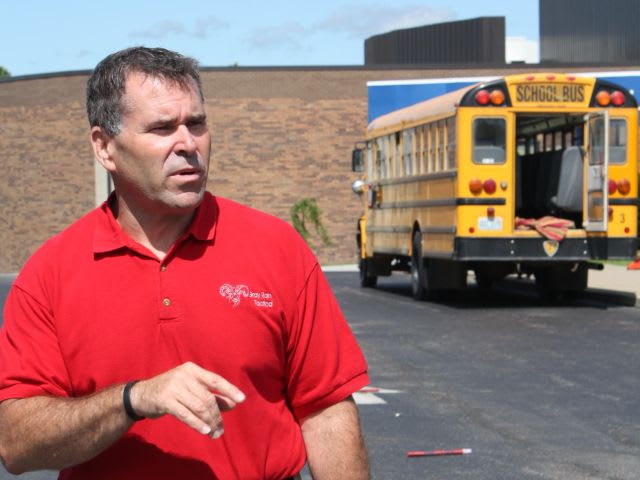
A Gray Ram Tactical instructor teaches a class using a school bus.
Pay attention to sentence structure
When speaking to an angry or frustrated student, it is vital to place the most important information that you want to convey to the student at the beginning of your sentences.
“When people are agitated, they’re not going to listen to the whole sentence,” Brooks says. “So whatever you say first is really the only thing that they are going to hear. You need to say what is most important to the other person, not necessarily what is most important to you, as the driver.”
For example, if a student is getting out of his or her seat because he or she is in a hurry to get home, the school bus driver should say, “I will get you home soon if you sit down,” as opposed to, “Sit down and I will get you home soon.”
“By just simply changing that sentence up like that, what the student hears at that point is, ‘I’ll get you home soon,’ and that’s what they want,” Brooks explains. “They want to get home soon. So the most important thing to the [student] needs to be stated first.”
Paraphrasing students’ words can help
A form of verbal de-escalation called paraphrasing can also help you to start a calming conversation with a frustrated student.
When the student says something to you, Brooks explains, you should repeat it back to the student in your own words. This will demonstrate that you are actively listening to his or her concerns.
“People who are agitated or possibly on the verge of becoming aggressive, they want other people to respond to them, just the same way that a person in a normal conversation would,” he continues. “So when you start to paraphrase … a lot of times people will pick up on the, ‘Oh, there’s a different way to do this; I didn’t realize that we could approach this from this angle over here. I was just thinking we’ve got to go A-B-C, and I never thought we could go from A directly to C.’”
In the same vein, Summers suggests that you can offer students a second chance by asking them to start explaining their problem from the beginning.
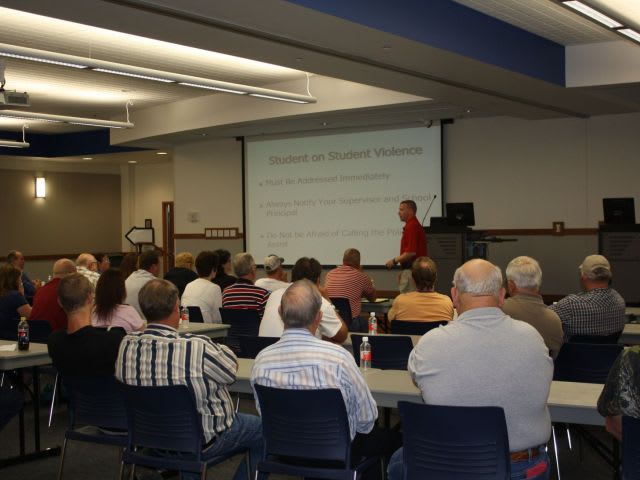
Bret Brooks, chief operating officer for Gray Ram Tactical, conducts a class about preventing student-on-student violence.
Find the root cause
Students don’t just become violent — there is often a trigger, at school or in the home environment, which causes them to lash out. In order to stop violence as it happens or prevent future incidents, it is important for school and transportation staff to discover the root cause and address it properly.
“When we look at student violence in America, sometimes it can be attributed to students being bullied and they’ve lashed out in violence,” Brooks explains. “There are a number of reasons for individuals to become violent, whether adolescent or adult. But if we as a society, as teachers, administrators, school bus drivers, if we can find out the root cause — we can deal with it.”
Beauchea says that school staff must have a “listening ear” when it comes to student safety.
Because the signs of bullying are often subtle, bus drivers and other school personnel must “make sure that [they] look at and address every incident, every time a child tells [them] something is happening,” she says.
Avoid aggressive body language
When approaching a volatile student, it is crucial to remain non-threatening.
“If you’re dealing with someone who is potentially violent, and you’re flinging your arms around because you’re getting excited, that rapid movement — it subconsciously triggers something in a violent person [and] you can actually make the situation worse,” Brooks says. “You want to have proper body language and display a sense of calmness to the person that you’re dealing with.”
Brooks adds that drivers and aides should avoid charging at a student. “If you’ve got a student in the middle or toward the back of the bus who is getting agitated, the driver doesn’t want to walk down the aisle to that student. It’s seen as charging … You don’t want to encroach upon their personal space.”
Don’t be verbally confrontational
In a similar vein, school personnel should not resort to yelling to achieve order in a classroom or on a bus.
“Yelling at a child never works on a school bus,” Beauchea says.
Not only does it not work, it can actually make the situation worse.
“If I’ve got a loud bus, and I try to yell over all the noise, what am I doing to the overall noise level? I’m raising it,” Boardman says. “The louder I get, the louder they get … and suddenly it comes to where we bump heads.
“A ‘Sit down and shut up’ or ‘I am in charge and you are not!’ approach to managing behavior is no more successful on a bus than it is in a classroom or school hallway,” he adds.
Summers does point out that when a student crosses a line into irrationality, sometimes speaking slowly and quietly won’t cut it.
“When someone is acting irrationally, sometimes it takes a loud voice or noise or unexpected action to stop the chain of irrational thinking and get his or her attention: yell ‘Stop’ or ‘Listen,’” he recommends.
Create a supportive, respectful environment
At Evansville Vanderburgh School Corp., Summers trains school administrators, teachers, custodians, cafeteria workers and bus drivers annually using the school safety and healthy children training curriculum from Human Factor Research Group.
“The training focuses on giving each individual person respect and treating people the way you want to be treated,” Summers says.
First Student similarly focuses on fostering a respectful environment on its buses.
“Our drivers and attendants work very hard to create an environment of trust and respect on the bus by showing or being a role model to the passengers,” Beauchea explains. “If you want to get respect, you need to earn respect. Anytime they observe children mistreating each other or making fun of each other or calling each other names, it’s time to stop. It’s zero tolerance.”
Boardman compares the school bus environment to the classroom environment.
“A teacher’s job is not just to know content — they need to know how to deal with people. I think the teacher … creates the feeling of ‘this is a safe place to be’ in [the] classroom, both physically and emotionally. The principal does that for the school,” he says. “And I believe that on a bus, a driver sets and creates that same climate.”
Boardman adds that CPI’s training centers on the concept that the behavior of school employees affects student behavior.
“If I take a very strong, authoritative, confrontational, I-don’t-want-to-hear-your-side-of-it approach, that will garner a confrontational/challenging response,” he says.
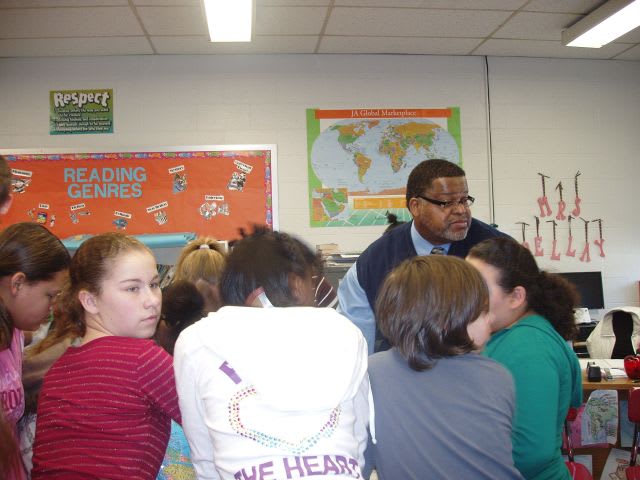
Gerald Summers, director of safety and security for Evansville (Ind.) Vanderburgh School Corp., speaks to a group of students about bullying.
When things turn violent
Sometimes, despite your best efforts to diffuse a situation, violence will erupt. At this point, action must be taken.
Summers says that tactical communication is a great first approach to a potentially violent situation, “however, when it becomes clear the person is not going to respond, or in cases where mutual combatants will not separate or a crowd begins to gather, finding a way to exit the situation and calling for additional help is best,” he says.
CPI’s personal safety training, which has been adapted for both buses and classrooms, provides instruction on how to hold someone safely and not place them at risk.
“A paramount aspect of any of the holds that we do is they should only be used as a last resort when there’s an imminent danger to self or others,” Boardman stresses. “If a fight breaks out, there’s ways of dealing with it without jumping in the middle of it and getting yourself hurt.”
Know where to pull over the bus
“If you’ve got a serious incident on the bus that’s happening, you need to find a safe place to pull the bus off to the side of the road, contact dispatch and let them know what is going on,” Beauchea says. “[Dispatch] can either send someone from dispatch or send someone from the school or, if necessary, 911.”
Where you pull your bus over is important. Boardman suggests that drivers check along their routes for safe places to park the bus — such as grocery store or church parking lots or side roads — as part of their emergency planning.
“This makes it safer so you can attend to the incident as opposed to the driving at the same time,” he says.
Also, the location where you pull over could affect the safety of students.
In a September incident, a Keystone Oaks (Pa.) School District bus driver pulled his bus over at an emergency exit near an onramp because a student was poking holes in bus seats with a stick. When the bus came to a stop, the boy and his friend escaped through the bus’ emergency exit and began wandering through traffic on a busy bridge. Both boys were picked up by a Department of Transportation employee and charged with criminal mischief.
While it’s safer “to pull over, stop the bus and attend to [the discipline issue] in a way that you can command full attention,” according to Boardman, it is imperative that training for this type of situation be provided. “If we don’t give folks training, don’t prepare them, don’t rehearse, don’t practice for physical and emotional safety for everybody, it won’t go so well,” he stresses.
If an angry student demands to be let off the bus, “the answer to that is, not without tremendous vulnerability to liability,” says Peggy Burns, Esq., of Education Compliance Group. “That is not a good answer.”
Be cautious when using restraint
In extreme cases, it might become necessary to physically prevent a student from doing something. But, “almost any time that a student is restrained, it’s very likely to become a legal issue,” Burns says.
Burns strongly suggests that school administrators be familiar with the U.S. Department of Education’s 15 principles for the use of restraint and seclusion that were issued this year (see sidebar here). “They are certainly going to be referred to by an astute attorney who’s looking to make an issue out of the use of restraint on a school bus,” she says.
Burns stresses that there is widespread agreement on the Department of Education principle that restraints should never be used as punishment or discipline.
Boardman also stresses this point. “Although we do teach restraints [in CPI’s Nonviolent Physical Crisis Intervention training], these are only used as a last resort, when a behavior becomes an imminent danger to self or others.”
In many cases, restraint will be used to ensure the safety of a student with special needs who becomes a danger to his or herself and others. In this type of situation, Burns says, documentation, training and parental notification are crucial.
IEPs outline scenarios where restraint is needed
The Individuals with Disabilities Act (IDEA) mandates the use of Individual Education Programs (IEPs), which describe how a student with a disability learns and how education providers can help the student learn more effectively.
Burns says these IEPs can also help educators make decisions about the use of restraint.
“The kind of legal issue that may arise if a driver or aide has to physically restrain a child is going to be the excessive use of force. There’s going to be claims that there’s been an excessive use of force and violation of his constitutional rights,” Burns explains. “Did the IEP reflect the possible need for physical restraint, and was it done in a way that is consistent with that?”
Under these circumstances, school administrators must make sure that relevant information about each student is communicated to the transportation staff. Sometimes, there is difficultly in this area “from the transporters’ perspective — we’re not getting the information that we need about behavior intervention plans … because there’s a lot of confusing messages out there about the Health Insurance Portability and Accountability Act,” Beauchea explains (for more information, see “Sharing student information under IDEA").
Burns also says that parents should be informed of school policies that make restraint an option, and that they should be immediately notified if the use of restraint becomes necessary in dealing with their child.
Bus and school policies should align
It is imperative that student safety and discipline policies extend from the classroom to the school bus, Brooks says.
“Drivers should follow the school procedures and policies that they have in place,” he explains. “That groundwork that’s been laid needs to be followed.”
If students hear consistent policies about their behavior, they are more likely to adhere to them, Boardman says.
“It’s important that there are some consistent rules that are fair, reasonable and enforceable. On a bus, they should align with school rules and school policies,” he says. “You need to have them in handbooks. You need to have parents know, students know, and then you need to consistently enforce them, because … this may be a rule one day, it may not be a rule the next day. And if it’s not consistent, as a person riding the bus, I don’t know what the rules are.”
“All the legal rules that the school district has in place for school staff would apply to transportation staff,” Boardman adds.
Work with your contractors
“Even if the bus service is contracted, the parent and student dealing with [the drivers] … assume [the drivers] are an extension of what happens at the school,” Boardman says.
If your district employs an outside contractor to handle its bus service, discipline policies may not line up. To solve this problem, Boardman suggests that district officials specify what policies they would like followed when they put the transportation contract out for bid.
“If you put those pieces in your specifications for the bus contract, the bus companies will think it’s a pretty good idea — because they want that contract,” Boardman says.
He also urges districts to include the contractor in relevant meetings. “If they’re not expected to come to meetings, if they’re treated as an outside group, they’ll be an outside group.”
“It comes down to first and foremost hiring a well-qualified bus company and knowing what procedures that company lives by,” Burns says, “and providing sufficient information to the contractor; no less information than you would give if you had your own fleet.”
If the district cultivates a good relationship with the contractor, drivers will feel comfortable reporting incidents directly to school officials — which will increase overall safety, Beauchea points out.
Training is vital
“Sending drivers through consistent training is a must,” Brooks says.
If bus drivers do not receive the proper training, students could be put at risk and a district could be open to liability.
“If you gave teachers a class of 60 kids and said, ‘Now turn your back and manage their behavior; teach them math through a mirror’ — oh, by the way, while driving a $100,000 vehicle — the teachers would laugh at you. But that’s what drivers do every day,” Boardman explains.
“If they need additional training and skills sets in that area, I believe that onus is on the school,” he adds. “Bus drivers will respond to difficult, challenging and aggressive behaviors, either based on their training or based on the emotions of the moment. And often, their training may be more successful than an off-the-cuff response based on emotion. Everyone is safer when staff react based on their training.”
See something, do something
Student transportation contractor First Student Inc. conducts a yearly campaign called “See Something, Do Something,” based on a campaign created by the U.S. Department of Education’s Office of Safe and Drug Free Schools and the National Association for Pupil Transportation.
During the month of September, First Student drivers are given two handouts each week to help prevent bullying on the bus. In addition, posters with bullying facts are hung in the driver’s room.
Fifty-two percent of school bus drivers believe bullying is a problem on their buses, according to the contractor.
The campaign aims to help drivers and attendants understand how to create an environment of trust and understanding on their school buses, as well as:
Establish and enforce bus safety rules
Understand the signs of bullying and how to intervene
Understand the additional challenges students with special needs face
Empower children to report if they are being bullied or see bullying on the bus or at school
Understand the importance of reporting all bullying incidents to management and school district customers
15 principles for the use of restraint and seclusion
The U.S. Department of Education’s restraint and seclusion resource document lays out the following principles for educators to follow when the need for restraint and/or seclusion arises:
1. Every effort should be made to prevent the need for the use of restraint and for the use of seclusion.
2. Schools should never use mechanical restraints to restrict a child’s freedom of movement, and schools should never use a drug or medication to control behavior or restrict freedom of movement (except as authorized by a licensed physician or other qualified health professional).
3. Physical restraint or seclusion should not be used except in situations where the child’s behavior poses imminent danger of serious physical harm to self or others and other interventions are ineffective and should be discontinued as soon as imminent danger of serious physical harm to self or others has dissipated.
4. Policies restricting the use of restraint and seclusion should apply to all children, not just children with disabilities.
5. Any behavioral intervention must be consistent with the child’s rights to be treated with dignity and to be free from abuse.
6. Restraint or seclusion should never be used as punishment or discipline (e.g., placing in seclusion for out-of-seat behavior), as a means of coercion or retaliation, or as a convenience.
7. Restraint or seclusion should never be used in a manner that restricts a child’s breathing or harms the child.
8. The use of restraint or seclusion, particularly when there is repeated use for an individual child, multiple uses within the same classroom, or multiple uses by the same individual, should trigger a review and, if appropriate, revision of strategies currently in place to address dangerous behavior; if positive behavioral strategies are not in place, staff should consider developing them.
9. Behavioral strategies to address dangerous behavior that results in the use of restraint or seclusion should address the underlying cause or purpose of the dangerous behavior.
10. Teachers and other personnel should be trained regularly on the appropriate use of effective alternatives to physical restraint and seclusion, such as positive behavioral interventions and supports and, only for cases involving imminent danger of serious physical harm, on the safe use of physical restraint and seclusion.
11. Every instance in which restraint or seclusion is used should be carefully and continuously and visually monitored to ensure the appropriateness of its use and safety of the child, other children, teachers and other personnel.
12. Parents should be informed of the policies on restraint and seclusion at their child’s school or other educational setting, as well as applicable federal, state or local laws.
13. Parents should be notified as soon as possible following each instance in which restraint or seclusion is used with their child.
14. Policies regarding the use of restraint and seclusion should be reviewed regularly and updated as appropriate.
15. Policies regarding the use of restraint and seclusion should provide that each incident involving the use of restraint or seclusion should be documented in writing and provide for the collection of specific data that would enable teachers, staff and other personnel to understand and implement the preceding principles.
For more information, go here.
Sharing student information under IDEA
Students with autism and other disabilities often require a structured environment and routine in order to feel safe and comfortable.
As a bus driver, “you need to establish your behavior plan with them early on — being fair, firm and consistent with them. And your relationship with the school is critical so that you can ask for information on the behavior intervention plan [that pertains to the student] in the classroom,” explains Dona Beauchea, special-needs operational safety and training manager for First Student.
It is easy for school officials to become confused about what information they can share about the student under the Health Insurance Portability and Accountability Act, Beauchea says, but the Individuals with Disabilities Education Act (IDEA) allows for relevant information to be provided to support staff.
This includes school bus drivers and attendants, Beauchea explains.
Transportation staff should be invited to take part in the development of a student’s Individualized Education Program (IEP). In that role, the transporter could serve two major functions:
To gather information regarding the student’s expected transportation needs so as to properly plan for a timely, efficient and safe initiation of transportation service.
To educate the IEP team members regarding the transportation environment. This could include: type and configuration of the vehicle the student would likely be assigned to ride, probable length of ride, conditions with respect to temperature extremes during loading/unloading and on the bus, pickup/drop off, type of device/occupant securement system to be used, need for the vehicle to be equipped with an emergency communication system, degree of training and skills of the driver, need for a bus attendant, etc.
If the student will need special care or intervention during transportation (or has adaptive or assistive equipment needs), transportation staff participation is essential in developing information addressing the following concerns:
Can the student be safely transported, given the transportation environment (including the length of the ride), without undue risk to the student or others?
Does the student have medical, physical or behavioral concerns that would expose the student to unreasonable risk, given the anticipated transportation environment?
Can assistive or adaptive equipment identified as necessary to accommodate the student during the transportation process be safely secured and transported, and are there adequate instructions regarding its use?
Subscribe to Our Newsletter
More Safety
America Has a School Bus Passing Problem — and Distraction Is Making It Worse
Illegal school bus passing remains a major safety threat as distracted driving rises. This op-ed explores why awareness, enforcement, and stop-arm cameras matter more than ever.
Read More →
School Bus Laws to Watch: New York Delays EV Mandate
Plus, federal lawmakers seek new funding for school bus safety as states weigh stop-arm enforcement, disability protections, and education spending.
Read More →
Sponsored•May 26, 2026
The Essential Handbook for Safe Alternative Student Transportation
Your district's "exception riders" — students with IEPs, those experiencing homelessness, foster care youth — deserve more than a middleman solution. This handbook breaks down exactly what to look for in a supplemental transportation partner: from driver vetting and regulatory compliance to proactive safety technology. Because getting a ride isn't the same as getting a safe one.
Read More →
Operation STEER Brings Emergency Response Training to North Texas
Prosper ISD hosted the third annual training for transportation professionals across 67 districts to learn how to respond to emergencies, such as rollovers and evacuations, and proper use of safety equipment.
Read More →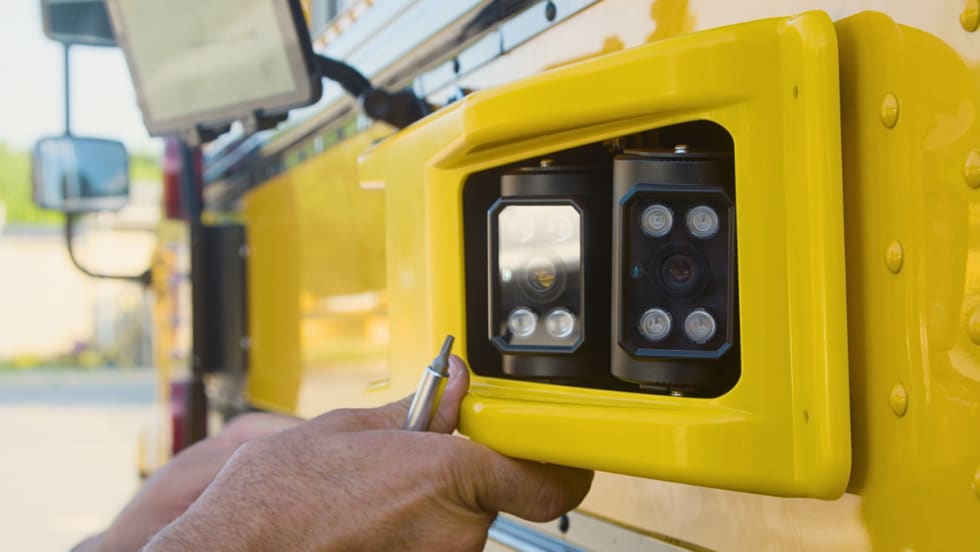
Florida District Relaunches BusPatrol School Bus Camera Program With New Safeguards
After being suspended over due process concerns, Miami-Dade schools and law enforcement are restarting the AI-powered stop-arm camera program with new oversight.
Read More →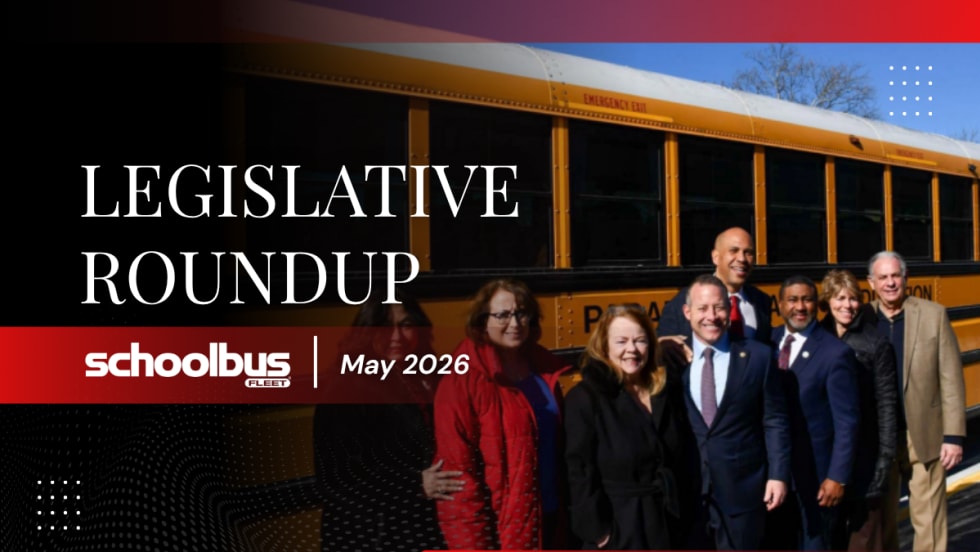
School Bus Laws To Watch: Seat Belt Bills, Funding Fights & EV Changes
From national bills on seat belts and driver oversight to driver awareness campaigns referencing “Finn’s Rule” and ongoing transportation funding debates in Alaska, here’s the latest in school bus legislation across the U.S.
Read More →
9-Year-Old Boy Killed by School Bus at Busy Brooklyn Intersection
A Williamsburg community is mourning after a child was fatally struck by a private yeshiva bus, prompting calls for urgent safety improvements at the high-traffic crossing.
Read More →
Does Reliable School Transportation Boost Attendance? EverDriven’s Data Says Yes
The new data shows 99.99% incident-free trips and strong on-time performance, reinforcing how dependable transportation, especially for vulnerable student populations, can help districts combat chronic absenteeism.
Read More →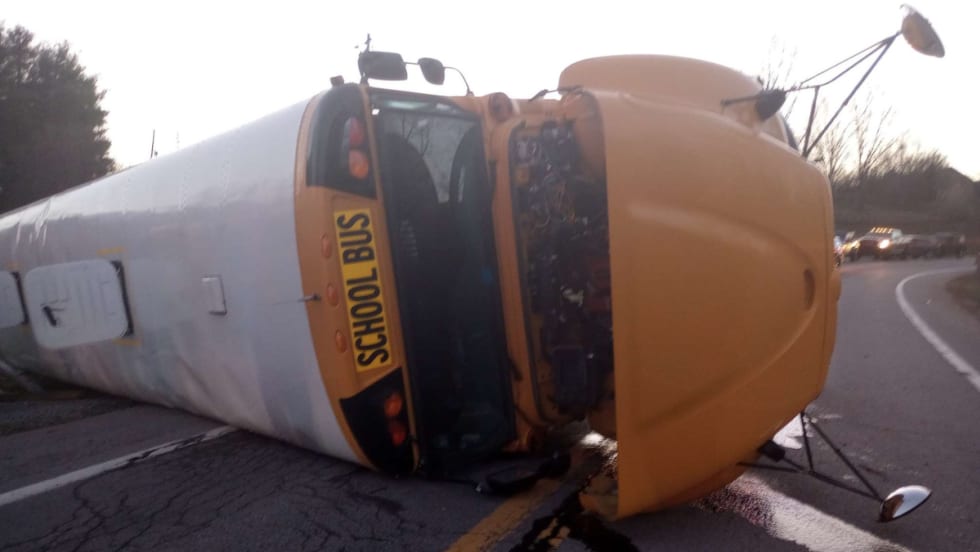
NTSB Calls for Alcohol Impairment Systems, Seat Belts After W.V. Crash Investigation
The federal agency's report asks NHTSA to require all new school buses to be equipped with vehicle-integrated alcohol detection systems and passenger lap-shoulder belts.
Read More →
Sponsored•April 20, 2026
2026 State of Student Transportation Report
Student transportation teams are being asked to do more with less, facing driver shortages, rising costs, and increasing safety expectations. This report uncovers how fleets are adapting, where technology is making the biggest impact, and why student ridership tracking is emerging as a top priority. Download the report to explore the key trends shaping 2026 and what they mean for your operation.
Read More →