




Target bus stop dangers
I recently heard the harrowing story of Jaycee Dugard’s life for nearly two decades after she was abducted from a school bus stop in South Lake Tahoe, Calif., in 1991 by convicted sex offender Phillip Garrido and held captive in the backyard of his home. This got me thinking about what school districts can do to maximize student safety at bus stops.

This summer, I heard the harrowing story of Jaycee Dugard’s life for nearly two decades after she was abducted from a school bus stop in South Lake Tahoe, Calif., in 1991 by convicted sex offender Phillip Garrido and held captive in the backyard of his home.
This got me thinking about what school districts can do to maximize student safety at bus stops.
Sexual predator awareness is vital
Max Christensen, executive officer of school transportation at the Iowa Department of Education, suggests keeping bus stops away from areas that sexual predators and sex offenders might find inviting. Knowing where they live in relation to where you might place bus stops — which involves having access to a database of sex offenders in your area — is also important.
Dr. Duane Dobbert, a criminal forensics studies professor at Florida Gulf Coast University in Fort Myers, and a fellow of the American College of Forensic Examiners, offers a program called “School Bus Drivers: The 1st Line of Defense Against Child Sexual Predators.” In the program, he explains the difference between a sexual predator and a sex offender and discusses what school bus drivers should do if they see a suspicious person at a bus stop or school site.
“Carry a notepad and jot down the day, date, time and information pertaining to the person and his or her vehicle, and turn it in to the transportation director,” Dobbert recommends. “If you are particularly concerned about a situation, call your dispatcher and have him or her call law enforcement.”
(For more information about Dobbert’s program, go here.)
Ensure students can be seen
Walking to bus stops before the sun comes up can be dangerous. In 2009, Timothy Wysong, transportation director at Eanes Independent School District in Austin, Texas, addressed this by starting the “Be Seen, Be Safe” campaign. Round, flashing 2-inch LED lights were distributed to elementary school students for them to wear on the morning walk to their bus stops.
The campaign is still in place, and Wysong’s operation is now focusing on distributing the lights to students in kindergarten through third grade.
“We feel like they’re at the biggest risk,” he explains. “We’re also adding stop-arm cameras to our buses this year, and we’ve added an LED sign to the back of the buses that gives motorists a warning when our buses are preparing to stop — it changes to ‘Do Not Pass.’”
Establish safe walking routes
Christensen also recommends reviewing the path that kids take to get to and from a bus stop.
“Though legally transportation operators aren’t required to look at how kids get to the bus stop, we really should look at this issue as a matter of public service to help keep our kids safe both before and after they get on or off the school bus,” he says.
In Iowa, many districts work closely with the state’s Safe Routes to School coordinator to establish safe walking routes to school bus stops.
“Another initiative is training our school bus drivers to be aware of the danger zone and potential hazards at every bus stop,” Christensen says. “An added component to our training this year is the inclusion of School Bus First Observer.”
More Safety
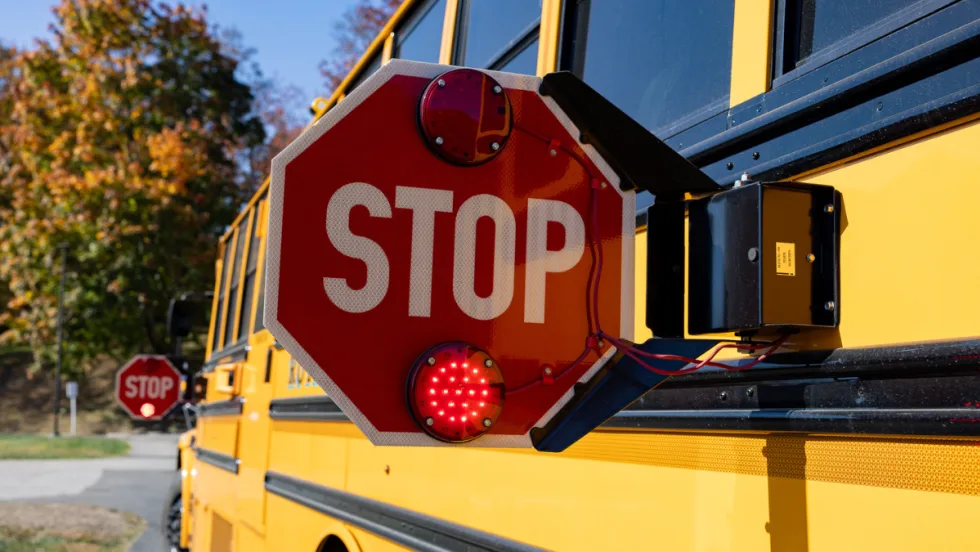
Illegal School Bus Passing Drops 24% in New York Districts
With fewer than 5% of citations involving repeat offenders, Westchester County officials said enforcement, education, and community partnerships are helping change driver behavior.
Read More →
School's Back. Here's What Happened to Traffic, Speeding & Distraction
What happens to traffic when school resumes? New data analysis examines changes in distracted driving, congestion, and speeding around schools.
Read More →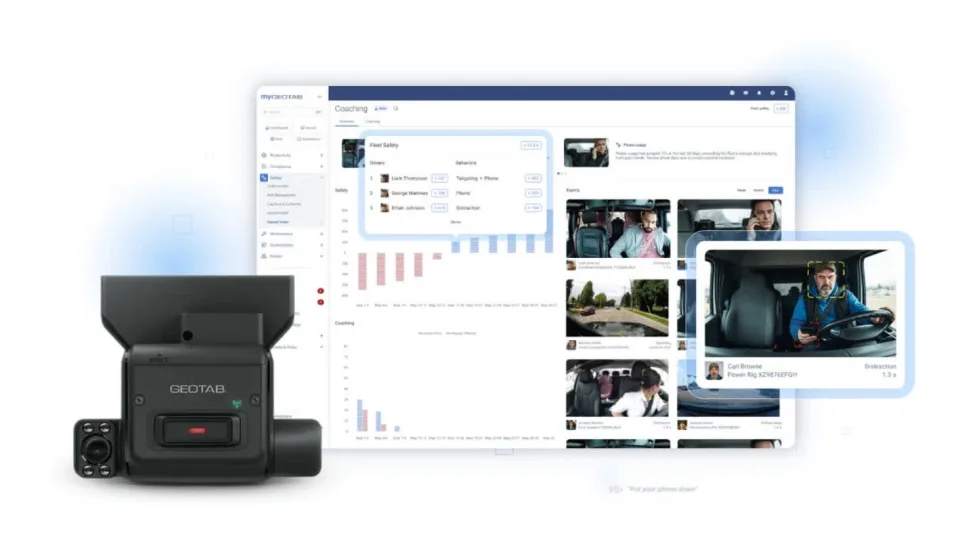
Geotab Expands Fleet Safety Tools With Video Coaching, Risk Insights
New safety and video capabilities aim to help fleet managers assess risk, support drivers, and take targeted action through video coaching, red-light violation detection, and more.
Read More →

How to Build a Better School Bus Driver Training Program
Is it time to strengthen your driver training? Here’s how to pick the right talent and improve recruitment, retention, and safety. This video is brought to you by IC Bus.
Read More →
Recent School Bus Accidents Leave 2 Dead, 2 Injured
Four school bus crashes in Florida, Illinois, and Georgia highlight risks in transportation lots, at bus stops, and during student loading and unloading.
Read More →
When Every Second Matters, Clarity Keeps Routes Moving
From routine delays to urgent incidents, strong communication practices help drivers, dispatchers, schools, and families respond with confidence.
Read More →
What Happens When a School Bus Catches Fire — and What Can Help
School bus fires are rare but can be devastating. Learn how advances in fire suppression and asset protection help fleets detect fires earlier, reduce damage, and improve safety.
Read More →
Geotab Launches Tool to Help Fleets Investigate Road Incidents
Geotab Investigations combines telematics data, video, documents, and other evidence to help fleets reconstruct incidents, resolve claims, and determine what happened.
Read More →
Texas Sixth Grader Wins 2026 National School Bus Safety Poster Contest
Sai Darshana Yekolu of Moseley Middle School in Prosper, Texas, was named the newest winner for her artwork, bringing the theme of “Safe Rides, Everyday Heroes” to life.
Read More →
Doing More With Less: How Transportation Directors Can Prioritize Safety Amid Budget Uncertainty
With diesel prices soaring and nearly one-third of transportation directors expecting budget cuts, maintaining student safety has never been more challenging. Download this guide to learn how leading districts are prioritizing risk, funding critical safety technology, and building stronger budget cases with data.
Read More →