



Program instructs on sexual predator awareness
In “School Bus Drivers: The 1st Line of Defense Against Child Sexual Predators,” Dr. Duane Dobbert explains different types of sexual disorders and how to identify people who are afflicted with them. The program, which Dobbert recently taught to a group in West Virginia, has been endorsed by the Department of Homeland Security.


Dr. Duane Dobbert, a criminal forensics studies professor, presented his “School Bus Drivers: The 1st Line of Defense Against Child Sexual Predators” program at the West Virginia Association of Pupil Transportation State School Transportation Conference in July.
SNOWSHOE, W.Va. — In late July, more than 300 pupil transporters convened here for the West Virginia Association for Pupil Transportation's annual conference.
Among the presenters during the event was Dr. Duane Dobbert, a criminal forensics studies professor at Florida Gulf Coast University in Fort Myers, and a fellow of the American College of Forensic Examiners. Dobbert spoke to nearly 100 transportation administrators about his “School Bus Drivers: The 1st Line of Defense Against Child Sexual Predators” program.
Dobbert developed the program in 2004 after learning from a colleague about the abduction of a 6-year-old girl in a northeastern state.
“I’m a 41-year forensic psychologist, and I’ve worked with law enforcement and prosecution for the most serious cases. The ones that disturbed me the most were those that involved the abduction, sexual assault and death of children,” Dobbert told SBF. “That was the straw that broke the camel’s back. I thought, ‘I can’t see any more dead children — I need to wake up the world.’”
In the program, Dobbert explains the difference between a sexual predator and a sex offender. A sex offender is someone who violates a criminal sexual conduct law, whereas a sexual predator is someone who engages in forcible, nonconsensual sexual activity.
Sexual predators are afflicted with sexual disorders, or paraphilias. Two common paraphilias involving children are pedophilia and hebephilia. A pedophile is someone who is intensely sexually aroused by prepubescent children. A hebephile is someone who is sexually aroused by children who have arrived at puberty.
“I talk about how a person becomes a pedophile or a hebephile so that trainees begin to understand the nature of these people. If you don’t understand these people, you can’t identify them and stop them. Then I show them how these sexual predators have a fantasy love group, they go to where these groups are, they identify a fantasy love child and then they begin a stalking process until they establish an elaborate form of contact,” Dobbert explained.
He noted that since school bus drivers are usually familiar with students’ walking routes to and from bus stops, they should be alert at every stop for people who look suspicious. They should also be alert at schools.
“Carry a notepad and jot down the day, date, time and information pertaining to the person and his or her vehicle and turn it in to the transportation director,” Dobbert said. “Better yet, use a disposable camera to take the person’s picture. If you are particularly concerned about a situation, call your dispatcher and have him or her call law enforcement.”
Ben Shew, executive director of school transportation for the West Virginia Department of Education, told SBF that Dobbert’s presentation at the West Virginia Association for Pupil Transportation conference was well received.
“The training certainly woke up some of our transportation directors. We hear every day of kids and teens who have been abducted, so as much training as possible not only helps us in transportation, it helps in getting those people off the street,” Shew said.
Federal funding to assist operations in receiving the training may become available. In April, Dobbert was informed that Transportation Security Administration officials would like the “School Bus Drivers: The 1st Line of Defense Against Child Sexual Predators” program to become part of First Observer, and that the Department of Homeland Security would like to endorse it as a national training initiative.
“I signed the contract in May and now we’re in the process of putting the program together on the First Observer Website,” Dobbert said. “I’m really hoping that there are going to be federal dollars directed through First Observer to school districts so that they’ll be able to get the training out of federal funds.”
Shew was pleased upon learning of the Department of Homeland Security’s support for Dobbert’s program.
“Training is expensive. Anytime we get support from people like the Homeland Security folks, we’re happy because it helps us reduce our costs. In the southeast in particular, most of the states are having considerable budget restraints, so all the help that we can get at this point is not only justified, it’s needed,” he said.
Those interested in having Dobbert present his “School Bus Drivers: The 1st Line of Defense Against Child Sexual Predators” program at their operations can e-mail him at DrDuaneDobbert@cs.com.
A two-hour DVD that mirrors the onsite presentation and comes with a workbook is available to order on Dobbert’s Website. (Note: The price has been reduced to $109.)
More Management

The Back-to-School Checklist Every Director Should Complete Before the First Bell
Help your transportation team start the school year strong with these tips for contingency planning, communication, fleet visibility, technology, and trip management.
Read More →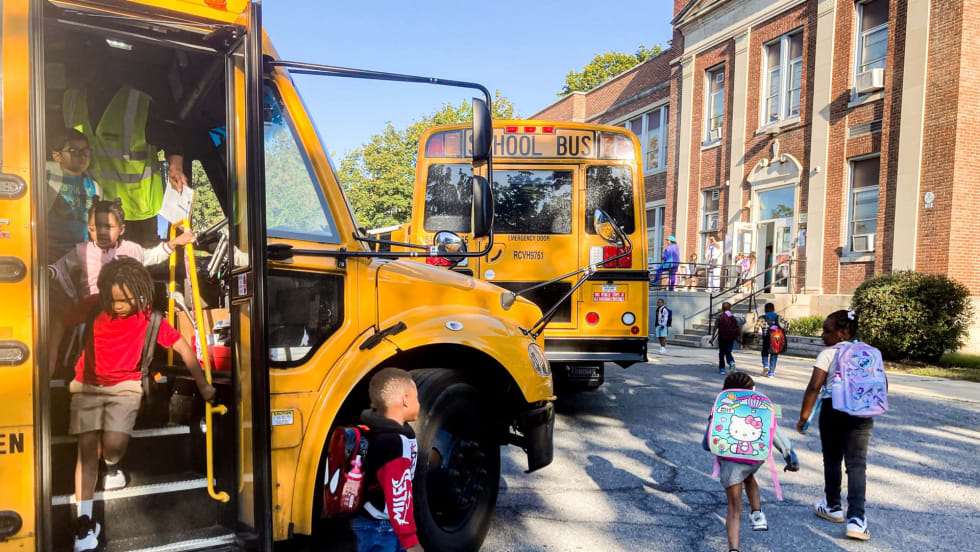
How a New York District Cut Nearly $1M in Transportation Costs While Expanding Bus Access
A data-driven overhaul with BusRight reduced Poughkeepsie City School District's planned routes from 26 to 17 while extending school bus service to about 1,200 additional students.
Read More →
Budgets Down, Enrollment Shifting: What the Data Says Districts Should Watch
School transportation departments face two converging challenges this year: tightening budgets and shifting enrollment. Most districts still address these issues separately, but the assumption that either trend will simplify operations is proving incorrect.
Read More →
These 8 School Transportation Companies Made the 2026 Inc. 5000 List
Find out which school transportation contractors, technology providers, and suppliers ranked among America’s fastest-growing private companies.
Read More →
The Link Between Emotional Intelligence and School Bus Safety
How can emotional intelligence help transportation pros navigate stress, manage change, and build stronger relationships? Listen to find out.
Read More →
What Emotional Intelligence Has to Do With School Bus Safety
In this video, discover how emotional intelligence can help transportation leaders and drivers navigate stress, manage change, and build stronger relationships. The Route is sponsored by IC Bus.
Read More →
Beyond Two-Way Radios: School Bus Communications Evolve With Push-to-Talk Over Cellular
PRYME Radio and PositionPTT join forces to advance hands-free radio use and reduce distracted driving. See how PoC compares with traditional radios on range, cost, safety, and connectivity.
Read More →
Have School Districts Adapted to Bus Driver Shortages or Simply Accepted Less Service?
According to a recent report from HopSkipDrive, many districts appear to have recalibrated what "normal" transportation service looks like.
Read More →
Reliable Transportation Linked to Better Student Outcomes, New EverDriven Study Finds
See why new research suggests transportation consistency improves student outcomes while influencing attendance, funding, IEP compliance, and family trust.
Read More →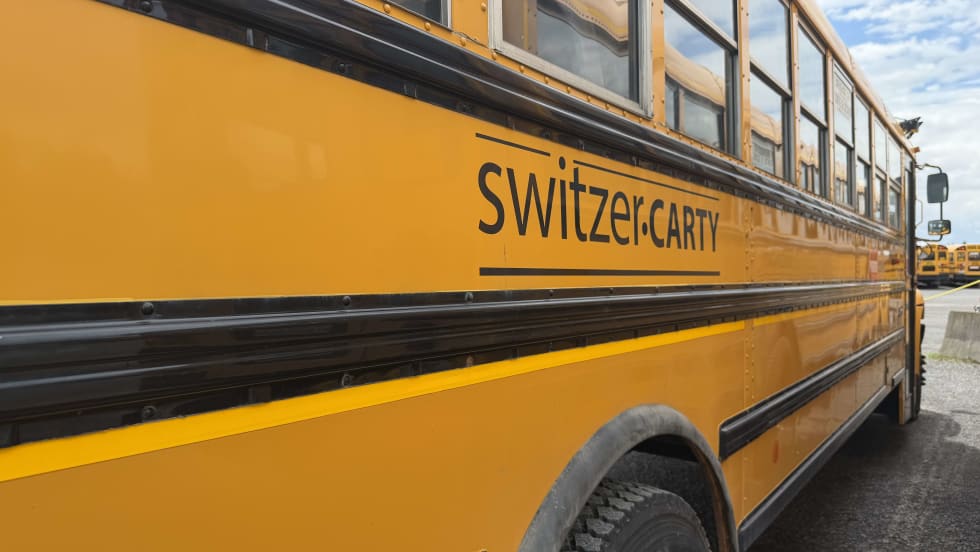
Switzer-CARTY Enters the U.S. with New Acquisition
The Canadian contractor’s acquisition of Minnesota-based Agnes Corporation marks its first cross-border expansion into the United States and adds 350 vehicles.
Read More →