




10 More Ways to Bolster Safety
Pupil transportation officials share tips on bus stop safety, pre-trip inspections, emergency communications and more in this sequel to the August issue feature.
1. Don’t excuse drivers for breaking rules
Students should not be the only ones who are disciplined if they disobey policies. This is the consensus among the employees at Walled Lake (Mich.) Consolidated School District’s transportation department.
“When we had to terminate a driver for texting, talking on a cell phone and eating with kids on the bus, the word spread pretty quickly,” Transportation Supervisor Jill Segal explains. “Policies should be enforced. If drivers are breaking the rules, write them up.”
2. Prepare for emergency communications
For situations like emergencies and inclement weather, being able to communicate quickly and efficiently is essential.
Middleton-Cross Plains Area School District in Middleton, Wis., uses the AlertNow system to reach parents and staff. With a few steps, and usually in less than two minutes, the district can send out mass notifications.
“Although we thankfully haven’t had to use it for a true emergency, such as a severe bus accident with injuries or fatalities, it is capable of notifying parents at home and on cell phones if one were to happen,” says Jeff Walker, who served as transportation services manager for the Middleton district until moving to Litchfield Elementary School District #79 in Litchfield Park, Ariz., this summer.
The AlertNow system can quickly provide information on what happened, where students are being transported if injured, where parents can reunite with their children, etc.
“We have used it for situations where a bus has broken down or gotten stuck in traffic and is running more than 15 minutes late, so that parents waiting at the bus stop are not stampeding our dispatch center with phone calls,” Walker says.
The Middleton district also uses the system for driver notifications, such as weather-delayed starts, school cancellations and in-service training reminders.
“Overall, it has worked out extremely well for us and is worth the investment,” Walker says.
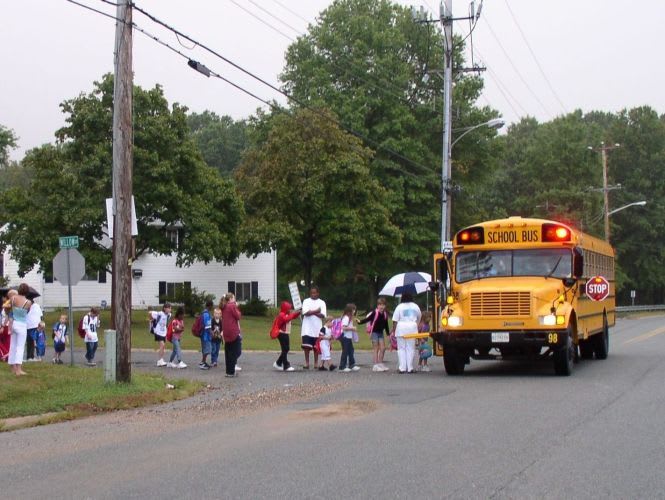
3. Team up for safe bus stops
The My Brother’s Keeper program was developed after a tragedy in our school district [Jones County Schools] in December 2009. The district felt that we needed to do more to ensure that kids cross the street safely at the bus stop.
So we put together a program encouraging children to hold hands and cross the street as a unit as opposed to individually. Oftentimes, an impatient driver may see one child cross and assume they can pass the bus, resulting in unsafe situations for children.
We also started a second safety program called Meet Me at the Bus Stop. This was designed to encourage parents of younger riders to stand with them and to meet children at the bus stops. We feel that adult supervision will enhance the safety of these stops.
The program is set up as an incentive program, where the children receive stickers, bracelets and little prizes from the bus driver weekly when parents participate.
— Submitted by Terry Graham, transportation director, Jones County Schools, Laurel, Miss.
4. Stress consistent inspections
John Clements, director of transportation at Kings Canyon Unified School District in Reedley, Calif., emphasizes the importance of performing a daily pre-trip inspection on every school bus prior to operation. He notes that shortcuts in inspections or failure to complete a brake inspection, for example, can lead to preventable accidents.
“As you start down a steep grade, that is not the time to be thinking, ‘I should have checked my air brake system today!’” Clements says. “That inspection needs to occur prior to leaving the yard.”
5. Maximizing vision with mirrors
Ron Kinney, a school transportation consultant and former California state director, recommends school bus mirror modifications to enhance the safety of students outside the bus during loading and unloading.
On Type C and D school buses, Kinney suggests replacing the standard 7-inch-by-16-inch mirror with a 7-inch-by-20-inch right-side flat (also known as “West Coast”) mirror.
“Do not forget to look in front and behind the mirrors,” says Kinney, whose consulting firm is QET Management Services. “Lean forward and backward to see around the mirror blind spots.”
On Type D school buses, Kinney recommends positioning the left-side flat mirror so that the driver has a clear view over the top of the mirror. Again, the driver should lean forward and backward to see around blind spots.
6. Updating safety policies
The transportation department at Murfreesboro (Tenn.) City Schools recently compiled a list of safety procedures based on new requirements issued by the state, Transportation and Safety Supervisor Debra Savely reports.
Buses are labeled with animal magnets as well as numbers to help students and parents remember their bus assignments. Drivers and assistants receive bus journals to write down important information.
Each bus has its number painted on the roof for identification in case of emergency.
Buses are also equipped with red, 4-by-6-inch LED lights in the middle of the back door.
“When the bus stops, the light flashes,” Savely says. “Since installing these lights two years ago, we haven’t been hit from behind.”
Drivers keep seating charts and demographic rosters on the bus, and children’s names are posted above their seats. Drivers and assistants on special-ed buses must develop evacuation plans that include which children will be evacuated first, which ones may be “runners” and require additional help, etc. This information is recorded on the child’s nametag above the seat.
[PAGEBREAK]
7. Share info to bolster student safety
Maximizing student safety on school buses involves sharing pertinent information within the transportation team and with school officials.
“Dispatchers should provide school bus drivers with correct phone numbers, medical alerts, maps, etc.,” says Segal of Walled Lake Consolidated School District.
To avoid losing students, schools should be given “alpha lists, street lists, route times and maps of routes,” Segal adds.
8. Rules on the bus improve passenger safety
• Get to know your students. Be honest with them and follow through with what you tell them. If they know the rules, they know their limits.
• With assigned seats, it takes less time to load. Students know right where to go and there is very little delay. Having assigned seats lets the driver have control of who sits with whom and eliminates possible fights.
• Have the students keep all pencils and pens and all other sharp objects in their book bags. They could cause a serious injury, either because of the bus’ motion or the kids poking them at each other.
• Make sure the students sit with book bags on their laps and not on their backs. When book bags are worn on the children’s backs, they do not sit on the seats properly and do not have the protection of the seats.
• When unloading, have the students stay seated until it is their turn to get off, alternating from side to side. This eliminates pushing injuries.
• Make sure the students use the handrail when they are getting on and off the bus to help prevent possible falls and injuries.
• Make sure the students stay seated while the bus is in motion. Students could get seriously injured if the bus has to stop suddenly and the students are standing and not protected by the seats.
— Submitted by Liza Leonard, driver/trainer, First Student, Grand Ridge, Ill.
9. Refresh skills in back-to-school meetings
Vicki Mattson, director of transportation for Lincolnshire-Prairie View School District 103 in Lincolnshire, Ill., encourages operations to use their back-to-school meeting as a review period.
“Discuss the danger zone and how to correctly adjust a bus’ mirrors,” Mattson says. “Place objects on the ground so that drivers can see what they are supposed to see in the mirrors.”
Hosting a demonstration on how to operate a fire extinguisher can be helpful. Policies can also be reviewed during the meeting. At Mattson’s district, for instance, supervisors must be visible in the parking lot during pre- and post-trip inspections, as well as at school sites while students load and unload.
10. Attend to disruptive students
James Kraemer, founder of 2safeschools.org and a veteran school bus driver, says that bus drivers should not allow disruptive children or others to distract them.
“Establish a safe, calm environment before leaving the school,” he says. “Offer children who refuse to follow directions, bullies and otherwise disruptive children a warning. If the misbehavior continues, offer the student a seat change or to wait outside the bus. Sometimes, an escort to the school office to resolve the misbehavior prior to riding a school bus again may be necessary.”
More Safety
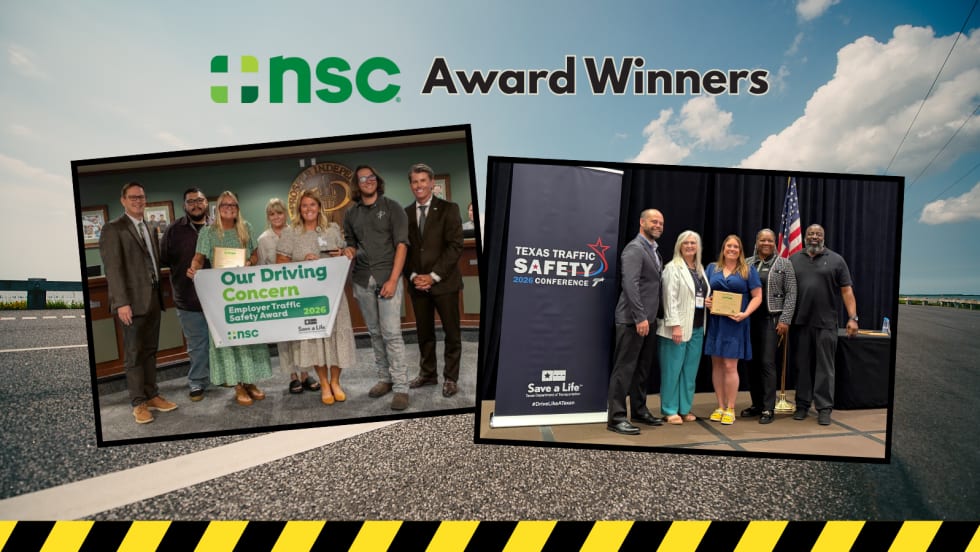
How Two Texas Districts Built Award-Winning Safety Programs
Learn how Prosper ISD and Rockwall ISD earned National Safety Council honors through hands-on training, safety culture, and strategies that reduced transportation incidents.
Read More →
NHTSA Releases 10-Year Review of Fatal School Bus Crashes
The latest federal analysis reinforces the safety of school buses while identifying where school-age pedestrians and other motorists remain most at risk.
Read More →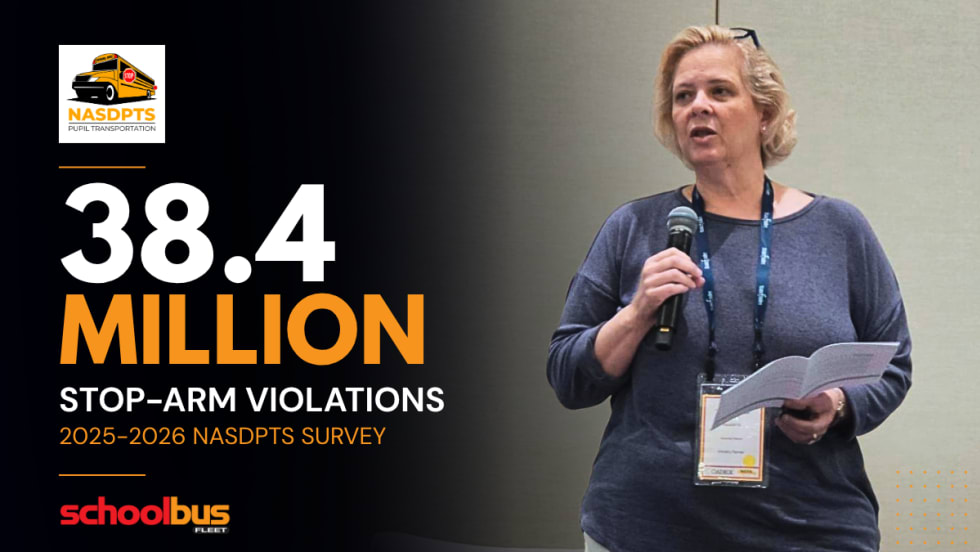
2026 NASDPTS Survey: Data Shows Further Reduction of Illegal Passing
New data is in! School bus stop-arm passings are down to 38.4 million violations per year, about a 2.3% decrease from last school year — but passings on the right side of the bus are higher than ever.
Read More →
Another School Bus Fatality Reported in Monsey, New York
A 7-year-old girl died after being struck by a school bus in Rockland County, New York while crossing the street. Here's what we know.
Read More →
NSTA Announces 2026 School Bus Driver International Safety Competition Winners
Drivers from across the U.S. and Canada showcased their safety and driving skills, with two defending champions successfully retaining their titles.
Read More →
The Driver Shortage Playbook
Driver shortages are still a major challenge for student transportation fleets, but the real issue has shifted. It’s no longer just about filling seats quickly. It’s about finding safe, reliable drivers who meet performance expectations and want to stay. The Driver Shortage Playbook covers why traditional recruitment tactics are falling short and how school fleets are adapting with smarter hiring, stronger retention strategies and a greater focus on driver quality.
Read More →
Pro-Vision Launches AI-Powered 360° Camera System
The new Birdseye camera delivers real-time AI-based pedestrian and vehicle detections, full visibility around the bus, and telematics integrations.
Read More →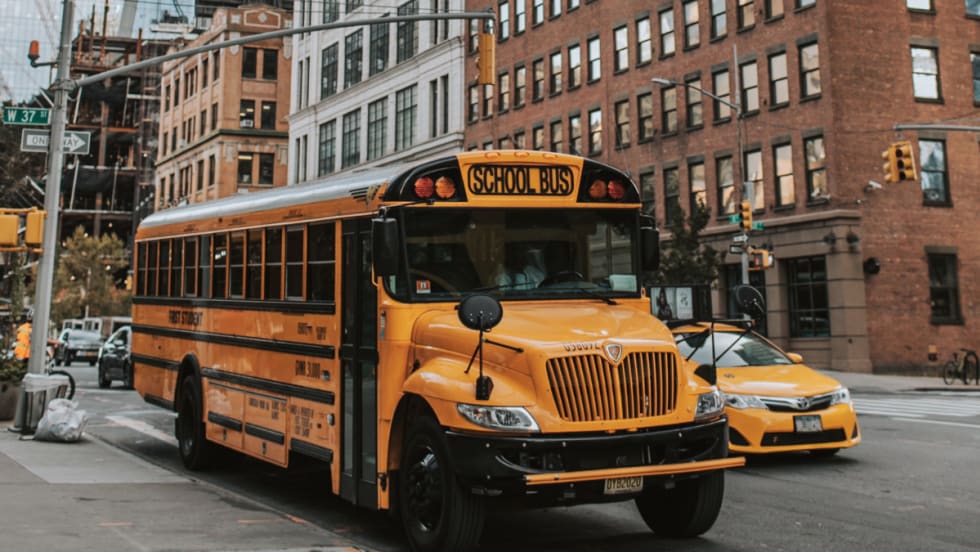
N.Y. & N.J. Coalitions Call for Modernized Transportation for Vulnerable Students
New statewide coalitions in New York and New Jersey are urging lawmakers to expand student transportation options for vulnerable students amid ongoing driver shortages.
Read More →
America Has a School Bus Passing Problem — and Distraction Is Making It Worse
Illegal school bus passing remains a major safety threat as distracted driving rises. This op-ed explores why awareness, enforcement, and stop-arm cameras matter more than ever.
Read More →
School Bus Laws to Watch: New York Delays EV Mandate
Plus, federal lawmakers seek new funding for school bus safety as states weigh stop-arm enforcement, disability protections, and education spending.
Read More →