



School bus officials cite concerns on flammability lobbying
Chemical companies are reportedly funding a nonprofit group that is lobbying state legislatures to adopt additional flammability standards for school buses. A new position paper from NASDPTS explains that the standards being proposed aren't suited for pupil transportation — and the industry's own national specifications are actually more stringent.

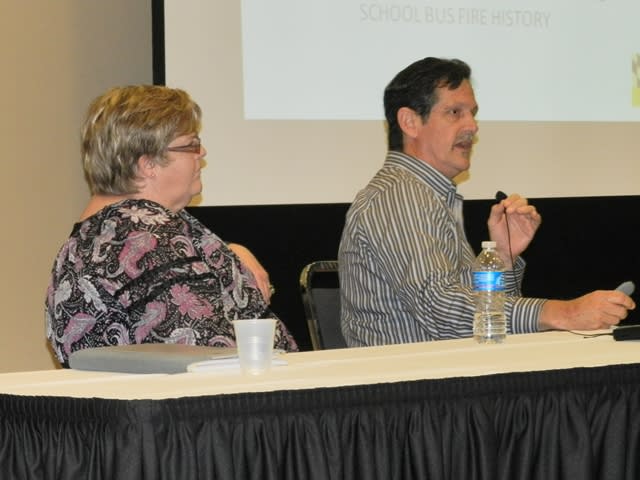
A NASDPTS position paper explains that flammability standards being proposed in lobbying efforts aren't suited for pupil transportation. Nevada state director Diana Hollander and Maryland state director Leon Langley have already contended with such legislation.
At the state pupil transportation directors conference on Saturday, an alarming development was discussed: Chemical companies are reportedly funding a nonprofit group that is lobbying state legislatures to adopt additional flammability standards for school buses.
A new position paper from the National Association of State Directors of Pupil Transportation Services (NASDPTS) explains that the standards being proposed aren't suited for pupil transportation — and the industry's own national specifications are actually more stringent.
The paper, developed by NASDPTS' School Bus Manufacturers Technical Council, details the fire-related federal standards that apply to school buses, including FMVSS 302 — Flammability of Interior Materials.
The paper notes that flammability standards are also included in the industry's National School Transportation Specifications and Procedures. A maximum burn rate is specified for floor covering, and passenger seats are to meet the criteria of the School Bus Seat Upholstery Fire Block Test.
One of the standards being proposed in the lobbying efforts — which Maryland state director Leon Langley and Nevada state director Diana Hollander have already contended with — is to require that school bus seats meet ASTM International Standard E1537, “Standard Test Method for Fire Testing of Upholstered Furniture.” But the School Bus Seat Upholstery Fire Block Test is more stringent and more reliable, the NASDPTS paper points out.
Another of the lobbyists' proposed standards, the paper explains, is to require that each plastic component in school bus engine compartments meets a V-0 classification when tested in accordance with the Underwriters Laboratories (UL) Inc. Standard 94, “Standard for Safety of Flammability of Plastic Materials for Parts in Devices and Appliances Testing.” But the chemicals that would be used to meet that standard could be problematic.
"In addition to major concerns regarding durability and performance of plastic components made to meet the UL 94 V-0 classification, there are also concerns with the chemicals that could be required to treat the plastics," the paper says. "Brominated Flame Retardant (BFR) chemicals are typically used to meet UL 94 V-0 classification, and it is unknown what effect these BFR chemicals could have on plastic components in the engine compartment environment."
At the NASDPTS conference, Bruce Miles, chair of the School Bus Manufacturers Technical Council, said that many of these flame retardant chemicals have been banned in Europe as toxins.
The position paper finds that neither ASTM E1537 nor UL 94 were developed for motor vehicles, "and there are significant concerns with the negative effects of these standards on pupil transportation."
NASDPTS and the technical council "do not recommend that these standards be used to govern flammability on school buses. For states and school districts that want enhanced flammability performance, we recommend adopting the School Bus Seat Upholstery Fire Block Test that is a part of the National School Transportation Specifications and Procedures."
The technical council suggests considering fire-suppression systems on special-needs buses, and both NASDPTS and the technical council support "required passenger evacuation drills that ensure students know what to do in the event of an emergency."
NASDPTS President Mike Simmons distributed the paper to association members on Friday, and he said that it will be available in the position papers section of the NASDPTS website.
"We felt that it was imperative to get this into the hands of our members as soon as possible," Simmons said.
More Safety
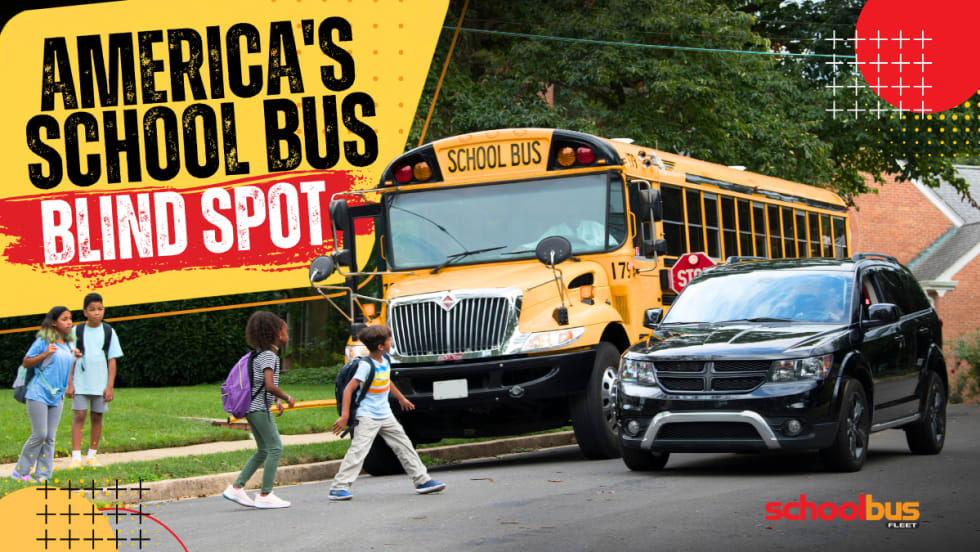
America Has a School Bus Passing Problem — and Distraction Is Making It Worse
Illegal school bus passing remains a major safety threat as distracted driving rises. This op-ed explores why awareness, enforcement, and stop-arm cameras matter more than ever.
Read More →
School Bus Laws to Watch: New York Delays EV Mandate
Plus, federal lawmakers seek new funding for school bus safety as states weigh stop-arm enforcement, disability protections, and education spending.
Read More →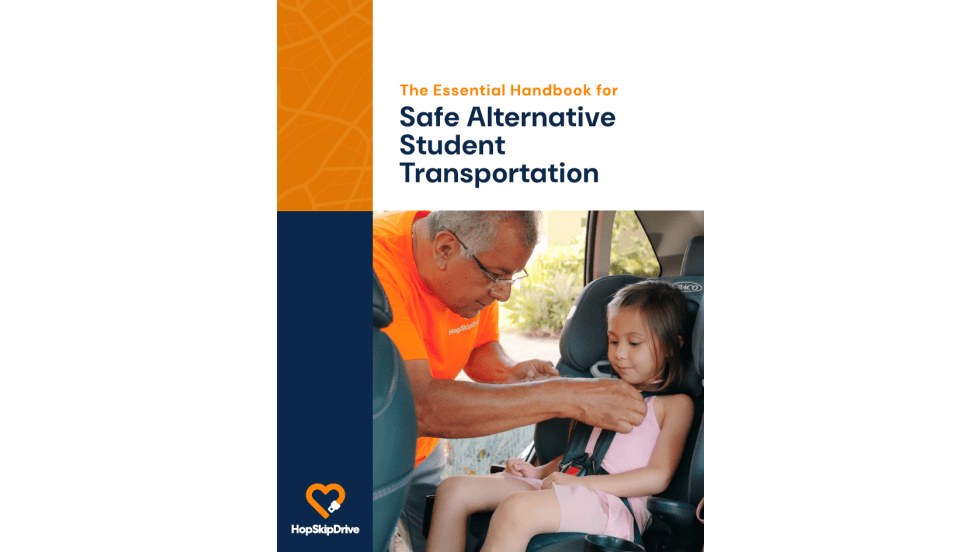
The Essential Handbook for Safe Alternative Student Transportation
Your district's "exception riders" — students with IEPs, those experiencing homelessness, foster care youth — deserve more than a middleman solution. This handbook breaks down exactly what to look for in a supplemental transportation partner: from driver vetting and regulatory compliance to proactive safety technology. Because getting a ride isn't the same as getting a safe one.
Read More →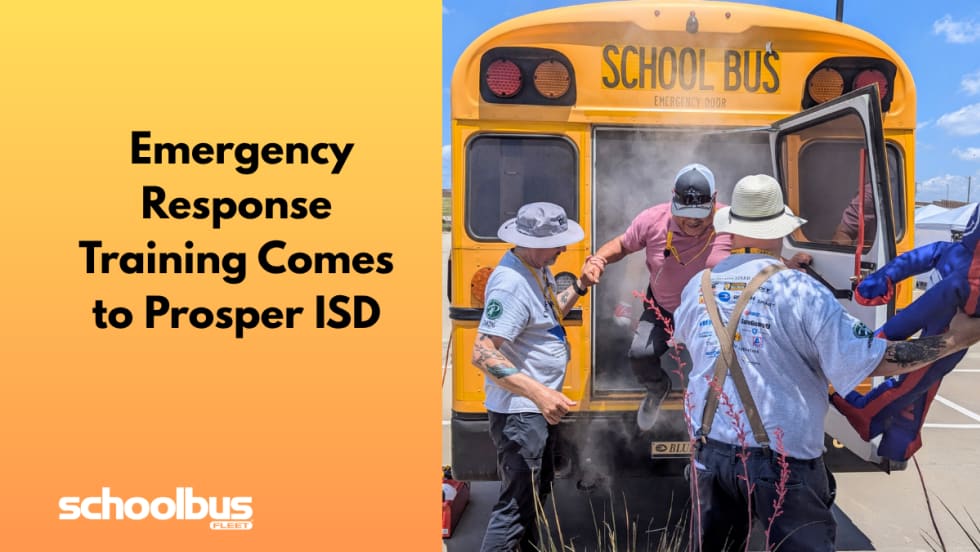
Operation STEER Brings Emergency Response Training to North Texas
Prosper ISD hosted the third annual training for transportation professionals across 67 districts to learn how to respond to emergencies, such as rollovers and evacuations, and proper use of safety equipment.
Read More →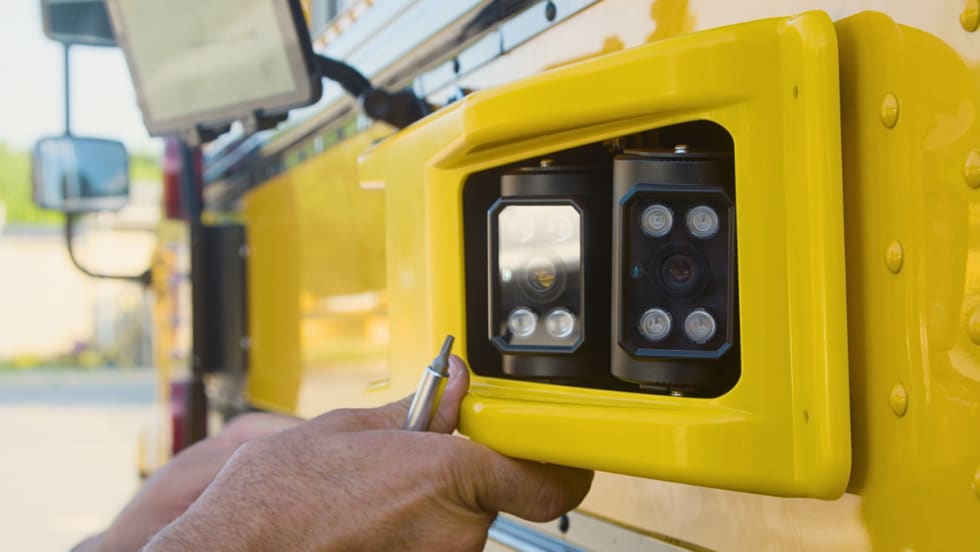
Florida District Relaunches BusPatrol School Bus Camera Program With New Safeguards
After being suspended over due process concerns, Miami-Dade schools and law enforcement are restarting the AI-powered stop-arm camera program with new oversight.
Read More →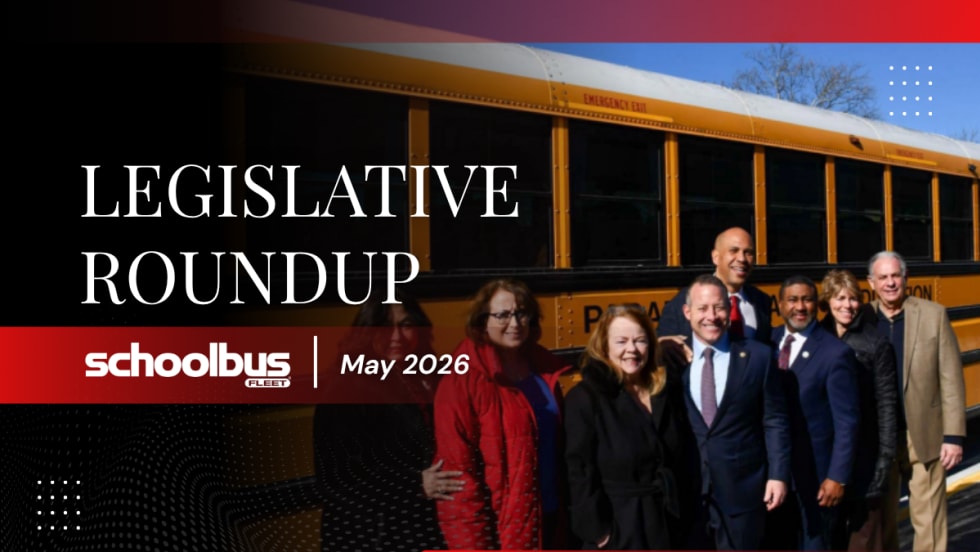
School Bus Laws To Watch: Seat Belt Bills, Funding Fights & EV Changes
From national bills on seat belts and driver oversight to driver awareness campaigns referencing “Finn’s Rule” and ongoing transportation funding debates in Alaska, here’s the latest in school bus legislation across the U.S.
Read More →
9-Year-Old Boy Killed by School Bus at Busy Brooklyn Intersection
A Williamsburg community is mourning after a child was fatally struck by a private yeshiva bus, prompting calls for urgent safety improvements at the high-traffic crossing.
Read More →
Does Reliable School Transportation Boost Attendance? EverDriven’s Data Says Yes
The new data shows 99.99% incident-free trips and strong on-time performance, reinforcing how dependable transportation, especially for vulnerable student populations, can help districts combat chronic absenteeism.
Read More →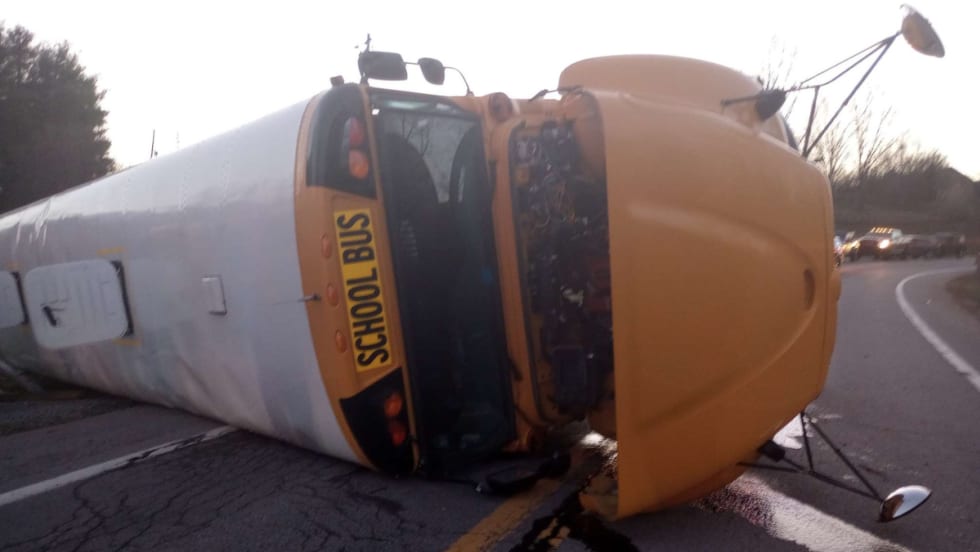
NTSB Calls for Alcohol Impairment Systems, Seat Belts After W.V. Crash Investigation
The federal agency's report asks NHTSA to require all new school buses to be equipped with vehicle-integrated alcohol detection systems and passenger lap-shoulder belts.
Read More →
2026 State of Student Transportation Report
Student transportation teams are being asked to do more with less, facing driver shortages, rising costs, and increasing safety expectations. This report uncovers how fleets are adapting, where technology is making the biggest impact, and why student ridership tracking is emerging as a top priority. Download the report to explore the key trends shaping 2026 and what they mean for your operation.
Read More →