



NYAPT testifies before state fiscal committees
The pupil transportation group cautions lawmakers to avoid money-saving measures that could compromise student safety. NYAPT also expresses qualified support for a "shared services" proposal, calls for a review of special-needs transportation costs, and proposes streamlining paperwork requirements.

ALBANY, N.Y. — In testimony before the State Senate and Assembly fiscal committees on Feb. 2, the New York Association for Pupil Transportation (NYAPT) called for a renewed focus on school bus safety in New York.
In a statement before the Senate Finance and Assembly Ways and Means Committees, NYAPT Executive Director Peter Mannella said, "the association's members recognize that the state's financial situation is dire and that extraordinary measures may be needed to correct that fact." He cautioned that "some measures might save money but might also compromise safety."
"In transporting 2.3 million children, we understand that we must find new ways to manage the costs associated with the school bus ride. However, we caution our state leaders to avoid steps that could compromise the safety of the children or that would unnecessarily result in increased burdens on parents and school communities. Rather, we urge a discussion of the various cost areas that affect transportation in order to moderate those costs with no impact on safety," Manella said.
In terms of specific provisions in the Executive Budget Proposal, NYAPT:
offered its support for inclusion in the governor's budget of $400,000 for the School Bus Driver Safety Training Program. The program, which has been in place since 1997, contributes significantly to school bus safety. NYAPT recommended that the Legislature institute new provisions that would make it possible for the State Education Department to expeditiously expend funds on urgently needed training;
expressed qualified support for proposals related to regional school transportation services. NYAPT urged the Legislature to set relevant evaluative criteria to gauge the results of a regional transportation demonstration program that would be overseen by the commissioner of education as well as regional models initiated by local schools;
expressed qualified support for a "shared services" proposal included in the governor's budget that would allow one district to sign onto a contract that another district has entered into with a private operator pursuant to a competitive bid. NYAPT supports the intent of the proposal but recommends it be time-limited, tied to special circumstances and not allowed to continue into a second school year;
suggested that the state should examine and address the factors that drive up the cost of transportation rather than advance regional systems. Even in a regionally-operated environment, there are factors that nonetheless drive up the cost of transportation. Among the recommendations from NYAPT is adoption of a standard school-year calendar that would limit the number of days on which school buses must be in operation when public schools are otherwise closed;
called for a review of the transportation costs associated with students with special needs, including students in special-education programs and students who are classified as homeless under the federal McKinney-Vento Act;
offered proposals for reducing costly mandates and streamlining paperwork requirements for school transportation.
"We are concerned that this small part of local school budgets is getting this kind of attention," Mannella said. "In reality, school transportation can be costly. But those costs are derived from the demands placed on school buses by the education system itself. We transport 2.3 million children each day, many with special needs, many with custom transportation needs. There is no way that is going to be inexpensive."
More Management
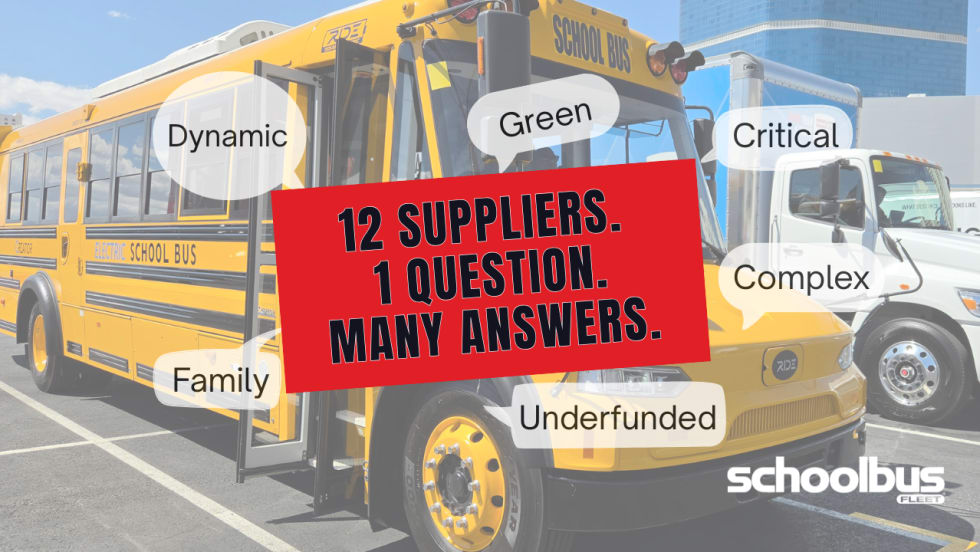
13 Industry Leaders Describe School Transportation in One Word
What word best describes the school bus industry today? We posed that question to over a dozen manufacturers, resulting in a revealing mix of perspectives on the challenges and opportunities ahead.
Read More →
Tyler Technologies Adds New AI, Transactions Leadership Roles
Two company executives are promoted to newly created C-suite positions to accelerate the company's long-term growth in both artificial intelligence and payments.
Read More →
Pro-Vision Acquires Convoy Technologies
The deal aims to broaden customer relationships and adds specialized vehicle video capabilities for commercial fleets.
Read More →


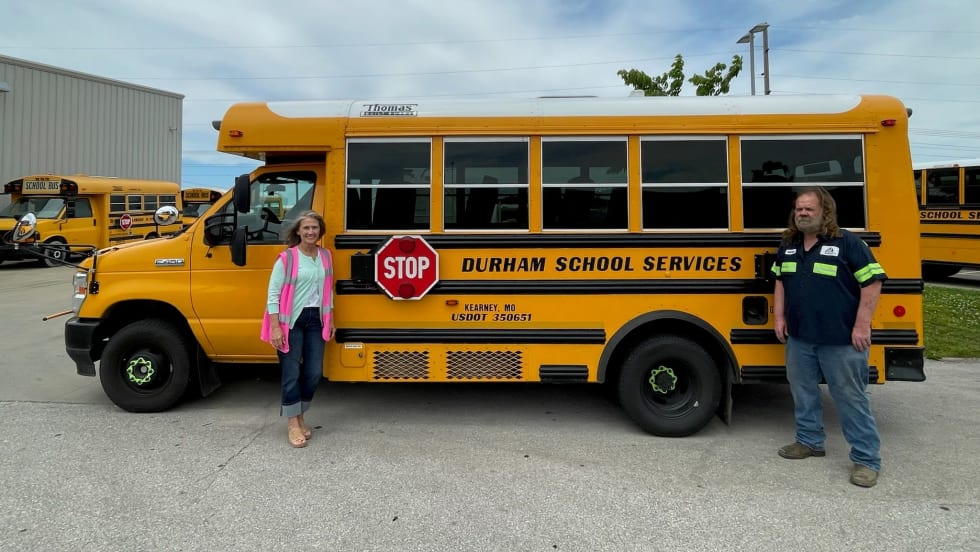
Durham School Services Maintenance Teams Earn Missouri Fleet Excellence Awards
Eight of the contractor’s school bus fleets achieved a distinction few maintenance teams earn during the state’s rigorous annual inspection program.
Read More →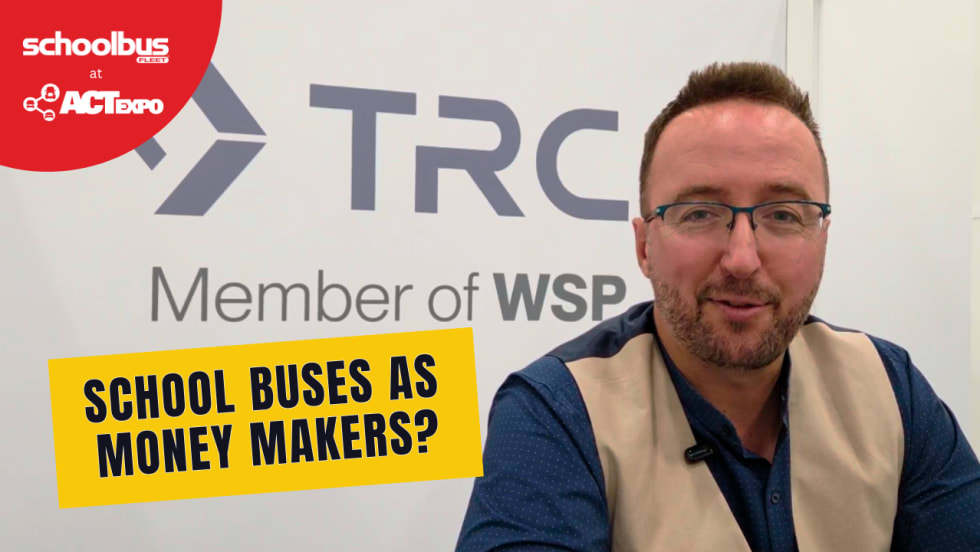
How Incentives, AI, and Energy Markets Are Reshaping School Transportation
Sit down with Joe Annotti of TRC Companies to talk district grant funding, utility challenges, AI, and why school buses are evolving from transportation assets into energy assets.
Read More →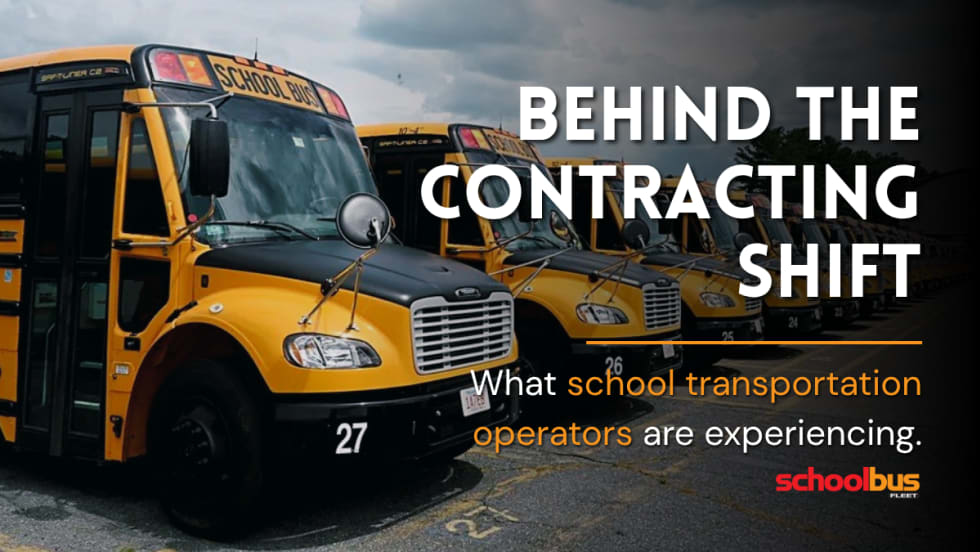
Inside the Contracting Shift: What School Transportation Operators Are Seeing Now
School transportation contractors weigh in on recent trends, costs, driver shortages, and the rise of multimodal student transportation.
Read More →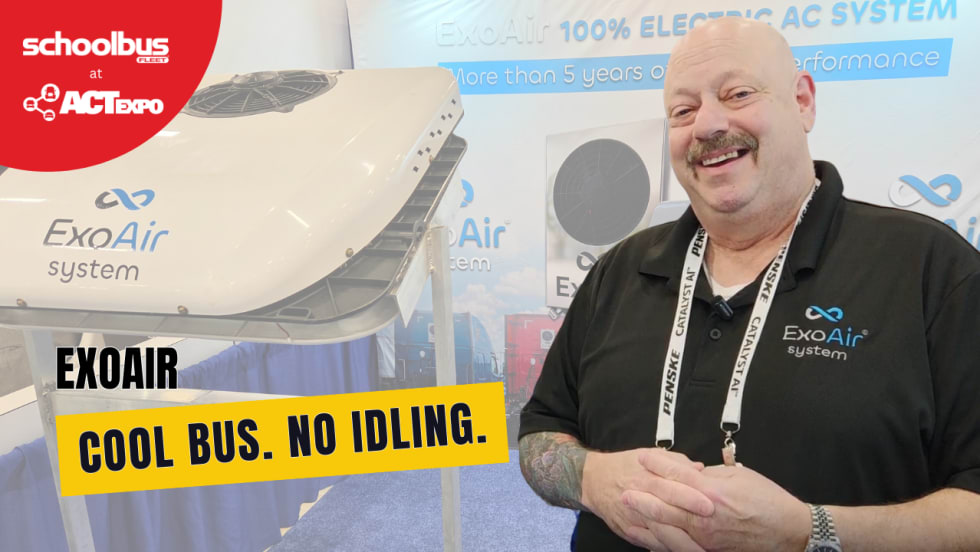
The No-Idling School Bus AC System
Take a peek at ExoAir Systems’ battery-powered cooling solution designed to run for up to 10 hours without the engine on, reducing fuel use and improving comfort for drivers and students.
Read More →
Geotab on Three Major Trends in School Transportation
School bus fleets are becoming more proactive than ever. From AI driver alerts to vehicle-to-grid opportunities, Geotab outlines the biggest technology trends transforming school bus operations.
Read More →
Gatekeeper Lands Major School Bus Deals as Revenue Surges
The video solutions provider announces contracts with Atlanta Public Schools and other fleet operators as it records quarterly revenue growth and expanding subscription business.
Read More →
Building Leaders Who Last: Creating a Successful Mentorship Program in Student Transportation
Discover five strategies for building an effective mentorship program to strengthen leadership development and support staff retention.
Read More →