




Hurricane Sandy: the impact on NYC's school bus fleets
Last fall's massive storm on the East Coast created a surge of challenges for student transportation in New York City, from flooded bus yards and offices to fuel and equipment shortages. Here's an overview of the crisis and how the city's Office of Pupil Transportation responded.
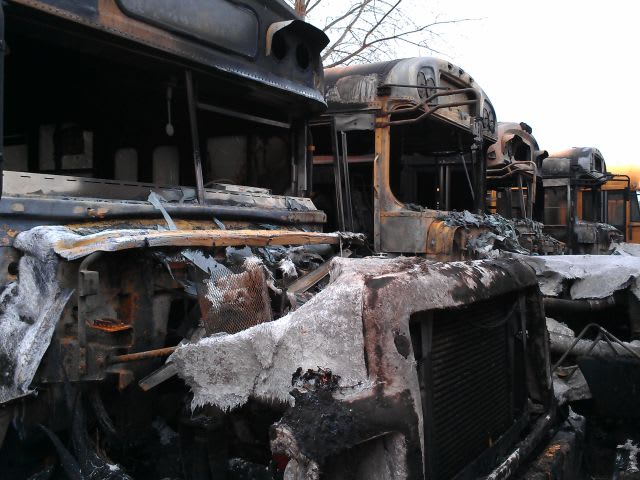
In some yards, buses were destroyed when salty floodwaters sparked vehicle electrical fires.
Photo by Sherry Concepcion
Hurricane Sandy made landfall near Atlantic City, N.J., on Oct. 29. As shown in the map using LiDAR satellite data, most of New York City’s (NYC) coastal areas experienced storm surge, significantly impacting almost all city services. Yellow school bus service was no exception. (Note: In the map legend, the blue areas indicate coastal areas inundated. The yellow dots indicate garages in the inundation area.)
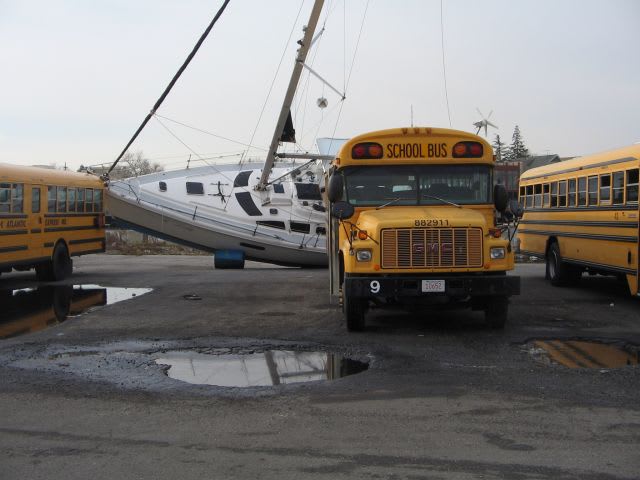
In Coney Island, boats from nearby marinas landed in bus yards. In the case pictured here, the boat’s bow pierced a bus, causing major damage.
Photo by Sherry Concepcion
NYC school bus service is provided by private vendors but is managed by the Department of Education’s Office of Pupil Transportation (OPT). As part of the city’s storm preparation, OPT sent management and staff to the Office of Emergency Management to assist in mobilizing hundreds of these buses to evacuate citizens in low-lying areas to shelters. Then the city, and the bus fleets, waited for the storm to pass.
Flooded facility
When the waters receded, OPT began damage assessment. Of immediate concern was damage to OPT’s facility, which sustained serious flooding.
According to OPT Executive Director Alexandra Robinson, more than 7 million gallons of water were pumped from the bottom of the Department of Education’s OPT building.
This extensive flooding and associated electrical problems forced OPT to relocate its more than 200 employees to other city facilities in the weeks following the storm. Access to critical network systems and equipment used for routing, geographic information systems (GIS) and the customer service call center had to be quickly reassembled and performed remotely.
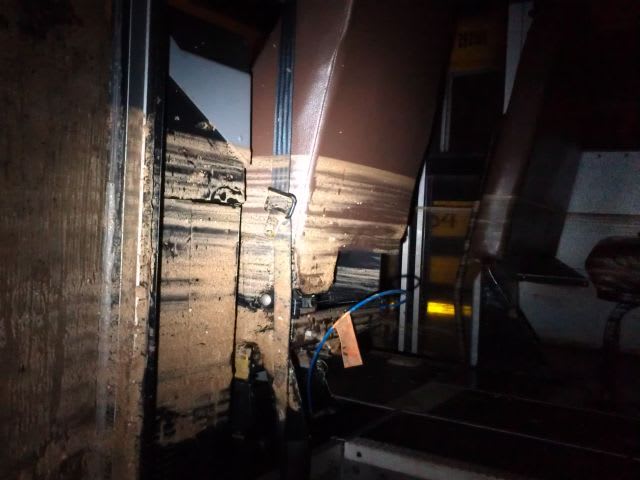
This photo shows the high water line inside a school bus.
Photo by Sherry Concepcion
Bus yards inundated
At the same time, OPT had to assess damage to bus vendor assets.
Unfortunately, nearly one-third of the school bus yards used by NYC’s private bus contractors were located in the inundation area. Vendors that hadn’t moved their fleets to higher ground suffered significant losses.
According to Robinson, “one of NYC’s largest contractors lost more than 250 buses, but many companies, big and small, sustained vehicle damage in the hundreds. Many vendors also suffered extensive damage to their offices, fuel tanks and critical operational systems.”
Two areas of Brooklyn with a large number of bus yards — Red Hook and Coney Island — experienced severe storm surge and long-term power outages.
In Red Hook, 10 yards (used by 17 different vendors) were flooded. In Coney Island, nine yards (used by 13 different vendors) were also swamped. Further complicating recovery in Coney Island were thick layers of beach sand deposited across the yards by the receding surge waters.

Damaged underground fuel tanks in many yards exacerbated citywide fuel shortages.
Photo by Sherry Concepcion
Surge in service demand
OPT also had to contend with issues beyond fleet and yard damage. Although schools reopened on Nov. 3, more than 77 school buildings remained closed due to flood damage, electrical failure or accessibility issues.
Students from these schools who had previously used the now-crippled public transit system to get to school suddenly required yellow school bus service for the first time. With many companies struggling just to provide service to their previously contracted routes, approximately 21,000 additional students from closed schools now required service to alternate sites.
Though the bus vendors rallied their resources to service much of this increased demand, OPT also utilized private coach services in some areas.
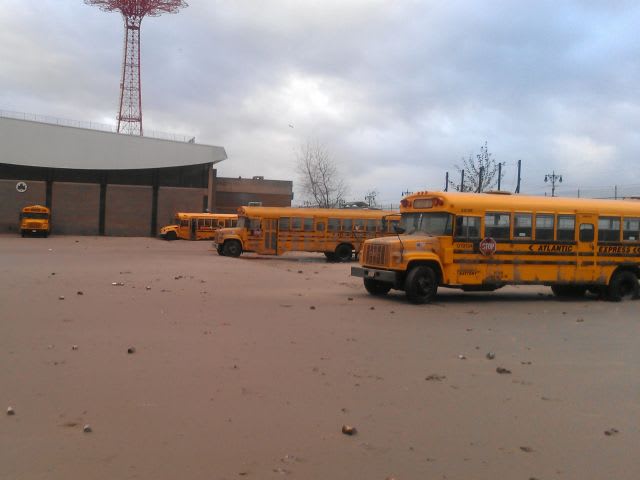
Yards in Coney Island suffered from beach sand deposits, which damaged facilities and equipment and required cleanup before the yards could be used again.
Photo by Sherry Concepcion
Fuel shortage
Finally, fuel became a critical issue. All of NYC struggled with a serious gasoline shortage following the storm.
Although many bus yards have underground fuel storage tanks, most in the inundation areas were destroyed by salt water. For these companies, this meant that even yards able to regain electrical power and clear away debris were still unable to fuel their fleets.
To deal with the citywide fuel shortage, NYC used a decommissioned airport (Floyd Bennett Field), managed by the National Guard, as an emergency fueling station for critical service vehicles, including school buses.
Quick response
In a remarkably short time, NYC’s yellow school bus service was up and running.
“We’re proud of the work done by OPT in response to Hurricane Sandy,” said Eric Goldstein, chief executive of the Department of Education’s Office of School Support Services, which oversees OPT. “Both staff and management worked diligently to re-route closed schools, find alternate assets to replace damaged and destroyed fleets, and even served as volunteers at shelters, all while assisting parents and school administrators in adjusting to a radically altered school bus environment.”
Kevin Jenkins is a GIS analyst for the New York City Department of Education, Office of Pupil Transportation.
More Disaster Response
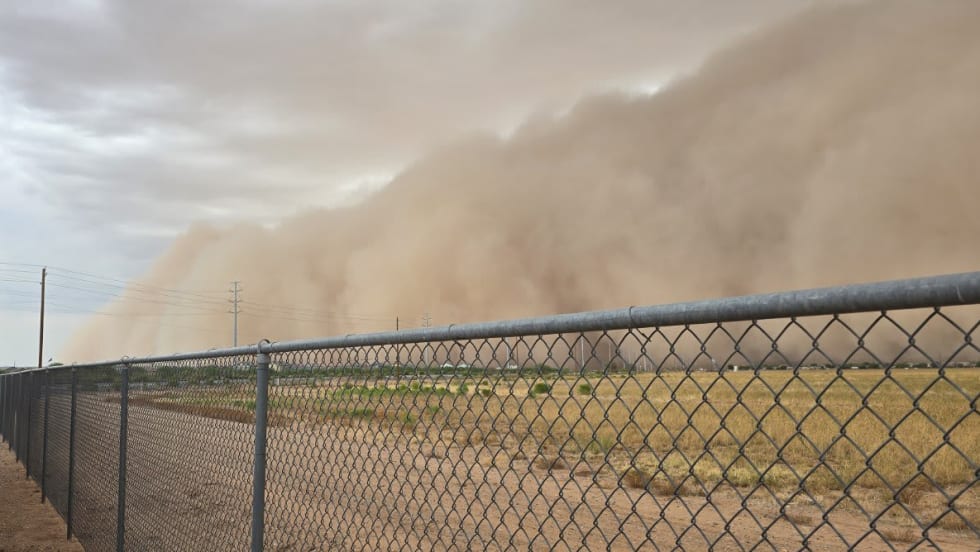
School Bus Safety & Severe Weather: Florence USD’s Monsoon Response
A late-fall monsoon tested Florence USD’s emergency preparedness. Here’s how training, communication, and teamwork kept 2,700 students safe.
Read More →
Lessons Learned from Hurricane Helene for School Transportation
How student transportation became both a service and a signal in community recovery.
Read More →
What To Do When Natural Disaster Strikes: Tips & Stories from School Transportation Teams
Mother Nature sometimes has her own plans, and transportation teams must be ready to fight back against whatever disaster she has in store. Review best practices for emergency preparedness and learn what others advise from recent experience.
Read More →
School Bus Driver Navigates Choir to Safety During Tornado Outbreak
DS Bus Lines driver Roger Smith was transporting 30 students from Piper High School in Kansas City, Kansas to a choir competition in Wichita, nearly three hours away, when they found themselves in the middle of a severe weather outbreak.
Read More →
Louisiana Fleet Finds Opportunity After Flooding
Following a 2016 flood that devastated the state, East Baton Rouge Parish Schools saw a chance to replace its damaged diesel buses while shifting to a propane fleet.
Read More →
School bus drivers take students to shelter during tornado
Many of Harrison County (Ky.) Schools' buses were in a tornado warning area, and the bus drivers safely took students inside nearby buildings.
Read More →
District honored for school bus routing after tornado
The transportation department at Missouri's Joplin Schools receives the 2014 Public Sector Excellence Award from Tyler Technologies for its creative use of the Versatrans transportation management system following a May 2011 tornado, including identifying students affected by the disaster and creating new routes around the damaged areas. Two more school districts are among the seven other award recipients.
Read More →Florida buses brake for hurricane season
The first day of school came late for many Florida school districts as hurricanes swept through the state last month.
Read More →Be Prepared for the Unexpected
Unexpected phenomena such as riots, strikes, tornadoes, earthquakes, snowstorms and other natural disasters can pose a threat to your operations. Here's how to prep.
Read More →How to Navigate Your Fleet Through Disasters
Coordinated plans — rehearsed in tabletop and actual simulations — ensure that school bus operators can handle nature's nastiest surprises.
Read More →