




Alex Robinson builds training in NYC, partnerships at NAPT
Two months after becoming president of NAPT, Alex Robinson began running the largest school district transportation department in the nation in December 2011. Since then, her staff at the NYC Office of Pupil Transportation has undergone more than 40 hours of training, and NAPT has grown its connections to relevant organizations around the globe.

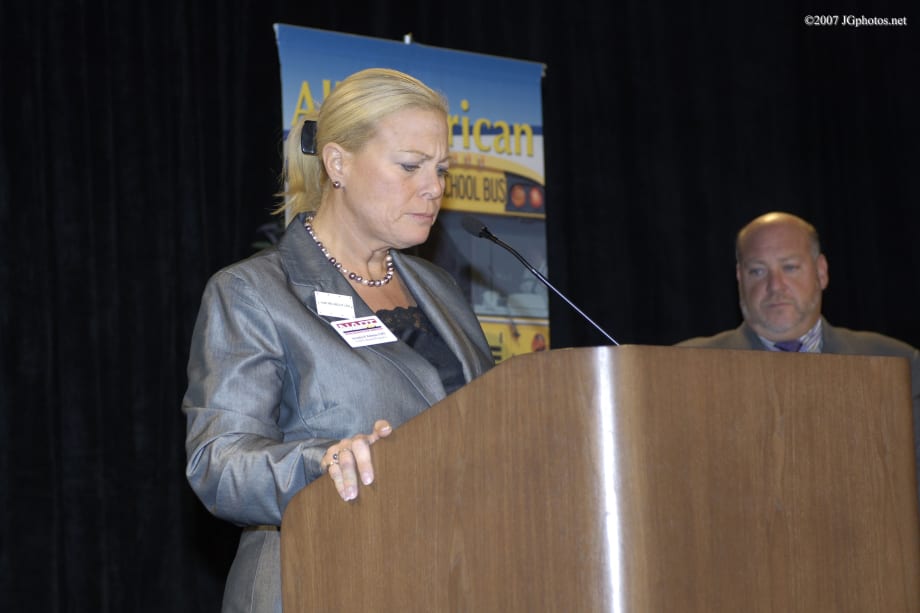
Regarding pupil transportation in New York City, Alex Robinson says that "driving, routing and picking up within huge, complex traffic patterns is difficult. But we do it very safely."
unknown nodeIn the last few months of 2011, Alex Robinson began tenures in two of the most high-profile positions in the school bus industry: president of the National Association for Pupil Transportation (NAPT) and executive director of the Office of Pupil Transportation at the New York City (NYC) Department of Education.
The latter job brought Robinson, previously a longtime director of transportation in California, back to the East Coast, where she began her career in pupil transportation.
With the NYC Office of Pupil Transportation, she oversees a vast urban system of more than 8,000 school buses (all contractor owned) that transport a highly diverse population of about 171,000 students daily.
Now in the second of her two-year term as president of NAPT, Robinson says that the association has been branching out to be “more in the realm of being connected to the classroom than we were before.”
SBF Executive Editor Thomas McMahon recently spoke with Robinson about her noteworthy efforts in both roles.
SBF: When you started in New York City as executive director of the Office of Pupil Transportation, what were your first orders of business?
ALEX ROBINSON: The first piece was to make sure that people who weren’t traditionally in the business got to the point where they understood school transportation. Not that many people here had actually worked for a bus company or driven a bus.
So it’s a lot different than the way people come up the ranks in other districts. Because it’s completely contracted, it’s removed from that daily operation piece that I was used to.
Then there was making sure that people not only understood how transportation impacts students — especially all of the students with disabilities we transport — but also how it’s connected to the classroom. And we needed to provide training for that.
So we went full force here, and everybody was on board, with training, training, training: everything from special education 101 to routing 101 to customer service to everything else. Everybody is always putting out fires here, so training hadn’t been a big piece of what they did on a daily basis.
Were you doing most of that training yourself, or did you bring in other people?
We brought in some, and I’ve done a lot of it myself. We brought in Bill Arrington from the Department of Homeland Security. Everybody here has had First Observer and has been trained on security issues.
Since you started?
Yes. I also brought in Sue Shutrump [Trumbull County (Ohio) Educational Service Center] to certify all of our inspectors in NHTSA child passenger safety for car seat training. They went through the eight-hour class.
We brought in Joe Scesny, who used to be with the New York Department of Transportation. He came in and gave our investigators and our inspectors an all-day safety and inspection training class.
We brought in Bill Tousley from Michigan [Farmington Public Schools], who did a routing/get-to-know-the-city challenge with all of our borough directors and all of our borough operation routers.
We’ve done psychological first-aid training with all of our customer service and operations people.
How many hours would you say have gone into it?
So far we’ve had definitely more than 40 hours of training. Since January [2012].
[PAGEBREAK]Any other big changes you’ve made there so far?
I don’t know that it’s a change, but I’ve made a point to meet with all of our bus vendors on an individual basis to make sure they know that I have a background in transportation and I care about the operations piece.
I think the other part is that people are less likely to try to run a transportation department from behind their desk. Rather, we have account managers and routers now out in the field visiting the schools, following buses, riding buses — things that they really didn’t have time to do before. We really tried to restructure.
So it’s probably a lot more hands-on than they were used to. But everybody has been, I must say, very open to getting the training and very amenable to learning new stuff. Especially when it comes to special education.
We’ve done a lot of behavior management training and a lot with characteristics of disabilities, why we transport per the law and legal issues with transporting students with disabilities. So I hope it’s a welcome change.
The other big thing that has happened since I started, although it’s not as a result of me: They were already in the process of doing a pre-K bid when I got here, and we’ve now implemented the new bid structure for transporting early intervention and pre-K.
We had kind of a rocky start of school — not with school age, but with pre-K — and that’s been quite a challenge. But people here work very hard. It’s very common to have people work 13, 15 hours a day. It’s a lot.
So was the Office of Pupil Transportation not doing pre-K transportation before?
Actually, many years ago, the pre-K and early intervention was done by the Department of Transportation in New York. The Department of Education took it over several years ago, but it hadn’t been bid. So we bid in kind of a zone structure for the first time.
Our department is actually aligned by borough. We had already been doing the transportation, but this was the first time it had been bid in a while. So it’s an effort to be more efficient and to save money.
We’ve had several hiccups along the way, but we’ve had a lot of really good things happen. I think it was a very smooth opening for school age.
Tell us more about how the department is aligned by borough.
All of our offices are in Queens, in Long Island City. We have a huge building — it’s 35,000 square feet of office. And in each borough, there’s a borough director, an account manager and routers. They’re responsible for everything that goes on in that borough.
We also have an account manager specifically over our yeshivas — the Jewish schools — who works directly with them. We actually have a rabbi who does that.
Unlike other school districts, we transport for all private, parochial and non-public schools. So we do all of the Catholic schools, Greek schools, Islamic schools.
We also transport out of borough for special ed. So we transport students to Westchester County, Connecticut, New Jersey, and Nassau and Suffolk counties in Long Island.
Any other ways it’s different from previous jobs you’ve had?
It’s challenging because there’s a lot of control we don’t have. I can’t go outside to the parking lot and say, “There’s still kids standing. Go send a bus.” Because I don’t own the buses.
Also, it’s so condensed. There’s very little suburban. It’s all urban, except for maybe Staten Island. So I think that part is a little different. Driving, routing and picking up within huge, complex traffic patterns is difficult. But we do it very safely.
And I guess I thought that the largest transportation operation in the country would be the most progressive. But in many cases, because there’s so much history and policy ... it’s not as progressive as I thought. We have a long way to go.
So that’s one of your goals, to make the office more progressive?
Right. And more in line with the best practices of the school transportation industry.
[PAGEBREAK]What were the most significant developments in your first year as president of NAPT?
Probably our ability to partner with others. We have an exciting partnership with the United Arab Emirates [UAE] and the Dubai Roads and Transport Authority [RTA]. And we hope to work more on global awareness when it comes to school transportation.
It’s been my hope throughout that if school transportation and who we transport is important in the United States, then certainly sharing with other countries our knowledge of how to do things well is important. Granted, we’re the National Association for Pupil Transportation, but we’re really the ‘International Association.’
[NAPT Executive Director] Mike Martin has been able to represent us in China, with the World Bank of China. We have the partnership now with RTA in the UAE. And we’ve developed an exciting partnership with Easter Seals Project ACTION [Accessible Community Transportation in Our Nation]. We’ve also continued our strong relationships with NASDPTS and NSTA. Being able to partner and to look more at the global picture is very exciting.
Also, we’ve looked carefully at the budget. I’m excited about the bylaws amendment that we put in for restructuring of the board and not necessarily having the directors at large anymore, because our region directors are there. Plus, our president and vice president really should be those directors at large. So I’m hoping that will be very successful.
Also, I think the special-needs endorsement has worked out really well. Linda Bluth [immediate past president of NAPT] had a lot to do with that and pushing that forward.
We’re really strong with our online training now. So many people had asked us for years to get everything online. So I think we’re more visible now.
NAPT is a lot more than just a conference. We’re trying to make sure members hear from us.
Tell us about the partnership with Easter Seals Project ACTION.
They work closely to come up with projects that include travel training, using both city and school buses, for students with disabilities. The goal is that as the school bus ride is certainly the beginning part of a child’s life, the travel training that we provide as it connects to the classroom as kids get older, and how we transition kids, is important. And Easter Seals Project ACTION is all about that transitioning.
They work very closely with the Council for Exceptional Children and a lot of the paratransit associations, so we’re going to be working with them as well.
Then the other thing is the partnerships we’ve been able to form with GLSEN [Gay, Lesbian and Straight Education Network]. We’re now an educational partner with GLSEN. And there’s the work we’ve been able to do with the Office of Safe and Drug-Free Schools [at the U.S. Department of Education] and the bullying prevention networks.
Mike has been able to represent us in D.C. with huge success in a lot of arenas where transporters weren’t always included.
We also worked closely with the producers of the “Bully” project — the movie that came out. With things like that, we’re trying to branch out more so we’re more in the realm of being connected to the classroom than we were before. And Mike has really been instrumental in a lot of those connections in D.C.
Any new initiatives for the second year of your term?
Well, we’re going to continue working very closely with our global partners.
We’re going to, I hope, continue to push forward with our KPI [key performance indicators] project. We’ve had a very strong committee this year that has worked with developing the KPI structure for our industry.
We are working very closely with a brand new fleet advisory committee that will be taking a look at bus fleets, specifications and industry norms throughout the country. And that committee will be working closely in preparation for the next NCST [National Congress on School Transportation].
We hope to expand and/or continue our special-needs endorsement. Plus, I think we need to get more membership involvement so we have a succession plan. We need people to run for office, and we need them to take action to become involved.
One of the things we did with the LED [Leading Every Day] Initiative at the Summit this year was to talk very seriously about grassroots efforts and how you make them happen. How do you, a school district, state association or local transportation club, get initiatives passed? And how do you lobby for yourself?
We’ve done very well in California with the ability to turn the budget around and avoid the transportation trigger cuts. CASTO [California Association of School Transportation Officials] is very good at that. So we need to use that example to get others in the industry to be grassroots instigators.
What’s happening with the KPI project?
The KPI project group presented a strand of sessions during the Summit. They have lots of subcommittees, which meet weekly. We actually hired a consultant to help with the project itself, and they have conference calls weekly.
The goal will be to really have a strong metrics report card that districts can use when all is said and done. That has been all-consuming for that committee. They’ve worked really hard.
More Management
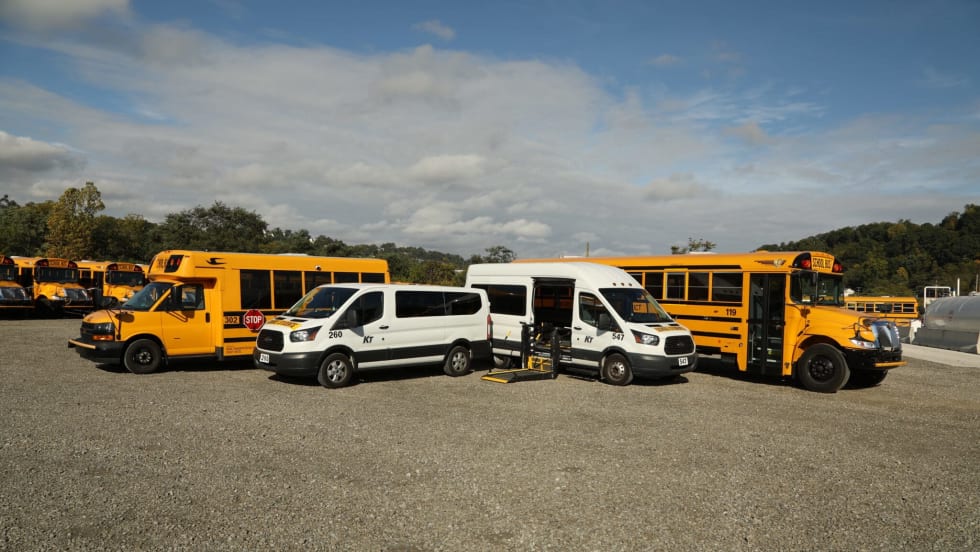
American Student Transportation Partners Acquires AJ Myers and Sons
A new deal brings a 75-year Pennsylvania student transportation provider into one of the nation’s largest private school bus contracting groups.
Read More →
What I Brought Home From SBFX: Relationships, Leadership, and Preparing What's Next
Who could lead your transportation operation tomorrow if you couldn't? Bernando Brown explores succession planning, mentorship, and preparing emerging leaders to step up.
Read More →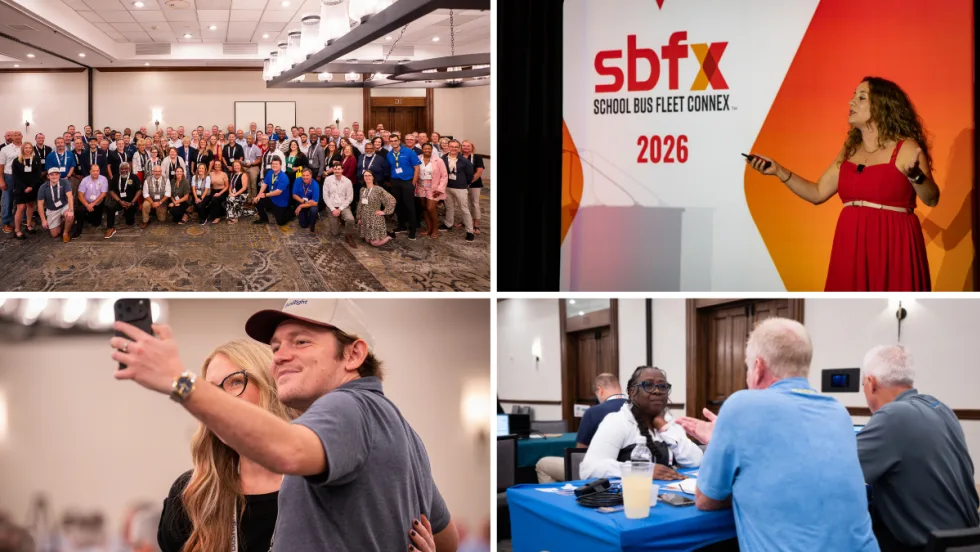
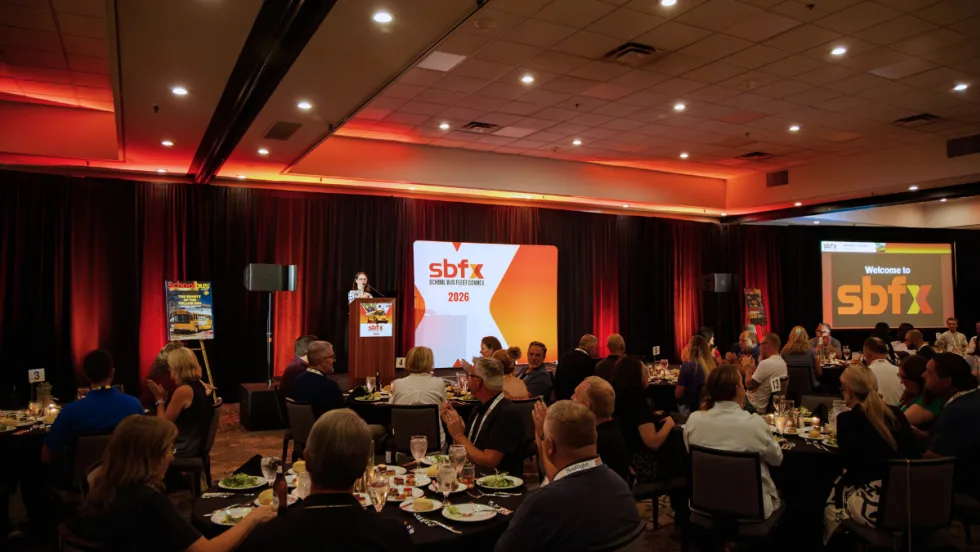
Inside School Bus Fleet ConneX 2026: Industry Leaders Connect in Scottsdale [Photos]
See highlights from SBFX 2026 in Arizona, where school bus operators and suppliers gathered for meetings, education, networking, awards, and more.
Read More →
School Transportation’s Biggest Pressures and Opportunities: SBFX Attendees Weigh In
School bus operators point to rising costs, staffing, and vehicle prices as immediate pressures while identifying technology, training, and routing as opportunities for growth.
Read More →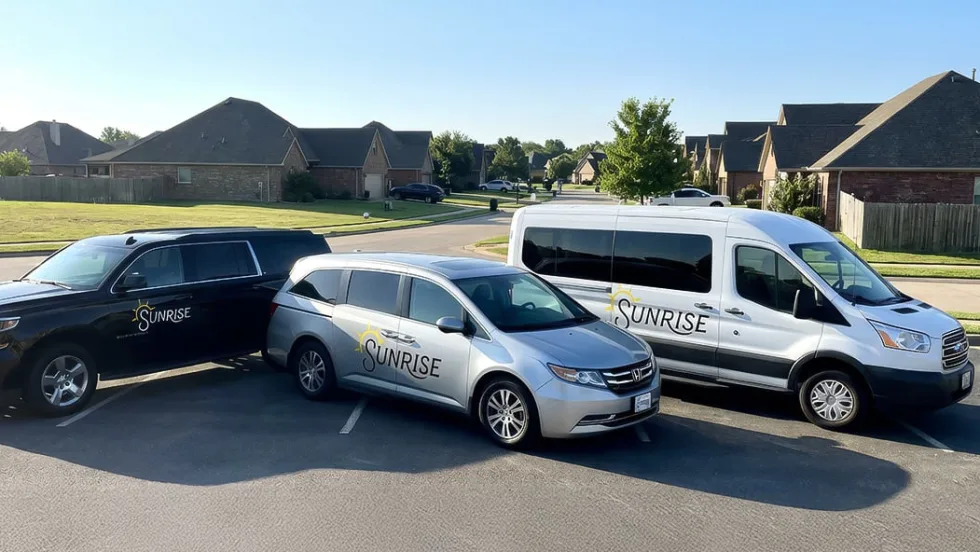
STA Acquires Sunrise Transportation
Student Transportation of America expands in Illinois and Connecticut through Sunrise's fleet of nearly 1,000 vehicles.
Read More →
EPA Opens $180M DERA Funding Round for Diesel Upgrades
The 2026 Diesel Emissions Reduction Act program seeks applications from eligible organizations to accelerate the retirement of legacy diesel vehicles.
Read More →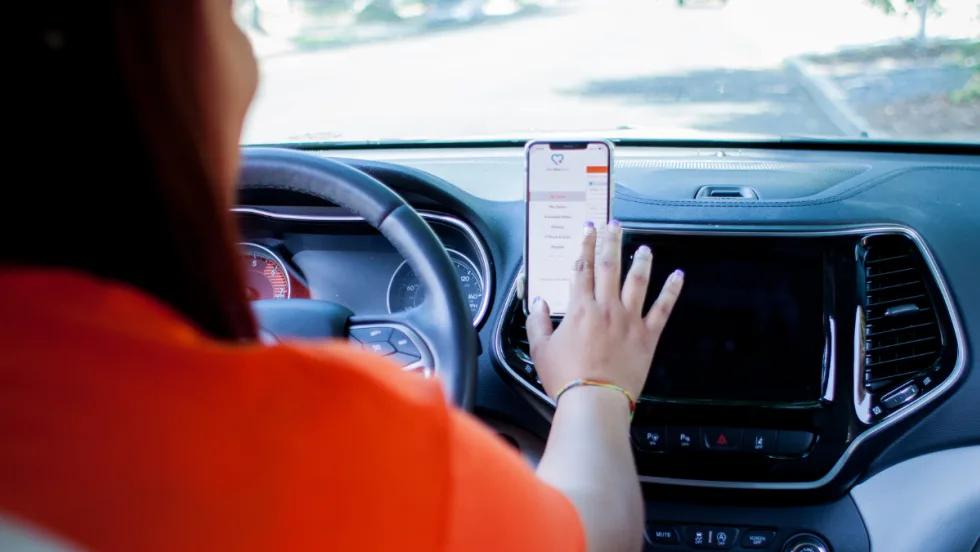
HopSkipDrive’s CareEngine Targets the ‘Exceptions’ in Student Transportation
The new platform works alongside districts’ existing transportation management systems to coordinate specialized rides, automate last-minute changes, and turn ride data into operational improvements.
Read More →
The Right Ride for Every Student: Navigating the New Student Transportation Ecosystem
How should districts blend school buses with small-vehicle transportation and other options? EverDriven CEO Mitch Bowling discusses safety, costs, partnerships, and strategy.
Read More →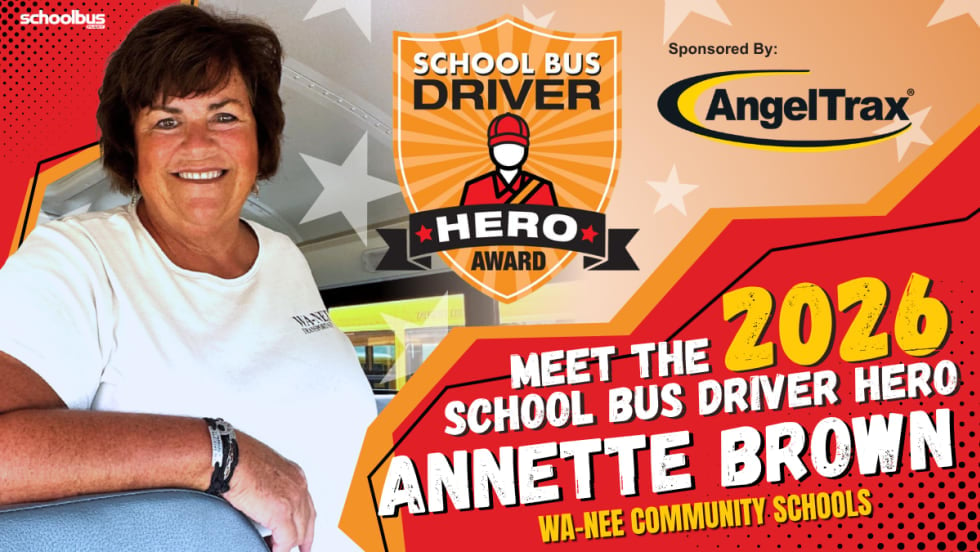
Annette Brown Always Takes the Extra Time: Meet Our 2026 School Bus Driver Hero
For more than 30 years, the Wa-Nee Community Schools driver has treated students like family, combining safety, compassion, and servant leadership to make a lasting difference on and beyond the school bus.
Read More →
How to Build a Better Driver Training Program
Ready to boost up your school bus instructor training? Here’s how to pick the right talent and improve recruitment, retention, and safety.
Read More →