




4 tips for defusing difficult people
Pupil transportation leaders often have to meet with angry people. Staying calm, being respectful, and listening carefully and actively can go a long way toward resolving conflicts.

Listening intently is the key to dealing with any upset person.
Photo: School Bus Fleet
Have you ever noticed how personnel in large department stores effectively deal with merchandise returns?
The reason they are often successful is they have been trained on how to deal with difficult people and solve problems. Regrettably, many pupil transportation leaders — who routinely have to meet with angry and upset people — have not received this type of training.
Some would say that meeting with difficult people "comes with the job." While that is true, there are effective strategies that work well in defusing conflict and solving problems.
Below are simple tips, traps and to-dos that are effective when conducting a meeting with individuals who are disturbed about something related to pupil transportation.
I have a copy of these tips, traps and to-dos on a 3x5 card on my desk, and I discreetly glance at them when dealing with people who are upset about some issue. They work!
1. Show confidence, stay calm
Keep in mind that calm is strength and anger is weakness.
Try to project a "Three Fs" demeanor: firm, fair and friendly.
When you are calm, the angry person sees you as being controlled, respectful and willing to listen. At the start of the meeting, look him directly in the eye and ask him to introduce himself by extending your hand and smiling.
If possible, sit on the side of the desk with the person who is upset. When you sit behind your desk, it sends the subtle message that you are in control and he isn't.
The angry person is often surprised when you remain calm and professional. Resist becoming defensive at the start of a meeting. It is not productive if you try to convince the angry person that you are correct. Furthermore, avoid saying the first thing that comes to your mind - the result can be a loss of focus on resolving any conflict.
Convey to the other person that you are not taking his criticism personally; rather, you are sincerely interested in solving the problem. Remember: Usually the upset person is not angry at you; he is upset with an event and wants to be heard by someone in authority.
2. Be respectful
If you treat complaining people with disrespect, they often will treat you the same way. Do not allow profanity, and don't argue. Arguing is like a Chinese finger puzzle - the more you pull, the tighter the puzzle becomes. It is important to not fall into a power-play trap.
During the meeting, if the complainant becomes belligerent, physical or abusive, tell him calmly that his behavior is unacceptable and the meeting will have to be rescheduled at a later date. When threatened by a lawsuit, I merely hand the person the school attorney's business card and terminate the meeting.
3. Listen carefully, take notes
Tell the person that you will take notes during the meeting so that you can fully understand all of the facts related to the issue he is concerned about. Note-taking sends a powerful signal to the other person that he is being heard and that you are committed to hearing his concerns.
The simple act of writing down the person's concerns can sometimes go a long way toward the resolution of a conflict. Allowing him to view the notes as they are being drafted on a computer screen is highly effective in bringing a sense of purpose to the meeting. At times, I give the complainant the opportunity to read the notes and add anything that was left out.
4. Communicate by actively listening
Listening intently is the key to dealing with any upset person. Listen to what he is saying, not how he is saying it.
It's important to demonstrate to the other person that you are actively and sincerely listening to his concerns. Speak softly, and ask clarifying questions such as, "I want to be clear on this: You are stating that ... ."
Don't fall into a trap of thinking that you are really listening while in fact you are thinking about how wrong the person is and how you are going to respond. Below are communication tips that promote meaningful and productive communication with a person who is upset about some transportation issue:
Resist interrupting. If you interrupt, it should only be to clarify something that has been said. Never interrupt so that you can make a point. This is easy to say, but difficult to do!
Avoid explanations. Explanations that you give at the beginning of a conversation can be perceived as arguing or escaping the issue that the difficult person is concerned about. In the mind of the complainant, you are saying, "If you knew the facts, you would quickly see that I am right and you are wrong!" There is a time for explanations of transportation rules, procedures, regulations, etc., but it should not be at the start of a conversation with an angry person.
Paraphrase the concerns. Acknowledge concerns by saying things like, "If I understand correctly, you are concerned about ... ." If you determine that the concern is valid, it is appropriate to say, "I can certainly understand why you feel the way you do. What can I do to help?"
Summarize the facts. Summarizing the facts that have been discussed in the meeting suggests to the other person that you really do understand his concerns and that you have really thought about what he has said.
Ask what the person would like. Toward the end of the meeting, it is important to ask the upset person, "What do you think we should do to solve this problem?" This question sends a strong message that you are interested in a workable solution to the issue in question. Often, the question does result in the difficult person proposing a workable solution. It is important, however, to avoid making promises unless you can keep them.
Say you will call or e-mail. If you need time to address any concerns, it is appropriate to defer action to another time by saying things like, "I don't have an answer for you right now, but if you give me your phone number or e-mail address, I promise I will get back to you by next Friday." Finally, express thanks to the person for sharing his concerns with you.
Poor responses to upset patrons can, and often do, inflame transportation cultures and burn communication bridges that pupil transportation leaders constantly strive to build.
Use of the tips, traps and to-dos outlined above can go a long way in cooling down heated passions.
Finally, some have suggested that the above strategies are also effective when dealing with angry and upset spouses!

Author Dan Lumley
About the Author: Dr. Dan Lumley is a former school administrator in Kansas and Missouri who consults with school districts across the U.S. and internationally on a variety of motivational topics. He holds a doctorate degree in educational leadership from Kansas State University. His “Preventing Misbehavior on the School Bus” is a popular in-service presentation at conferences and workshops. He can be reached at www.educateandmotivate.com.
More Management
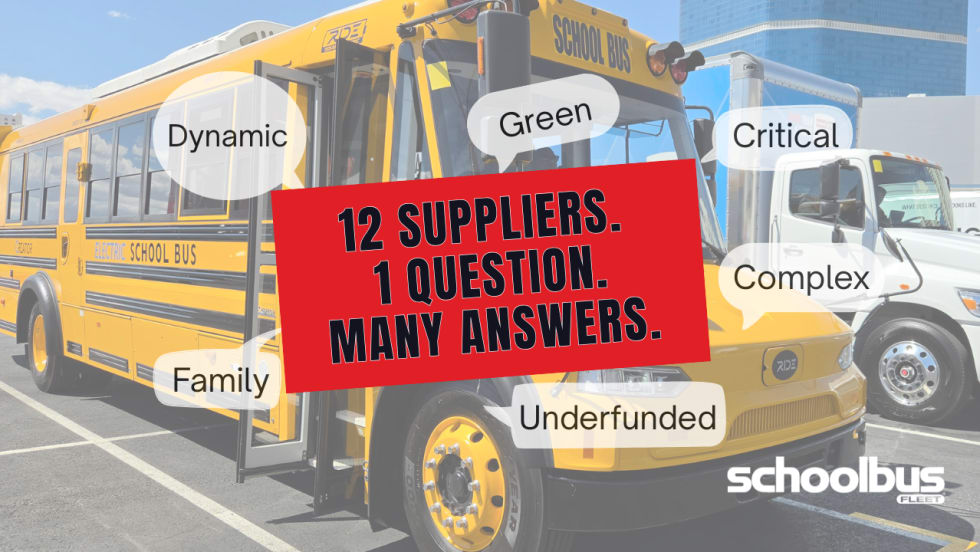
13 Industry Leaders Describe School Transportation in One Word
What word best describes the school bus industry today? We posed that question to over a dozen manufacturers, resulting in a revealing mix of perspectives on the challenges and opportunities ahead.
Read More →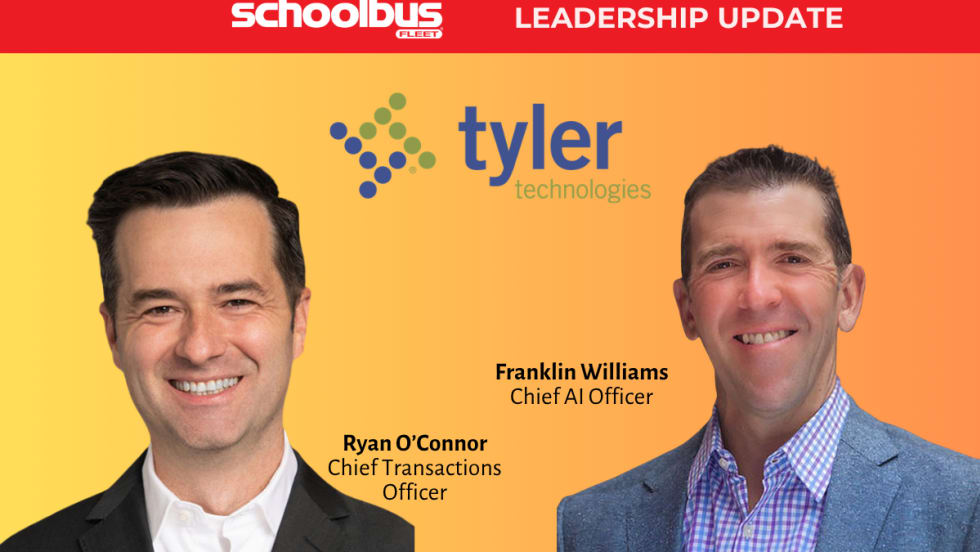
Tyler Technologies Adds New AI, Transactions Leadership Roles
Two company executives are promoted to newly created C-suite positions to accelerate the company's long-term growth in both artificial intelligence and payments.
Read More →
Pro-Vision Acquires Convoy Technologies
The deal aims to broaden customer relationships and adds specialized vehicle video capabilities for commercial fleets.
Read More →



Durham School Services Maintenance Teams Earn Missouri Fleet Excellence Awards
Eight of the contractor’s school bus fleets achieved a distinction few maintenance teams earn during the state’s rigorous annual inspection program.
Read More →
How Incentives, AI, and Energy Markets Are Reshaping School Transportation
Sit down with Joe Annotti of TRC Companies to talk district grant funding, utility challenges, AI, and why school buses are evolving from transportation assets into energy assets.
Read More →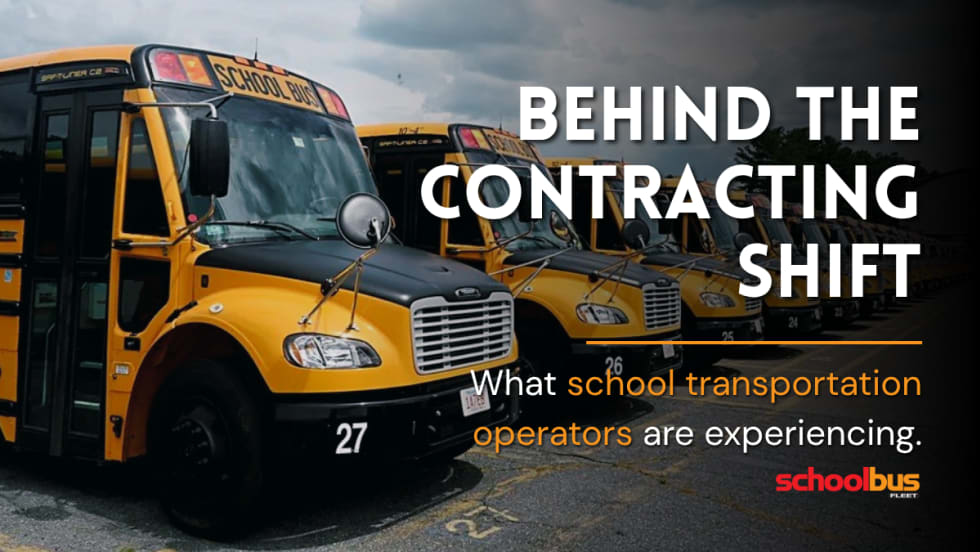
Inside the Contracting Shift: What School Transportation Operators Are Seeing Now
School transportation contractors weigh in on recent trends, costs, driver shortages, and the rise of multimodal student transportation.
Read More →
The No-Idling School Bus AC System
Take a peek at ExoAir Systems’ battery-powered cooling solution designed to run for up to 10 hours without the engine on, reducing fuel use and improving comfort for drivers and students.
Read More →
Geotab on Three Major Trends in School Transportation
School bus fleets are becoming more proactive than ever. From AI driver alerts to vehicle-to-grid opportunities, Geotab outlines the biggest technology trends transforming school bus operations.
Read More →
Gatekeeper Lands Major School Bus Deals as Revenue Surges
The video solutions provider announces contracts with Atlanta Public Schools and other fleet operators as it records quarterly revenue growth and expanding subscription business.
Read More →
Building Leaders Who Last: Creating a Successful Mentorship Program in Student Transportation
Discover five strategies for building an effective mentorship program to strengthen leadership development and support staff retention.
Read More →