



Proactive Employers Keep Operations Substance-Free
Pupil transportation officials have a zero-tolerance attitude toward on-the-job drug and alcohol use, and staff members undergo testing frequently. Experts say that understanding the effects of these substances and learning how to recognize signs of abuse are integral to maintaining a safe workplace.


Ray Lanoux, director of risk, emergency and facilities management for Dallas County Schools, says the district expanded its drug testing policy last year to include the bus monitors as an added safety measure.
Officials in this industry tout their dedication to safely transporting students, and with good reason — there are countless administrators and school bus drivers who provide exemplary service. However, SCHOOL BUS FLEET’s latest Web Poll demonstrates that the industry is not without individuals who put the safety of others at risk by using impairing substances.
When asked whether they have dealt with drug abuse among employees at their transportation department or bus company, more than one-third of respondents said “yes.”
While this figure may seem surprising, national statistics on drug use as it relates to the workplace suggest that it’s fairly common. Seventy-five percent of drug abusers admit to using drugs at work, and 64 percent say it affects their performance.
These are two figures presented during Corporate Drug & Alcohol Specialist Inc.’s (CDAS) “Recognizing the Drug Impaired” program. Inspector Bryan Schafer of the Minneapolis Police Department is an instructor for CDAS. He has found that prescription drugs are taking over the drug scene and that this makes it more difficult to detect whether someone is using drugs.
“You may have a guy who used to smoke marijuana and you’d see burn marks on his hands or smell it,” Schafer says. “But if the person now goes to the doctor and gets a prescription for Xanax, you’re not going to know if he’s taken it unless you look at his pupils and see how he handles himself.”
For transportation officials, preventing substance abuse among employees requires establishing a comprehensive policy on the issue. Education on several levels is also key.
[IMAGE]588[/IMAGE]
Operations enforce strict policies
Dallas County Schools (DCS) based its policy on the U.S. Department of Transportation’s (DOT) regulations.
DCS’ policy states that employees cannot come to work impaired on any substances; those who exhibit signs of impairment are subject to reasonable suspicion drug testing. Individuals are also subject to pre-employment, post-offer, random, post-accident and follow-up testing.
Ray Lanoux, director of risk, emergency and facilities management for the district, says the testing policy applies to everyone in the transportation department who is involved in operating or maintaining a commercial motor vehicle. Last year, the district expanded the policy to include bus monitors.
“It increases safety, and internally it increases fairness among the employees,” he says. “We’re treating employees in the transportation realm more equally now, and it’s been positively received.”
To ensure that drug tests are administered correctly, DCS utilizes the services of Pinnacle Medical Services. If an employee within DCS’ transportation department tests positive, he or she is subject to termination.
“People have to understand that when you’re transporting children, it’s just not tolerated,” Lanoux says.
Kevin Neafie, director of transportation for Michigan City (Ind.) Area Schools (MCAS), agrees, and his operation practices the same policy.
Random drug testing is performed every three months by Midwest Toxicology. Employees are also subject to reasonable suspicion testing.
“We call the person in, discuss that a situation has been brought to our attention, and the person is sent to our healthcare provider to take a drug and alcohol test,” Neafie says.
(Midwest Toxicology is based in Indianapolis, so for times when reasonable suspicion testing is needed, it is more efficient to send employees to the clinic.)
Beach Transportation in Missoula, Mont., also enforces a zero-tolerance policy for substance abuse. Safety Director Tracie Stahl says the contractor’s drug testing program involves the regulations dictated by the DOT.
“Consequences of substance use and abuse may include termination,” Stahl adds. “If a driver tests positive, they are immediately removed from their duties and provided with resources for help with substance abuse.”
[PAGEBREAK]
[IMAGE]587[/IMAGE]
Learn about the effects of drugs and alcohol
Officials at MCAS and Beach Transportation review their substance abuse policies with all employees.
Karen Joyce, clinical director at SAP (Substance Abuse Professional) Referral Services LLC in Baltimore, says sharing this kind of information and reviewing what’s expected of employees is essential to establishing a drug-free workplace.
Also, information should be provided on how substances affect a person’s ability to perform his or her job. This is true of prescription and over-the-counter medication as well as alcohol and illicit drugs.
“If someone’s taking a sleep aid or medication for a cough or pain, he or she can be fatigued and have a slow response time,” Joyce says. “When medication is taken and the time that the person is expected to start working must be taken into consideration.”
Sgt. Bruce Talbot, a retired police officer and founder of drug recognition training provider Bruce R. Talbot Associates in Bolingbrook, Ill., points to more severe side effects of over-the-counter drugs.
“Dextromethorphan is found in 164 cough and cold preparations. It causes hallucinations, a drunken-like effect and an out-of-body experience at high doses,” he says.
More generally, Joyce says that if the drug that someone is abusing is a stimulant (like cocaine), he or she may have increased energy and exhibit nervousness. Even caffeine and energy drinks, when consumed at high levels, can affect a person’s judgment and work pace, Joyce says.
Taking depressants (such as marijuana) or consuming substances that have a depressant-like effect (such as alcohol) may result in slow movements and a slow response time.
For more information on the effects of specific drugs, see the list on pg. 4 of this feature.
Look for signs of substance use or abuse
In conjunction with learning how drugs and alcohol can affect employees’ performance, pupil transportation officials should be aware of symptoms of substance abuse.
Joyce says the primary thing supervisors should look for is changes in employees’ usual behavior. This comprises changes in the quality of their work along with changes in their appearance, including:
• Problems following directions
• Difficulty problem solving
• Unexplained absences
• Frequent on-the-job accidents
• Inappropriate laughter or responses
• Mood swings or paranoia
• Red eyes or severely dilated or constricted pupils
• An unsteady gait or slurred speech
Both Joyce and Schafer note the importance of not jumping to conclusions if an employee exhibits any of these signs.
“Supervisors need to be cautious that it’s not due to another condition,” Joyce says. “Approach the person in a supportive way and let them know that you’re concerned because it’s not typical for them.”
Moreover, Schafer says that symptoms must be taken into consideration with other factors. If a person’s eyes are red, it may not mean that he or she is impaired. If, however, a person’s eyes are red, he or she has an unsteady gait, and he or she has been in an accident, it could warrant sending the person in for a reasonable suspicion drug test.
[PAGEBREAK]
Use in-service and safety meetings to discuss the topic
Training is the final component for a safe, substance-free workplace. DCS, MCAS and Beach Transportation all devote time to discussing the issue during in-service and safety meetings.
At MCAS, new and current employees view a video on substance abuse that covers the DOT regulations on drugs and alcohol, the effects of drugs and alcohol, and the consequences of positive test results.
Moreover, Neafie has had the head of school nursing discuss with the drivers the effects of certain drugs.
New employees at Beach Transportation receive a drug and alcohol training and awareness booklet during orientation, which the trainers review with them, and Stahl says that every few years the local police force narcotics team talks with the drivers about the risks of drug use.
During a convention in July, Stahl attended a class on over-the-counter drug abuse.
“I hope to incorporate this topic into our drug program using information I learned and bring in a pharmacist or some other professional trained in the side effects of drug use,” she says.
Drug recognition training resources
In addition to local substance abuse experts and law enforcement officials, there are companies that specialize in providing training on the effects of drugs and alcohol, and how to spot signs of use and abuse, that could benefit pupil transportation supervisors and their employees.
One such company is CDAS — as previously mentioned, it offers the “Recognizing the Drug Impaired” program. Topics covered include an overview of the drug problem in today’s society and how to address this issue through policies, tools to assess impairment and how to associate drug influence by examining a person’s eyes and pupils.
[PAGEBREAK]
Among the hands-on activities that trainees engage in, Schafer says, is measuring one another’s pupils.
“We distribute what we call a ‘pupilometer,’ which is a business card with a bunch of dots in different millimeter sizes,” Schafer explains. “We show them what the norm is for pupil size, and how to look at them and make an assessment [about impairment].”
More information about the program can be found at www.cdasinc.com.
In Talbot’s drug recognition training program, instructors teach non-invasive drug abuser screening techniques. Central to this is the Talbot Method, which Talbot describes as a “hands-off process of documenting in a standardized report form the physical symptoms that the body displays when drugs are taken at an impairing level.”
Talbot says that chemical drug tests are just one component of a complete fitness-for-duty examination and that far too many supervisors put too much weight behind the chemical test result as opposed to documenting workplace performance impairment.
“A supervisor trained in recognizing and properly documenting physical symptoms of impairment can establish reasonable suspicion to warrant a fitness-for-duty examination,” he adds.
Talbot also points out more far-reaching benefits of such training.
“Well trained supervisors who regularly observe driver behavior and performance for the signs of substance abuse and impairment not only help reduce the incidence of unsafe driving, they also reduce liability by demonstrating that the operation is taking all reasonable steps to prevent an impaired driver from getting behind the wheel,” he says.
For more information on Talbot’s program, visit www.drugrecognition.com.
[IMAGE]589[/IMAGE]
Loopholes in the applicant screening process
The DOT’s final rule on procedures for transportation workplace drug and alcohol testing programs became effective on Oct. 1.
Specifications require testing for ecstasy, lowering cutoff levels for cocaine and amphetamines and conducting mandatory initial testing for heroin.
While the DOT’s regulations are designed to ensure that commercial motor vehicle drivers work safely, Dawn Dregier, president and CEO of SAP Referral Services LLC, says there is a weakness in drug testing at the pre-employment level that enables substance abusers to continue operating commercial vehicles.
She says that if an individual applies to a company and fails a pre-employment drug test, then applies at another company and tests clean, there is no way for the second company to know that the person failed the test for the first company.
“The majority of states have no drug and alcohol reporting responsibilities, and there’s no tracking system at the federal level, so there’s no way to catch these people,” Dregier says.
(Eight states — Arkansas, California, North Carolina, New Mexico, Oregon, South Carolina, Texas and Washington — require reporting in some capacity.)
Another factor that is contributing to this problem stems from an error on the part of some employers.
“Anytime anyone applies for a safety-sensitive position like a school bus driver, the DOT requires that the employer, prior to hiring the person, send out a 49 CFR Part 40 drug and alcohol testing release of information form to all of the applicant’s employers from the last three years to request disclosure of prior drug and alcohol violations. Some employers do not do this, and it’s allowing for another loophole,” Dregier says.
The form asks such questions as “Did the employee have alcohol tests with a result of 0.04 or higher?” and “Did a previous employer report a drug and alcohol rule violation to you?”
Dregier also notes that employers are obligated under federal guidelines to provide individuals, whether they’re employees or applicants, with resources to access DOT-qualified substance abuse professionals if they test positive for drugs or alcohol or refuse to submit to a test.
For operations that practice this, SAP Referral Services can provide assistance. The company offers connections to a nationwide network of qualified substance abuse professionals who are trained in working within DOT guidelines.
For more information, call (888) 720-SAPS or visit www.sapreferralservices.com.
Substances and their effects
Marijuana and hashish: Red eyes, neglect of appearance, loss of interest and motivation
Herion: Addiction, loss of appetite
Cocaine: Restlessness, anxiety
Amphetamines: Paranoia, excessive irritability, mood swings
LSD: Dilated pupils, hallucinations, mood swings
PCP: Slurred speech, confusion, agitation, impaired memory and perception
Inhalants (gasoline, hair spray, fingernail polish remover, etc.): Poor motor coordination, impaired vision and thought processes
Source: "How to spot illicit drug abuse in your patients." Posgraduate Medicine, Vol. 106, No. 4
More Management
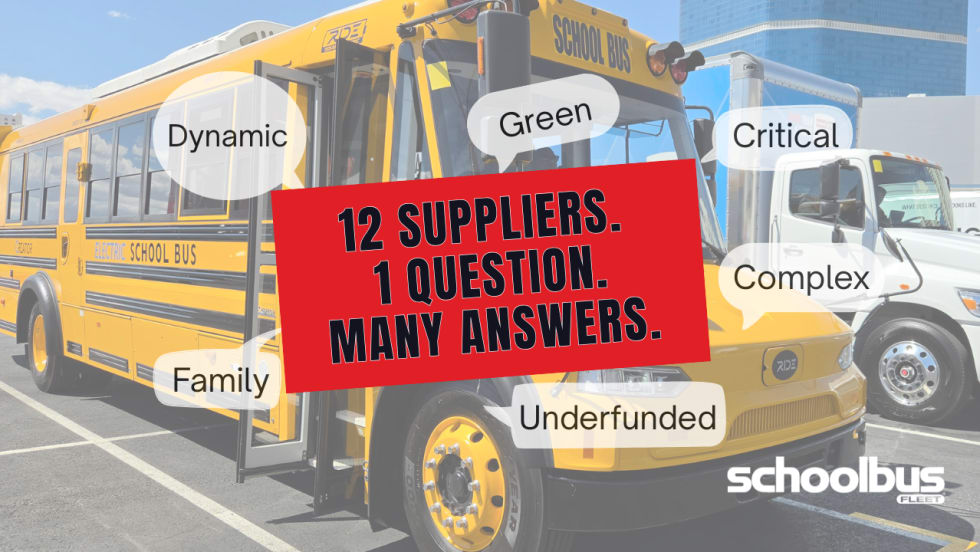
13 Industry Leaders Describe School Transportation in One Word
What word best describes the school bus industry today? We posed that question to over a dozen manufacturers, resulting in a revealing mix of perspectives on the challenges and opportunities ahead.
Read More →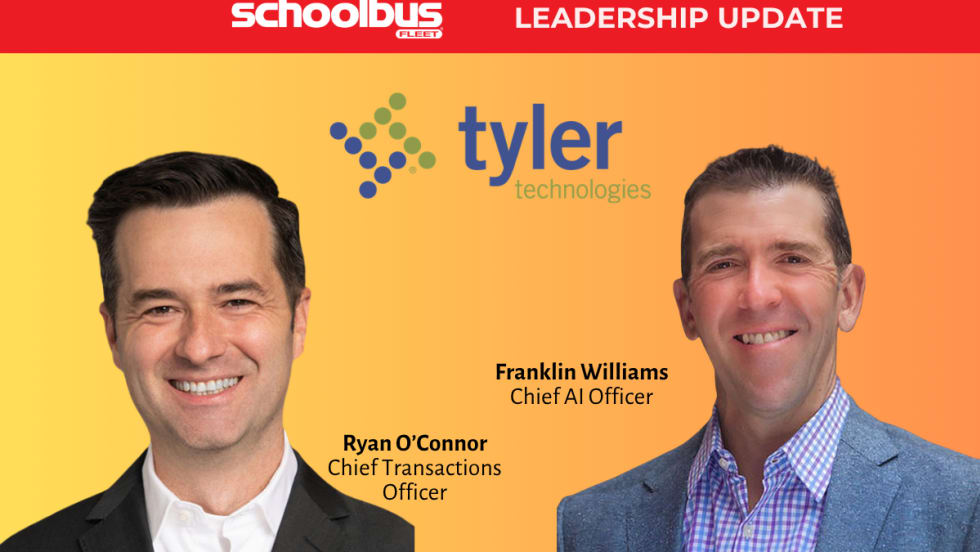
Tyler Technologies Adds New AI, Transactions Leadership Roles
Two company executives are promoted to newly created C-suite positions to accelerate the company's long-term growth in both artificial intelligence and payments.
Read More →
Pro-Vision Acquires Convoy Technologies
The deal aims to broaden customer relationships and adds specialized vehicle video capabilities for commercial fleets.
Read More →


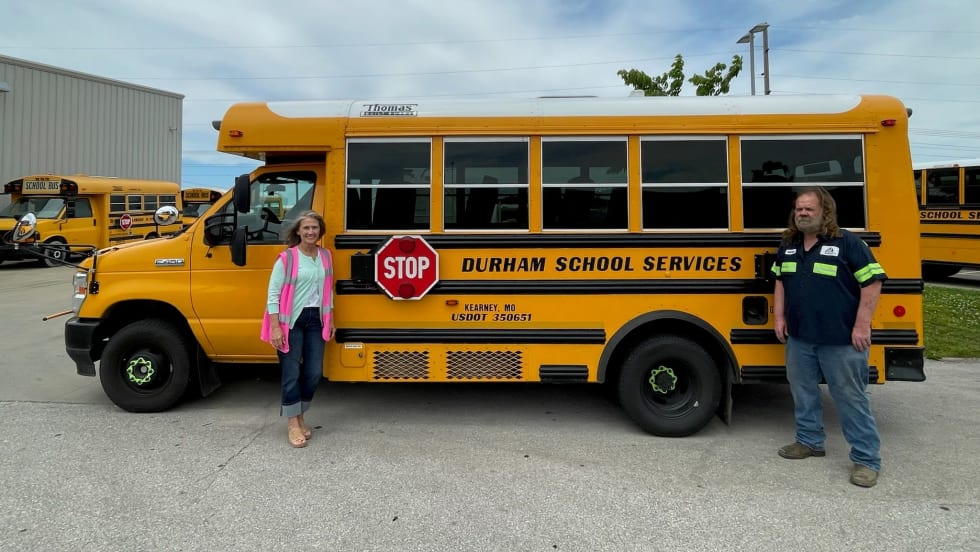
Durham School Services Maintenance Teams Earn Missouri Fleet Excellence Awards
Eight of the contractor’s school bus fleets achieved a distinction few maintenance teams earn during the state’s rigorous annual inspection program.
Read More →
How Incentives, AI, and Energy Markets Are Reshaping School Transportation
Sit down with Joe Annotti of TRC Companies to talk district grant funding, utility challenges, AI, and why school buses are evolving from transportation assets into energy assets.
Read More →
Inside the Contracting Shift: What School Transportation Operators Are Seeing Now
School transportation contractors weigh in on recent trends, costs, driver shortages, and the rise of multimodal student transportation.
Read More →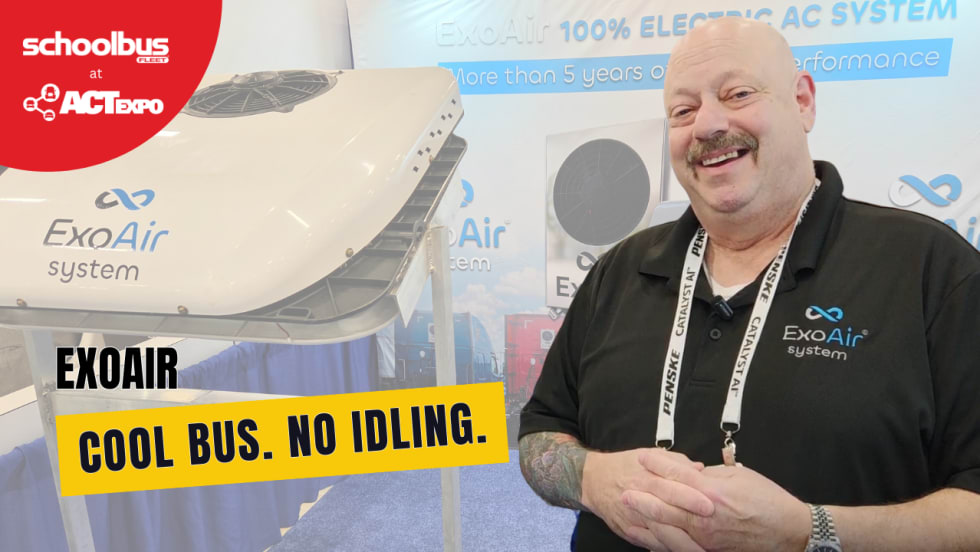
The No-Idling School Bus AC System
Take a peek at ExoAir Systems’ battery-powered cooling solution designed to run for up to 10 hours without the engine on, reducing fuel use and improving comfort for drivers and students.
Read More →
Geotab on Three Major Trends in School Transportation
School bus fleets are becoming more proactive than ever. From AI driver alerts to vehicle-to-grid opportunities, Geotab outlines the biggest technology trends transforming school bus operations.
Read More →
Gatekeeper Lands Major School Bus Deals as Revenue Surges
The video solutions provider announces contracts with Atlanta Public Schools and other fleet operators as it records quarterly revenue growth and expanding subscription business.
Read More →
Building Leaders Who Last: Creating a Successful Mentorship Program in Student Transportation
Discover five strategies for building an effective mentorship program to strengthen leadership development and support staff retention.
Read More →