



N.C. report highlights route data
RALEIGH, N.C. — The average reported morning bus ride to school in North Carolina for the 2006-07 school year was 25 minutes, and the average d...

RALEIGH, N.C. — The average reported morning bus ride to school in North Carolina for the 2006-07 school year was 25 minutes, and the average distance between students and their schools was 4.3 miles. Those are just two of the facts contained in a study issued on the 15th anniversary of the statewide implementation of the Transportation Information Management System (TIMS).
The report provides a broad overview of the statewide pupil transportation system of routes and schedules and is expected to help school boards shape transportation policies and school transportation professionals translate those policies into improved service for students and parents.
Since the statewide implementation of TIMS in September 1992, school districts have used its data to optimize the efficiency of day-to-day school bus routes and for boundary planning and redistricting projects. The pupil transportation data collected through TIMS, which uses EDULOG’s routing and scheduling software, is among the most detailed in the country.
“We are able to do what no other state can — compile data on each student transported by the public schools,” said Derek Graham, section chief of transportation services for the Department of Public Instruction.
TIMS helps school districts optimize routing and scheduling of buses, which can reduce the number of vehicles needed to service a district and also curtail fuel usage, student ride times and total driver hours. Since its inception, TIMS is credited with reducing statewide school bus travel by 560 million miles.
The report contains a breakdown of 2006-07 data from each school district, allowing for side-by-side comparisons of various service indicators.
For example, the longest average morning ride time reported was 55 minutes, at Currituck County Schools. The district also reported one of the longest average distances to school, at 8.2 miles. The longest distance was reported by Hyde County Schools, where students live an average 12.8 miles from school. Obviously, the farther students live from home, the longer they might have to ride the bus.
Using TIMS, school districts are able to keep tabs on morning pick-up times. The district reporting the earliest morning pick-up time was Harnett County Schools. Its first stop in the morning reportedly was scheduled for 4:49.
TIMS also tracks fleet usage data. It reported that the average number of afternoon runs per route was 1.6. Some districts reported a much higher average number of afternoon runs, indicating a higher level of fleet utilization and shorter bus trips for students overall.
Meanwhile, the statewide percentage of routes with more than one afternoon run was 54.6. The school district with the highest percentage of routes with more than one afternoon run was Asheboro County Schools, where every route had two or more afternoon runs.
Although TIMS was implemented statewide in 1992, it was first used during the 1987-88 school year at Cumberland County Schools and Durham Public Schools. The report credited those two school districts with paving the way to statewide implementation five years later. It also credited the support staff at the Institute for Transportation Research and Education at North Carolina State University and the Urban Institute at the University of North Carolina in Charlotte.
For more information on TIMS, visit www.ncbussafety.org/TIMS.html.
More Management
13 Industry Leaders Describe School Transportation in One Word
What word best describes the school bus industry today? We posed that question to over a dozen manufacturers, resulting in a revealing mix of perspectives on the challenges and opportunities ahead.
Read More →
Tyler Technologies Adds New AI, Transactions Leadership Roles
Two company executives are promoted to newly created C-suite positions to accelerate the company's long-term growth in both artificial intelligence and payments.
Read More →
Pro-Vision Acquires Convoy Technologies
The deal aims to broaden customer relationships and adds specialized vehicle video capabilities for commercial fleets.
Read More →


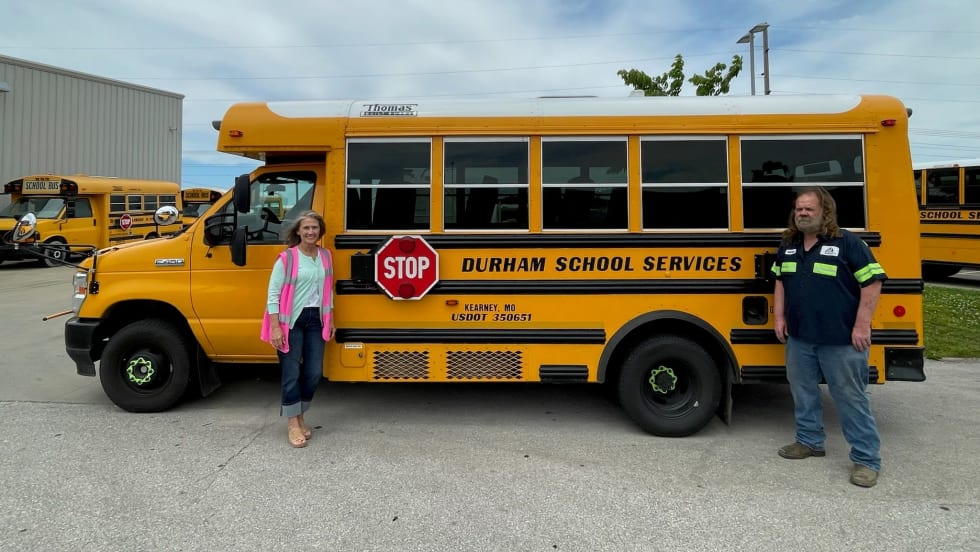
Durham School Services Maintenance Teams Earn Missouri Fleet Excellence Awards
Eight of the contractor’s school bus fleets achieved a distinction few maintenance teams earn during the state’s rigorous annual inspection program.
Read More →
How Incentives, AI, and Energy Markets Are Reshaping School Transportation
Sit down with Joe Annotti of TRC Companies to talk district grant funding, utility challenges, AI, and why school buses are evolving from transportation assets into energy assets.
Read More →
Inside the Contracting Shift: What School Transportation Operators Are Seeing Now
School transportation contractors weigh in on recent trends, costs, driver shortages, and the rise of multimodal student transportation.
Read More →
The No-Idling School Bus AC System
Take a peek at ExoAir Systems’ battery-powered cooling solution designed to run for up to 10 hours without the engine on, reducing fuel use and improving comfort for drivers and students.
Read More →
Geotab on Three Major Trends in School Transportation
School bus fleets are becoming more proactive than ever. From AI driver alerts to vehicle-to-grid opportunities, Geotab outlines the biggest technology trends transforming school bus operations.
Read More →
Gatekeeper Lands Major School Bus Deals as Revenue Surges
The video solutions provider announces contracts with Atlanta Public Schools and other fleet operators as it records quarterly revenue growth and expanding subscription business.
Read More →
Building Leaders Who Last: Creating a Successful Mentorship Program in Student Transportation
Discover five strategies for building an effective mentorship program to strengthen leadership development and support staff retention.
Read More →