



What You Need to Know About Your School Board
In an ideal world, every transportation department would have a balanced relationship with its local school board, built on productive collaboration a...

In an ideal world, every transportation department would have a balanced relationship with its local school board, built on productive collaboration and communication. In an ideal world, budget restraints would be unheard of as well. Unfortunately, we don’t live in an ideal world, which means most districts struggle with tight budgets, and school boards aren’t always as helpful as they could or should be.
Whatever your situation may be, maintaining a strong, positive relationship between your department and school board is important in running an effective operation. It is also a key part of developing respect within the community and among your peers and in reaching your department’s monthly, yearly and overall goals.
Role of the board
The concept of the school board has changed through the years, transforming into something much more complex. When boards first came into play, their sole purpose was to provide a mechanism for communities to choose their teachers for every school. Before the 1900s, each school had its own board. Since then, school boards have consolidated into larger managerial entities with longer lists of responsibilities to more people.
Today’s boards are made up of various committees that address every aspect of education, including policy, personnel, grounds maintenance, transportation, budgets and finance and technology. The mission of school boards has grown to “establish the direction and structure of their school districts,” according to the National School Boards Association.
To do that, school boards have come up with standard guidelines for every department, amending them as they become outdated or unsuited to the district. The guidelines are a system of checks and balances to keep both the departments and administration within their authoritative boundaries.
Lane Emmett, transportation director at Port Neches-Groves (Texas) Independent School District, says the guidelines he follows regarding interactions with his board were in place before he began his tenure there. Emmett says that other than the board’s approval of the yearly budget, it doesn’t really interfere with his department.
Other boards have a more hands-on approach and use the various departments in the district as information resources to improve the state of education. No matter the management style, the overall relationship between a school board and any district department it works with is much more involved than it used to be.
Securing the benefits
A lot can be accomplished when a transportation director can count on his or her local school board for support and cooperation.
“[My school board’s] influence has been about knowing what they could do to help,” says Grant Reppert, transportation director at Gwinnett County (Ga.) Public Schools.
Reppert says his board has been very effective in helping him meet his needs.
{+PAGEBREAK+} Reppert’s board members look at their transportation department as a resource for improving education as a whole. “They treat us as transportation professionals, so they call us for information about transportation,” he says. “They’ll call and represent their constituents if they have concerns, but it’s not an adversarial relationship.”
David Pace, transportation director at Virginia Beach (Va.) City Public Schools, says that for any issue he wants the board to hear, he must go through a chain of command before reaching the school board. “I report to the assistant superintendent of operations, and typically all problems that are associated with pupil transportation are referred to him,” Pace says.
The assistant superintendent then takes that information to the superintendent, who meets with the board. “The protocol that we have through the assistant superintendent to the board has always resulted in positive results for me,” he says.
Pace still interacts with his board on a regular basis, mostly to provide updated information and answer their immediate questions regarding transportation initiatives. For deeper matters, district protocol directs board members to approach the superintendent, who will then pose their questions to whomever he feels is qualified to provide the best information.
Pace says that his good working relationship with the superintendent and assistant superintendent helps him fulfill his department’s needs. In turn, the superintendent also realizes the importance of certain aspects of transportation and makes that clear to his board.
For example, the superintendent builds certain expenses into the budget on a regular basis, no matter the state of funding. “He sees the replacement of buses as an annual expense, as a cost of doing business,” Pace says. “So when the budget gets tight, he pretty much gives direction to the board — ‘We don’t want to cut the bus replacement cycle because we’ve got to have those things,’” he says.
A good relationship can also mean a hands-off relationship. In some situations, maintaining the distance between the operations of a school board and a transportation department keeps the atmosphere amicable. Emmett of Port Neches-Groves says that if he is doing his job well, “the board doesn’t have to talk to me except when we drink a cup of coffee.”
Emmett also recognizes that his board isn’t able to fulfill certain requests for various reasons. Approaching his board with almost impossible requests is counter-productive and ultimately unnecessary, he says.
On the down side
Unfortunately, the interaction between a transportation department and its school board isn’t always fruitful. At times, it can be a setback when directors have specific needs that must be met, and, at worst, it can lead to unsafe transportation.
“The challenge is when the board assumes technical confidence that they don’t have and tries to manage the operation,” Reppert says. When a board attempts to micromanage departments, it can be a headache to work around.
{+PAGEBREAK+} Reppert adds that those problems tend to arise when the board assumes safety competency. “They haven’t done the evaluations or gone to NAPT [National Association for Pupil Transportation] conferences and attended the training sessions,” he says.
Student safety can be compromised if a board assumes it has knowledge that it doesn’t. There’s not much a transportation department can do when the school board refuses to approve a request for more vehicles because its members truly believe 84 students can fit safely on one bus. Those in the industry know that bus capacity isn’t quite quantifiable and really is based on how many students can fit safely in any particular bus.
Without that knowledge, boards can wreak havoc. Problems can also arise if a board develops an “ostrich mentality of sticking their head in the sand and pretending [problems are] not real,” Reppert says.
The most important role of any school board is to maintain integrity in the education system and improve what can be improved. “They’re the bosses, but their functional role is policy design,” Reppert says. The board must recognize its place and try to address issues as they come, not avoid what’s in front of it. “It’s about the board recognizing that role as a policymaker and letting us develop the practices and processes it takes to accomplish that policy they establish,” he adds.
Fixing what’s broken
Though changing the attitudes of board members seems impossible, certain approaches might make them think twice before ignoring issues.
An effective way of approaching a board with a request is to prepare yourself before you speak to them. Making a case with no quantifiable data to back your point is equivalent to diving into a shark tank without a protective cage — you’ll probably be eaten alive. Without that prepared data, Reppert says, you’re making an emotional argument instead of a factual one.
By collecting and analyzing supporting data, transportation directors can make solid arguments to their board that point out what they are doing right and how they can make improvements if they’re given what they’re asking for. Whatever the situation, people want definite proof that what they’re investing in will have a higher rate of return than the initial cost of the investment itself, and the education system is no exception.
Boards often approach transportation with preconceived notions on what the pupil transportation industry is about. “It’s the mentality of, ‘Well that’s just another school bus, someone just climbs up there and drives,’ and that’s not what the industry is anymore,” Reppert says. To effectively combat those assumptions, professionalism and patience are key.
Transportation directors should aim to complement the board’s overall agenda. Although no one person can be forced to listen, board members will respond better to well-prepared colleagues who approach their problems in a professional manner.
More Management
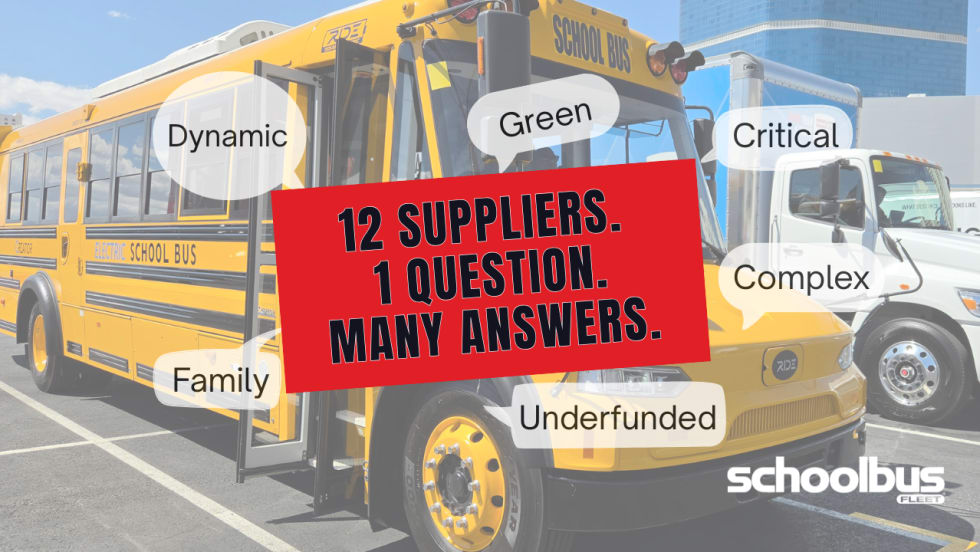
13 Industry Leaders Describe School Transportation in One Word
What word best describes the school bus industry today? We posed that question to over a dozen manufacturers, resulting in a revealing mix of perspectives on the challenges and opportunities ahead.
Read More →
Tyler Technologies Adds New AI, Transactions Leadership Roles
Two company executives are promoted to newly created C-suite positions to accelerate the company's long-term growth in both artificial intelligence and payments.
Read More →
Pro-Vision Acquires Convoy Technologies
The deal aims to broaden customer relationships and adds specialized vehicle video capabilities for commercial fleets.
Read More →


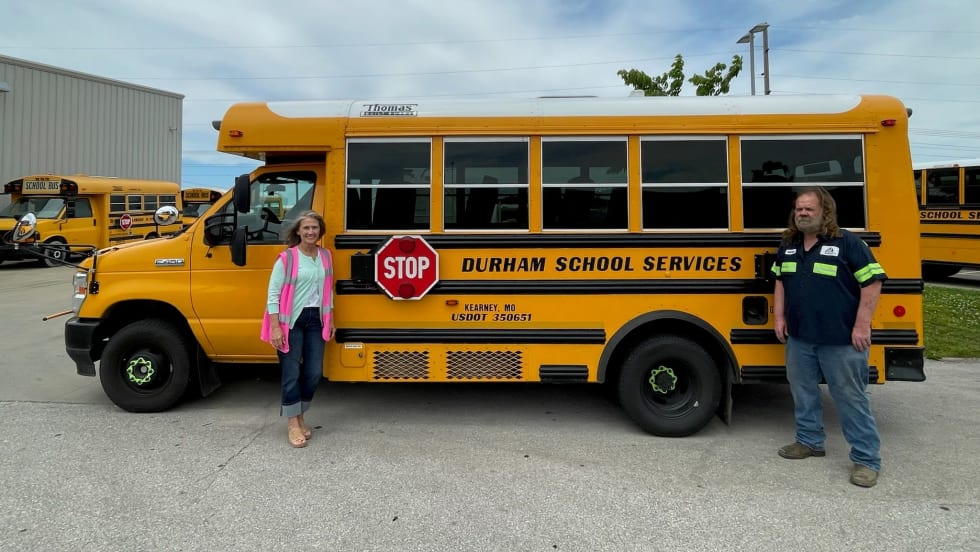
Durham School Services Maintenance Teams Earn Missouri Fleet Excellence Awards
Eight of the contractor’s school bus fleets achieved a distinction few maintenance teams earn during the state’s rigorous annual inspection program.
Read More →
How Incentives, AI, and Energy Markets Are Reshaping School Transportation
Sit down with Joe Annotti of TRC Companies to talk district grant funding, utility challenges, AI, and why school buses are evolving from transportation assets into energy assets.
Read More →
Inside the Contracting Shift: What School Transportation Operators Are Seeing Now
School transportation contractors weigh in on recent trends, costs, driver shortages, and the rise of multimodal student transportation.
Read More →
The No-Idling School Bus AC System
Take a peek at ExoAir Systems’ battery-powered cooling solution designed to run for up to 10 hours without the engine on, reducing fuel use and improving comfort for drivers and students.
Read More →
Geotab on Three Major Trends in School Transportation
School bus fleets are becoming more proactive than ever. From AI driver alerts to vehicle-to-grid opportunities, Geotab outlines the biggest technology trends transforming school bus operations.
Read More →
Gatekeeper Lands Major School Bus Deals as Revenue Surges
The video solutions provider announces contracts with Atlanta Public Schools and other fleet operators as it records quarterly revenue growth and expanding subscription business.
Read More →
Building Leaders Who Last: Creating a Successful Mentorship Program in Student Transportation
Discover five strategies for building an effective mentorship program to strengthen leadership development and support staff retention.
Read More →