




Q&A: Thomas CEO Sees Rising Costs on the Horizon
Although school bus operators are still feeling the pinch of a lagging revenue base, the cost of a school bus is rising and will probably continue to ...


Although school bus operators are still feeling the pinch of a lagging revenue base, the cost of a school bus is rising and will probably continue to head higher over the next several months.
John O’Leary, president/CEO of Thomas Built Buses in High Point, N.C., says several factors are involved, including global pressures on raw materials, impending federal emissions standards and, for those who are so inclined, the addition of three-point belt systems.
O’Leary sat down with SBF Editor Steve Hirano at the National Association for Pupil Transportation’s conference in Cincinnati to discuss these issues and other trends in pupil transportation.
The cost of a school bus is increasing. Why is that?
It’s basically due to the increased cost of raw materials such as steel, plywood and copper wire. We’re seeing high demand for these commodities from overseas economies.
In China, for example, there’s a huge demand for steel, concrete and plywood, which puts pressure on the world market. These are the building blocks of infrastructure, and all of it is in very high demand right now. Of course, when you have a big spike in demand for a fixed supply of product, prices rise and that’s exactly what’s happening.
What additional cost will there be with the rise in steel prices alone?
It’s around $1,500 per bus.
Are people going to see the increase immediately?
We’ve had some price increases already this year, and we anticipate we’ll have them again next year unless this demand for raw materials suddenly stops. We would very much enjoy not increasing our prices.
Is pricing the only issue that bus buyers have to worry about?
No. This past summer the pricing issue was almost secondary. What’s really been a challenge for us has been availability. At one point, flatbed trucks were pulling up to our fabrication plant and providing us with steel within two hours of when it was needed. Fortunately, we were able to use our DaimlerChrysler connections to get our hands on some steel when our suppliers were unable to meet our demands. That relationship worked out very well for us. It’s been a big challenge for our logistics folks to keep us supplied.
How has just-in-time manufacturing affected your production schedule?
What’s happened over the years is that bus builders have moved toward just-in-time manufacturing. But that’s predicated on having very little inventory. In the old days, you may have had a warehouse full of parts, so if you had a hiccup from a supplier, it didn’t really impact you. Nowadays, you typically are only carrying a few days’ supply. If you get an interruption, it’s going to hit you within two days. It’s a big battle, but our logistics guys are a critical part of our success.
Have you seen more interest in leasing because of tightness in capital budgets?
Yes, we’ve seen a greater trend toward leasing. Our DaimlerChrysler financial services people have done a good job of structuring programs attractive to our customers. Typical is a two- or three-year lease-to-own program that allows the customer a predictable payment schedule.
What are you seeing in terms of the federal government’s clean-air initiatives?
The school bus industry has been very quick to embrace clean air whether it’s reduction in idling or the Clean School Bus USA program. There is a lot of effort going on among school districts to try to clean up buses, which is great. The downside is the cost implication of doing that. The EPA puts in more stringent anti-pollution requirements, but they don’t tell the fleet owner what it’s going to cost them. The problem is that the federal government says, “You have to do this,” but they don’t provide any money or assistance to do it.
It becomes a point of frustration for a lot of people. They want to have clean school buses, and they want to have new school buses that the drivers like to drive. They want to keep their fleets updated with the latest safety equipment. But they have a fixed amount of money every year, and it becomes very difficult to do it. {+PAGEBREAK+} Alternative fuels such as compressed natural gas are often used in the transit industry.
Do you think there’s a future for alternative fuels in the school bus industry? The reason that you see all these alternative fuels on the transit side is that it’s all government subsidized. The federal government injects a huge amount of money into that industry but not into ours. Believe me, if there was no federal money being thrown around and these transit agencies had to provide it out of their own pocket, it wouldn’t be happening.
I think the DaimlerChrysler corporate position on vehicle propulsion is that it’s going to be fuel cells. But it could be 10 to 15 years before fuel-cell propulsion is ready for prime time. We do have some fuel-cell buses in operation in Europe on a test basis. You’re talking well over $1 million per vehicle to employ that technology. That’s the intent, though — to put the vehicle into service, figure out what some of the issues are and start moving in that direction.
As an interim step, I would say the hybrid electric concept — either diesel or gasoline — is promising. In the meantime, engine manufacturers are focusing their efforts on reducing emissions in diesel.
Are you planning to redesign your Type D products, possibly incorporating some of the features and manufacturing processes of the new C2?
I would say it’s definitely on the drawing board. What we’re doing right now is taking a hard look at the economics of doing that. As you know, the Type D market is considerably smaller than the Type C market. From our standpoint, there has to be a business basis behind it. I would say within another month or two we’ll have a decision made. Either way, we’re looking at investing a fair amount of money into our existing facility in High Point.
What influence does the parent company have on a school bus manufacturer?
Our parent company gives us pretty wide leeway to do what we feel is best for the school bus industry.
From a resource standpoint, they have an awful lot to offer. For example, we just got a new vice president of manufacturing through our DaimlerChrysler connection. We called them up and asked if they had any candidates, and it turned out there was a brilliant young manufacturing candidate at Detroit Diesel. We had him come down for an interview. He liked us, we liked him, and now he’s our new VP of manufacturing.
Both Freightliner, our direct parent company, and DaimlerChrysler have had a very strong year and that certainly helps us overall. But we’re pretty much expected to run the business as if the money was our own, and just because Freightliner’s making a lot of money doesn’t mean that all of a sudden the faucets get turned on.
Another potential cost that school bus operators are facing is the installation of three-point belt systems in their buses. How do you see that playing out?
The three-point harness idea is one that several states are starting to embrace in varying degrees — some only on the small buses, some only on the big ones.
From a capacity standpoint, adding three-point systems creates a significant reduction. Accordingly, I think people are going to have to make some pretty difficult decisions, especially if they can’t convince the district or whoever their funding source is to come up with more money to cover that additional expense.
To compensate, they can extend the replacement cycle of their buses, buy fewer buses or try to come up with other ways of getting kids to school — none of which is as safe as buying new vehicles. That’s a real trade-off. That’s why I think there needs to be some mobilization effort among all the key industry players to really get out and start telling the school bus story. All of us in the industry know why school bus transportation is such a great deal for kids, but people outside the industry really don’t.
I was outside the school transportation industry two years ago and, believe me, I knew very little about it. I think with a coordinated educational campaign that we can get the message to the people outside the industry about what parents are giving up when their children are not riding school buses every day.
More Management
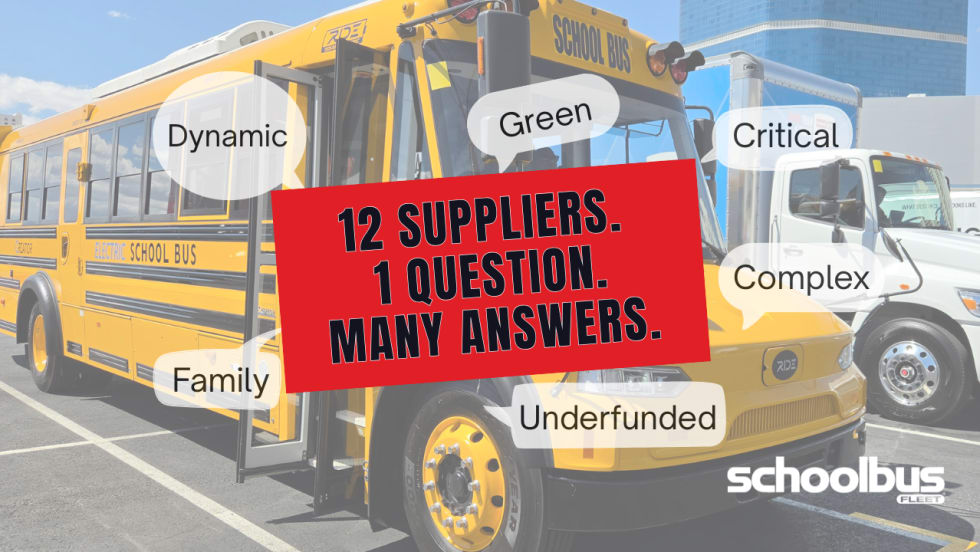
13 Industry Leaders Describe School Transportation in One Word
What word best describes the school bus industry today? We posed that question to over a dozen manufacturers, resulting in a revealing mix of perspectives on the challenges and opportunities ahead.
Read More →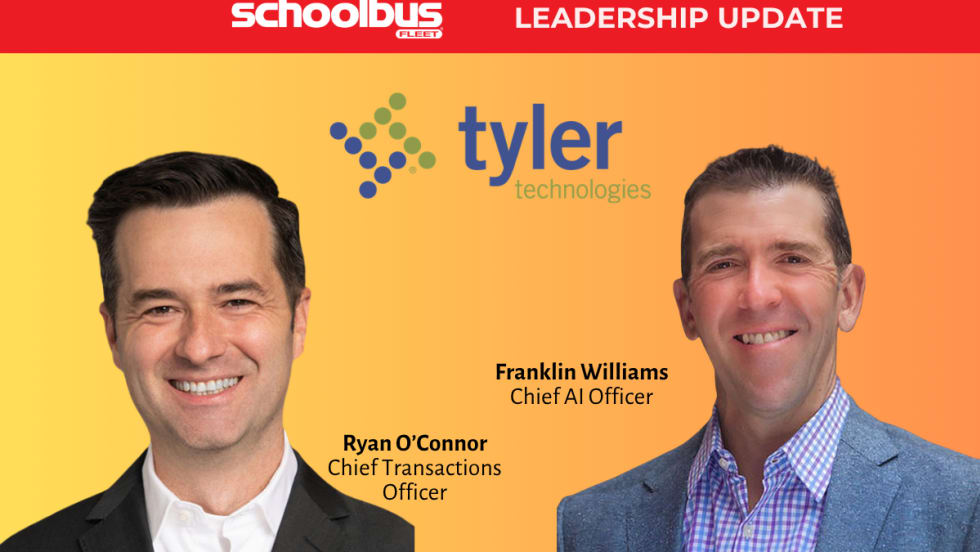
Tyler Technologies Adds New AI, Transactions Leadership Roles
Two company executives are promoted to newly created C-suite positions to accelerate the company's long-term growth in both artificial intelligence and payments.
Read More →
Pro-Vision Acquires Convoy Technologies
The deal aims to broaden customer relationships and adds specialized vehicle video capabilities for commercial fleets.
Read More →


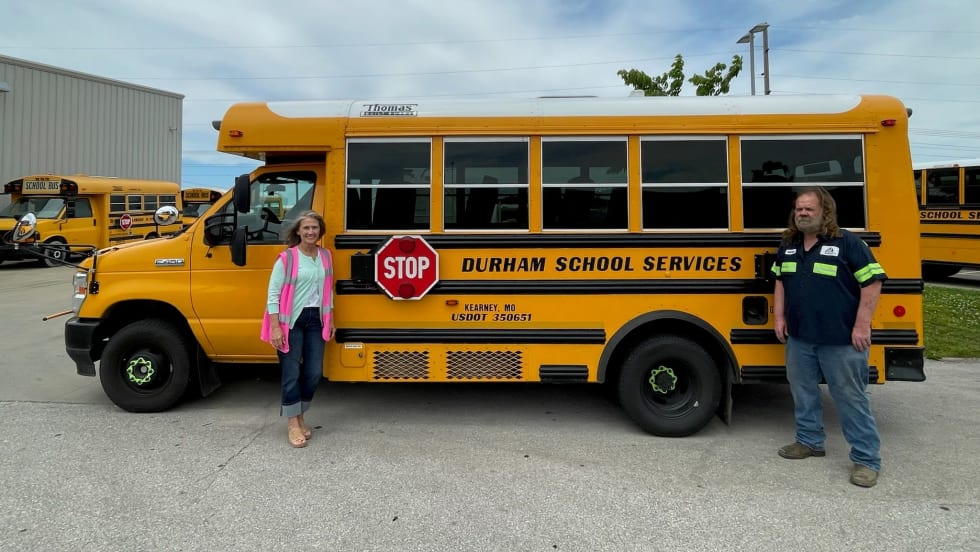
Durham School Services Maintenance Teams Earn Missouri Fleet Excellence Awards
Eight of the contractor’s school bus fleets achieved a distinction few maintenance teams earn during the state’s rigorous annual inspection program.
Read More →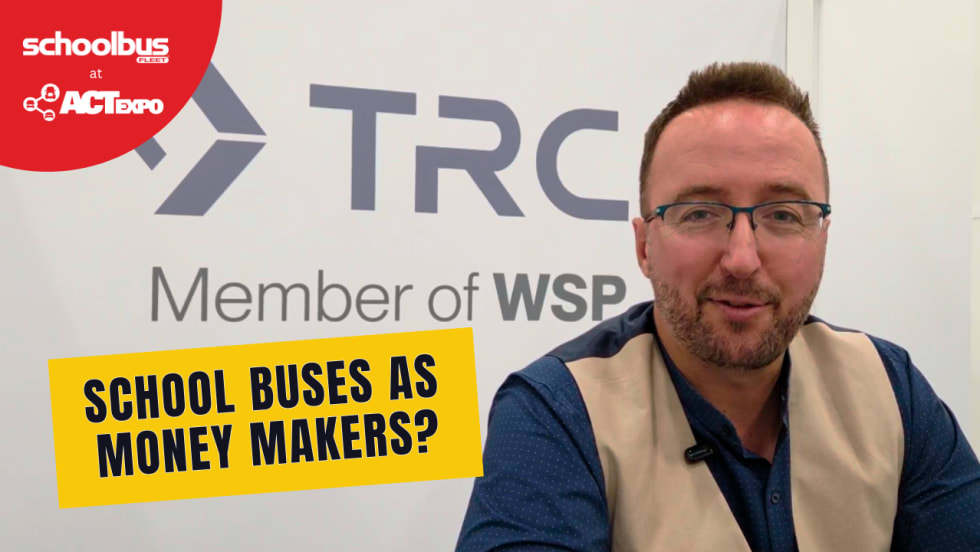
How Incentives, AI, and Energy Markets Are Reshaping School Transportation
Sit down with Joe Annotti of TRC Companies to talk district grant funding, utility challenges, AI, and why school buses are evolving from transportation assets into energy assets.
Read More →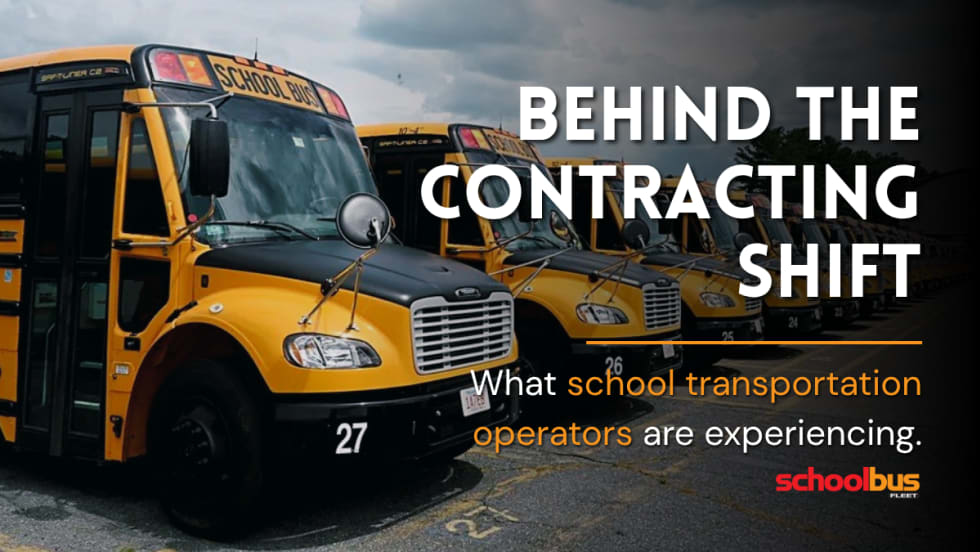
Inside the Contracting Shift: What School Transportation Operators Are Seeing Now
School transportation contractors weigh in on recent trends, costs, driver shortages, and the rise of multimodal student transportation.
Read More →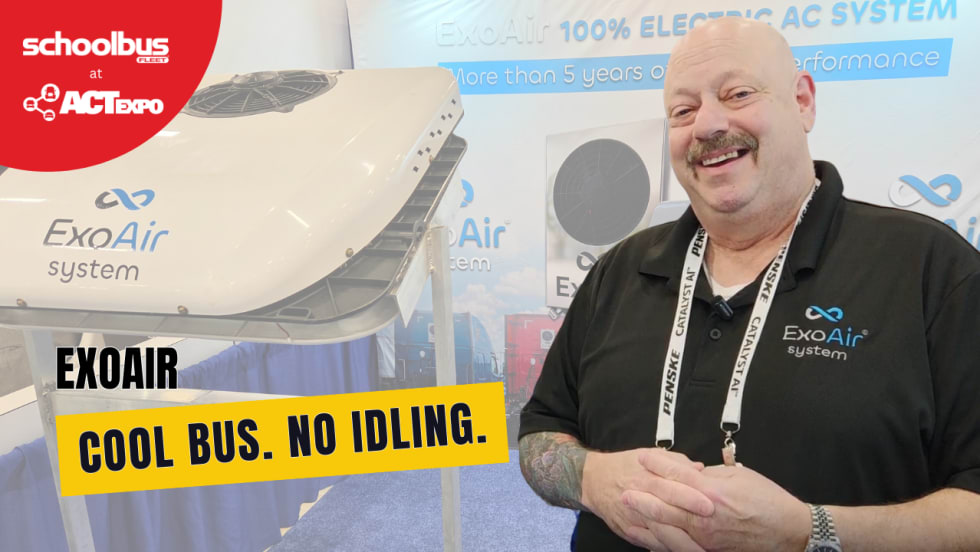
The No-Idling School Bus AC System
Take a peek at ExoAir Systems’ battery-powered cooling solution designed to run for up to 10 hours without the engine on, reducing fuel use and improving comfort for drivers and students.
Read More →
Geotab on Three Major Trends in School Transportation
School bus fleets are becoming more proactive than ever. From AI driver alerts to vehicle-to-grid opportunities, Geotab outlines the biggest technology trends transforming school bus operations.
Read More →
Gatekeeper Lands Major School Bus Deals as Revenue Surges
The video solutions provider announces contracts with Atlanta Public Schools and other fleet operators as it records quarterly revenue growth and expanding subscription business.
Read More →
Building Leaders Who Last: Creating a Successful Mentorship Program in Student Transportation
Discover five strategies for building an effective mentorship program to strengthen leadership development and support staff retention.
Read More →