




How much is it worth to you?
I’ve got some good news and some bad news. First, the good news: Half of transportation managers at school districts believe they’re adequately compen...
I’ve got some good news and some bad news. First, the good news: Half of transportation managers at school districts believe they’re adequately compensated. I think you can guess the bad news: The other half aren’t of the same mind.
What’s interesting about this assessment is that average salaries haven’t increased in the past five years. According to SCHOOL BUS FLEET salary surveys performed in 1998 and then again this year (for full results of the 2003 survey, see the story beginning on pg. 22), the average salary has actually dipped by 2.5 percent, from $49,560 to $48,305.
I wish I could tell you why salaries haven’t gone up. Maybe it’s because of attrition, managers with lots of experience retiring or moving into another career and being replaced with managers at a lower salary level. Or maybe school districts have tightened their belts amid the economic downturn and ratcheted back salary increases.
Whatever the case, transportation managers aren’t seeing their salaries being enriched over time and that’s got to be frustrating. The responsibilities certainly haven’t declined. In fact, you could argue that managers are being asked to shoulder even greater responsibility, what with the increasingly complex nature of special-needs transportation and expanding liability exposure and parental contentiousness. Not to mention the budget pressures afflicting so many transportation programs.
Money isn’t everything
But the numbers don’t tell the whole story.
Job satisfaction has to do less with monetary compensation than with psychic compensation. That is, the people who are happiest with their jobs are the ones who feel emotionally rewarded, while, yes, also receiving at least a fair, if not bountiful, wage.
These people wake up in the morning and look forward to going to the bus yard (even if it’s 5 a.m. and frostbite season). Once at their desks, they bury a quick cup of coffee and begin to tackle the day’s long list of challenges. When the day’s done, they let out a long sigh of relief, get in their cars and head home with the knowledge that they’ve met every challenge that came their way.
Respect is hard to come by
Not everyone has such a blissful time on the job, however. According to this year’s survey, nearly two-thirds of the respondents feel that school transportation should be given more respect by teachers and site administrators. Lack of respect — at any place of employment — is one of the leading causes of dissatisfaction and turnover.
That may explain why more than half of the respondents said their daily stress level is "high" or "very high." There’s enough stress built into the job and its responsibilities without the additional strain of dealing with teachers and administrators who don’t give you the support you deserve. When you factor in the challenges of student misbehavior and conflict with parents, it’s a wonder that anyone would classify their stress levels as anything less than very high.
Which is a tribute to transportation managers everywhere — working for school districts or contractors. Yes, money is a motivating force (Have you ever heard of anyone volunteering to run a school bus operation?), but the financial rewards are secondary to the satisfaction gained from performing a function that is extremely complicated and prone to the chaos of on-the-fly adjustments.
Very few people who work in pupil transportation management have a punch-the-clock-and-go-home attitude. The job is too stressful and the risks are too high. I can't say whether transportation managers deserve higher salaries; each case would have to be analyzed individually. But I can tell you that you have a tough job and, on the whole, you do it incredibly well. Keep it up!
More Management
13 Industry Leaders Describe School Transportation in One Word
What word best describes the school bus industry today? We posed that question to over a dozen manufacturers, resulting in a revealing mix of perspectives on the challenges and opportunities ahead.
Read More →
Tyler Technologies Adds New AI, Transactions Leadership Roles
Two company executives are promoted to newly created C-suite positions to accelerate the company's long-term growth in both artificial intelligence and payments.
Read More →
Pro-Vision Acquires Convoy Technologies
The deal aims to broaden customer relationships and adds specialized vehicle video capabilities for commercial fleets.
Read More →


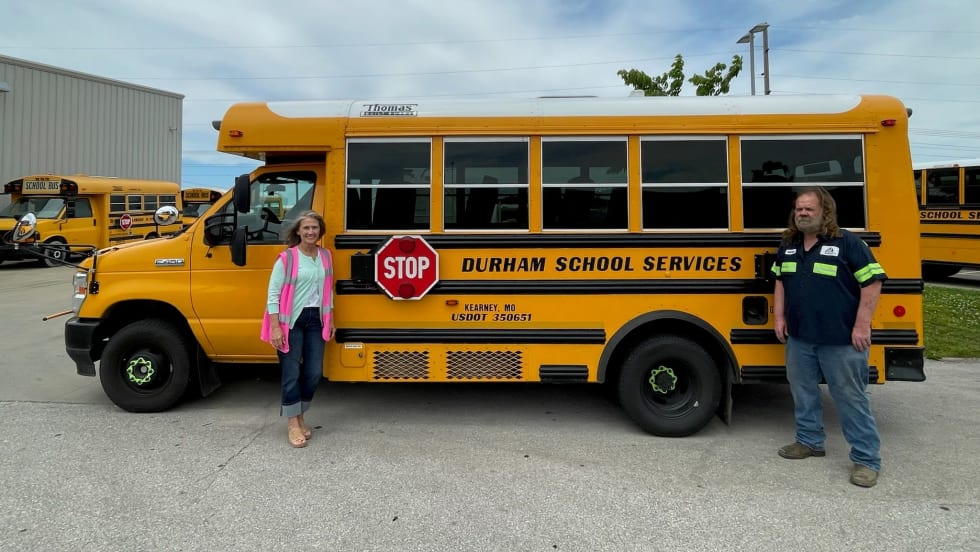
Durham School Services Maintenance Teams Earn Missouri Fleet Excellence Awards
Eight of the contractor’s school bus fleets achieved a distinction few maintenance teams earn during the state’s rigorous annual inspection program.
Read More →
How Incentives, AI, and Energy Markets Are Reshaping School Transportation
Sit down with Joe Annotti of TRC Companies to talk district grant funding, utility challenges, AI, and why school buses are evolving from transportation assets into energy assets.
Read More →
Inside the Contracting Shift: What School Transportation Operators Are Seeing Now
School transportation contractors weigh in on recent trends, costs, driver shortages, and the rise of multimodal student transportation.
Read More →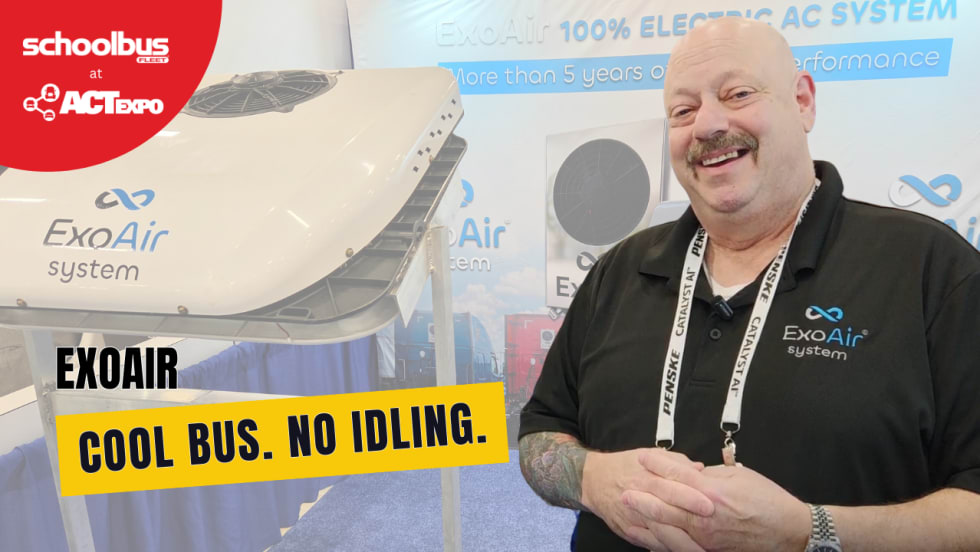
The No-Idling School Bus AC System
Take a peek at ExoAir Systems’ battery-powered cooling solution designed to run for up to 10 hours without the engine on, reducing fuel use and improving comfort for drivers and students.
Read More →
Geotab on Three Major Trends in School Transportation
School bus fleets are becoming more proactive than ever. From AI driver alerts to vehicle-to-grid opportunities, Geotab outlines the biggest technology trends transforming school bus operations.
Read More →
Gatekeeper Lands Major School Bus Deals as Revenue Surges
The video solutions provider announces contracts with Atlanta Public Schools and other fleet operators as it records quarterly revenue growth and expanding subscription business.
Read More →
Building Leaders Who Last: Creating a Successful Mentorship Program in Student Transportation
Discover five strategies for building an effective mentorship program to strengthen leadership development and support staff retention.
Read More →