




10 Characteristics of Safe, Professional School Bus Drivers
If you are like me, by the time the last few weeks of the school year roll around you are probably running out of ideas for fresh and interesting safe...
If you are like me, by the time the last few weeks of the school year roll around you are probably running out of ideas for fresh and interesting safety meetings. In this article I hope to provide you with enough talking points to keep positive conversations alive between you and your staff until the end of the year. Whether you hold daily meetings and need a topic each day to stimulate interactive conversation or enough material to get you through a one-hour weekly session, you should find all you need to get started right here.
I have had the wonderful opportunity to meet some of the best professional drivers from both my home state of New York and around the country as I attend conferences, consult and travel for personal vacations. I have discovered from talking with these professionals that it does not matter what type of vehicle they drive. From buses to semis, fire trucks to local delivery vehicles, the drivers who had clean driving records and professional attitudes all shared 10 clearly definable characteristics. I feel strongly that this information should be shared with school bus drivers.
As I mentioned earlier, the following list of 10 qualities can be used in a number of ways. A creative manager or driver trainer can use these 10 points to create a high impact PowerPoint presentation for a "formal" driver training classroom session. Add to it a handout or quiz with some local flavor, and I am sure the feedback will be positive. On the other hand, the 10 talking points below can each be used individually to help you start 10 daily morning meetings with a fresh safety reminder. I have personally used this data both ways and found I can get excellent results either way.
1. They know they aren’t driving a 3,000-pound car
We have all seen school bus driver candidates during their first few days of training. They walk around the parking lot marveling at the size of the buses. Many new drivers who have just received their learner’s permit from the DMV cannot imagine at that point that driving one of these behemoths could possibly be easy. Veteran drivers use this opportunity to assert their experience, professionalism and possibly their seniority with comments of simplicity and confidence. References are made that compare their bus to a large minivan or an SUV. While these comments often help the new drivers respect the experience of veteran drivers and help them believe that they could one day do this, these statements could not be further from the truth.
The fact of the matter is that true professionals know the distinct differences between their personal vehicle and their school bus. Size, acceleration, handling, braking and the most important difference, stopping distance, are factors that must be understood and respected. Drivers have to know that they must smoothly switch between small personal vehicles and their buses with no compromise in safety.
2. They know it’s easy to accelerate to 55 mph but tougher to stop
The sheer power of the diesel-fueled school bus is an amazing thing. Literally, with the effortless push of just one toe on the accelerator, hundreds of horsepower and thousands of pounds of vehicle can achieve highway speeds in seconds.
Unfortunately, while acceleration can be easily controlled without much thought, stopping distance takes considerable thought and planning. There's much written about braking and stopping school buses, so I will not hammer this point home. However, professional drivers understand that they control the bus. The bus should never control the driver.
3. They drive the bus like their children are inside
Basically this one line says it all. Sometimes we get so caught up in the rules and regulations or the daily difficulties of working with hundreds of children that we become inflexible. After all, we perform the same tasks day after day, and it’s easy to get into a routine or groove. Still, we do transport somebody’s child. Professional drivers always drive in the same fashion they would expect a person to drive a vehicle transporting their own children or grandchildren.
4. They don’t allow emotions or adrenaline to drive the bus
Do you know Debbie Dilemma or Charlie Chaos? If you don’t, you should. Every bus garage has a driver or two who is constantly living in a state of chaos, sometimes of their own making. Supervisors need to pay close attention to drivers who are constantly rushing into work in a whirlwind. The vary nature of our business, such as part-time status or bidding for hours, helps create hectic lives. It is not uncommon for drivers to juggle two or three part-time jobs. Add to that kids, domestic matters, bus garage personality conflicts or local political issues and the pressures can be tough to handle.
Drivers need to clearly separate their personal matters from the time spent on the school bus. Emotions such as anger, sadness, nervousness or chemical surges from adrenaline can cause even the best drivers to make poor decisions. Supervisors or trainers can clearly recognize people like this in their operation but need to respect their personal matters. We need to work with them to keep a safe route. We can also help them bid hours that fit their busy schedules and alleviate some time pressures. Professional drivers separate life’s troubles and pressures from their driving environment.
5. They always observe the three-month rule
The three-month rule for professional drivers is that if you have not driven a particular vehicle in the past three months, you should not be using it on a route. School bus fleets are identically different. If that statement sounds humorous, it was meant to be. If you think about, it is actually true.
One of the things professional drivers pride themselves on is their ability to drive any bus in the fleet. One of the purchasing practices that aids this concept is fleet managers who try to standardize their bus specifications. One key fact to keep in mind is that even buses built to the same specifications each year will have a number of differences and, if the manufacturers are on top of things, improvements as well. Items like switches, heater controls, drivetrains and braking systems can function differently from bus to bus. Professional drivers do their best to stay familiar with all the buses they may be expected to transport children in.
6. They treat returning to the garage equally to the route itself
With the students safely dropped at their respective destinations, the driver’s thoughts often turn to some well-deserved personal time. Whether you are heading back to the garage, home (if you keep your bus there between runs) or to get a bite to eat during a trip, you must still drive defensively and professionally. This is not the time to open the windows, turn up the stereo and cruise. Citizens are always watching your bus, and accidents can happen anytime. Another fact for drivers to consider is that an accident on downtime, while out of the district on a trip or athletic event, can strand your students and result in significant delays locating mechanics, relief drivers and buses on evenings or weekends.
7. They don’t mess with drugs or alcohol
Zero tolerance for drugs and limited social use of alcohol are the accepted rules of the day. However, there seems to be a small minority of drivers who still feel that as long as they are alcohol free during the work week, it is OK to let their hair down on Friday night.
The problem with this way of thinking is that unless you are in the privacy of your own home, the eyes of the community are still upon you. Even if you stay clean and sober Monday through Friday while behind the wheel of a school bus, driving under the influence in your own car on Saturday night is just not acceptable behavior for a professional driver.
8. They watch their speed and use proper rail crossing procedures
If you review a great deal of accident reports, you’ll find a common thread — speed. Professional drivers recognize the importance of speed control and adjusting speed to conditions. On the same note, following posted signs and warnings and following rail-crossing guidelines can prevent disaster no matter what you are driving or transporting.
9. They always wear the driver’s seat belt
Not that I am looking to get into a debate about seat belts, but I do feel that seat belt use for drivers is critical. Professional drivers must be able to remain in position and in control of the vehicle they are driving no matter what situation arises. Also, supervisors and driver trainers need to be aware of drivers in their organization whose physical features such as height or weight present difficulties using seat belts. They need to remedy this situation before it is too late. Professional drivers always use their seat belts.
Some final thoughts
There you have it. Nine of the most important characteristics shared by professional drivers and an article you can use to build a training class or talking points. If you are thinking to yourself that I promised 10 and only delivered nine, you are right. The 10th point is something your drivers can only be assisted with.
The 10th characteristic shared by professional drivers is a constant thirst for training and knowledge. From the school board to the superintendent and on down, an environment that supports and provides training opportunities must be offered. Costs of training can be high, so you must budget accordingly. Professional drivers love training opportunities.
More Management
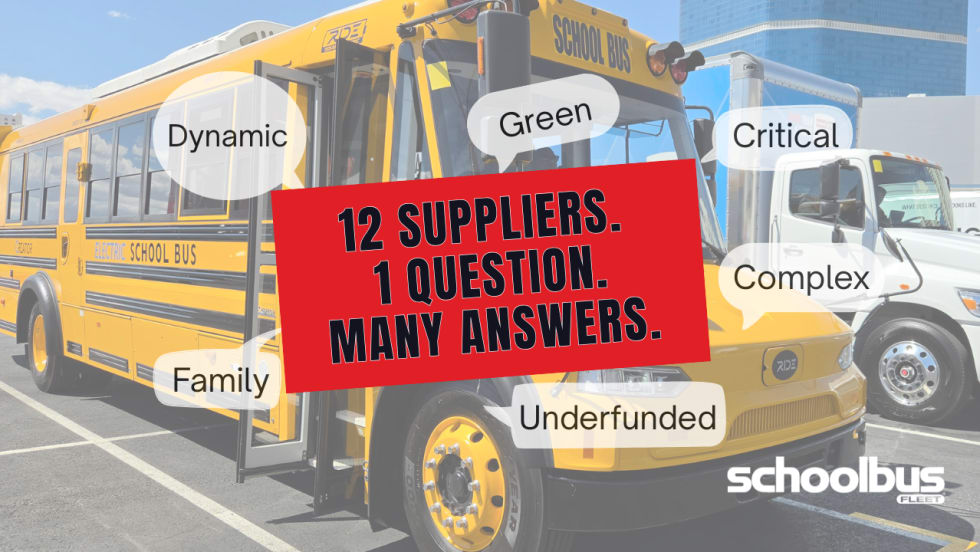
13 Industry Leaders Describe School Transportation in One Word
What word best describes the school bus industry today? We posed that question to over a dozen manufacturers, resulting in a revealing mix of perspectives on the challenges and opportunities ahead.
Read More →
Tyler Technologies Adds New AI, Transactions Leadership Roles
Two company executives are promoted to newly created C-suite positions to accelerate the company's long-term growth in both artificial intelligence and payments.
Read More →
Pro-Vision Acquires Convoy Technologies
The deal aims to broaden customer relationships and adds specialized vehicle video capabilities for commercial fleets.
Read More →


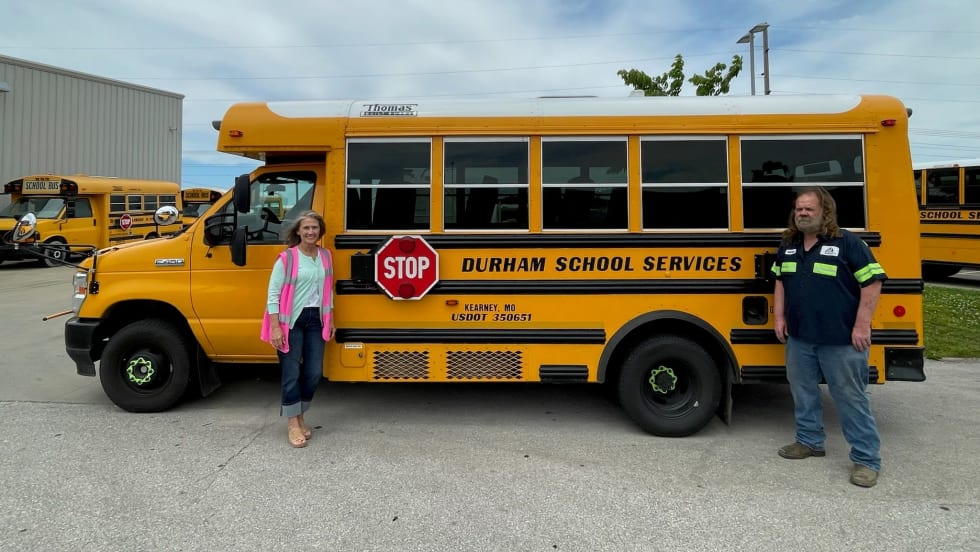
Durham School Services Maintenance Teams Earn Missouri Fleet Excellence Awards
Eight of the contractor’s school bus fleets achieved a distinction few maintenance teams earn during the state’s rigorous annual inspection program.
Read More →
How Incentives, AI, and Energy Markets Are Reshaping School Transportation
Sit down with Joe Annotti of TRC Companies to talk district grant funding, utility challenges, AI, and why school buses are evolving from transportation assets into energy assets.
Read More →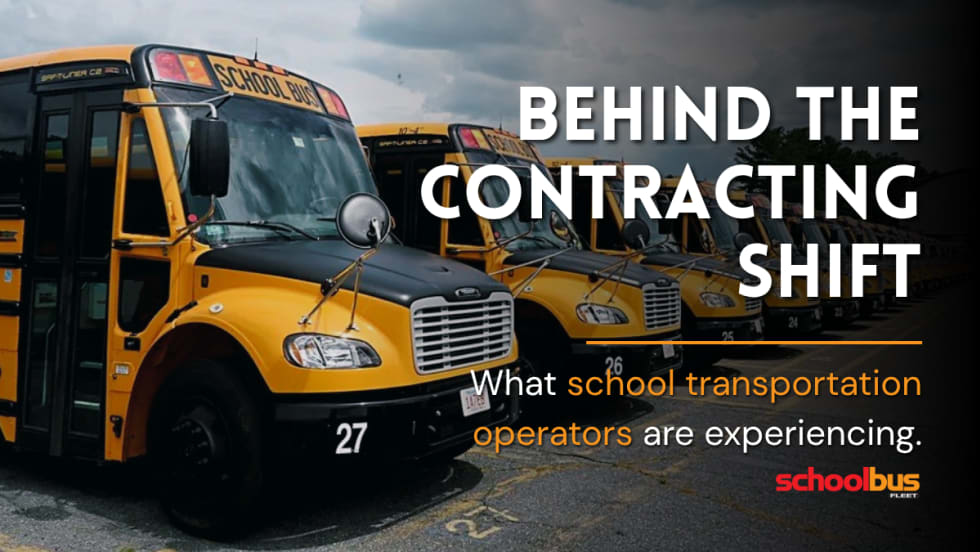
Inside the Contracting Shift: What School Transportation Operators Are Seeing Now
School transportation contractors weigh in on recent trends, costs, driver shortages, and the rise of multimodal student transportation.
Read More →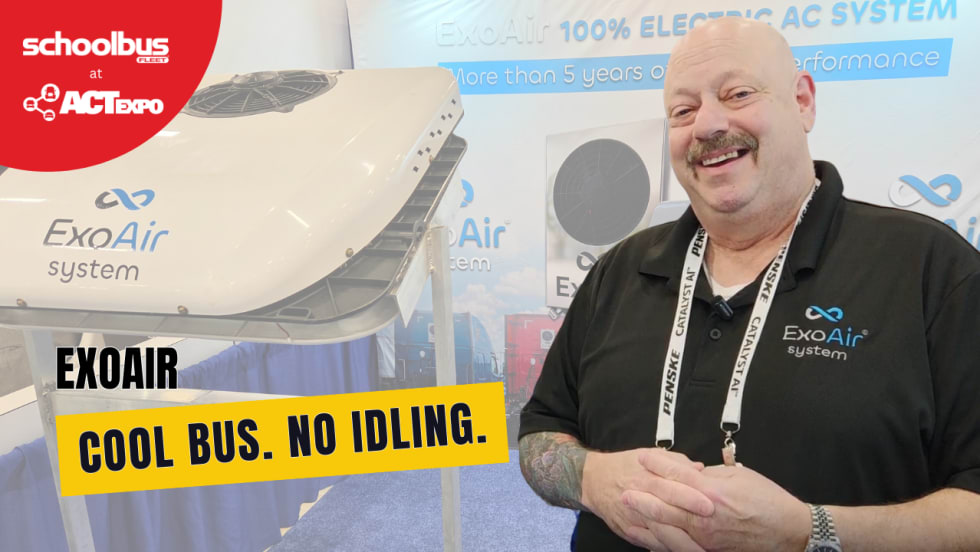
The No-Idling School Bus AC System
Take a peek at ExoAir Systems’ battery-powered cooling solution designed to run for up to 10 hours without the engine on, reducing fuel use and improving comfort for drivers and students.
Read More →
Geotab on Three Major Trends in School Transportation
School bus fleets are becoming more proactive than ever. From AI driver alerts to vehicle-to-grid opportunities, Geotab outlines the biggest technology trends transforming school bus operations.
Read More →
Gatekeeper Lands Major School Bus Deals as Revenue Surges
The video solutions provider announces contracts with Atlanta Public Schools and other fleet operators as it records quarterly revenue growth and expanding subscription business.
Read More →
Building Leaders Who Last: Creating a Successful Mentorship Program in Student Transportation
Discover five strategies for building an effective mentorship program to strengthen leadership development and support staff retention.
Read More →