



Guidelines for Chartering Motorcoach Buses to Transport Students
Culminating a year-long multi-agency effort to improve student passenger safety on motorcoaches, the North Carolina School Charter Transportation Safe...
Culminating a year-long multi-agency effort to improve student passenger safety on motorcoaches, the North Carolina School Charter Transportation Safety Committee (SCTSC) has released its guidelines and procedures for contracting motorcoach operators to transport students. The following is an overview of the SCTSC's research and recommendations. The full report is available at www.ncbussafety.org, under "pupil transportation resources."
The development process
As co-chair of the SCTSC, I surveyed our public school districts to find out if they maintained a central list of motorcoach carriers, who made the decision whether or not to charter and who decided the company with which to contract. Out of 117 school districts surveyed, we received 63 responses. Only four counties reported that they maintained a central list. Ironically, Cumberland County (Fayetteville), where a motorcoach accident occurred earlier this year, was one of those four districts that maintained a central list of approved carriers. The response was nearly unanimous that a teacher or principal makes the decision whether or not to use a charter bus and selects the company with which to contract. Considering the amount of coordinating that goes into planning a school activity trip, a teacher is primarily concerned with obtaining a bus at the right price and on the right date, and is likely unaware of the safety requirements that the coach operator must meet. A key problem was identified.
Tragedy strikes
Early on the morning of April 6, following a midnight departure from school, a charter motorcoach carrying students from Cumberland County, N.C., flipped on its side and skidded down southbound I-95, dragging students through shattered glass and asphalt. Many passengers were injured, and seven of the most serious cases were taken to a hospital in Jacksonville, Fla. Though chartering motorcoaches was not the responsibility of the transportation department, it was Dr. Mike Clover, senior director of transportation, who was dispatched to Jacksonville. This turned into an eight-day trip for Dr. Clover. The accident occured when the driver fell asleep at the wheel. Further, this driver was a subcontract driver - not insured and not employed by the company that was contracted by the school district for the trip. That left Dr. Clover - with proof of insurance in hand - to deal with the media, which demanded to know how students could be assigned to a bus that was not approved by the school system. To make matters worse, the driver had been on duty at another job prior to his departure and, during the course of the overnight trip, exceeded the maximum on-duty time allowed under federal law.
Responding to the crisis
The SCTSC, with a new sense of urgency ignited by this crash, began a series of seven weekly meetings to finalize the guidelines for schools to use when chartering buses. Building on the work of the committee to date and with a clear focus on providing something useful to schools, this committee dedicated itself to meeting a June 1 deadline, in anticipation of the opening of school in late sum-mer. As a result of the SCTSC's work, Chris Hartley, state director of the Federal Motor Carrier Safety Administration (FMCSA), seized the opportunity to coordinate FMCSA training with the newly developed document and initiated five regional meetings throughout North Carolina for public school representatives to learn about contracting with motorcoach operators. The more training that can be made available to individuals responsible for school charter trips, the better. The motorcoach industry is quite complicated, operating under a number of federal requirements. School district personnel can-not become experts in motorcoach operation. However, asking certain key questions will make it clear to the carrier that the school system is serious about the safety of students. The FMCSA is committed to assisting schools in this process. Contact the FMCSA director in your state to find out what resources or training may be available.
The recommendations
The SCTSC identified three main steps for acquiring charter motorcoach services.
1. Pre-approval. The superintendent or his or her designee should maintain a list of approved motorcoach operators for the school district, which should be updated annually. It is recommended that a school system representative visit motorcoach operations to meet with carriers and discuss the company's drug testing program, maintenance program, driver policies, driver records, etc. The com-pany must submit to the school district specific documentation (see sidebar pg. 46). The district should also check the DOT safety rating assigned to the carrier. This can be done online through A&I Online or SAFER, each of which is linked from the FMCSA's Website at www.fmcsa.dot.gov.
2. Contract for a specific trip. Initiate a contract only with a carrier on the approved list. State explicitly that the carrier may not subcontract any portion of the trip except with another carrier on the approved list. Make sure the contract ensures the proper number of drivers are assigned to the trip in relation to the hours of service allowed for each driver. Include the exact itinerary, method of payment and other details in the contact. In the process of developing the contract, let the carrier know that a school system representative will expect certain documents immediately prior to departure on the day of the trip (see item 3). Finally, about one week prior to the trip, call the carrier's insurance company to verify that insurance is still in force.
3. Pre-trip review. Immediately prior to departure, a school system representative should meet with the driver and go over certain key requirements. The driver must present his or her medical card, CDL with P-endorsement, log book and vehicle registration. The school system representative should review the overall condition of the bus with the driver for cleanliness, and check a few basic mechanical items such as lights and tires.
More Management
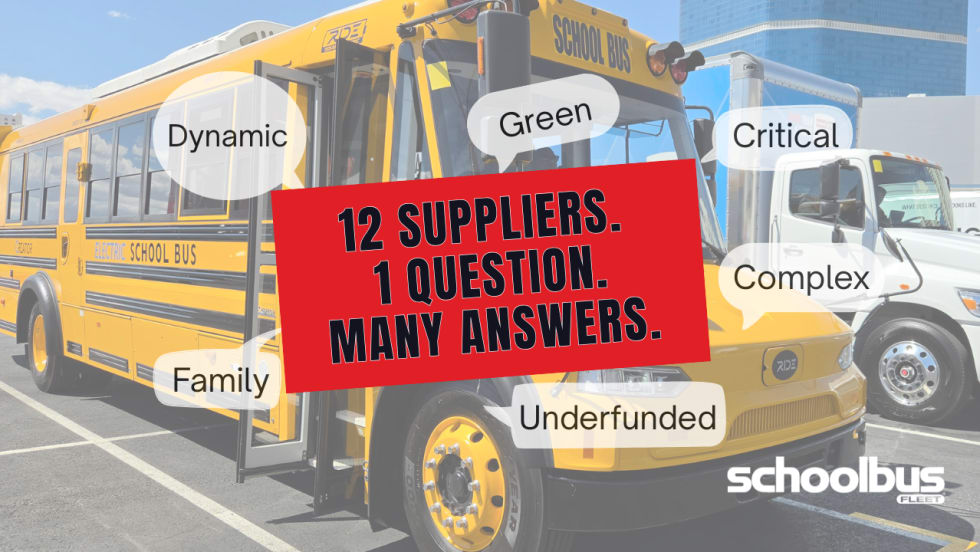
13 Industry Leaders Describe School Transportation in One Word
What word best describes the school bus industry today? We posed that question to over a dozen manufacturers, resulting in a revealing mix of perspectives on the challenges and opportunities ahead.
Read More →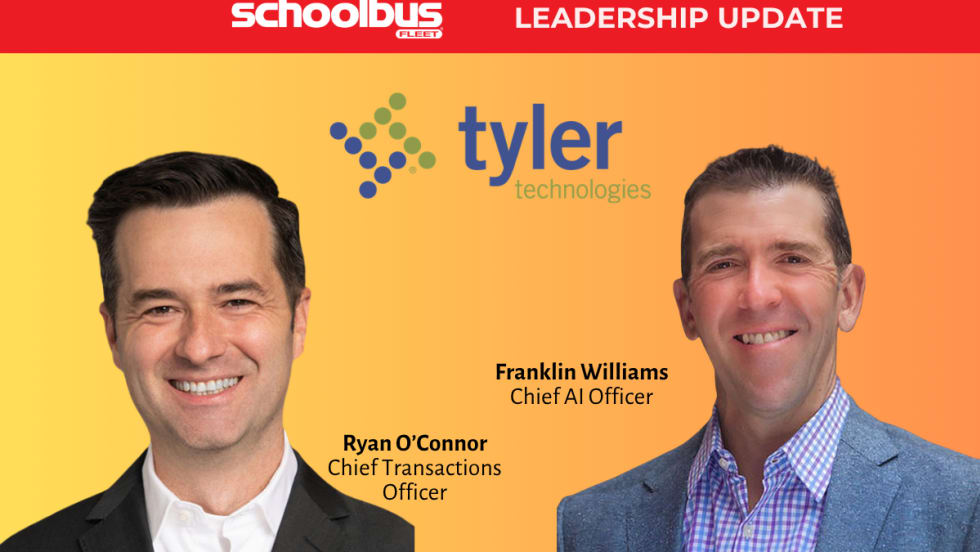
Tyler Technologies Adds New AI, Transactions Leadership Roles
Two company executives are promoted to newly created C-suite positions to accelerate the company's long-term growth in both artificial intelligence and payments.
Read More →
Pro-Vision Acquires Convoy Technologies
The deal aims to broaden customer relationships and adds specialized vehicle video capabilities for commercial fleets.
Read More →


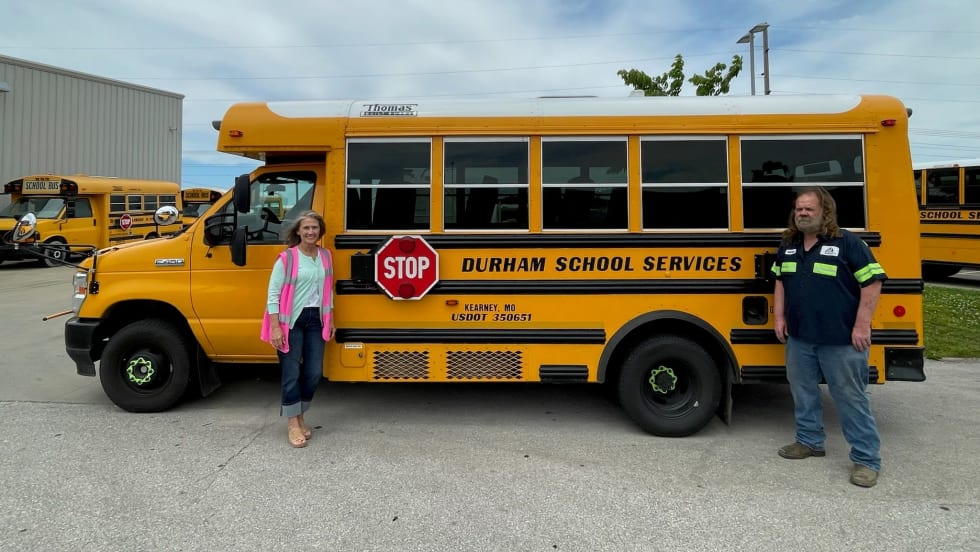
Durham School Services Maintenance Teams Earn Missouri Fleet Excellence Awards
Eight of the contractor’s school bus fleets achieved a distinction few maintenance teams earn during the state’s rigorous annual inspection program.
Read More →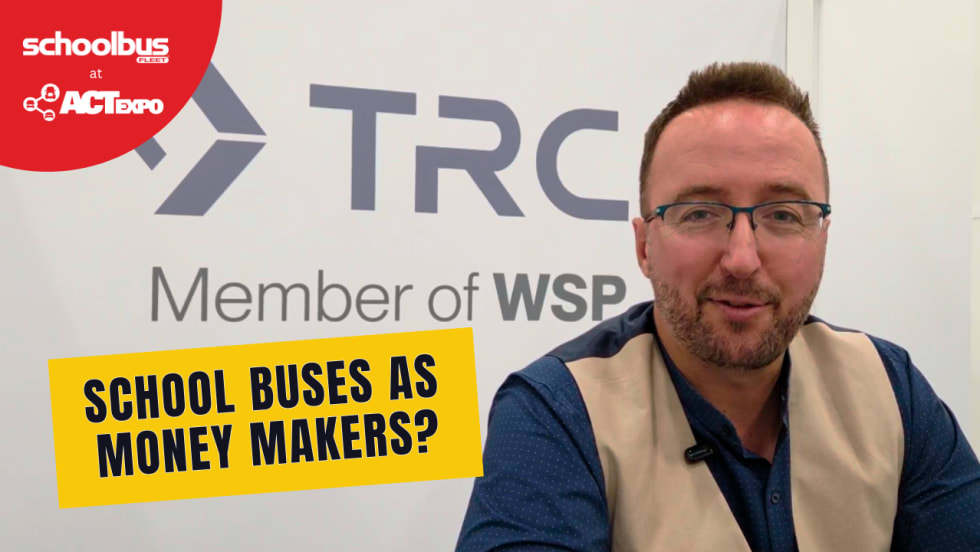
How Incentives, AI, and Energy Markets Are Reshaping School Transportation
Sit down with Joe Annotti of TRC Companies to talk district grant funding, utility challenges, AI, and why school buses are evolving from transportation assets into energy assets.
Read More →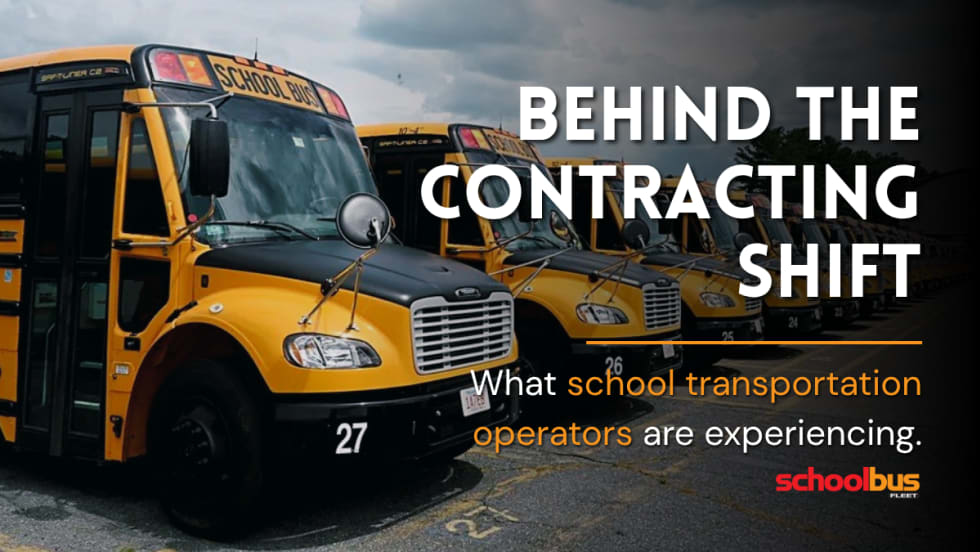
Inside the Contracting Shift: What School Transportation Operators Are Seeing Now
School transportation contractors weigh in on recent trends, costs, driver shortages, and the rise of multimodal student transportation.
Read More →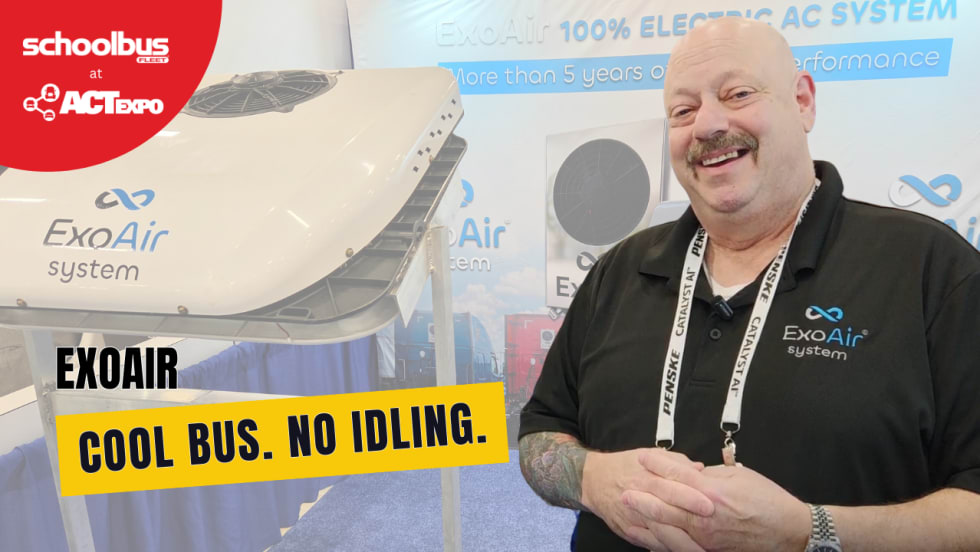
The No-Idling School Bus AC System
Take a peek at ExoAir Systems’ battery-powered cooling solution designed to run for up to 10 hours without the engine on, reducing fuel use and improving comfort for drivers and students.
Read More →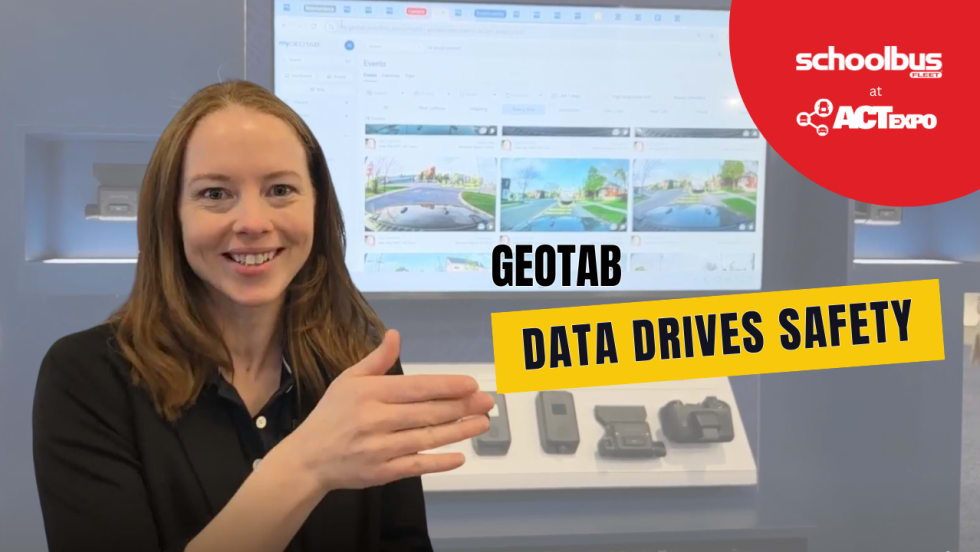
Geotab on Three Major Trends in School Transportation
School bus fleets are becoming more proactive than ever. From AI driver alerts to vehicle-to-grid opportunities, Geotab outlines the biggest technology trends transforming school bus operations.
Read More →
Gatekeeper Lands Major School Bus Deals as Revenue Surges
The video solutions provider announces contracts with Atlanta Public Schools and other fleet operators as it records quarterly revenue growth and expanding subscription business.
Read More →
Building Leaders Who Last: Creating a Successful Mentorship Program in Student Transportation
Discover five strategies for building an effective mentorship program to strengthen leadership development and support staff retention.
Read More →