




Head Start Programs Push 'Commitment' to Recruit, Retain Drivers
Fortunately, wages are not the driving force for employment. 'Making a difference' is the leading attraction, and many parents respond.
If school districts and contractors are having problems recruiting and retaining bus drivers, you might expect budget-strapped Head Start agencies to have even rougher times filling their driving slots. But the reality is that Head Start operators, although not awash in drivers, are managing to get their routes completed without much difficulty. The explanation is fairly simple. Head Start drivers typically are not driving for the money. If they were, the $6- to $7-an-hour wages would quickly wear thin. Obviously, there are other reasons why they drive. "I think it's the idea that they're making a difference with these families," says Kathy Potts, transportation coordinator of the South Central Community Action Head Start in Bloomington, Ind. "We know we're here not for the wage," Potts says. "We're here because of the lives that we touch and the fact that we can have that one-on-one contact and make that difference for those parents." Unlike school districts, Head Start agencies can rely on drawing drivers and aides from the parent pool. Word of mouth among this group can help to pull even more parents into the loop. But that doesn't mean that Head Start transportation coordinators don't need to recruit. They use many of the same techniques that their school district counterparts use, such as classified advertising in local newspapers. Potts says her drivers also assist in the recruiting process, canvassing for college students at nearby Indiana University.
More than just drivers
Once drivers are brought into the fold, Potts tries to keep them there by offering more than time behind the wheel. She says that her drivers serve as the main contact for Head Start parents and are responsible for relaying messages between parents and staff, driving on field trips, and teaching the children about school bus safety. Mary Anne Schutz, transportation coordinator of Warren County Head Start in Glen Falls, N.Y., also believes that providing additional duties to drivers helps with retention and offers other benefits. "The advantage of that [various driver duties] is that the drivers get to know the kids, they know the classroom, they know about the Head Start philosophy and what we're trying to do and why we're trying to do it," Schutz says. Barb Sylvester, transportation coordinator for the Community Action Agency Head Start program serving Jackson and Hillsdale Counties near Ann Arbor, Mich., says that difficulty in retaining bus monitors has forced them to try an alternative strategy. Instead of just hiring people to watch the children, Sylvester says her agency tries to find monitors who can double as substitute bus drivers. Thus, they're required to obtain CDLs and undergo driver training. Linda Flaugher, a transportation coordinator who works with Sylvester, says that when there are openings for bus monitors and drivers, they try to get current parent volunteers to make the switch and become paid staff members.
Delicate balancing act
Bob Busch, director of transportation services for the Community Action Council Head Start program in Lexington, Ky., says driver retention is a continuing problem. Busch, whose program operates 16 school buses, offers drivers an annual safe driver bonus. The program also covers the cost of the annual DOT driver physical and offers to pay for CDL renewals. "There's definitely a shortage and we, in a friendly way, compete with the local school district for qualified drivers," Busch says. Busch says one of the other ways in which his program can compete with school districts for potential drivers is by emphasizing his behavior-management advantage: 3- and 4-year-olds are much easier to handle than middle-school students.
GPS Targets Head Start Ride Time
A lengthy ride time can stretch into eternity when it involves fussy infants and toddlers. To keep ride times to a minimum requires some fancy route scheduling - or an investment in something a little more scientific. Trying to keep ride times under one hour is a challenge for Doug Abram, Head Start transportation coordinator for Snyder, Union, Mifflin Child Development, Inc. of Mifflinburg, Pa. That's because he's in charge of a rural area that covers three counties and more than 1,000 square miles. "The geography is what makes it difficult," Abram says. "The kids live very far apart and the roads don't always go in the right direction." To address this issue, Abram is experimenting with GPS technology. This spring, when Abram's Head Start program begins recruiting children for its 17 centers, the family support staff will carry a hand-held Garmin GPS receiver and use that to mark the child's global position right on the child's application. "Whenever they [family support staff] come back and log those kids into our database system, we can print out a map with all the kids plotted," Abram explains. When enrollment time arrives, the child then can be directed toward the most geographically advantageous center. Abram says the GPS system is being tested in four of its centers.
More Management
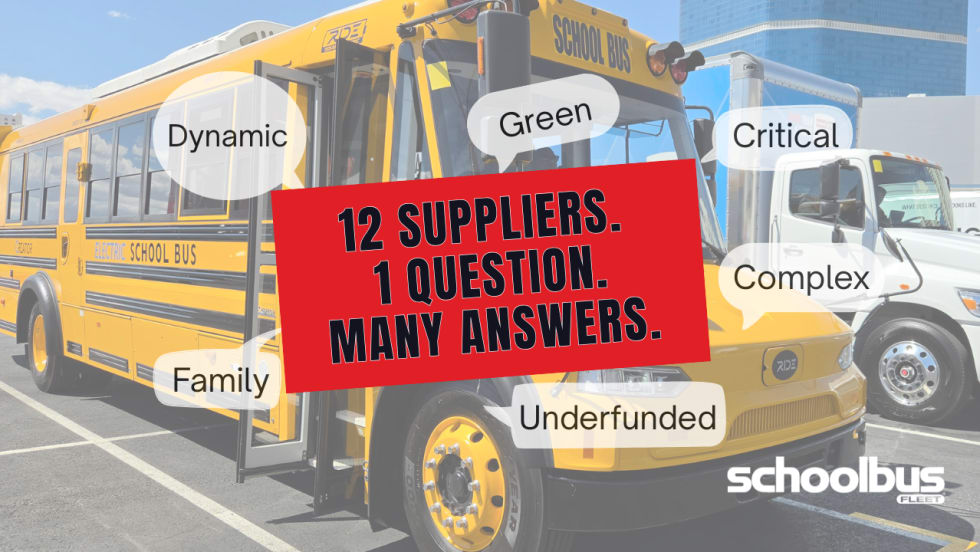
13 Industry Leaders Describe School Transportation in One Word
What word best describes the school bus industry today? We posed that question to over a dozen manufacturers, resulting in a revealing mix of perspectives on the challenges and opportunities ahead.
Read More →
Tyler Technologies Adds New AI, Transactions Leadership Roles
Two company executives are promoted to newly created C-suite positions to accelerate the company's long-term growth in both artificial intelligence and payments.
Read More →
Pro-Vision Acquires Convoy Technologies
The deal aims to broaden customer relationships and adds specialized vehicle video capabilities for commercial fleets.
Read More →


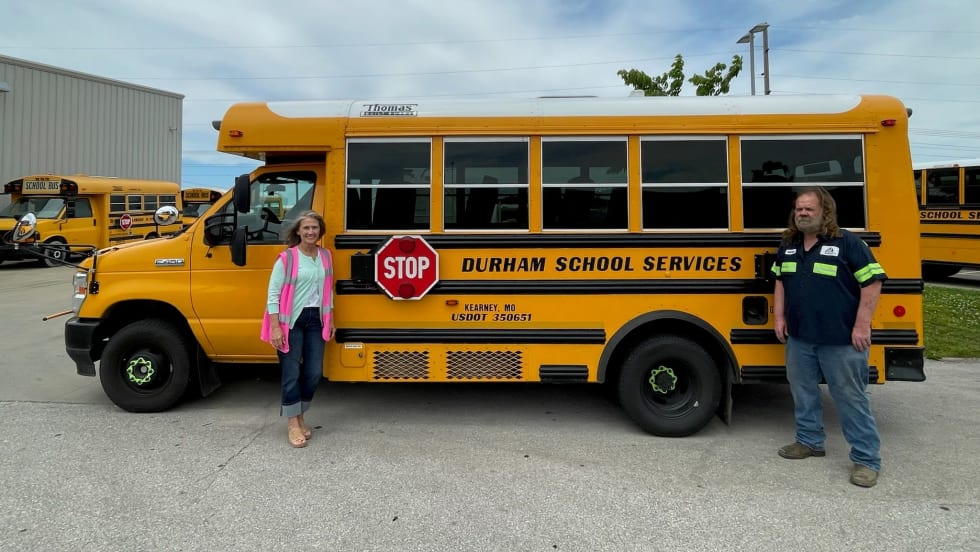
Durham School Services Maintenance Teams Earn Missouri Fleet Excellence Awards
Eight of the contractor’s school bus fleets achieved a distinction few maintenance teams earn during the state’s rigorous annual inspection program.
Read More →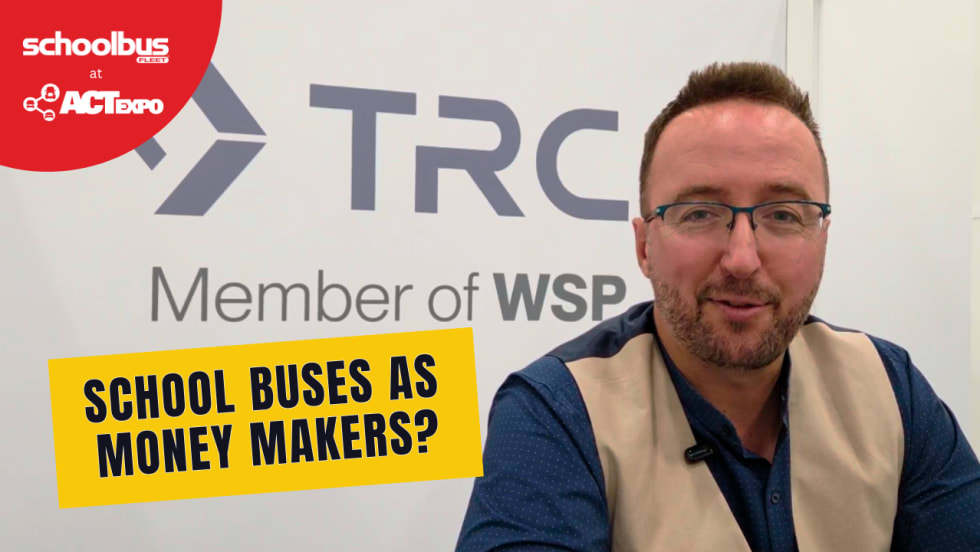
How Incentives, AI, and Energy Markets Are Reshaping School Transportation
Sit down with Joe Annotti of TRC Companies to talk district grant funding, utility challenges, AI, and why school buses are evolving from transportation assets into energy assets.
Read More →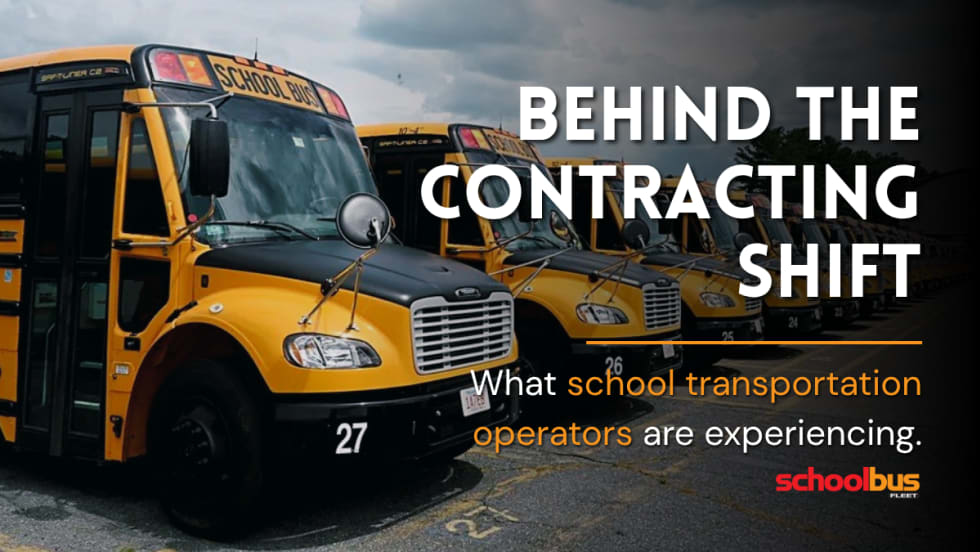
Inside the Contracting Shift: What School Transportation Operators Are Seeing Now
School transportation contractors weigh in on recent trends, costs, driver shortages, and the rise of multimodal student transportation.
Read More →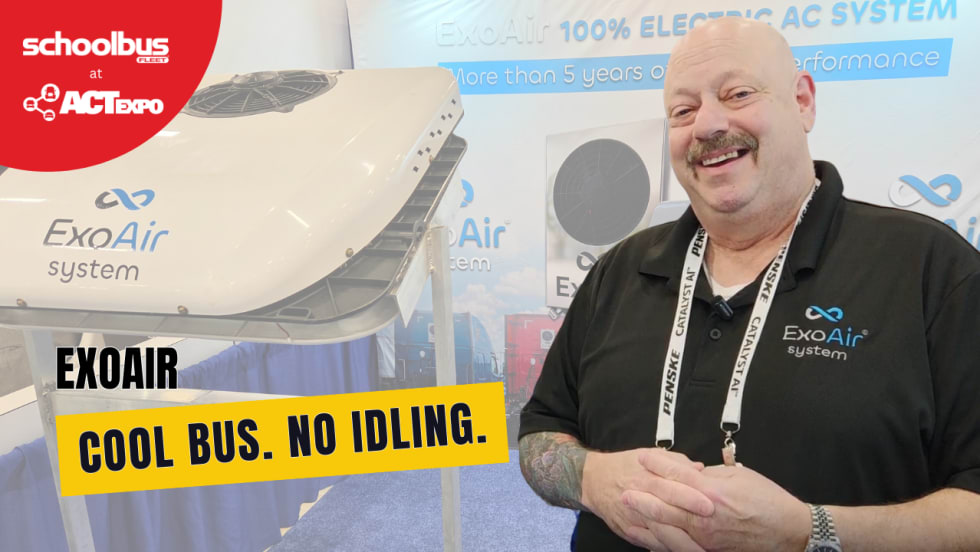
The No-Idling School Bus AC System
Take a peek at ExoAir Systems’ battery-powered cooling solution designed to run for up to 10 hours without the engine on, reducing fuel use and improving comfort for drivers and students.
Read More →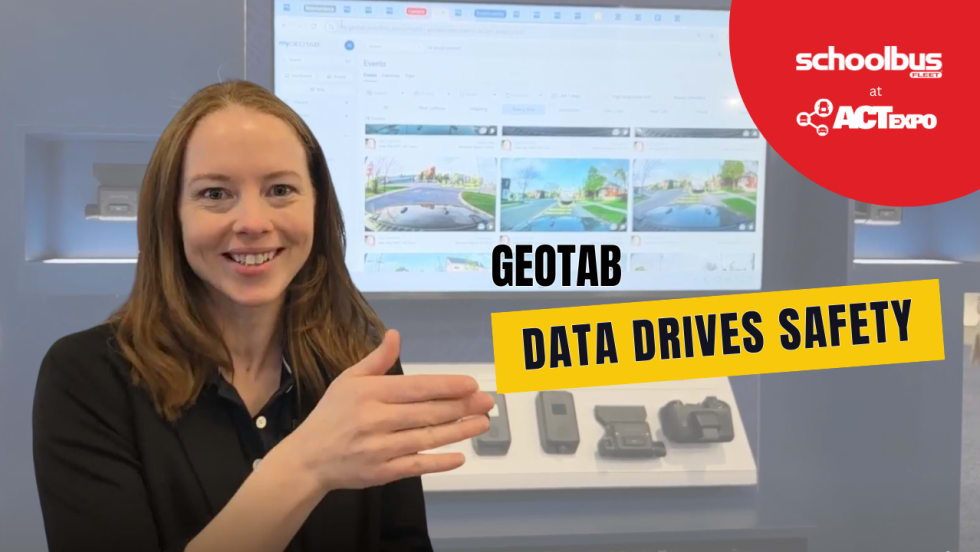
Geotab on Three Major Trends in School Transportation
School bus fleets are becoming more proactive than ever. From AI driver alerts to vehicle-to-grid opportunities, Geotab outlines the biggest technology trends transforming school bus operations.
Read More →
Gatekeeper Lands Major School Bus Deals as Revenue Surges
The video solutions provider announces contracts with Atlanta Public Schools and other fleet operators as it records quarterly revenue growth and expanding subscription business.
Read More →
Building Leaders Who Last: Creating a Successful Mentorship Program in Student Transportation
Discover five strategies for building an effective mentorship program to strengthen leadership development and support staff retention.
Read More →