



District’s hybrid buses parked over green rub rails
The California Highway Patrol maintains that the green rails on Napa Valley Unified School District’s buses are not in compliance with state and national standards. Director of Transportation Ralph Knight discusses with SBF the benefits he says he believes the green rails provide, and the steps he’s taking to try to revise California’s regulations on school bus colors after an exemption request to allow the green rails was denied by the highway patrol.

Napa Valley (Calif.) Unified School District has put black vinyl tape over the green rub rails of its wheelchair-equipped hybrid buses so that it can operate them. The California Highway Patrol has said that the green rails are not in compliance with state and national standards. The green bumpers, however, are permitted.
NAPA VALLEY, Calif. — Many of Napa Valley Unified School District’s hybrid buses are currently out of service because the California Highway Patrol (CHP) maintains that their green rub rails do not comply with state and national standards.
A section of Title 13 in the California Code of Regulations that covers school bus color and signs indicates that the exterior of a school bus must be yellow, with the exception of bumpers, grilles, lamp bodies and other accessories. (Therefore, the hybrid buses' green bumpers are permitted.) Title 13 also says that a bus' moldings and rub rails “may be black.”
Napa Valley Unified School District Director of Transportation Ralph Knight told SBF in an interview that he understands California Title 13 requirements, but he noted that a statutory provision allows for exemptions.
He assembled a package with letters of support from the American Lung Association, Clean Cities coordinators, fire marshals and other groups and requested an exemption from CHP Commissioner Joseph Farrow. Farrow denied the request.
In a letter to Knight, he wrote, “The National School Bus Standards Conference establishes recommendations for nationwide standard school bus colors and markings, to ensure the vehicles are clearly distinguishable as vehicles transporting schoolchildren. Deviation from these standards must be strictly regulated to minimize the potential adverse effect associated with reduced regulation.”
Farrow also said that universally recognized markings that identify a vehicle as one that uses an alternative fuel are currently required by both federal and state regulations, but “do not include the use of green rub rails on school buses.”
Knight has several issues with Farrow’s response. He said that the color of rub rails is up to the discretion of individual states and is not part of the national school bus standards. Nevada allows green rub rails, and Colorado allows rub rails that are not black, according to Knight.
He also said he does not understand how green rub rails could have an adverse effect.
“I don’t feel that the change from black rails to green rails is going to endanger kids on the bus,” he said, adding that he believes that the green rub rails actually contribute to the safety of students and first responders by drawing attention to the fact that the buses are powered by an alternative fuel.
“In an emergency, we don’t want first responders to cut into a sidewall and run into a 300-volt wire,” Knight explained.
In addition, he believes that the green rub rails could help draw the attention of other motorists, thereby causing them to stop for the bus instead of illegally passing it.
Knight said he is working with legislators to propose changes to the wording of Title 13 in the California Code of Regulations that would allow for rub rails to be a color other than black.
In the meantime, Knight has put black vinyl tape over the green rub rails of his wheelchair-equipped hybrid buses because he said he needs to operate them.
Other news on hybrid buses:
More Alternative Fuels
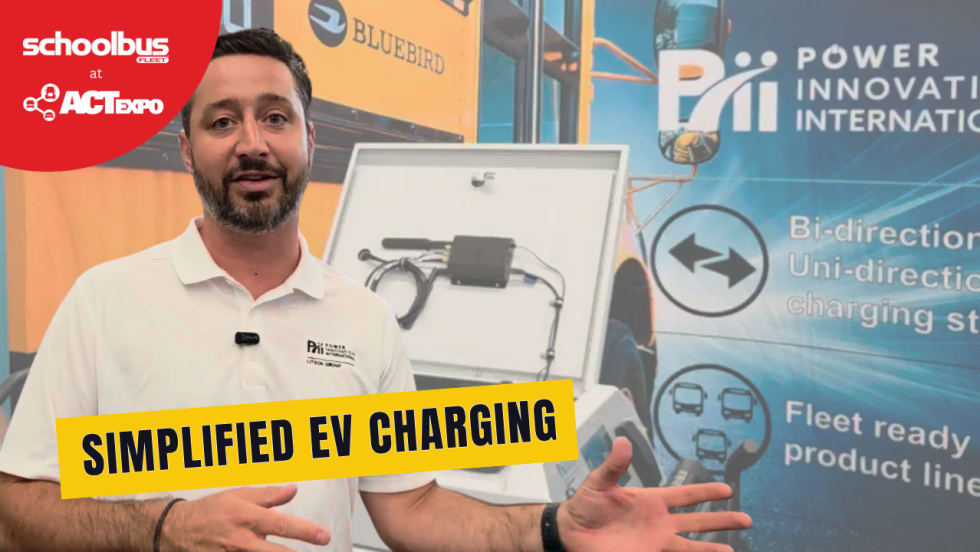
A Solution Helping School Buses Charge Without Major Infrastructure Upgrades
Power Innovations International dishes on its EV charging technology designed to reduce infrastructure barriers, improve reliability, and support V2G applications for school bus fleets.
Read More →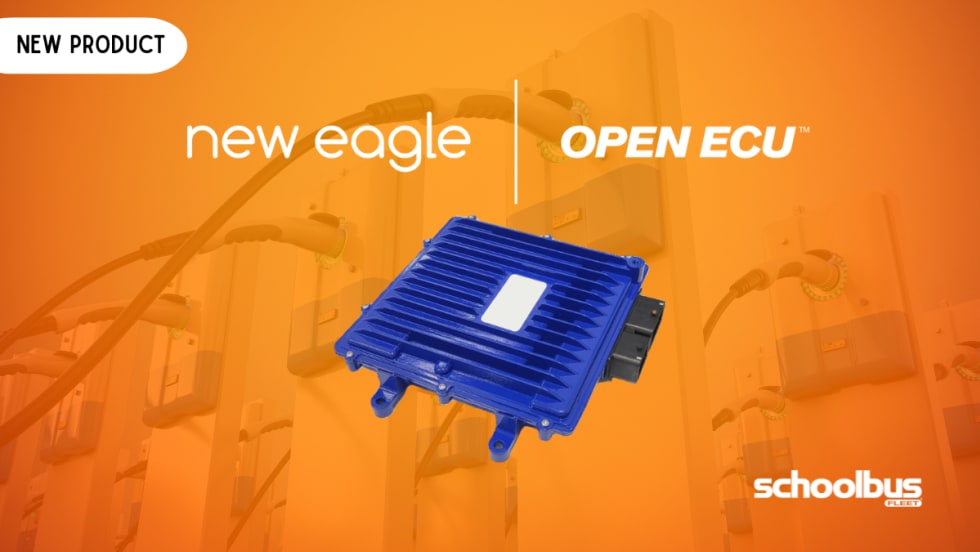
New Eagle Launches All-in-One EV Control Platform
The new OpenECU NX3 platform integrates charging and vehicle controls into a single platform, with support for megawatt charging and vehicle-to-grid technologies.
Read More →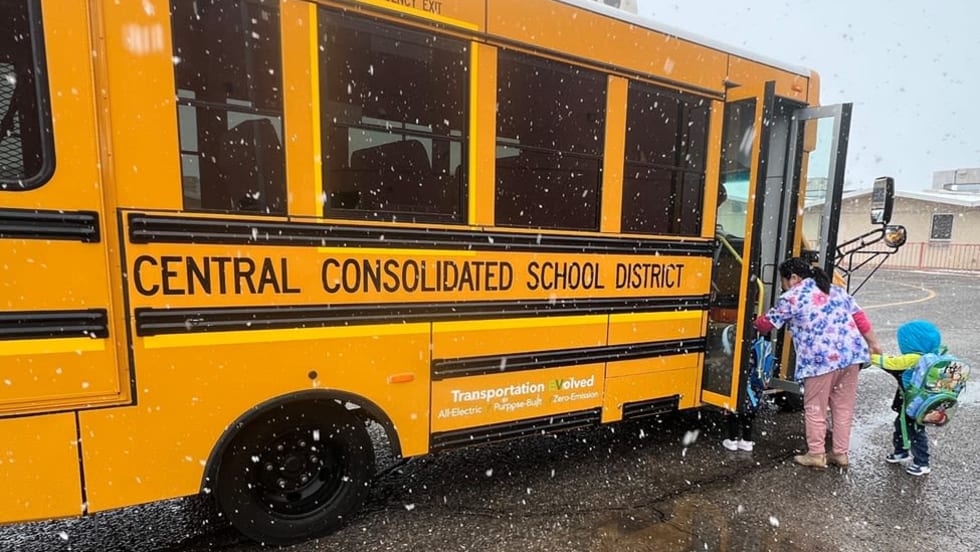
GreenPower Unveils New Heating Solution for Type A Bus
The all-electric bus manufacturer's new product aims to eliminate cold-cabin issues on its Nano BEAST zero-emission school buses operating in cold climates.
Read More →
Alt-Fuel Moves: Fleets Plug In for the Long Haul
School districts across the U.S. are moving electric school bus plans into operation, with new fleet deployments, charging infrastructure, and long-term electrification partnerships taking shape.
Read More →
The Achilles Heel of School Bus Electrification: BetterFleet’s Take
BetterFleet’s managing partner discusses AI-powered EV fleet management, vehicle-to-grid challenges, and the real challenges in bus electrification today, from ACT Expo.
Read More →
You're On Your Own to Pick a Drivetrain [Op-Ed]
After years of federal pressure toward electric school buses, districts are suddenly being told to choose their own path. Let’s explore the risks, realities, and politics behind school bus drivetrain decisions.
Read More →
Wattson: Thomas Built’s Largest EV School Bus Yet
Check in with Mark Childers on the new Wattson Type D electric school bus, featuring faster charging, expanded passenger capacity, and advanced safety technology.
Read More →
The New Era of Electric School Buses: V2G, Bidirectional Chargers & More
The Mobility House discusses AI-powered charging, vehicle-to-grid technology, smart energy management, and the next phase of school bus electrification.
Read More →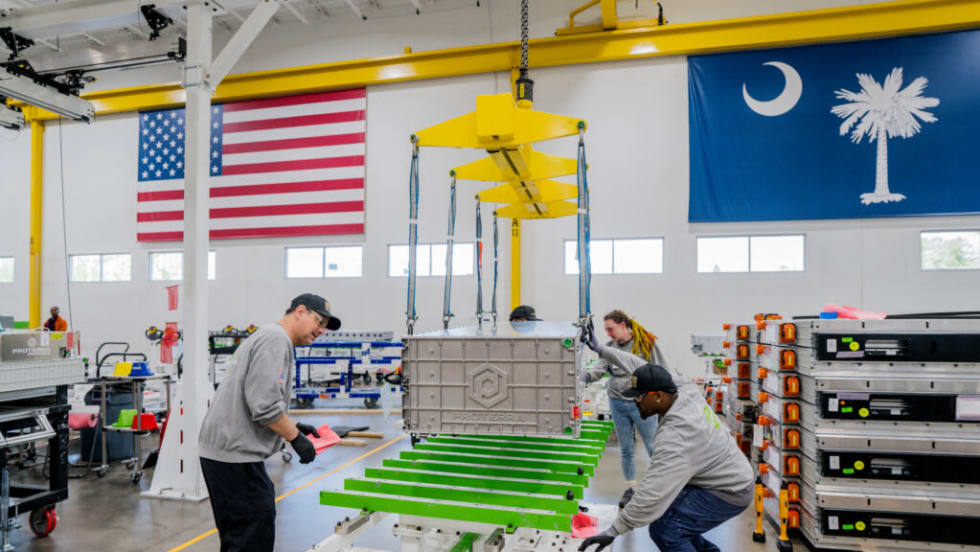
Now Made in America: Proterra Turns to U.S.-Built EV Batteries
Proterra announced a new U.S.-sourced battery cell option for its Onyx platform, boosting domestic content by more than 600% and strengthening EV supply chain resilience for commercial vehicle OEMs.
Read More →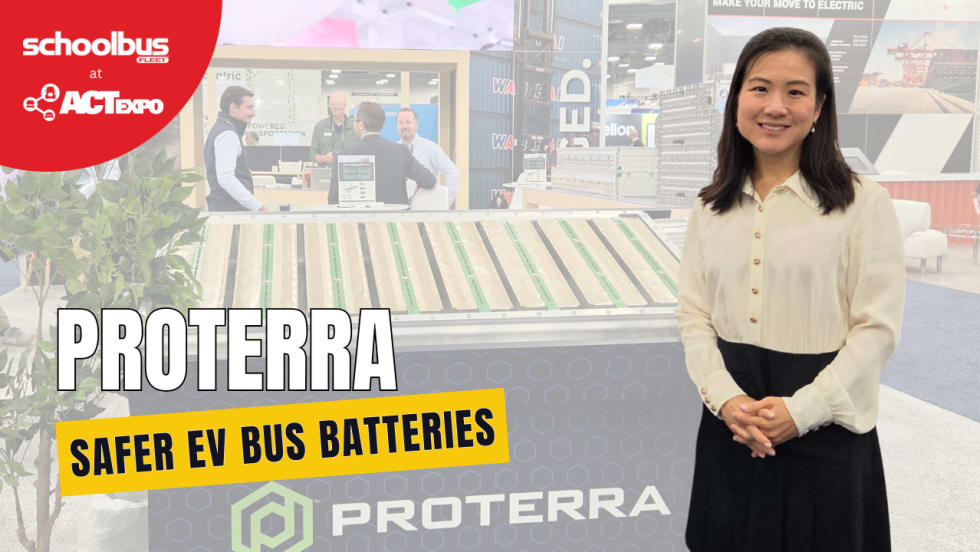
A Look at the Battery Technology Powering Electric School Buses
Check in with Proterra on next-generation EV battery technology for school buses, including safety innovations, predictive diagnostics, EPA 2027 readiness, and the future of transportation from ACT Expo.
Read More →