



Making DEF Work for Your Operation
In talking with school bus fleet managers, transportation directors and mechanics about how they’re going to meet the tough new EPA air quality sta...
In talking with school bus fleet managers, transportation directors and mechanics about how they’re going to meet the tough new EPA air quality standards in 2010, we’ve heard a lot of questions.
They’re doing the research now to be sure they understand the new technology and the products, tools and procedures they’ll need when 2010 rolls around. With day-by-day responsibility for the schoolchildren of America, we understand their interest, and we applaud their diligence.
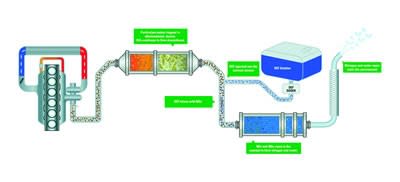
Some manufacturers, like Thomas Built Buses and its engine partner, Cummins Inc., will meet the 2010 emissions standards by incorporating selective catalytic reduction (SCR). SCR not only reduces nitrogen oxide (NOx) emissions to near-zero, but according to testing by Cummins, it has a 5- to 9-percent fuel economy advantage compared to an in-line cylinder exhaust gas recirculation (EGR) technology.
SCR background
A well-known and proven technology, SCR has a more than 50-year history and record of success in power generation applications, which may be why it will be the mainstream emission reduction technology used in 90 percent of all North American 2010- compliant on-highway commercial vehicles. SCR reduces tailpipe emissions by treating the exhaust stream with a spray of diesel exhaust fluid (DEF).
At Colonial Chemical Company, we’ve been providing DEF (an aqueous solution of 32.5 percent urea and 67.5 percent de-ionized water) since 2006. The DEF reacts with the NOx to form harmless nitrogen and water before vehicle emissions are released into the environment. DEF is nontoxic, biodegradable and nonflammable.
DEF is not expensive. At this time, in bulk quantities, it’s about $2.25 per gallon, and, in smaller package sizes, $3 to $6 per gallon. Prices are expected to continue to decrease as demand and usage increase in the future.
Sizes and storage
The product is packaged in sizes from 1- and 2.5-gallon bottles to 5-, 15-, and 55-gallon drums to 275-gallon totes, and it is available in bulk for storage tanks.
As with most shop fluids, DEF totes and drums should be stored out of extreme heat and direct sunlight in your shop storage facility or other insulated shelter on the property. At storage temperatures between 20 and 80 degrees Fahrenheit, the shelf life for DEF will be a year or more.
Extreme cold and freezing have no adverse effect on DEF. Even if the fluid is frozen in a bus tank, drivers will be able to start and run the bus. At the other end of the temperature spectrum, if the DEF temperature is steady at 122 F, it will still be usable for up to a month. It is rare that any environment would cause the fluid to maintain such a high temperature for such a long time. At a constant 88 F, DEF has at least a six-month shelf life.
DEF is available today and will be broadly available by the end of this year. Most commercial vehicle dealers stock it, and in many cases fleet managers will find they can order DEF from their current suppliers. For the larger drums and totes, we recommend a dedicated pumping or dispensing system to avoid contaminating the DEF with oil, antifreeze, any other fluid or dirt.
How much you’ll need
Because we know there are a lot of questions about DEF, we’ve profiled four typical fleets to give SCHOOL BUS FLEET readers some real-life examples. We calculated the approximate amount of DEF each will need, given their current fleet size, taking into consideration average mileage, maintenance and any special conditions.
Here’s how we calculated the estimated amount of DEF each fleet will use:
number of buses with SCR systems
multiplied by the average annual mileage per bus
divided by average miles per gallon
multiplied by 2 percent (DEF per gallon of diesel)
equals estimated amount of DEF consumed per year
At roughly 300 miles to the gallon of DEF, Thomas buses typically will be able to travel between 3,000 and 4,000 miles on one tank of DEF. In most cases, that means just three or four DEF refills per year will be needed. The purchase recommendations below consider the DEF tank size, usage and number of fill-ups projected, and they are designed to keep fluid inventory low but in stock.
Based on conversations with real fleet managers, in most cases DEF fill-ups will be part of the regular maintenance at each shop as buses are inspected by technicians every one, two or three months. For the buses that have longer intervals between maintenance checkups, one recommendation is driver fueling. For fleets that get fuel from a cardlock, DEF likely will be available at those facilities.
The four operators shown here are typical in that each has different requirements. It may be extreme weather conditions, a small fleet or a large one, or individual shop capabilities. Their needs will change as the fleet of new buses with the SCR systems grows over time.
Bottom line: DEF isn’t toxic. It’s not hard to handle. It’s not expensive. And most school bus operations will only need to add it a few times a year along with other shop fluids, so this will become another item on the inspection or maintenance list.
Jim Spooner is vice president and general manager of Colonial Chemical Company. He is one of the foremost authorities in diesel exhaust fluid production. He has worked actively in the field of urea chemistry for five years and is a member of the Society of American Engineers’ (SAE) aftertreatment standards committee, the Auto-Alliance SCR stakeholders group and the Heavy Duty stakeholders group.
New Jersey-based Colonial Chemical Company has been managing chemicals and processes since 1970. In addition to a state-of-the-art urea supply system, Colonial Chemical offers full-range custom chemical blending, packing and distribution services of inorganic chemicals, mineral acids, bases and oxidizers. For more information, visit www.colonial-chemical.com.
Butler Bus Service
St. Johnsbury, Vt.
Buses in fleet: 61
Yearly bus purchase: 5
Type of buses: Saf-T-Liner C2
Gallons in DEF tank: 11
Miles per year per bus: 9,500
Mileage per gallon: 8.5
Maintenance*: by staff on-site at two shops every three months
Conditions: bad weather and bad roads; winter ice and spring mud
Year 1 DEF consumption: 112 gallons
Recommended Year 1 DEF purchase: three 55-gallon drums
Year 5 DEF consumption: 559 gallons
Recommended Year 5 DEF purchase: three 275-gallon totesCaston School Corp.
Fulton, Ind.
Buses in fleet: 19
Yearly bus purchase: 1
Type of buses: Saf-T-Liner C2
Gallons in DEF tank: 11
Miles per year per bus: 10,000
Mileage per gallon: 8.5
Maintenance: regular maintenance once a month by staff on-site
Conditions: cold, snowy winters
Year 1 DEF consumption: 24 gallons
Recommended Year 1 DEF purchase: three 15-gallon drums
Year 5 DEF consumption: 118 gallons
Recommended Year 5 DEF purchase: three 55-gallon drumsClark County School District
Las Vegas
Buses in fleet: 1,500
Yearly bus purchase: 100
Type of buses: Saf-T-Liner HDX
Gallons in DEF tank: 13
Miles per year per bus: 19,000
Mileage per gallon: 6.5
Maintenance**: on-site by staff; safety and lube every 4,000 miles, oil change every 12,000
Fueling: by staff in bus yard
Conditions: very dusty and sandy; high desert, extreme heat
Year 1 DEF consumption: 5,847 gallons
Recommended Year 1 DEF purchase: 5,000-gallon tank installed, filled twice
Year 5 DEF consumption: 23,385 gallons
Recommended Year 5 DEF purchase: five or six tank fillsGolden Arrow
Edmonton, Alberta
Buses in fleet: 402
Yearly bus purchase: 7
Type of buses: Saf-T-Liner C2
Gallons in DEF tank: 11
Miles per year per bus: 11,000
Mileage per gallon: 8
Maintenance*: by staff on-site at three facilities monthly
Conditions: extreme cold and snow six months a year
Year 1 DEF consumption: 193 gallons
Recommended Year 1 DEF purchase: five 55-gallon drums
Year 5 DEF consumption: 578 gallons
Recommended Year 5 DEF purchase: three 275-gallon totes*Butler and Golden Arrow plan to maintain 2010 buses at one facility the first few years of operation.
**Buses will need to be filled approximately every 3,300 miles. Installed DEF storage tank allows for driver fueling in the yard and will not disrupt established maintenance schedule.
More Alternative Fuels

A Solution Helping School Buses Charge Without Major Infrastructure Upgrades
Power Innovations International dishes on its EV charging technology designed to reduce infrastructure barriers, improve reliability, and support V2G applications for school bus fleets.
Read More →
New Eagle Launches All-in-One EV Control Platform
The new OpenECU NX3 platform integrates charging and vehicle controls into a single platform, with support for megawatt charging and vehicle-to-grid technologies.
Read More →
GreenPower Unveils New Heating Solution for Type A Bus
The all-electric bus manufacturer's new product aims to eliminate cold-cabin issues on its Nano BEAST zero-emission school buses operating in cold climates.
Read More →
Alt-Fuel Moves: Fleets Plug In for the Long Haul
School districts across the U.S. are moving electric school bus plans into operation, with new fleet deployments, charging infrastructure, and long-term electrification partnerships taking shape.
Read More →
The Achilles Heel of School Bus Electrification: BetterFleet’s Take
BetterFleet’s managing partner discusses AI-powered EV fleet management, vehicle-to-grid challenges, and the real challenges in bus electrification today, from ACT Expo.
Read More →
You're On Your Own to Pick a Drivetrain [Op-Ed]
After years of federal pressure toward electric school buses, districts are suddenly being told to choose their own path. Let’s explore the risks, realities, and politics behind school bus drivetrain decisions.
Read More →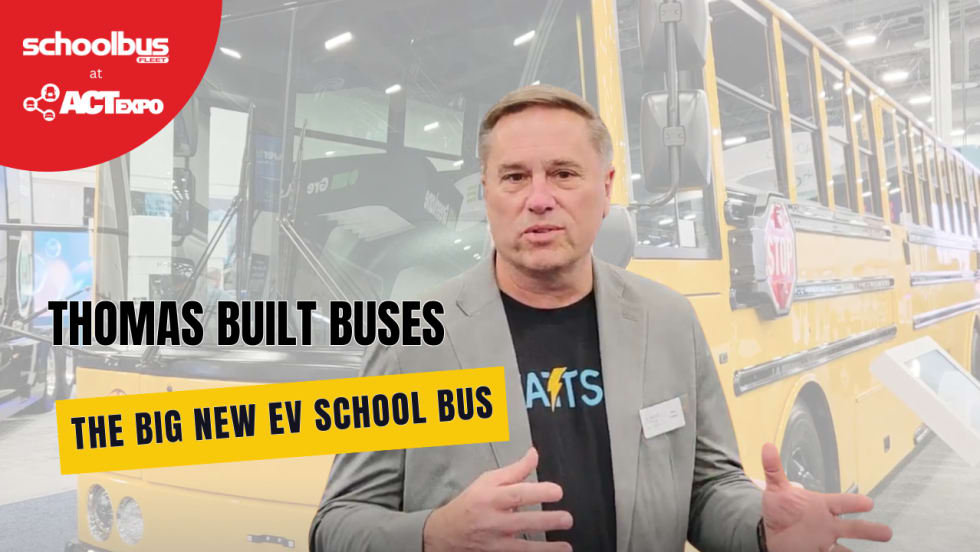
Wattson: Thomas Built’s Largest EV School Bus Yet
Check in with Mark Childers on the new Wattson Type D electric school bus, featuring faster charging, expanded passenger capacity, and advanced safety technology.
Read More →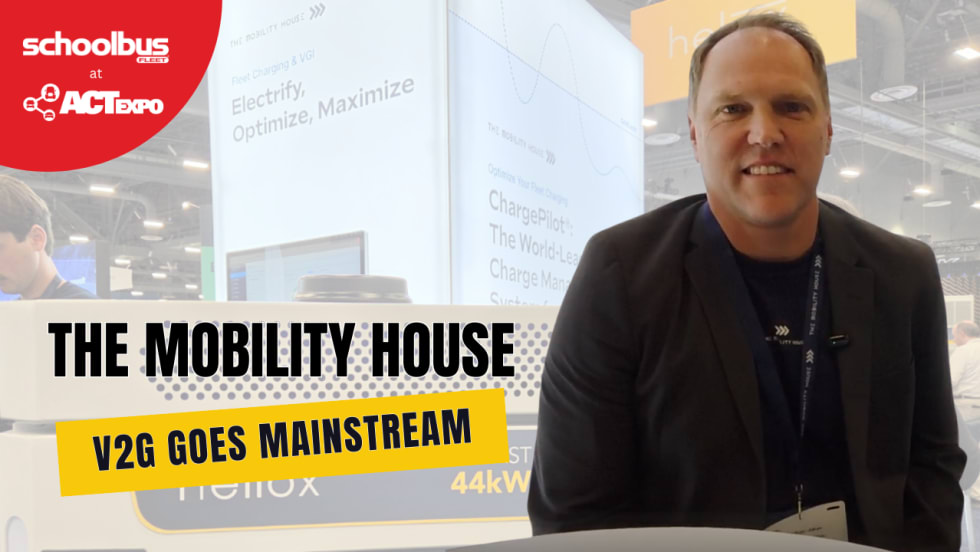
The New Era of Electric School Buses: V2G, Bidirectional Chargers & More
The Mobility House discusses AI-powered charging, vehicle-to-grid technology, smart energy management, and the next phase of school bus electrification.
Read More →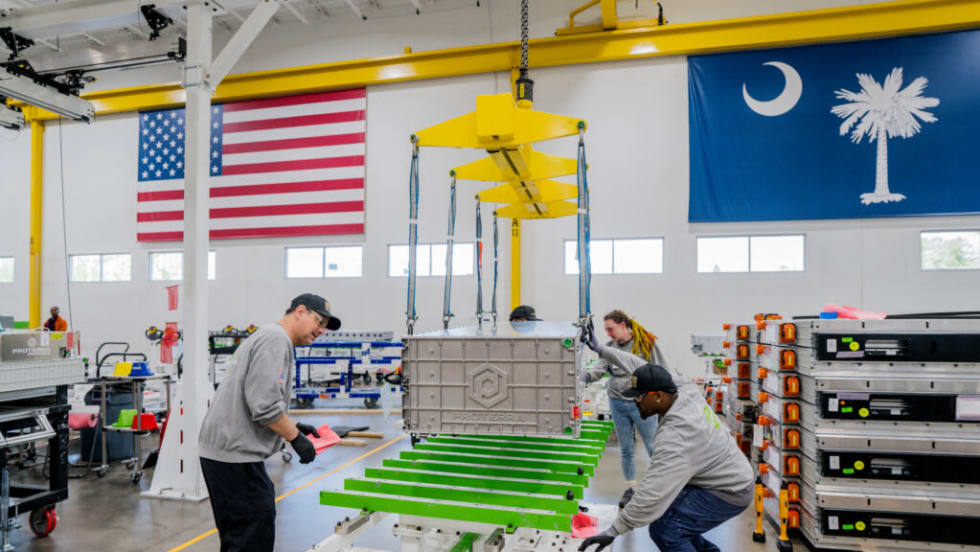
Now Made in America: Proterra Turns to U.S.-Built EV Batteries
Proterra announced a new U.S.-sourced battery cell option for its Onyx platform, boosting domestic content by more than 600% and strengthening EV supply chain resilience for commercial vehicle OEMs.
Read More →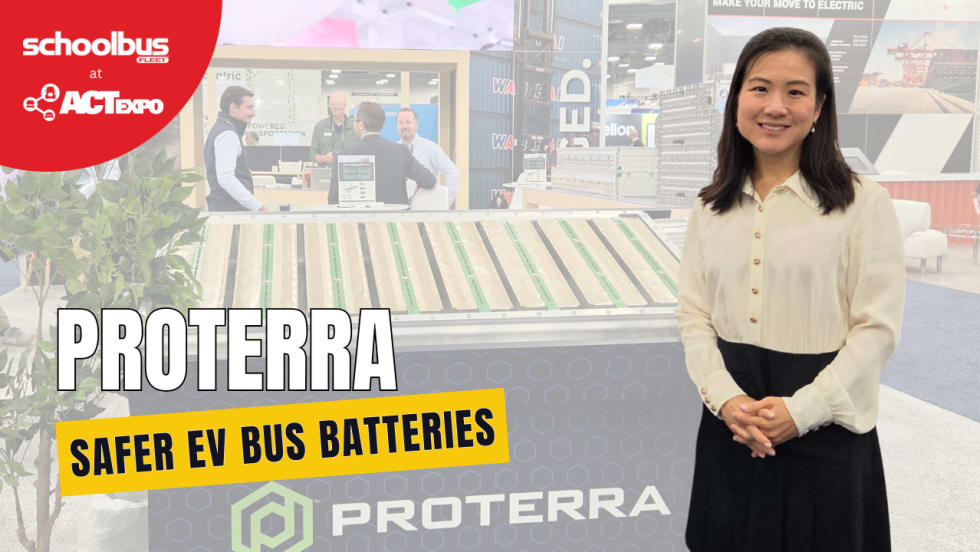
A Look at the Battery Technology Powering Electric School Buses
Check in with Proterra on next-generation EV battery technology for school buses, including safety innovations, predictive diagnostics, EPA 2027 readiness, and the future of transportation from ACT Expo.
Read More →