



Yellow buses are green
I haven't seen Al Gore's documentary An Inconvenient Truth, but I generally agree with the notion that climate change caused by human beings co...
I haven't seen Al Gore's documentary An Inconvenient Truth, but I generally agree with the notion that climate change caused by human beings could be damaging the environment. Which is why I try to ride a transit bus to work once a week, although it's, well, inconvenient.
The transit industry aggressively promotes the environmental benefits of its buses and trains. As an example, the American Public Transportation Association (APTA) recently held its second annual Dump the Pump Day, urging Americans to park their cars and use public transportation. "It is a day for people across the country to make a difference as they conserve gasoline and help our environment," APTA President Bill Millar said in a press release.
According to APTA, public transportation produces nearly 50 percent less carbon dioxide and nitrogen oxide per passenger mile as private vehicles. The association also reports that U.S. public transit systems save 1.4 billion gallons of gasoline every year, the equivalent of 300,000 cars filling up their tanks every day.
OK, so we know that transit buses and passenger railcars provide environmental benefits, but what about school buses?
It's an image thing
They do, of course; we just don't talk about it much. Maybe that’s because we've been regarded as polluters for so long. The image of black smoke spewing from the tailpipes of older school buses still lingers in the minds of many, but newer buses are much, much cleaner. And buses with 2007 engines burn even cleaner still.
Let's take a look at the environmental benefits of school buses. I'm going to throw out some very unscientific numbers for the sake of comparison. If we start with the premise that 25 million children ride school buses 180 times per year (yes, that’s probably on the high side in regard to an average student’s attendance). Then, I'm going to estimate that each child travels, say, 6 miles to and from school each day.
Now, let's say that all 475,000 school buses in the U.S. are parked for a year. Of the 25 million schoolchildren who ride each day, how many of them will be driven to school in an automobile? I'm going to guess 75 percent. The other 25 percent would walk, bike or use public transportation.
So, now we've got 18.75 million children getting rides to and from school 180 days a year, with the rides being approximately 6 miles total. According to my math, those 18.75 million cars are traveling 20.25 billion miles. If those cars average 18 miles per gallon, they would burn 1.125 billion gallons of gasoline in a year!
That's not pure excess, of course. You would have to subtract the amount of fuel used by the school buses that would otherwise transport those children. But the difference would still be immense. School buses, indeed, are contributing greatly to the planet’s sustainability.
Let's promote blue skies
As we all know, safety is the No. 1 benefit of riding in a school bus, but it's not the only benefit. We need to promote yellow school buses as "green," too.
School boards should be made aware that they are supporting the environment when they authorize funding for school bus transportation. In fact, they should be encouraged to bolster their investment. Every school bus that's on the road replaces dozens of cars — promoting safe student travel, reducing traffic congestion and, importantly, helping to preserve the environment for future generations. That's what I would call "a convenient truth."
More Alternative Fuels

A Solution Helping School Buses Charge Without Major Infrastructure Upgrades
Power Innovations International dishes on its EV charging technology designed to reduce infrastructure barriers, improve reliability, and support V2G applications for school bus fleets.
Read More →
New Eagle Launches All-in-One EV Control Platform
The new OpenECU NX3 platform integrates charging and vehicle controls into a single platform, with support for megawatt charging and vehicle-to-grid technologies.
Read More →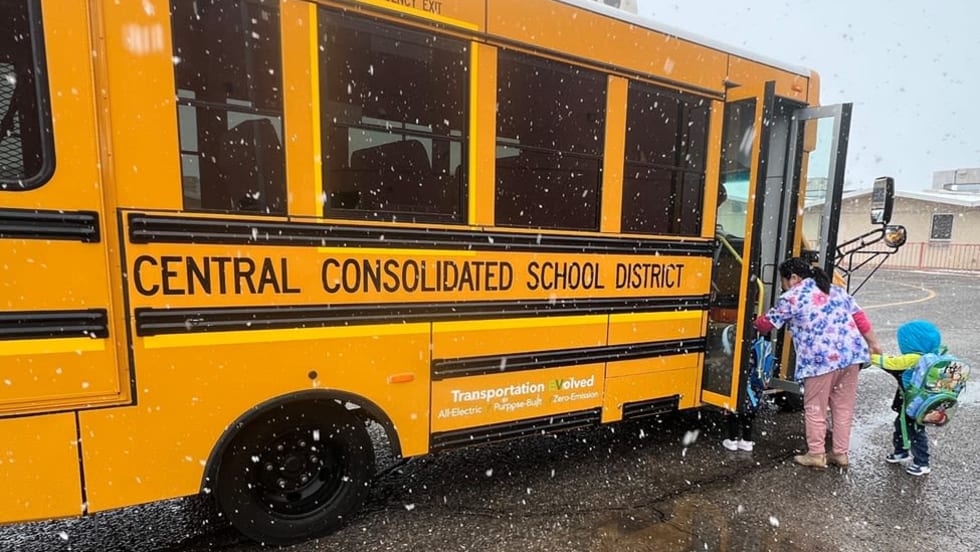
GreenPower Unveils New Heating Solution for Type A Bus
The all-electric bus manufacturer's new product aims to eliminate cold-cabin issues on its Nano BEAST zero-emission school buses operating in cold climates.
Read More →
Alt-Fuel Moves: Fleets Plug In for the Long Haul
School districts across the U.S. are moving electric school bus plans into operation, with new fleet deployments, charging infrastructure, and long-term electrification partnerships taking shape.
Read More →
The Achilles Heel of School Bus Electrification: BetterFleet’s Take
BetterFleet’s managing partner discusses AI-powered EV fleet management, vehicle-to-grid challenges, and the real challenges in bus electrification today, from ACT Expo.
Read More →
You're On Your Own to Pick a Drivetrain [Op-Ed]
After years of federal pressure toward electric school buses, districts are suddenly being told to choose their own path. Let’s explore the risks, realities, and politics behind school bus drivetrain decisions.
Read More →
Wattson: Thomas Built’s Largest EV School Bus Yet
Check in with Mark Childers on the new Wattson Type D electric school bus, featuring faster charging, expanded passenger capacity, and advanced safety technology.
Read More →
The New Era of Electric School Buses: V2G, Bidirectional Chargers & More
The Mobility House discusses AI-powered charging, vehicle-to-grid technology, smart energy management, and the next phase of school bus electrification.
Read More →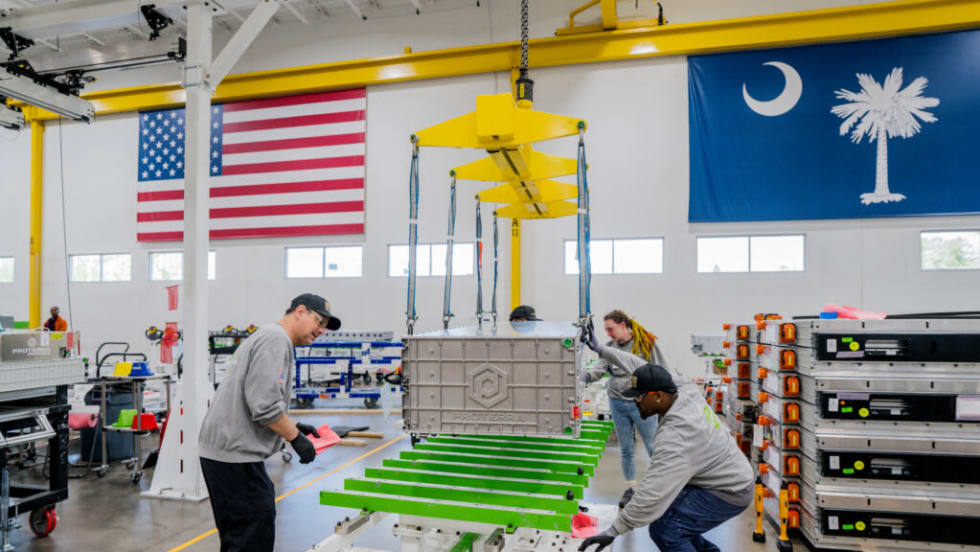
Now Made in America: Proterra Turns to U.S.-Built EV Batteries
Proterra announced a new U.S.-sourced battery cell option for its Onyx platform, boosting domestic content by more than 600% and strengthening EV supply chain resilience for commercial vehicle OEMs.
Read More →
A Look at the Battery Technology Powering Electric School Buses
Check in with Proterra on next-generation EV battery technology for school buses, including safety innovations, predictive diagnostics, EPA 2027 readiness, and the future of transportation from ACT Expo.
Read More →