



NSTA looks at Head Start, EPA funding at winter meeting
MAUI, Hawaii — The National School Transportation Association (NSTA) addressed a number of critical issues facing the pupil transportation industry at its mid-winter meeting in late January.

MAUI, Hawaii — The National School Transportation Association (NSTA) addressed a number of critical issues facing the pupil transportation industry at its mid-winter meeting in late January.
Discussion topics included revisions to Head Start transportation regulations, EPA funding for emission reductions, the School Bus Watch program and federal recognition of School Bus Safety Week.
In addition to NSTA members, the meeting was also attended by the presidents of the industry’s other national associations — the National Association for Pupil Transportation (NAPT) and the National Association of State Directors of Pupil Transportation Services (NASDPTS).
Both NAPT President Lenny Bernstein and NASDPTS President Pete Japikse confirmed that they are continuing to work with their association counterparts to more fully represent the industry where there are common goals.
The implementation of Head Start transportation regulations was a focal point. The final three provisions — the use of only school buses or multifunction school activity buses to transport students, the use of height- and weight-appropriate child safety restraint systems and the presence of an adult monitor on each bus — were originally to take effect on Jan. 28 but were postponed until June 30. In the interim, Congress is reconsidering the transportation regulations in the wake of complaints from Head Start grantees that they are too costly and operationally restrictive.
Robin Leeds, the NSTA’s industry specialist, said the association is preparing a position paper in conjunction with the NAPT and NASDPTS that will be sent to Congress. “The paper will support the requirements as they currently stand,” she said.
EPA funding for retrofitting emission-reducing equipment under the Clean School Bus USA program was discussed. In particular, the NSTA expressed concern about how the EPA was going to administer the grant program for 2006. “One concern is that they might draw from the 2005 applicants [who weren’t selected to receive a grant] rather than recompeting,” Leeds said. Because the 2005 grant eligibility rules were more restrictive than they are for 2006, especially in regard to private bus operators, the NSTA is pushing for the EPA to use a fresh-start competition.
Meanwhile, the NSTA was an active participant in a broad coalition of more than 200 industry, environmental and labor representatives that worked with Senators George V. Voinovich (R-Ohio), Thomas Carper (D-Del.), Johnny Isakson (R-Ga.), and Hillary Clinton (D-N.Y.) to support full funding for the Diesel Emission Reduction Act (DERA), which was included in the comprehensive energy legislation enacted last year by Congress.
In the White House’s budget request released on Feb. 6, President Bush included $49.5 million to fund DERA, passed by Congress in August. This represents almost four times the amount appropriated for clean diesel programs in the current fiscal year.
Bush’s budget request combines all diesel reduction programs — including the Clean School Bus USA Program, the Diesel Truck Retrofit and Fleet Modernization Program and the Engine Idling Reduction Program — under the DERA umbrella.
“As pioneers in the effort to reduce diesel exhaust and protect the health and safety of the children we transport every day, we welcome this new funding to help us continue our work and to expand clean air efforts to other diesel users,” said NSTA President John Corr. “While $50 million is a good start, we will continue to push for the full $200 million authorized by DERA.”
Also discussed at the meeting was the status of the industry’s attempt to get Congress to recognize School Bus Safety Week. As of early February, 16 members of the House of Representatives had signed up to co-sponsor the resolution, HR 498. The required number is 50, so the NSTA is urging all members of the pupil transportation community to lobby their House representatives to sponsor the measure. For more information on this legislative effort, visit www.yellowbuses.org.
More Management
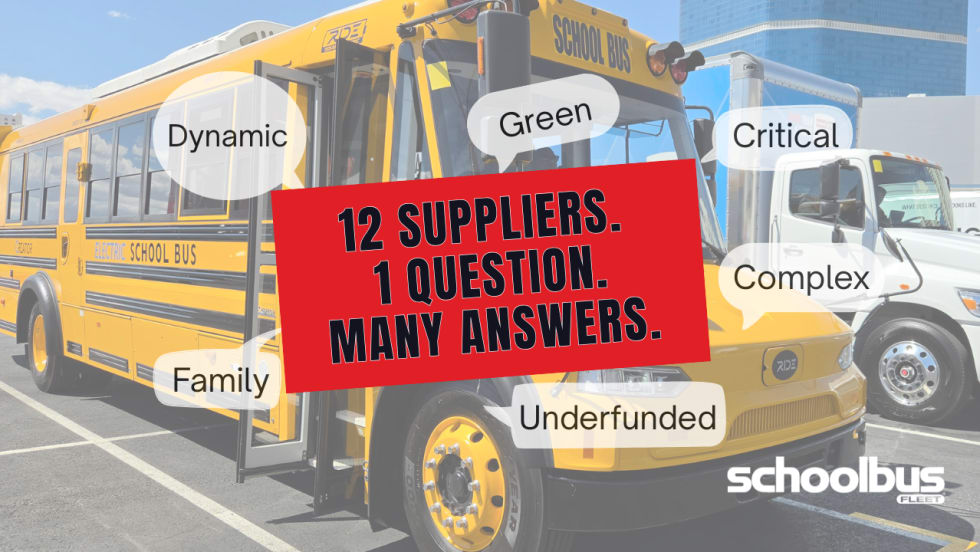
13 Industry Leaders Describe School Transportation in One Word
What word best describes the school bus industry today? We posed that question to over a dozen manufacturers, resulting in a revealing mix of perspectives on the challenges and opportunities ahead.
Read More →
Tyler Technologies Adds New AI, Transactions Leadership Roles
Two company executives are promoted to newly created C-suite positions to accelerate the company's long-term growth in both artificial intelligence and payments.
Read More →
Pro-Vision Acquires Convoy Technologies
The deal aims to broaden customer relationships and adds specialized vehicle video capabilities for commercial fleets.
Read More →


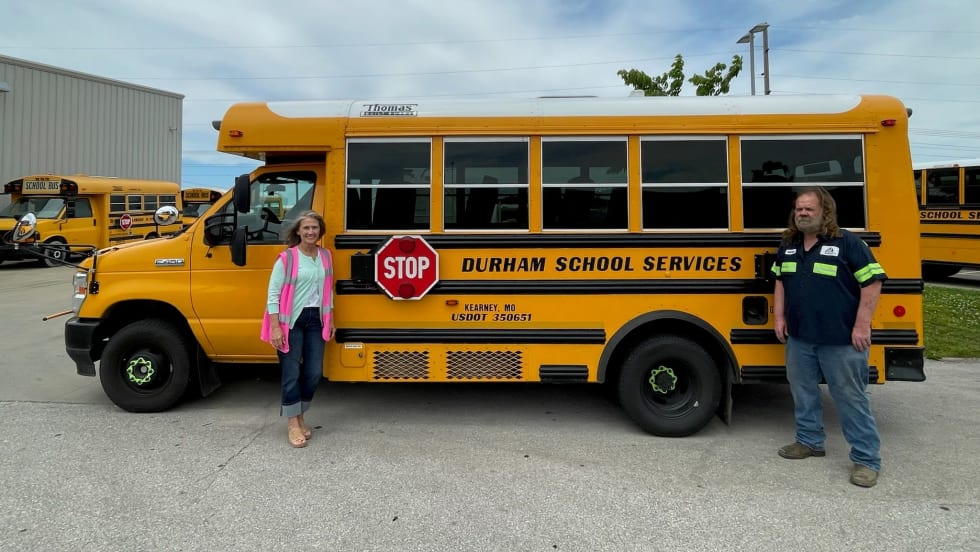
Durham School Services Maintenance Teams Earn Missouri Fleet Excellence Awards
Eight of the contractor’s school bus fleets achieved a distinction few maintenance teams earn during the state’s rigorous annual inspection program.
Read More →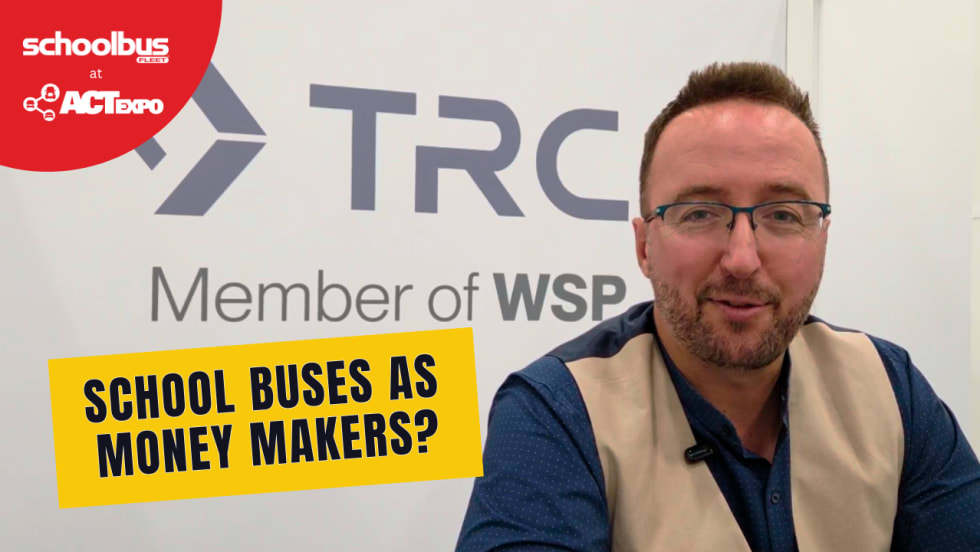
How Incentives, AI, and Energy Markets Are Reshaping School Transportation
Sit down with Joe Annotti of TRC Companies to talk district grant funding, utility challenges, AI, and why school buses are evolving from transportation assets into energy assets.
Read More →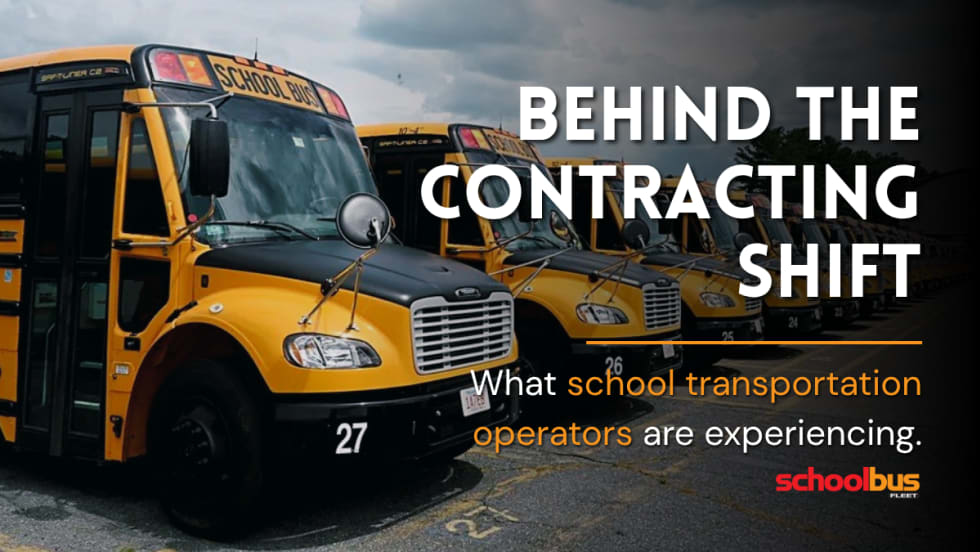
Inside the Contracting Shift: What School Transportation Operators Are Seeing Now
School transportation contractors weigh in on recent trends, costs, driver shortages, and the rise of multimodal student transportation.
Read More →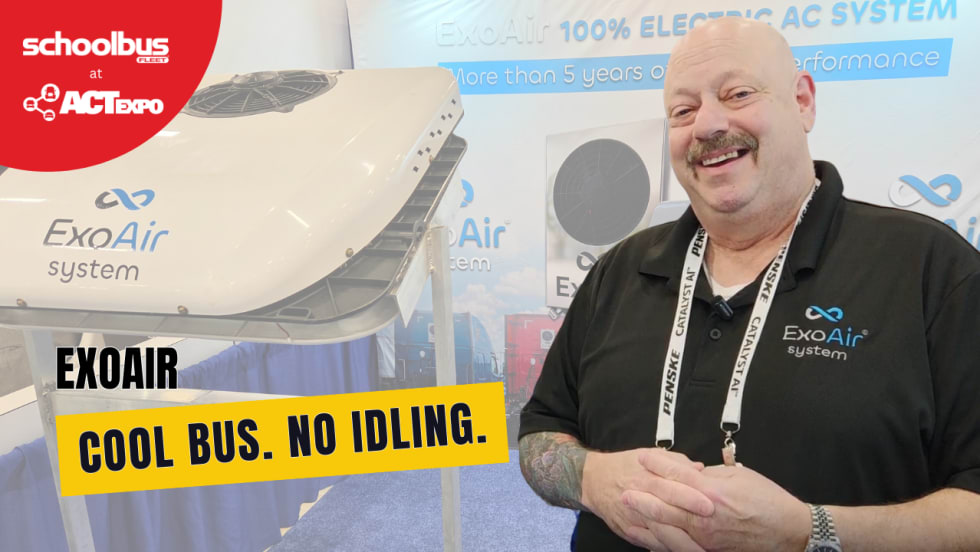
The No-Idling School Bus AC System
Take a peek at ExoAir Systems’ battery-powered cooling solution designed to run for up to 10 hours without the engine on, reducing fuel use and improving comfort for drivers and students.
Read More →
Geotab on Three Major Trends in School Transportation
School bus fleets are becoming more proactive than ever. From AI driver alerts to vehicle-to-grid opportunities, Geotab outlines the biggest technology trends transforming school bus operations.
Read More →
Gatekeeper Lands Major School Bus Deals as Revenue Surges
The video solutions provider announces contracts with Atlanta Public Schools and other fleet operators as it records quarterly revenue growth and expanding subscription business.
Read More →
Building Leaders Who Last: Creating a Successful Mentorship Program in Student Transportation
Discover five strategies for building an effective mentorship program to strengthen leadership development and support staff retention.
Read More →