



Skilled techs keep fleets top-notch
Pupil transporters say that technicians should have a desire to learn, and they discuss methods and resources for instruction. They also say that employee communication, a strong preventive maintenance program and performance benchmarking are essential to achieving well-maintained school buses.

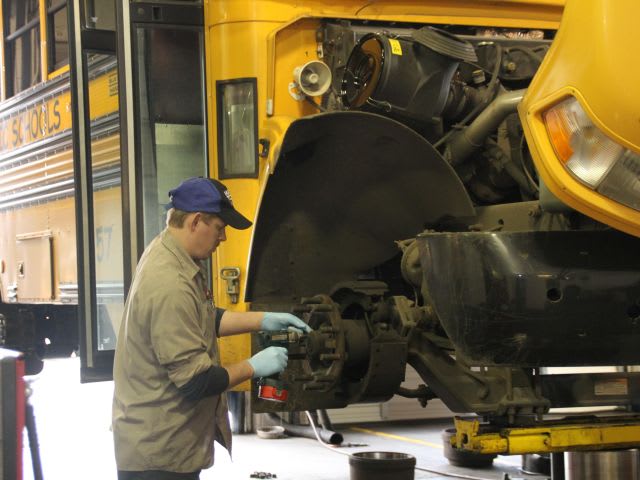
Technicians at Salem-Keizer Public Schools in Salem, Ore., undergo mentored training before working on buses by themselves.
Of the many components that factor in to transporting students safely, having well-maintained school buses is one of the most important. What does it take to achieve a well-maintained fleet? A comprehensive preventive maintenance program (PM) is essential, but pupil transporters say that everything from employees’ attitudes and the training they receive to benchmarking performance also play a role in ensuring that buses are in top condition.
“You need to hire people who want to make a difference and have a positive attitude and a willingness to learn,” says Michael Burton, assistant transportation manager at Salem-Keizer Public Schools in Salem, Ore. “Mechanics need to understand that it’s about the students that we serve.”
Assess technicians’ abilities and train accordingly
When it comes to training technicians, Burton says it’s important to look at an individual’s skill level, making sure that the technician is learning based on his level of training.
Cross-training between technicians is performed to help them develop their skills, and mentored training is performed when a new tech joins the team.
“We have a checklist with a variety of repairs so that we can make sure that they’re well-rounded before we send them out on their own,” adds David Farley, head mechanic at Salem-Keizer Public Schools. “It helps us assess their abilities, and therefore helps us determine what types of jobs we assign them to.”
New technicians at Volusia County Schools in Daytona Beach, Fla., are also paired with more experienced technicians until they understand the operation’s systems, and Assistant Director of Fleet and Finance William French, too, says a shop manager should evaluate the skill set of a technician, especially in the area of electronics, because if the technician is weak in fundamental electronics, it’s difficult to take on complex repairs.
“We use the Cummins ‘Basic Electronics Theory and Troubleshooting’ DVD series for this,” he says.

At Dean Transportation Inc. in Lansing, Mich., Director of Fleet Services Scott Pellerito says the company makes sure that all training topics for technicians encompass best practices, including safe and timely repairs to its vehicles. The company also surveys the employees to ensure that their needs in training are met.
“Technicians are monitored with the use of evaluations that measure work quality and personalized feedback,” he explains. “With this form of monitoring, specific topics are addressed with future training programs. The basic training used in the industry is also integrated, such as company safety programs, proper lifting techniques, first aid, basic firefighting, bloodborne pathogens and hazmat.”
To further boost safety, Dean Transportation requires that every technician maintain at least one ASE or state of Michigan mechanic certification in the area of heavy duty.
Resources for instruction
To bolster technicians’ knowledge and skills, many shops utilize the training offered by school bus manufacturers and suppliers of specific parts. Such is the case at North Kansas City (Mo.) Schools.
Shirley Patrick, director of transportation, says it’s important to develop solid relationships with vendors and also to stay current on what is available to assist in running an effective maintenance operation.
“A representative from the bus dealership visits our facility quarterly to share tips and offer new information to keep the mechanics current,” she adds.
French, Bob Duquette, shop foreman at Liverpool (N.Y.) Central School District, and Patrick Carney, transportation supervisor at Bedford (Ohio) County Schools, also recommend taking advantage of training opportunities through state pupil transportation organizations.
The New York Head Mechanics Association, www.nyhma.org, the Ohio School Bus Mechanics Association, www.osbma.org, and the Florida Association for Pupil Transportation, http://faptflorida.org, all offer such resources.
Courses at colleges and universities are another avenue through which technicians can grow their knowledge. Burton says Portland (Ore.) Community College offers several classes, while Pellerito says supervisory and management training courses are offered through the local community college, the University of Notre Dame and Michigan State University. (Dean Transportation’s lead technicians and fleet management personnel are subject to advanced training in certain areas to ensure that the needs of the company and industry standards are met.)
[PAGEBREAK]

Sharing and brainstorming with the staff at neighboring operations can also provide invaluable information. Gary Thomsen, transportation manager at Evergreen Public Schools in Vancouver, Wash., occasionally organizes a forum where technicians in the area get together to discuss issues, and Patrick says her operation’s technicians have an excellent relationship with other school districts’ transportation departments, so they can e-mail or call colleagues to share challenges and possible solutions.
Staff communication is key
Sharing information within one’s own shop during regular staff meetings and/or training sessions can also help technicians solve repair problems.
Duquette has roundtable meetings at his shop where he and the technicians discuss issues that may have come up as they perform their work, and strategies for repairs.
Moreover, French says that for multi-shop operations like Volusia County Schools, communicating repair modifications to all of the shops is critical to make sure that buses are repaired the same way.
“If we have a system or part with a known problem, we look for a better way to make the repair and share that information with all shops,” he says.
Thomsen believes that the way information is shared is important as well. At Evergreen Public Schools, once the maintenance team establishes a best practice for an inspection procedure or repair, they discuss it and then demonstrate it so that everyone can see how it’s done.
Tips for managing and maintaining your fleet
As was mentioned earlier, the primary component in terms of service to buses that contributes to them running smoothly is a strong PM program. An added bonus of a good PM program, officials say, is that it will lead to cost reductions in the long run.
“Maintaining buses with regularly scheduled maintenance helps to find small things that can be repaired or replaced at minimal expense,” Patrick says. “If this step is not done, those small things can turn into large, expensive repairs.”
Thomsen agrees, and points to evidence from his operation on how preventive work can provide long-term benefits.
“Our cost per mile is at the low end. We have lowered our cost per mile in the last 10 years by having good practices,” he says.

Performance benchmarking is another important ingredient of effective vehicle maintenance.
“It’s critical for an operation’s supervisor or manager to have a process set up to measure the quality and the quantity of the work that’s produced,” Thomsen says.
French agrees. “All the best practices in the world remain unproven unless you track the numbers,” he says. “We conduct an annual review of over 100 different benchmarks to track our performance. This helps us determine if our practices work, where we excel and where we need further improvement.”
To assist in assessing performance, officials offer the following tips:
• Document everything, including repairs. Burton recommends analyzing equipment for failures and setting up new service intervals based on those failures to help prevent them in the future.
• Use automated programs. “It’s a great tool for tracking your costs, locating high-cost vehicles and doing an analysis as to what the maintenance problems might be,” Duquette says. “We also do parts analysis to locate obsolete parts — it helps to maintain our inventory.”
[PAGEBREAK]

Here are additional practices that can help to maximize safety and efficiency:
• Understand your state’s inspection regulations. Carney says that the Ohio Highway Patrol’s (OHP) inspection booklet changes slightly every year, so his technicians obtain a new copy annually and review it to make sure that they’re familiar with the OHP’s regulations.
• Standardize your fleet. Duquette says that once Liverpool Central School District standardized to one bus body and two or three engine types, it resulted in a reduction of about 17 percent per year in standing inventory over a 10-year phase-in period. “At one point we had about $500,000 in inventory, and we’re down to about $120,000,” he says.
• Perform maintenance in house. Both French and Patrick say that most of their operations’ vehicle maintenance is performed in house, including almost all warranty work at Volusia County Schools. French says this saves the cost of transporting the bus to a service center and minimizes downtime, and labor is reimbursed at competitive door rates.
“Performing complex repairs under warranty helps enhance the technicians’ skills, and we want to make sure we’re prepared for the day those buses are no longer under warranty,” he adds.
• Be open-minded. Pellerito recommends spending time evaluating new technology for technicians based on what you can accommodate with your budget.
“Allow all employees to be a part of the decision-making process, and allow management personnel to think outside of the norm,” he adds.
More Maintenance

Cummins on Smarter, Simpler Engine Innovation
Cummins discusses its first-ever gasoline engine for school buses, EPA 2027, and why bus fleets still want durable, simpler internal combustion options.
Read More →
Report: 72% of Diesel School Buses Now Use Advanced Low-Emission Engines
New data shows advanced low-emission diesel technology continues expanding across school bus fleets, even as electric bus adoption gains momentum.
Read More →
Vampire Tools' CAIMAN 7.5-Inch Multi-Purpose Screw Extractor Long-Nose Pliers with Crimper
Vampire Tools introduced the VAMPLIERS Caiman 7.5-inch multi-purpose pliers, combining screw extraction, cutting, crimping, and gripping functions into a single tool designed for fleet maintenance professionals.
Read More →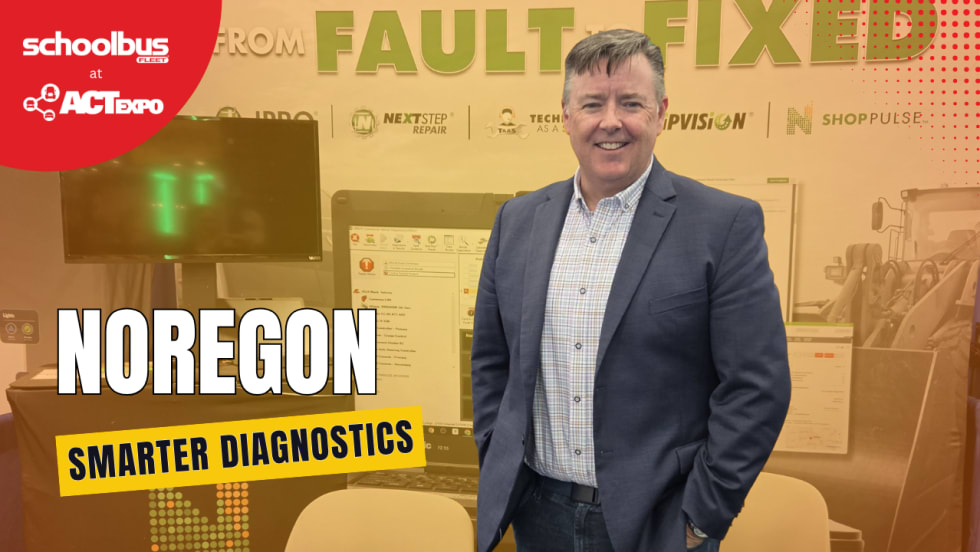
How Advanced Diagnostics Helps Bus Fleets Stay Ahead of Repairs
Chat with Noregon’s Kevin Smallhorn at ACT Expo about bus diagnostic tools, telematics integration, CNG maintenance support, and strategies to help reduce downtime and improve uptime.
Read More →
How School Bus Fleets are Getting Ahead of Breakdowns
Don’t let bus downtime wear you down. Here’s how bus operators are shifting from manual processes to AI-powered, data-driven maintenance systems for improved reliability and safety.
Read More →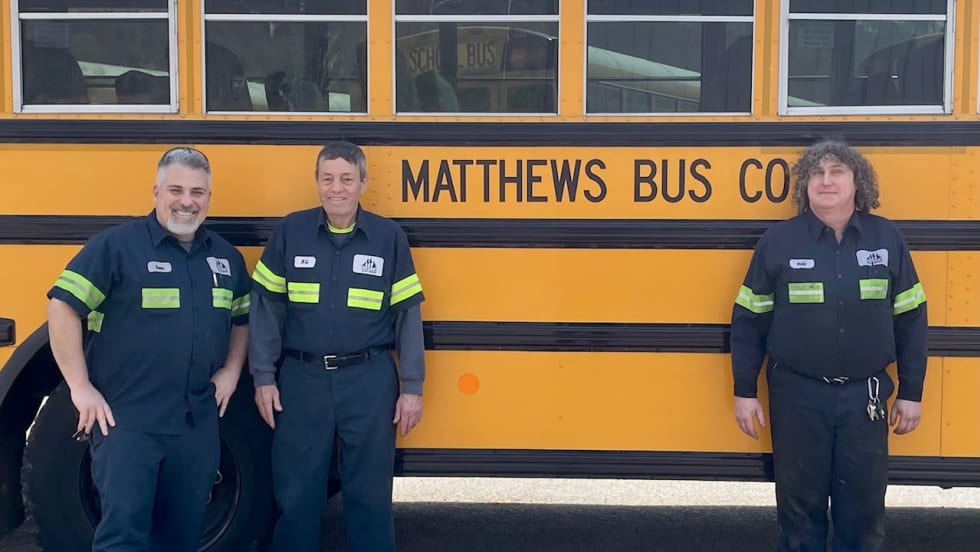
Pennsylvania School Bus Maintenance Team Praised for Dedication to Safety
Matthews Bus Company’s West Jefferson received a letter of commendation from the Pennsylvania State Police for their fleet inspections.
Read More →
2026 State of Student Transportation Report
Student transportation teams are being asked to do more with less, facing driver shortages, rising costs, and increasing safety expectations. This report uncovers how fleets are adapting, where technology is making the biggest impact, and why student ridership tracking is emerging as a top priority. Download the report to explore the key trends shaping 2026 and what they mean for your operation.
Read More →
From Chaos to Clarity: How School Districts Are Running Leaner Transportation Operations
Covering 38 routes on a Friday afternoon. Buses idling while routes overlap. Parents calling nonstop about late arrivals. Sound familiar? This whitepaper explores how district transportation leaders solved these exact problems — and what measurable results followed.
Read More →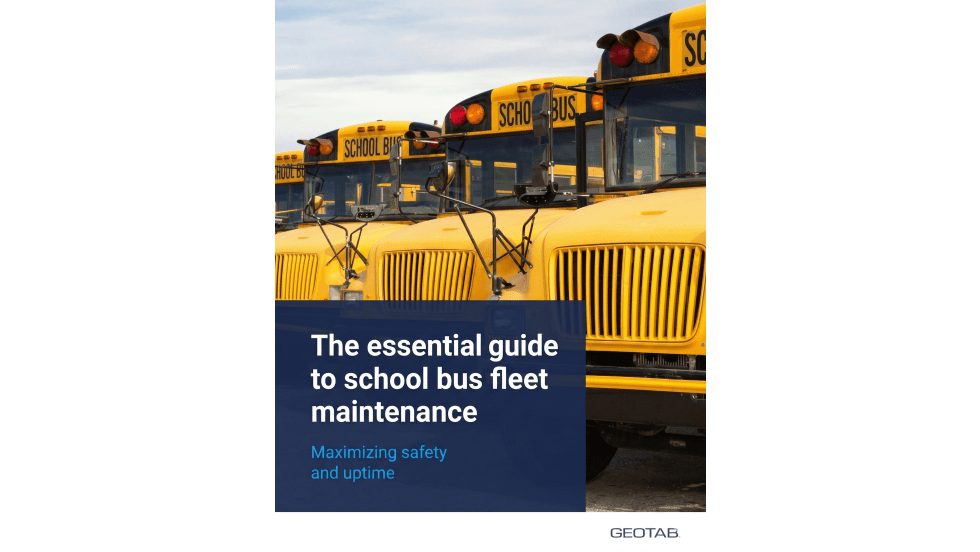
The New Playbook for Safer, Smarter School Bus Maintenance
As school districts juggle aging buses, technician shortages and rising safety expectations, proactive fleet maintenance is becoming essential. This guide explores how telematics, predictive maintenance and real-time vehicle data can help transportation departments reduce breakdowns, extend vehicle life, improve compliance and keep students safer on the road.
Read More →
2026 School Bus Fleet Vendor Directory & Buyer's Guide
Searching for the right equipment, technology, or services for your school transportation program? This industry guide brings together manufacturers and suppliers across the entire school bus market, all in one place. Download it to find the partners who can help move your operation forward.
Read More →