Keeping the Loading, Unloading Process Safe in 13 Steps
A California driver trainer details safe practices for loading and unloading. Those include executing steps consistently, practicing precise timing with lights and the door, and escorting students as they cross roadways.
Nicole Schlosser・Former Executive Editor
August 8, 2019
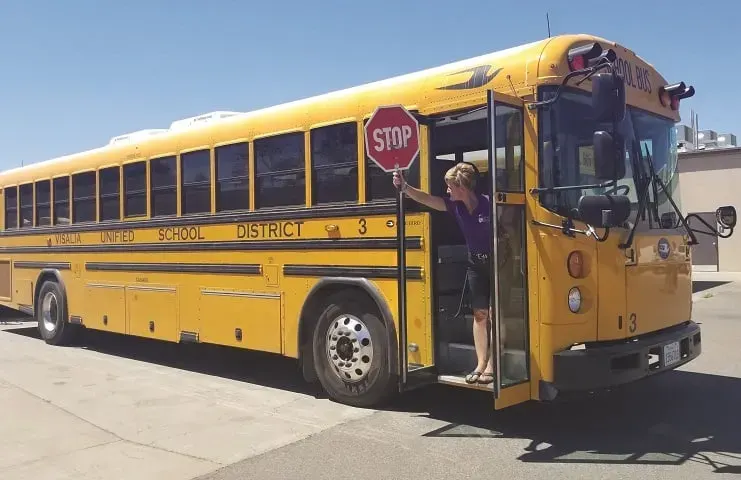
Sabine Konrad, a driver instructor for Visalia (Calif.) Unified School District, demonstrates how drivers should stick out the stop sign and check both directions for hazards before deboarding the bus.
Credit:
Mary Ward
6 min to read
Given the rash of incidents that occurred over the course of three days in late 2018, in which five students were killed by motorists who ran a school bus’s stop arm or struck a student at their bus stop, the loading and unloading process is one of many factors involved in student transportation that has received a second look lately.
The California Department of Education has established a procedure that includes the driver escorting students across the street. The state hasn’t had a documented death since the crossing requirement was established in the 1950s, Anna Borges, California’s state director of pupil transportation, confirmed to School Bus Fleet. This is the only state with such a requirement.
Ad Loading...
SBF spoke with Sabine Konrad, a driver instructor for Visalia (Calif.) Unified School District, about crucial steps in the loading and unloading process, which she covered recently in a presentation at the California Association for School Transportation Officials conference in April.
“Passenger loading and unloading is the nucleus of what school bus drivers do,” Konrad says. “Our precious cargo is exposed to the highest risk of getting injured — or worse — during this procedure. We cannot allow that to happen.”
Here are some of the most critical steps a driver should take in this process and when, such as turning on the amber and red lights, exiting the bus to help students cross, checking mirrors, and counting students as they load and unload.
1. Stay Focused.
Most importantly, Konrad emphasizes that bus drivers cannot be even slightly distracted during any point in the loading and unloading process, which can be the most dangerous step in transporting students, if not carried out safely. That includes dealing with behavior or other issues. If necessary, pull the bus over to deal with problems before or after the next stop instead of while loading or unloading.
“Letting your guard down for even one split second can and will have a devastating outcome,” Konrad says.
Ad Loading...
2. Enforce Safe Student Behavior.
Drivers should watch students and ensure they are not pushing each other or playing around while getting on or off the bus, and are using the handrail to avoid falling. When unloading, students should look to the front and rear of the bus before stepping onto the sidewalk, and then immediately move 12 feet away from the bus.
3. Be Consistent.
Each step has an important purpose, and it is critical that the procedure is executed the same way every time so as not to confuse students or the motoring public, Konrad adds.
4. Open The Door At The Right Time.
During loading and unloading, one critical step is opening the entrance door only when all traffic has come to a complete stop. When loading, the opening of the door signals to students that it’s safe to approach the bus. When unloading, it lets them know that it’s safe to leave their seat and move to exit the bus. Students should stay 12 feet away from the bus until the door opens during loading and stay seated until the door opens during unloading, she says.
“Just imagine kids walking down the aisle or approaching the bus as it is getting rear-ended by a vehicle,” Konrad adds. “Horrific images go through my head thinking about that.”
Additionally, when unloading, the driver should wait until they are certain that the stop arm is extended and flashing, and that all traffic is at a complete stop before opening the service door.
5. Time The Flashing Light System Properly.
When approaching a bus stop, activate the amber warning lights and tap the brake lights at 200 feet, Konrad says. Activate the right turn signal at 100 feet, stop no closer than 12 feet from the students and within 18 inches of and parallel to the curb, and set the parking brake. Shift into neutral and cancel the signal at the same time. Then, turn on the red light warning system. Check to ensure the stop arm is extended and flashing, and that all traffic has come to a complete stop.
Ad Loading...
Additionally, when exiting the bus with the stop sign, look up from 10 feet away at the front of the bus and verify that the red lights are flashing.
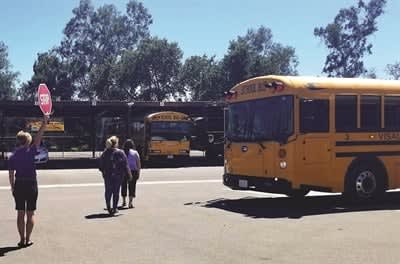
As soon as the last child passes them, the driver should turn their body 180 degrees to watch them walk toward the bus while the stop sign is facing traffic. Photo courtesy Mary Ward
6. Keep An Eye Out For Accessory Hazards.
Konrad reminds drivers to be aware of drawstrings, jackets, backpacks and backpack straps, scarves, belts, or any other loose items that could get caught in the door.
7. Take Command When Escorting Students.
Drivers must act with authority during the escort process. Right after leaving the stepwell, they have to “hold up that stop sign like the Statue of Liberty,” Konrad says. They should also not step off the bus before sticking out the hand-held stop sign, and check both directions alongside the bus for hazards.
8. Position Is Critical.
The driver must have a clear view of the crossing students and traffic at all times; that can only be done when standing sideways. The driver’s body should face the crossing students while the stop sign is facing traffic. The bus should be used as protection to check for vehicles that pass the flashing red lights before stepping into the middle of the road.
“Never turn your back to traffic,” Konrad warns.
Ad Loading...
As soon as the last student passes the driver, the driver should turn 180 degrees to watch students walk toward the bus. The stop sign should still face traffic. Drivers must also direct students to cross in front of them — never behind or toward the rear of the bus. When loading, drivers should tell students as they cross to enter the bus and find a seat. Hand motions should be avoided.
When the last student crosses the middle of the road, the driver should turn to face the bus. When students reach the sidewalk, the driver must immediately walk toward them and continue to hold the stop sign so that it is visible to traffic in both directions.
9. Look For Hazards.
Peek under the bus before entering to make sure there are no potential hazards or children underneath.
10. Check Mirrors.
Drivers should be aware of blind spots, using all mirrors to the fullest extent possible, and lean forward in the driver’s seat, moving side to side to eliminate blind spots and ensure the street is clear of traffic, students, and hazards, Konrad says.
11. Be Mindful Of The Danger Zone.
While loading and unloading, do not move the bus if students are within 12 feet of it on any side. Additionally, back up only with assistance from a spotter when absolutely necessary. Instead, go around the block, if possible.
Ad Loading...
12. Count Students Multiple Times.
Drivers should get a student count as they see them approaching the stop, get on or off the bus, and leave the danger zone.
13. Check, Check Again.
After boarding the bus, the driver must check the right mirror zone before closing the entrance door. Next, they should perform a five-count mirror check to ensure there are no approaching students, all students are seated, no students or hazards are in front of the bus, traffic is still stopped, and check the right mirror zone again for approaching students.
Then, the driver can put the transmission into gear, release the parking brake, and perform a second five-count mirror check. If clear, they can deactivate the red flashing lights and stop arm, check the left mirror zone, and activate the left turn signal when safe. Then, the driver can pull into traffic at idle speed while scanning all mirrors and deactivate the turn signal, their mission safely accomplished.
To view photos of Konrad demonstrating a few of the steps in the loading and unloading process, go here.
Technology’s Role in Loading, Unloading Safety
Risk around the bus can almost always be attributed to a lack of attention. Human attention is inherently limited, which has caused motorists to, for instance, drive past a bright yellow school bus with flashing lights, or caused a bus operator battling heavy rain and reflected light to struggle to keep their eyes on students as they cross the street while also maintaining focus on traffic and student behavior onboard.
Artificial intelligence technology can enable intelligence on the vehicle itself and extend beyond the driver’s and student’s roles in ensuring safety on and around the bus. Safe Fleet is introducing solutions that employ the technology to further enhance safety by serving as an extra set of eyes that won’t be prone to distraction.
To that end, Safe Fleet’s solutions take a different approach to addressing student risk and injury in the danger zone, or from stop-arm violations.
The Predictive Stop Arm is designed to notify bus drivers and students directly when risk is detected, and mitigate driver distraction with reduced false alerts. Meanwhile, the Right-Hand Danger Zone protection system detects students and their movements outside the bus and displays visual warnings to alert the operator when a safety risk is present.
Each solution relies on the combined strengths that mirrors, video, sensors, and intelligence bring. They proactively engage with the driver and students, with the goal of alerting them before an accident occurs. Additionally, they focus on directing the people at risk rather than taking the longstanding approach of focusing on external factors that contribute to the issue, according to Safe Fleet.
Is it time to strengthen your driver training? Here’s how to pick the right talent and improve recruitment, retention, and safety. This video is brought to you by IC Bus.
Four school bus crashes in Florida, Illinois, and Georgia highlight risks in transportation lots, at bus stops, and during student loading and unloading.
School bus fires are rare but can be devastating. Learn how advances in fire suppression and asset protection help fleets detect fires earlier, reduce damage, and improve safety.
Geotab Investigations combines telematics data, video, documents, and other evidence to help fleets reconstruct incidents, resolve claims, and determine what happened.
Sai Darshana Yekolu of Moseley Middle School in Prosper, Texas, was named the newest winner for her artwork, bringing the theme of “Safe Rides, Everyday Heroes” to life.
With diesel prices soaring and nearly one-third of transportation directors expecting budget cuts, maintaining student safety has never been more challenging. Download this guide to learn how leading districts are prioritizing risk, funding critical safety technology, and building stronger budget cases with data.
As thefts and overnight security threats continue, school transportation leaders are combining stronger operational practices with AI-enabled surveillance to better protect buses, facilities, and staff.
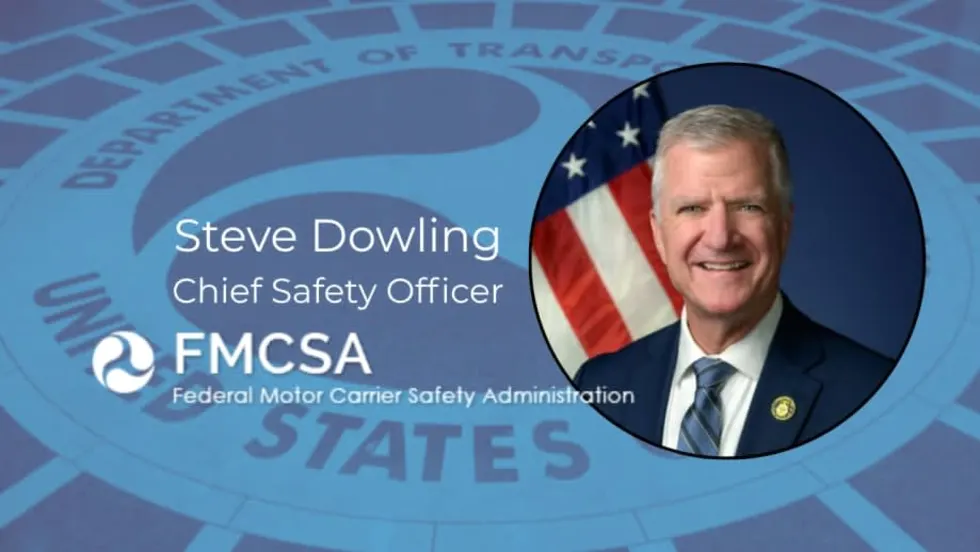
Steve Dowling is set to lead the federal agency's efforts to advance commercial motor vehicle safety and reduce crashes, fatalities, and injuries on the nation's roadways.