




Thomas Built Buses Debuts Pedestrian Detection Prototype
When a pedestrian is detected, the system will alert the driver on an in-cabin tablet as well as through caution lights on the cross-view mirrors.

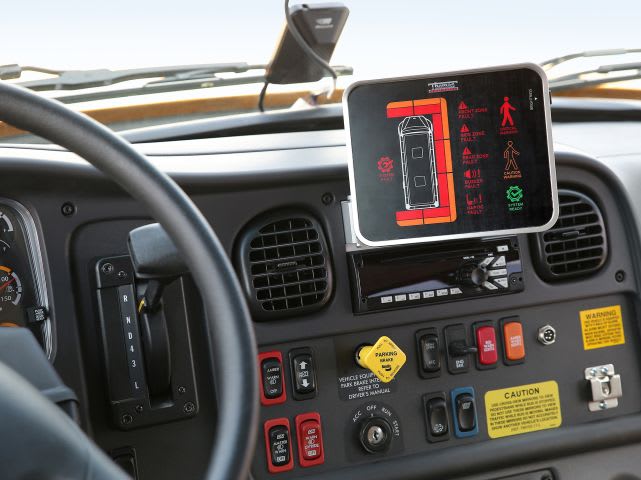
When a pedestrian is detected, Thomas Built’s new system will alert the driver on an in-cabin tablet and through caution lights on the cross-view mirrors.

HIGH POINT, N.C. — Thomas Built Buses debuted a prototype of its new pedestrian detection technology at the STN Expo on Tuesday.
Leslie Kilgore, vice president of engineering for Thomas Built Buses, said that the company has been working with MITO Corp. and CUB Group to develop the pedestrian detection system, and “the technology is 90% there.” The goal is to prevent accidents in the danger zone around the school bus, such as when students step too close or kneel down to pick something up.
“As diligent as bus drivers may be, sometimes they just can’t see a child around certain areas of the outside of the bus,” Kilgore said. “That’s the problem we are hoping to solve. With our new pedestrian detection system, we hope to avoid unnecessary pedestrian accidents in the front, back, and sides of our buses, even within blind spots.”
Part of the BusWise Technologies suite, the new pedestrian detection feature will consist of LED ground lights on the cross-view mirrors as well as multiple radar units on the 77GHz frequency band, which will be installed around a Thomas Built bus. These higher-frequency radars, which are used for autonomous vehicles and high-resolution meteorological observations, allow for more precise detection and measurement of a pedestrian or object within 10 feet of the school bus, according to Thomas Built Buses. When a pedestrian is detected, the system will alert the driver on an in-cabin tablet as well as through caution lights on the cross-view mirrors.
“We are fortunate to have partners like Thomas Built Buses that share the values of protecting the lives of school children,” said Dan Maloney, president of MITO Corp. “Along with our partners at CUB, our team strives to continually provide the finest and most thorough technology available to mitigate a tremendous issue facing the school transportation industry.”
“CUB is extremely excited to work with the industry leader, Thomas Built Buses, on such an important feature,” said Augustin Leung, vice president of the ADAS (advanced driver-assistance systems) division of CUB Group North America. “Saving lives and mitigating accidents is a key focus to CUB since we are an industry leader in ADAS and driver safety devices.”
Thomas Built Buses will show the pedestrian detection system at other upcoming shows and will announce a production date in the near future.
More Safety
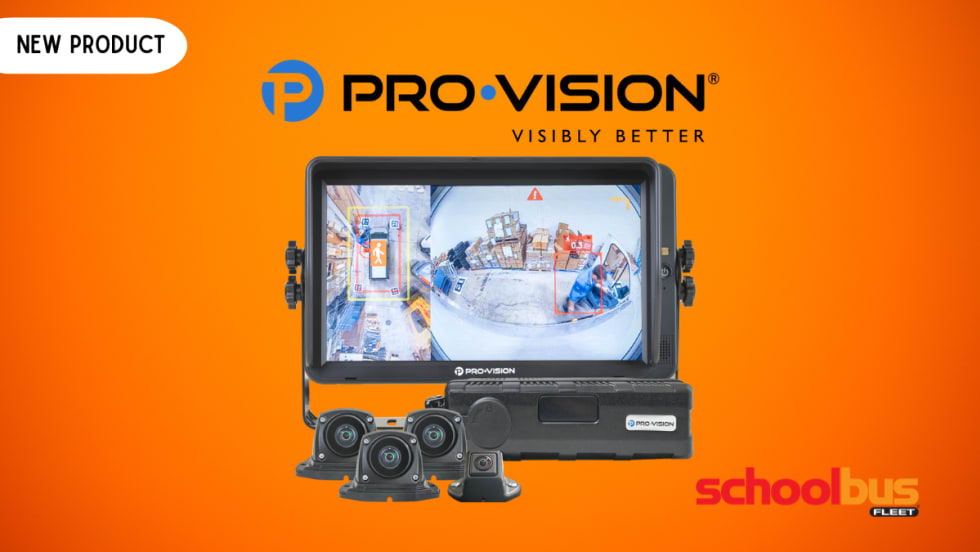
Pro-Vision Launches AI-Powered 360° Camera System
The new Birdseye camera delivers real-time AI-based pedestrian and vehicle detections, full visibility around the bus, and telematics integrations.
Read More →
NY Coalition Calls for Modernized Transportation for Vulnerable Students
A new statewide coalition is urging New York lawmakers to expand student transportation options for vulnerable students amid ongoing driver shortages.
Read More →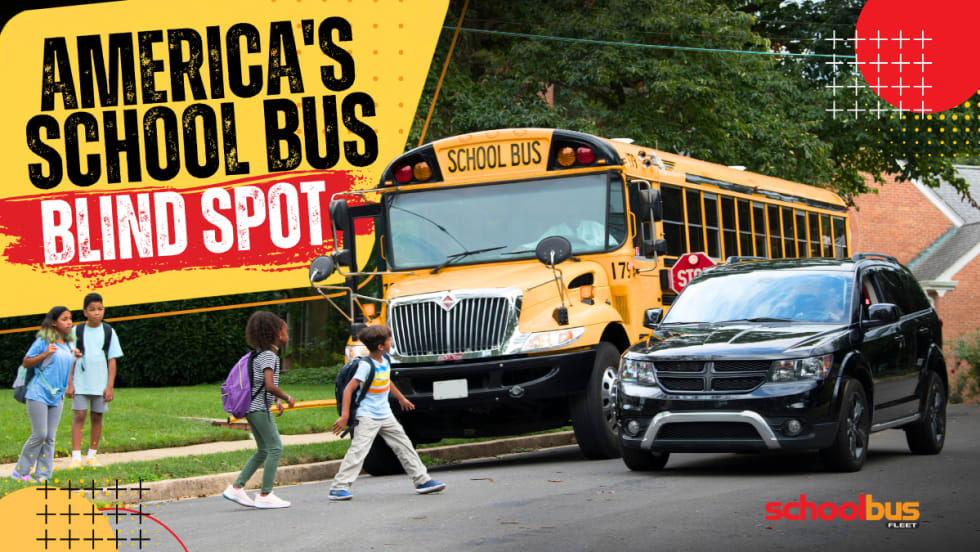
America Has a School Bus Passing Problem — and Distraction Is Making It Worse
Illegal school bus passing remains a major safety threat as distracted driving rises. This op-ed explores why awareness, enforcement, and stop-arm cameras matter more than ever.
Read More →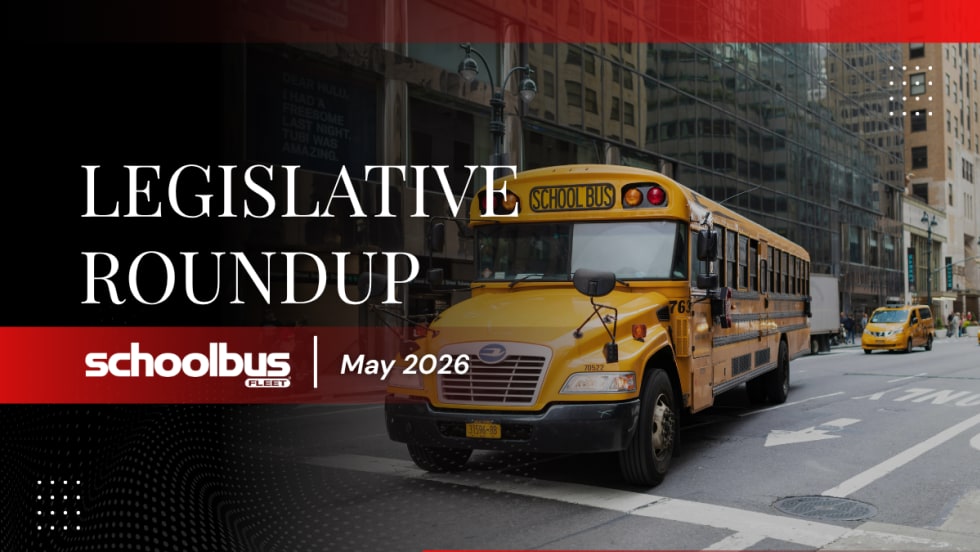
School Bus Laws to Watch: New York Delays EV Mandate
Plus, federal lawmakers seek new funding for school bus safety as states weigh stop-arm enforcement, disability protections, and education spending.
Read More →
The Essential Handbook for Safe Alternative Student Transportation
Your district's "exception riders" — students with IEPs, those experiencing homelessness, foster care youth — deserve more than a middleman solution. This handbook breaks down exactly what to look for in a supplemental transportation partner: from driver vetting and regulatory compliance to proactive safety technology. Because getting a ride isn't the same as getting a safe one.
Read More →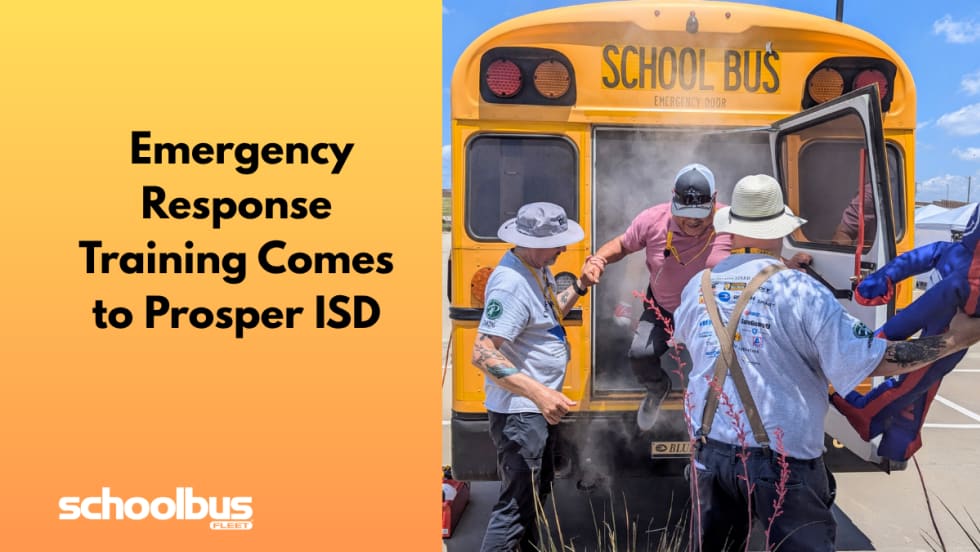
Operation STEER Brings Emergency Response Training to North Texas
Prosper ISD hosted the third annual training for transportation professionals across 67 districts to learn how to respond to emergencies, such as rollovers and evacuations, and proper use of safety equipment.
Read More →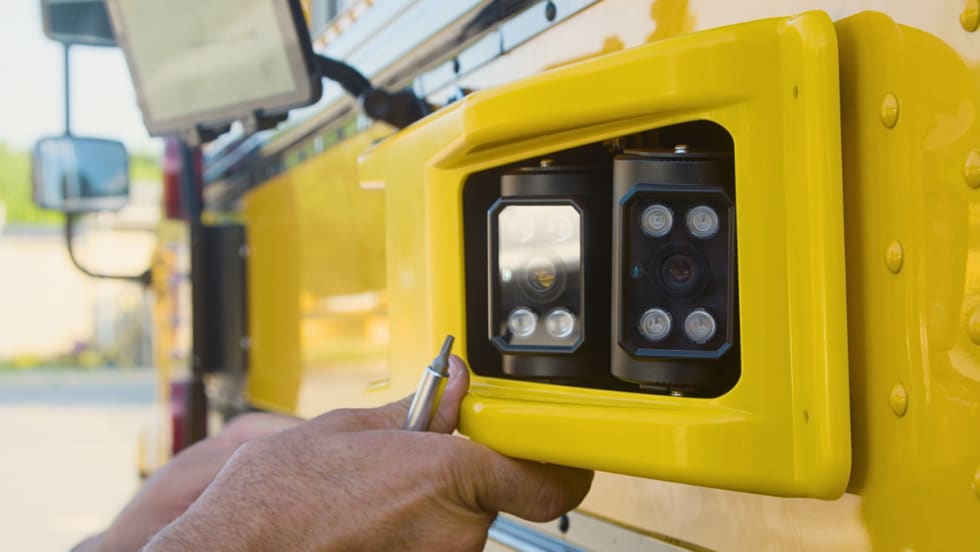
Florida District Relaunches BusPatrol School Bus Camera Program With New Safeguards
After being suspended over due process concerns, Miami-Dade schools and law enforcement are restarting the AI-powered stop-arm camera program with new oversight.
Read More →
School Bus Laws To Watch: Seat Belt Bills, Funding Fights & EV Changes
From national bills on seat belts and driver oversight to driver awareness campaigns referencing “Finn’s Rule” and ongoing transportation funding debates in Alaska, here’s the latest in school bus legislation across the U.S.
Read More →
9-Year-Old Boy Killed by School Bus at Busy Brooklyn Intersection
A Williamsburg community is mourning after a child was fatally struck by a private yeshiva bus, prompting calls for urgent safety improvements at the high-traffic crossing.
Read More →
Does Reliable School Transportation Boost Attendance? EverDriven’s Data Says Yes
The new data shows 99.99% incident-free trips and strong on-time performance, reinforcing how dependable transportation, especially for vulnerable student populations, can help districts combat chronic absenteeism.
Read More →