




6 of 8 School Bus Stop Fatalities Caused by Other Vehicles in 2016-17
The latest national report shows that for three of the six passing vehicle fatalities, the bus had not yet fully stopped, so the red lights and stop arm were not activated.

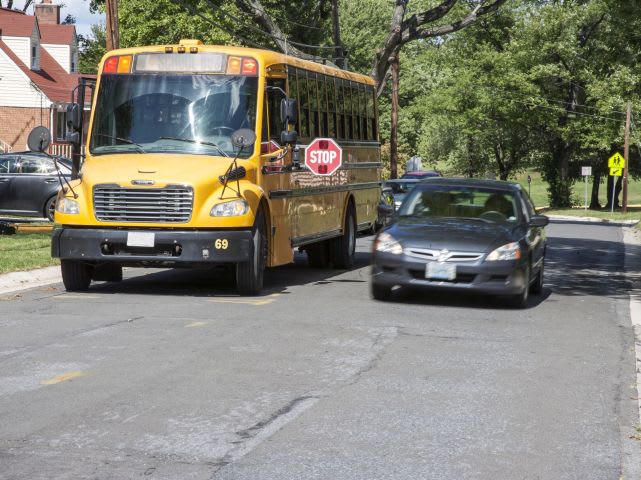
In the 2016-17 school year, six loading and unloading fatalities were attributed to a vehicle passing the school bus. File photo courtesy NHTSA
In the 2016-17 school year, six loading and unloading fatalities were attributed to a vehicle passing the school bus. File photo courtesy NHTSA
Eight students were killed in school bus loading and unloading accidents in the last school year, according to the latest report on fatalities of this type.
The total of eight school bus danger zone deaths in the 2016-17 school year is double the number of the prior school year, 2015-16, which saw four such fatalities. There were also four in 2014-15.
The national school bus loading and unloading fatality statistics are collected annually by the Kansas State Department of Education’s (KSDE’s) School Bus Safety Unit.
In the 2016-17 school year, six of the loading and unloading fatalities (75% of the total) were attributed to a vehicle passing the school bus. In the other two incidents (25% of the total), the students were struck by their own bus — one by the right front wheel, and the other by the right dual rear wheels.
For three of the six passing vehicle fatalities, the school bus had not yet fully stopped, so the amber warning lights were activated, but the red lights and stop arm were not. Here is the KSDE report’s narrative on one of those incidents, which involved two fatalities:
“Two cousins, a 6-year-old girl and a 6-year-old boy, were running across the highway to meet the school bus. An oncoming tractor-trailer struck and killed both students. The school bus had not come to a complete stop and was displaying the eight-way amber lights.”
That incident took place in Virginia. The other school bus stop fatalities in 2016-17 occurred in Massachusetts, Minnesota, Mississippi, New York, North Carolina, and Pennsylvania.
One of the by-own-bus deaths stemmed from a student’s backpack getting snagged in the door of the bus. Here’s the narrative on that incident, which happened in Massachusetts:
“A 9-year-old girl was unloading from the bus when her backpack was caught in the service door. The student was dragged for a distance prior to the backpack coming loose. The student was struck and killed by the right rear dual wheels of the bus.”
(As reported earlier this month, the school bus driver in the Massachusetts incident pleaded guilty and was sentenced to a year in jail.)
Here are other details on the 2016-17 school bus loading and unloading fatalities from the KSDE report:
• The students who were killed ranged in age from 6 years old to 16 years old.
• Six of the students were under age 10.
• Four were boys, and four were girls.
• Seven of the eight fatalities occurred in daylight, while one was in darkness.
• Weather conditions were described as clear in seven of the fatal incidents and cloudy in one of them.
• Road conditions were dry in seven of the incidents. The other one took place with snow/slush on the road.
• Seven of the fatalities occurred in rural areas, and one was in an urban area.
The KSDE school bus loading/unloading survey is a collection of fatality accident records provided by the state agencies responsible for school transportation and/or accident records. Onboard fatalities are not included.
The survey is described as “an effort to raise awareness of the dangers involved in loading and unloading school children,” and the ongoing fatalities show “the continuing need for forceful, advanced instruction to school bus drivers and students, as well as the need to increase our efforts to thoroughly inform drivers across the country about the requirements of the school bus stop law.”
To view the full report for 2016-17 and previous school years, go to the KSDE website.
More Safety

How to Build a Better School Bus Driver Training Program
Is it time to strengthen your driver training? Here’s how to pick the right talent and improve recruitment, retention, and safety. This video is brought to you by IC Bus.
Read More →
Recent School Bus Accidents Leave 2 Dead, 2 Injured
Four school bus crashes in Florida, Illinois, and Georgia highlight risks in transportation lots, at bus stops, and during student loading and unloading.
Read More →
When Every Second Matters, Clarity Keeps Routes Moving
From routine delays to urgent incidents, strong communication practices help drivers, dispatchers, schools, and families respond with confidence.
Read More →

What Happens When a School Bus Catches Fire — and What Can Help
School bus fires are rare but can be devastating. Learn how advances in fire suppression and asset protection help fleets detect fires earlier, reduce damage, and improve safety.
Read More →
Geotab Launches Tool to Help Fleets Investigate Road Incidents
Geotab Investigations combines telematics data, video, documents, and other evidence to help fleets reconstruct incidents, resolve claims, and determine what happened.
Read More →
Texas Sixth Grader Wins 2026 National School Bus Safety Poster Contest
Sai Darshana Yekolu of Moseley Middle School in Prosper, Texas, was named the newest winner for her artwork, bringing the theme of “Safe Rides, Everyday Heroes” to life.
Read More →
Doing More With Less: How Transportation Directors Can Prioritize Safety Amid Budget Uncertainty
With diesel prices soaring and nearly one-third of transportation directors expecting budget cuts, maintaining student safety has never been more challenging. Download this guide to learn how leading districts are prioritizing risk, funding critical safety technology, and building stronger budget cases with data.
Read More →
Walton County Schools Adds Gatekeeper Stop-Arm Enforcement System
The Florida district will deploy Gatekeeper’s updated Student Protector technology, which now incorporates AI to improve video evidence.
Read More →
How To Build a More Secure School Bus Yard During and After Hours
As thefts and overnight security threats continue, school transportation leaders are combining stronger operational practices with AI-enabled surveillance to better protect buses, facilities, and staff.
Read More →
FMCSA Names New Chief Safety Officer: What School Bus Operators Should Know
Steve Dowling is set to lead the federal agency's efforts to advance commercial motor vehicle safety and reduce crashes, fatalities, and injuries on the nation's roadways.
Read More →