




New Report Shows Higher Demand for Vehicle Technicians
TechForce Foundation’s report is based on updated U.S. Bureau of Labor Statistics (BLS) data.

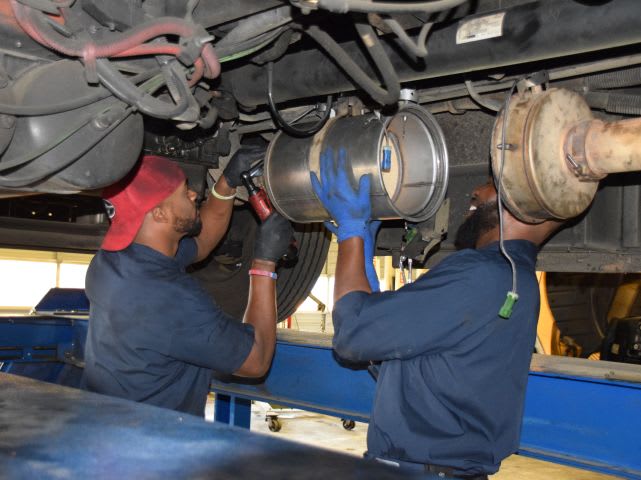
For diesel technicians, the Bureau of Labor Statistics projects an average annual new entrant demand of 28,300. File photo courtesy Atlanta Public Schools
For diesel technicians, the Bureau of Labor Statistics projects an average annual new entrant demand of 28,300. File photo courtesy Atlanta Public Schools
A new report by TechForce Foundation shows a heightened demand for vehicle technicians in the U.S. in the coming years.
The nonprofit’s report, “Transportation Technician New Entrant Demand,” is based on an analysis of U.S. Bureau of Labor Statistics (BLS) data. TechForce found that the estimated demand for new entrant vehicle technicians is much higher than previously reported. For the period between 2016 and 2026, that demand is more than triple the prior BLS estimates for the period between 2014 and 2024.
New entrant technicians are those needed to fill the growth in new positions and to replace those who leave the occupation. They are distinguished from experienced technicians who may move between employers but don’t add to the overall trained workforce in the occupation.
The TechForce report reveals that the newly projected BLS average annual new entrant demand — 75,900 auto technicians for the 2016 to 2026 period — is far greater than the previous BLS projected demand — 23,720 technicians for the 2014 to 2024 period.
Also, by extrapolating data from the economy and vehicles in use, TechForce has been able to provide annual projections that it said are more useful for industry planning than a 10-year average, which masks the cyclicality of individual years. As an example, in the case of auto technicians, the highest demand in the next five years is 92,071 in 2018, while the lowest is 65,020 in 2021, according to TechForce.
The demand for diesel technicians is similar. The newly projected BLS average annual new entrant demand of 28,300 diesel technicians far exceeds the previous projected demand of 7,690.
“BLS had underestimated the replacement component of demand — replacing existing technicians who have retired, been promoted, or decided to find a new career,” explained Greg Settle, one of the co-authors of the new report and TechForce’s director of national initiatives. “That methodological problem has been rectified with the new projections just issued by the BLS for the 2016-2026 period.”
What has exacerbated the technician shortage to the point of the “perfect storm” are essentially three things, according to Settle: “We’re caught in the middle of a strong growing economy, a ‘catch-up’ demand for technicians created by the Great Recession of 2008, and the increasing complexity of vehicles.”
TechForce’s full report is available as a free download after subscribing here.
More Maintenance

International Adds E-Commerce Capabilities to Fleetrite.com
IC Bus customers can now browse, buy, and track shipments for more than 400,000 aftermarket parts online.
Read More →
The Most Expensive Thing You Do Before Selling a School Bus: Wait
When should you sell an aging school bus? Learn how maintenance, mileage, corrosion, specifications, and timing can affect resale value long before the auction.
Read More →
The essential guide to school bus maintenance and student safety
Reactive maintenance puts students at risk of breakdowns, delays and roadside emergencies. This guide gives transportation directors a data-driven framework to predict failures, extend bus lifespans and improve fleet reliability across every route.
Read More →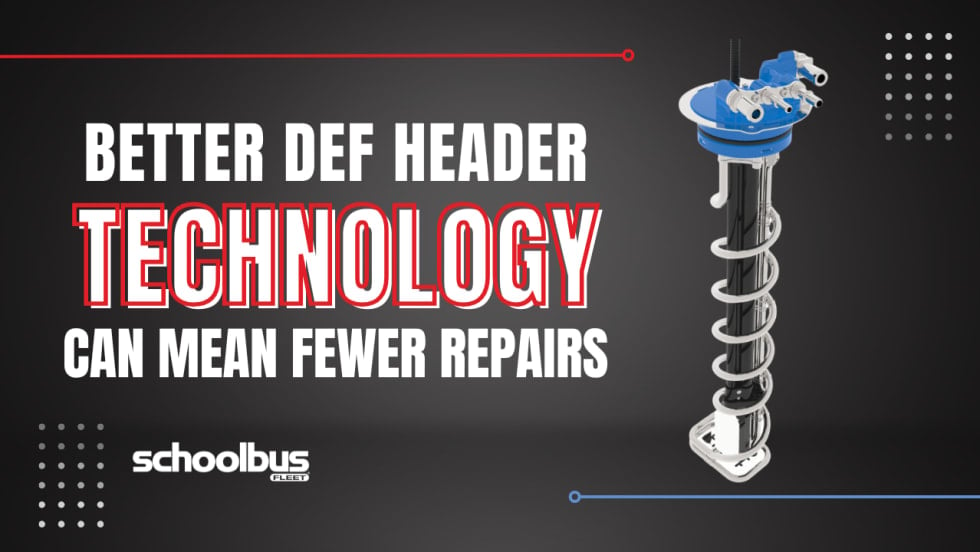
The Evolution of DEF Header Technology: What School Bus Operations Should Know at Replacement Time
See what school bus fleets should consider when replacing DEF headers to improve reliability, reduce repeat repairs, and control maintenance costs.
Read More →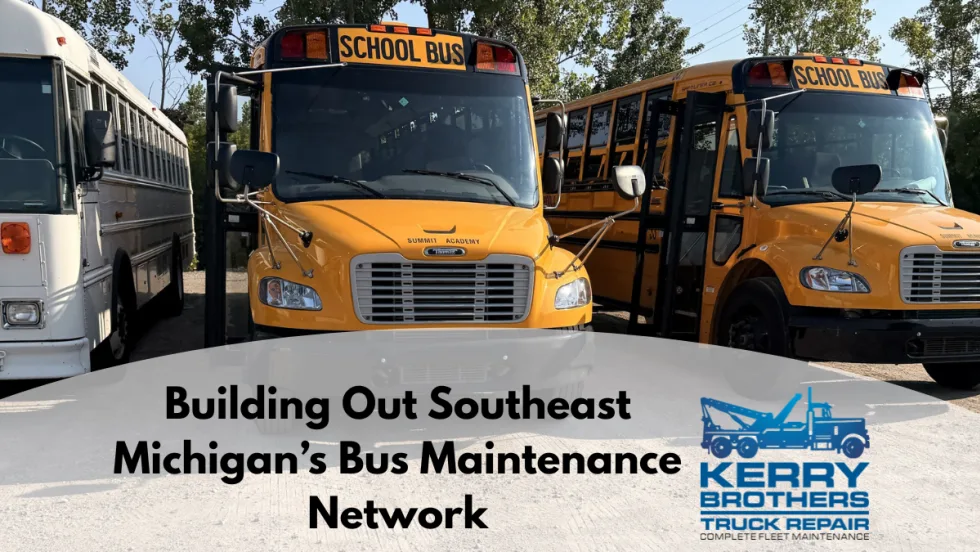
Kerry Brothers Grows Michigan School Bus Repair Network
The acquisition of Downriver Truck and Bus expands Kerry Brothers’ school bus maintenance footprint across southeast Michigan, adding repair capacity, diagnostic resources, and state inspection support.
Read More →
Noregon Introduces CAN Bus Diagnostic Tool, Expands JPRO Features
CAN Mentor and the latest JPRO update aim to simplify vehicle network diagnostics and improve repair efficiency for technicians of all experience levels.
Read More →
Cummins on Smarter, Simpler Engine Innovation
Cummins discusses its first-ever gasoline engine for school buses, EPA 2027, and why bus fleets still want durable, simpler internal combustion options.
Read More →
Report: 72% of Diesel School Buses Now Use Advanced Low-Emission Engines
New data shows advanced low-emission diesel technology continues expanding across school bus fleets, even as electric bus adoption gains momentum.
Read More →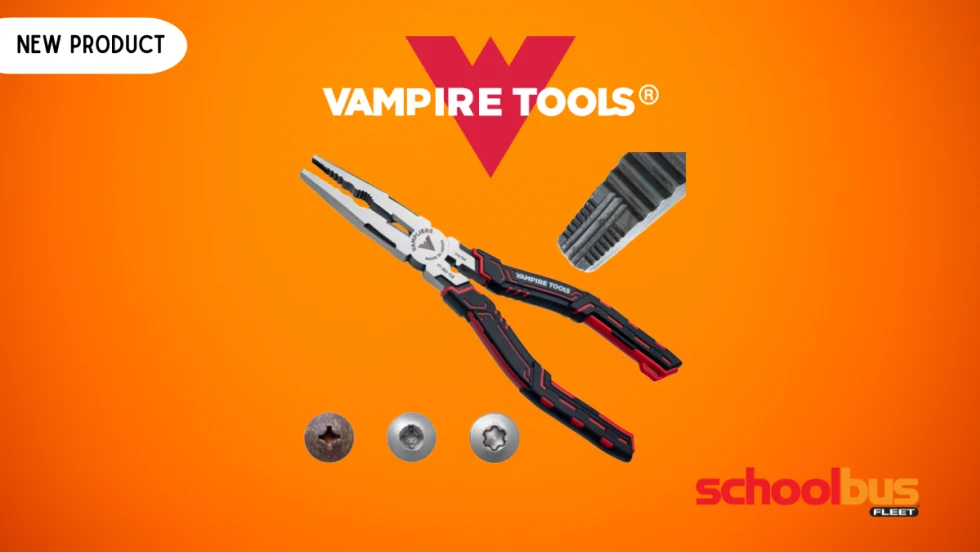
Vampire Tools' CAIMAN 7.5-Inch Multi-Purpose Screw Extractor Long-Nose Pliers with Crimper
Vampire Tools introduced the VAMPLIERS Caiman 7.5-inch multi-purpose pliers, combining screw extraction, cutting, crimping, and gripping functions into a single tool designed for fleet maintenance professionals.
Read More →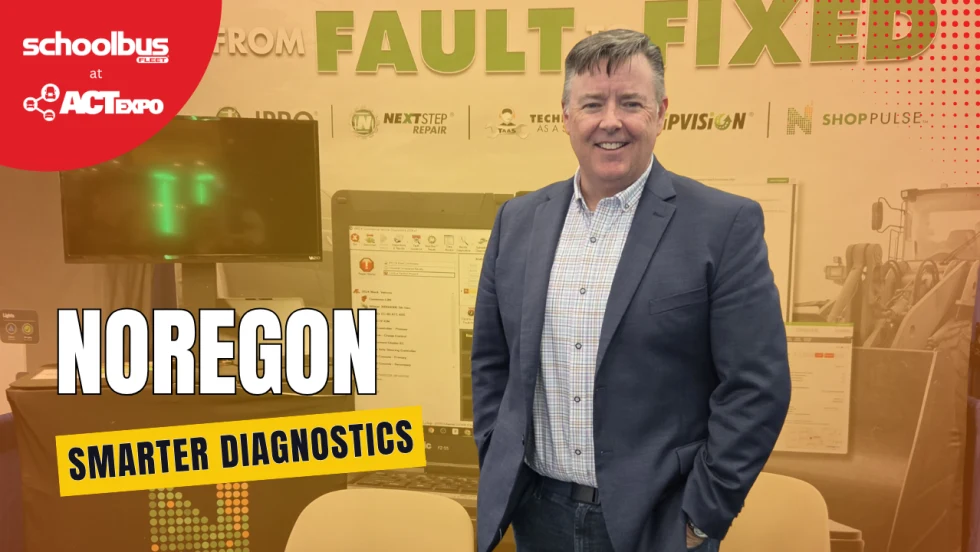
How Advanced Diagnostics Helps Bus Fleets Stay Ahead of Repairs
Chat with Noregon’s Kevin Smallhorn at ACT Expo about bus diagnostic tools, telematics integration, CNG maintenance support, and strategies to help reduce downtime and improve uptime.
Read More →