




Related: Angie Ortiz: School Bus Competitions Contribute to Student Safety
Winners Named in School Bus Driver International Safety Competition
David Mansfield of Minnesota, Billy Wiseman of West Virginia, and Hannah Beard of Missouri place first in the competition’s three school bus categories.

Thomas McMahon・Executive Editor
2 min to read
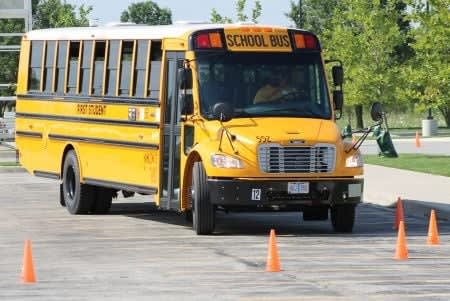
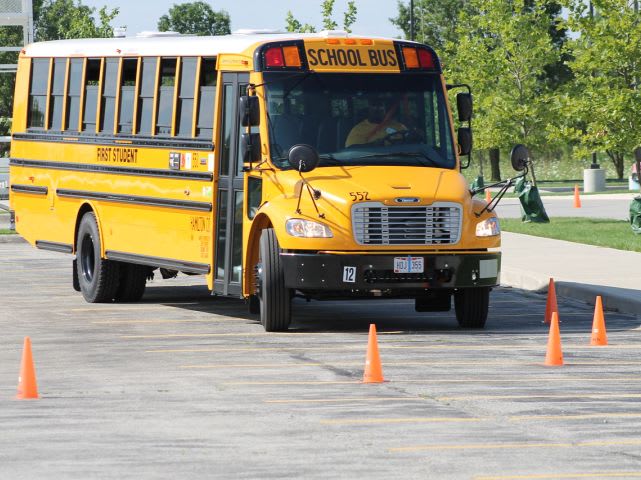
The 2017 School Bus Driver International Safety Competition was held at Hamilton Southeastern Schools in Fishers, Indiana. Photo courtesy NSTA
FISHERS, Ind. — Top school bus drivers from across the U.S. and Canada demonstrated their skills here over the weekend in the School Bus Driver International Safety Competition.
The National School Transportation Association (NSTA) hosted the 47th edition of the competition at Hamilton Southeastern Schools in Fishers. The event was held in conjunction with NSTA’s annual meeting and convention, which kicked off Monday morning in Indianapolis.
For the School Bus Driver International Safety Competition, contestants began on Saturday with a written exam testing their understanding of the rules of the road. Then the drivers got behind the wheel and completed a road course on Sunday.
In any state or Canadian province, a total of six drivers per year can qualify for the School Bus Driver International Safety Competition. That can include two drivers (one public sector, one private sector) in each school bus category: transit (Type D), conventional (Type C), and small bus (Type A).
NSTA President Todd Monteferrario said that the international competition “truly showcases the best of the best in school transportation, as each of the competitors are tested on their knowledge, maneuvering, and skill. School bus transportation is the safest mode of transportation available, and these elite drivers show why at every turn.”
NSTA announced the winners of the 2017 School Bus Driver International Safety Competition in an awards banquet held on Sunday evening and sponsored by IC Bus. Here are the top contestants in the three categories:
Small bus
• First: David Mansfield, Ottertail Minn-Dakota Coaches, Fergus Falls, Minnesota.
• Second: Karina Larson, Forest Lake (Minn.) Area Schools.
• Third: Mary Slate, Kanawha County Schools, Charleston, West Virginia.
Conventional bus
• First: Billy Wiseman, Kanawha County Schools, Charleston, West Virginia.
• Second: Larry Hannon Sr., Centennial School District, Warminster, Pennsylvania.
• Third: Michael Castaneda, Northeast Independent School District, San Antonio, Texas.
• Honorable mention: Mark VanderZouwen, Grandville (Mich.) Public Schools.
Transit bus
• First: Hannah Beard, First Student, St. Charles, Missouri.
• Second: Laurel Bird, Preston (Idaho) School District.
• Third: Ted Dubbs, Lower Merion School District, Ardmore, Pennsylvania.
• Honorable mention: Gene Thrasher, Bend-La Pine Schools, Bend, Oregon.
“We congratulate all of the competitors in this international competition as well as the winners in each vehicle category," Monteferrario said.
More Safety

How to Build a Better School Bus Driver Training Program
Is it time to strengthen your driver training? Here’s how to pick the right talent and improve recruitment, retention, and safety. This video is brought to you by IC Bus.
Read More →
Recent School Bus Accidents Leave 2 Dead, 2 Injured
Four school bus crashes in Florida, Illinois, and Georgia highlight risks in transportation lots, at bus stops, and during student loading and unloading.
Read More →
Sponsored•September 8, 2026
When Every Second Matters, Clarity Keeps Routes Moving
From routine delays to urgent incidents, strong communication practices help drivers, dispatchers, schools, and families respond with confidence.
Read More →

What Happens When a School Bus Catches Fire — and What Can Help
School bus fires are rare but can be devastating. Learn how advances in fire suppression and asset protection help fleets detect fires earlier, reduce damage, and improve safety.
Read More →
Geotab Launches Tool to Help Fleets Investigate Road Incidents
Geotab Investigations combines telematics data, video, documents, and other evidence to help fleets reconstruct incidents, resolve claims, and determine what happened.
Read More →
Texas Sixth Grader Wins 2026 National School Bus Safety Poster Contest
Sai Darshana Yekolu of Moseley Middle School in Prosper, Texas, was named the newest winner for her artwork, bringing the theme of “Safe Rides, Everyday Heroes” to life.
Read More →
Sponsored•August 27, 2026
Doing More With Less: How Transportation Directors Can Prioritize Safety Amid Budget Uncertainty
With diesel prices soaring and nearly one-third of transportation directors expecting budget cuts, maintaining student safety has never been more challenging. Download this guide to learn how leading districts are prioritizing risk, funding critical safety technology, and building stronger budget cases with data.
Read More →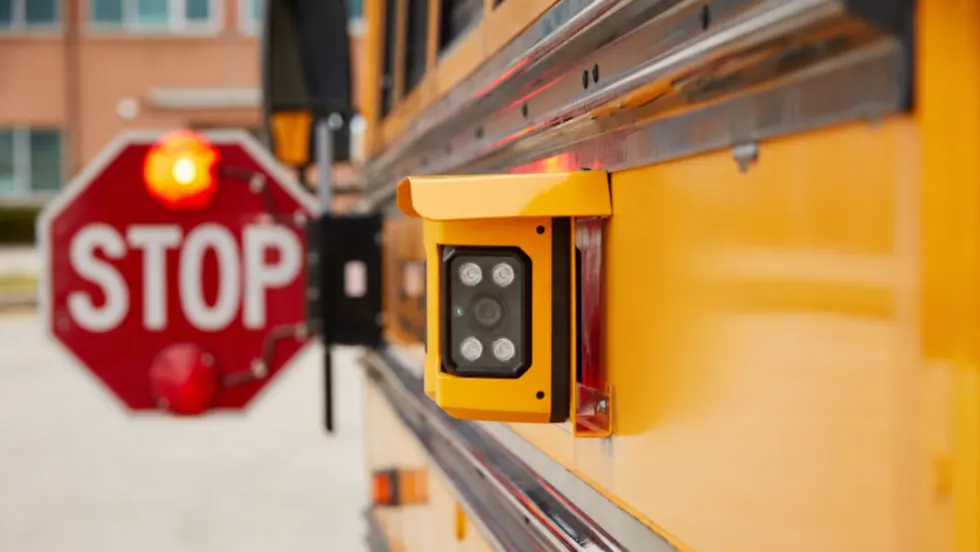
Walton County Schools Adds Gatekeeper Stop-Arm Enforcement System
The Florida district will deploy Gatekeeper’s updated Student Protector technology, which now incorporates AI to improve video evidence.
Read More →
How To Build a More Secure School Bus Yard During and After Hours
As thefts and overnight security threats continue, school transportation leaders are combining stronger operational practices with AI-enabled surveillance to better protect buses, facilities, and staff.
Read More →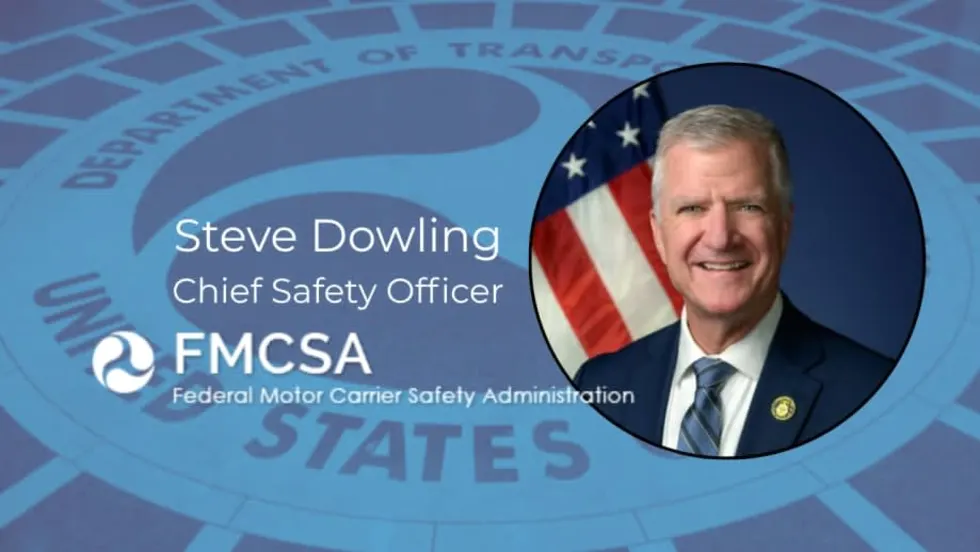
FMCSA Names New Chief Safety Officer: What School Bus Operators Should Know
Steve Dowling is set to lead the federal agency's efforts to advance commercial motor vehicle safety and reduce crashes, fatalities, and injuries on the nation's roadways.
Read More →