




Lion to Add Electric Bus Manufacturing Facility in California
The Quebec-based school bus manufacturer will receive support for the facility from the state and from the province’s Green Fund.

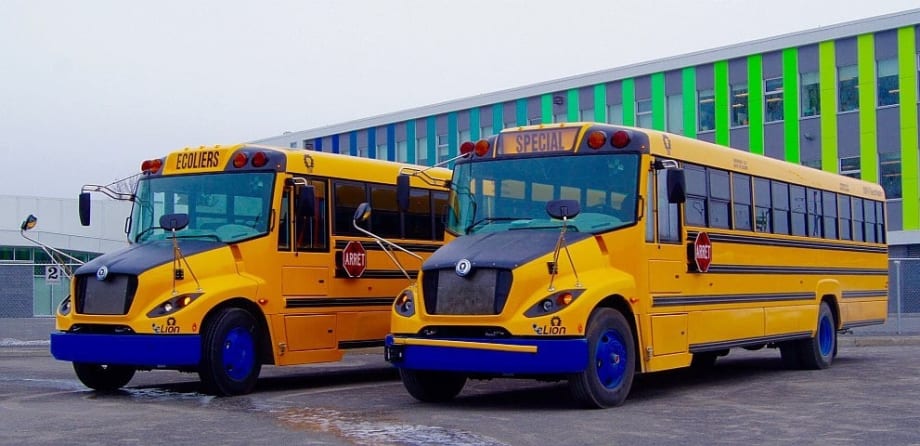
Lion Bus plans to add a new electric bus manufacturing facility in California, with support from the state and Quebec. Shown here are two eLion buses in Quebec.
Lion Bus plans to add a new electric bus manufacturing facility in California, with support from the state and the Canadian province. Shown here are two eLion buses in Quebec.
PALO ALTO, Calif. — Quebec-based Lion Bus plans to add a new electric bus manufacturing facility in California, with support from the state and the Canadian province.
Lion Bus President Marc Bedard and Tyson Eckerle, the deputy director for California Governor’s Office of Business and Economic Development (GO-Biz), made the announcement at a demonstration of the eLion electric bus held in Palo Alto on Tuesday. Two Sacramento area school districts will be the first in the state to add Lion's electric vehicles to their fleets, according to NBC Bay Area. Twin Rivers Unified School District and Elk Grove Unified School District are expected to receive a total of 29 buses in the coming months.
The state will help Lion find a location for the new facility as they ramp up production.
The eLion, a Type C electric school bus manufactured in Quebec, uses a technology developed and funded in part by proceeds from the Quebec cap-and-trade program, which is linked with California’s cap-and-trade program.
“Transportation electrification is among the promising solutions for fighting climate change and modernizing Quebec’s economy,” said David Heurtel, the Quebec minister of sustainable development, environment, and the fight against climate change. “This is why our government is proud to allocate income from the carbon market, through Quebec’s Green Fund, to support innovative companies like Lion Bus that allow us to take yet another step toward a modern, sustainable, and low-carbon economy for our own well-being and the well-being of our children.”
“GO-Biz is proud to partner with Lion Bus to help bring a new electric bus manufacturing facility to California and help meet Gov. Brown’s goal of putting 1.5 million zero-emission vehicles on the road by 2025,” Eckerle said.
Since the launch of their cap-and-trade programs in 2013, Quebec and California have provided more than $5.5 billion for initiatives and technologies financed through Quebec’s Green Fund and California’s Greenhouse Gas Fund. Many of the investments target innovations in transportation, since this sector is the largest single contributor of greenhouse gas emissions in both California and Quebec, according to GO-Biz and the Quebec Green Fund.
Zero-emission buses also benefit from incentive purchase funding from Quebec's and California’s cap-and-trade programs, which aim to help bring technologies like the eLion to communities most in need of pollution relief. The state and province have linked their respective cap-and-trade programs to create a carbon market that is designed, developed, and operated by sub-national governments from different countries. With the province of Ontario expected to join in 2018, the market will soon represent a population of 62 million and a gross domestic product of more than $3.7 trillion.
More Alternative Fuels

CALSTART and Forth Combine to Form Catalyst Mobility
The new name represents a renewed vision for the nonprofit focused on advancing clean, equitable, and affordable transportation solutions that move people and goods.
Read More →
Alt-Fuel Moves: New Buses, Charging Hubs & Real-World EV Testing
Propane and electric school bus deployments continue to grow as districts add new vehicles, expand charging infrastructure, and gather more real-world operating data.
Read More →
Fewer Electric School Bus Models Reshape the U.S. Market
WRI’s latest buyer’s guide points to a consolidating electric school bus market, but fewer options may reflect a maturing industry rather than fewer meaningful choices for school bus operators.
Read More →
The Fuel Budget You Can Actually Predict: How Propane Autogas Keeps Money in the Classroom
Learn how propane autogas helps school districts manage fuel costs with predictable pricing, lower maintenance, and reduced emissions from former transportation director Joel Stutheit.
Read More →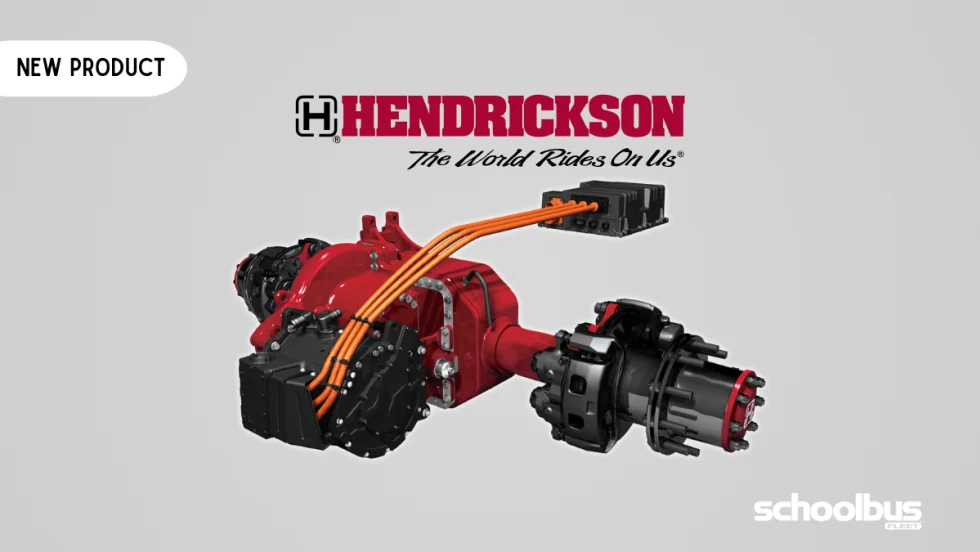
Hendrickson, Driventic Introduce New Electric Powertrain for School Buses
ELECTRAAX, the electrified, lightweight drive axle offers integrated ePowertrain efficiency and modular flexibility for Class 6–7 school bus use.
Read More →
The Mobility House Joins PowerFlex in Fleet Electrification Deal
The acquisition combines intelligent charging software, bidirectional charging expertise, and fleet electrification services to support the growing adoption of electric school buses across North America.
Read More →
Alt-Fuel Moves: Electric School Bus Investments Hit the Road
See which districts across the U.S. are putting electric school buses into service, expanding charging infrastructure, and planning the next phase of fleet electrification.
Read More →
With Fuel Volatility Ahead, School Districts Turn to Propane
While diesel prices peaked above $5 this spring, districts with propane autogas-powered fleets paid under $2 per gallon, according to PERC.
Read More →
EPA Unveils Proposed Changes to 2027 Heavy-Duty Engine Rules
The federal agency has proposed changes to next year’s targets that would eliminate DEF derates, ease warranty requirements, and retain current NOx emissions standards.
Read More →
Alt-Fuel Moves: EV Charging & Infrastructure Projects Gain Momentum
The latest developments include new funding, charging infrastructure, utility investments, and fleet technologies designed to support the transition to electric school buses nationwide.
Read More →