




Missouri District Buys 6 Collins CNG School Buses
Blue Springs School District also recently made a $1.2 million investment in fueling infrastructure for its compressed natural gas fleet.


Blue Springs School District’s six new Collins CNG buses are designed for students with special needs.
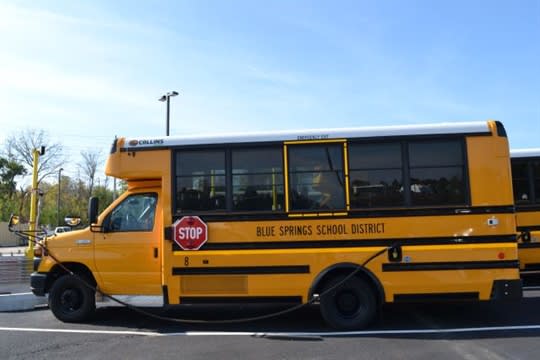
Blue Springs School District’s six new Collins CNG buses are designed for students with special needs.
BLUE SPRINGS, Mo. — Collins Bus Corp. has delivered six compressed natural gas (CNG) school buses to the Blue Springs School District, with 30 more buses scheduled to be delivered over the next four years.
The Type A school buses have capacities of 18 to 28 passengers. They are expected to reduce greenhouse gas emissions by up to 15% and cut operating costs by at least 10%.
Blue Springs "understand[s] the benefits of alternative fuels to both the environment and their bottom line,” said Joe Leggett, director of sales, western region, for Collins REV. “We felt all along that with the size and needs of the district, our CNG buses were the perfect choice for Blue Springs, and so far, the feedback we are hearing is playing that out.”
Blue Springs has a total of about 150 school buses. About 1,100 of the 1,500 students use district transportation daily.
The Collins Type A CNG school buses are powered by Westport’s dedicated natural gas WiNG Power System. The chassis and drivetrain are built on a Ford platform and carry a full Ford-backed warranty for parts and service. The buses have a range of 250 to 300 miles.
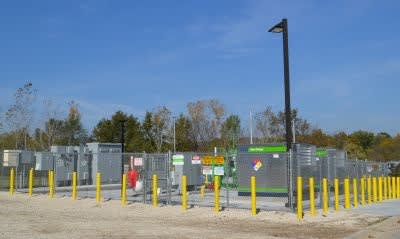
Blue Springs recently made a $1.2 million investment in fueling infrastructure for its compressed natural gas fleet.
Blue Springs School District recently made a $1.2 million investment in CNG fueling infrastructure. Based on current projections, the district expects a return on investment of three to five years on the purchase of the new CNG buses.
“In the short period of time we have used the Collins CNG buses, we have witnessed a reduction in operating costs for fuel and maintenance,” said Steve Brown, transportation director at Blue Springs School District. “We anticipate this will grow to a savings of hundreds of thousands of dollars every year once all the buses are up and running.”
The buses are designed for students with special needs. They include track seating and entrances and doors designed for easy ingress and egress.
“We like the flat floor,” Brown said. "[Having] no step up has been very important for our aides, our students, and our drivers.”
Masters Transportation brokered the deal for the Collins CNG buses.
An in-depth feature article on Blue Springs School District will appear in the January 2017 issue of School Bus Fleet.
More Alternative Fuels
Bipartisan Bill Seeks to Extend Clean School Bus Program Through 2031
The proposed legislation would renew federal support for cleaner school buses as districts navigate funding uncertainty, rising fuel and infrastructure costs, and fleet replacement needs.
Read More →
Alt-Fuel Moves: Electric Bus Rollouts, Bidirectional Charging & Propane Growth
See which fleets are adding electric and propane school buses as districts and operators invest in charging infrastructure, bidirectional technology, and alternative-fuel expansion.
Read More →
Nobody Told Diesel Prices They Were Supposed to Come Down
With diesel prices surging, school bus fleets have new reason to stress-test fuel costs, consider diversification, and calculate what each route really costs to operate.
Read More →
Why Gasoline School Buses Are Making a Comeback
Gasoline is gaining ground in full-size school buses. See how today’s options stack up against diesel on cost, maintenance, emissions, performance, and more.
Read More →
EPA Opens $180M DERA Funding Round for Diesel Upgrades
The 2026 Diesel Emissions Reduction Act program seeks applications from eligible organizations to accelerate the retirement of legacy diesel vehicles.
Read More →
The Secret Life of an Electric School Bus Battery
Batteries change throughout years of daily routes, but degradation doesn’t necessarily mean the end. Here’s what operators should know about performance, safety, and second life.
Read More →
CALSTART and Forth Combine to Form Catalyst Mobility
The new name represents a renewed vision for the nonprofit focused on advancing clean, equitable, and affordable transportation solutions that move people and goods.
Read More →
Alt-Fuel Moves: New Buses, Charging Hubs & Real-World EV Testing
Propane and electric school bus deployments continue to grow as districts add new vehicles, expand charging infrastructure, and gather more real-world operating data.
Read More →
Fewer Electric School Bus Models Reshape the U.S. Market
WRI’s latest buyer’s guide points to a consolidating electric school bus market, but fewer options may reflect a maturing industry rather than fewer meaningful choices for school bus operators.
Read More →
The Fuel Budget You Can Actually Predict: How Propane Autogas Keeps Money in the Classroom
Learn how propane autogas helps school districts manage fuel costs with predictable pricing, lower maintenance, and reduced emissions from former transportation director Joel Stutheit.
Read More →