




North Kansas City Makes Big Move to CNG School Buses
The district recently replaced the majority of its diesel fleet with 124 new CNG buses. Here, Director of Transportation Lon Waterman discusses the financial and environmental aspects of the decision.


Lon Waterman, director of transportation for North Kansas City Schools, says that the move to alternative-fuel buses ties in with the district’s overall environmental goals. In the background, new Thomas Built Saf-T-Liner C2 CNG buses are refueled at a time-fill station.
Photo: North Kansas City Schools
North Kansas City Schools has taken a giant leap into alternative fuels.
The district recently replaced the majority of its diesel fleet with 124 new CNG school buses. With 36 remaining diesels, for a total of 160 buses, the CNG models make up more than three-fourths of the fleet.
Lon Waterman, director of transportation for North Kansas City Schools, says that the move to an alternative fuel ties in with the district’s overall environmental goals.
“The district has looked at green initiatives in other departments, including the building of schools,” Waterman says. “For the board, they felt that transportation was the natural next step.”
With growing student enrollment, North Kansas City Schools needed to add more buses, and the existing buses were in need of replacement.
“Our fleet was aged beyond industry standards,” Waterman says. “The cost of maintenance and repairs was more than the fleet was worth.”
The district spent about two years analyzing the pros and cons of the various fuel options for school buses, ultimately settling on CNG for its local availability, its clean-burning properties, and its relatively stable price.
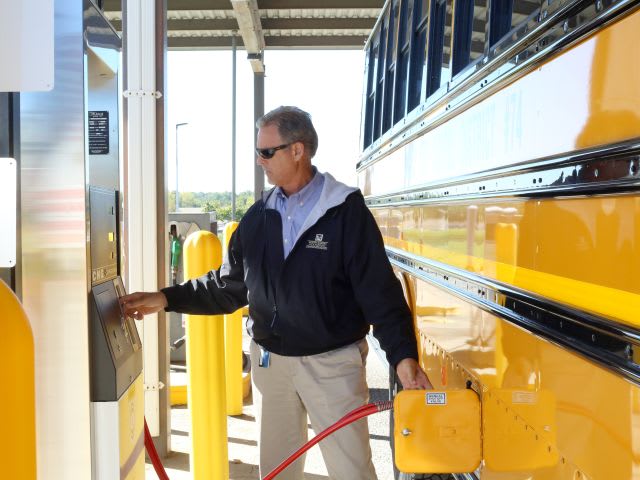
David Curry, lead trainer at North Kansas City Schools, refuels one of the district’s 124 new CNG buses at a fast-fill station.
“We wanted to make sure we could control our costs and project them reasonably,” Waterman says. Along with acquiring a new fleet of CNG buses, North Kansas City Schools installed fast-fill and time-fill fueling infrastructure. Most of the buses use the fast-fill station, which is akin to filling up at a diesel pump. About 50 of the buses use the time-fill station, which takes about four to five hours.
While some school districts tap into grant funding to offset the higher purchase prices of alt-fuel buses, North Kansas City Schools took a different route. The district financed its CNG bus purchase with a combination of three-year leases and long-term lease purchases.
“With the short-term leases, every three years we’re trading these buses in, which keeps our fleet costs down,” Waterman says. “It created a replacement cycle within our fleet that was never there before.”
This profile of North Kansas City Schools appeared in a feature about fuel choices in the November issue of School Bus Fleet. Read the full feature here.
More Alternative Fuels
Bipartisan Bill Seeks to Extend Clean School Bus Program Through 2031
The proposed legislation would renew federal support for cleaner school buses as districts navigate funding uncertainty, rising fuel and infrastructure costs, and fleet replacement needs.
Read More →
Alt-Fuel Moves: Electric Bus Rollouts, Bidirectional Charging & Propane Growth
See which fleets are adding electric and propane school buses as districts and operators invest in charging infrastructure, bidirectional technology, and alternative-fuel expansion.
Read More →
Nobody Told Diesel Prices They Were Supposed to Come Down
With diesel prices surging, school bus fleets have new reason to stress-test fuel costs, consider diversification, and calculate what each route really costs to operate.
Read More →
Why Gasoline School Buses Are Making a Comeback
Gasoline is gaining ground in full-size school buses. See how today’s options stack up against diesel on cost, maintenance, emissions, performance, and more.
Read More →
EPA Opens $180M DERA Funding Round for Diesel Upgrades
The 2026 Diesel Emissions Reduction Act program seeks applications from eligible organizations to accelerate the retirement of legacy diesel vehicles.
Read More →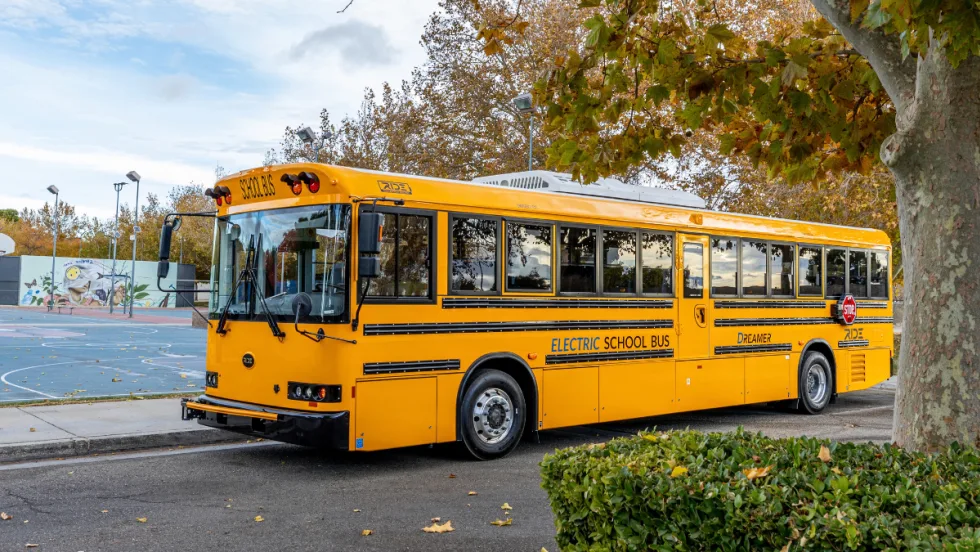
The Secret Life of an Electric School Bus Battery
Batteries change throughout years of daily routes, but degradation doesn’t necessarily mean the end. Here’s what operators should know about performance, safety, and second life.
Read More →
CALSTART and Forth Combine to Form Catalyst Mobility
The new name represents a renewed vision for the nonprofit focused on advancing clean, equitable, and affordable transportation solutions that move people and goods.
Read More →
Alt-Fuel Moves: New Buses, Charging Hubs & Real-World EV Testing
Propane and electric school bus deployments continue to grow as districts add new vehicles, expand charging infrastructure, and gather more real-world operating data.
Read More →
Fewer Electric School Bus Models Reshape the U.S. Market
WRI’s latest buyer’s guide points to a consolidating electric school bus market, but fewer options may reflect a maturing industry rather than fewer meaningful choices for school bus operators.
Read More →
The Fuel Budget You Can Actually Predict: How Propane Autogas Keeps Money in the Classroom
Learn how propane autogas helps school districts manage fuel costs with predictable pricing, lower maintenance, and reduced emissions from former transportation director Joel Stutheit.
Read More →