



Feds Finalize Standards for Greenhouse Gas, Fuel Efficiency
The new CO2 and fuel consumption standards for vocational vehicles — including school buses — start in model year 2021.

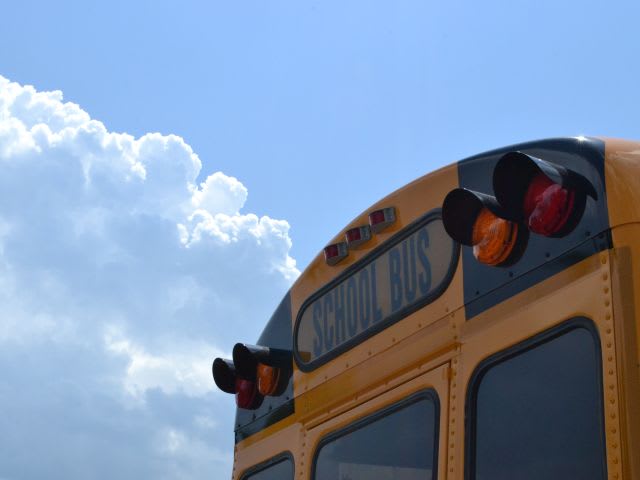
New CO2 and fuel consumption standards for vocational vehicles — including school buses — start in model year 2021.

New CO2 and fuel consumption standards for vocational vehicles — including school buses — start in model year 2021.
Two federal agencies on Monday finalized the next round of standards for medium- and heavy-duty vehicles — including school buses — that aim to improve fuel efficiency and reduce carbon pollution.
The final Phase 2 standards, issued by the U.S. Environmental Protection Agency (EPA) and the National Highway Traffic Safety Administration (NHTSA), were called for by President Obama’s Climate Action Plan. They follow a proposal that the agencies issued in June 2015.
“This next phase of standards for heavy- and medium-duty vehicles will significantly reduce greenhouse gas emissions while driving innovation, and will ensure that the United States continues to lead the world in developing fuel-efficient technologies through the next decade and beyond,” EPA Administrator Gina McCarthy said.
The final Phase 2 program encourages the wider application of currently available technologies and the development of new technologies through model year 2027. According to the EPA and NHTSA, the standards are expected to lower CO2 emissions by about 1.1 billion metric tons, save vehicle owners fuel costs of about $170 billion, and reduce oil consumption by up to 2 billion barrels over the lifetime of the vehicles sold under the program.
“Today’s ambitious but achievable announcement is a huge win for the American people, giving us cleaner air, more money saved at the pump, and real benefits for consumers across the supply chain,” Transportation Secretary Anthony Foxx said.
The standards apply to semi-trucks, large pickup trucks and vans, and all types and sizes of buses and work trucks, from model year 2021 to 2027.
School buses are included in the category of vocational vehicles. The new CO2 and fuel consumption standards for vocational vehicles start in model year 2021, with increased stringency in model year 2024, and a fully phased-in stringency level in 2027.
According to the EPA and NHTSA, the fully phased-in Phase 2 standards for vocational vehicles will achieve up to 24% reductions in CO2 emissions and fuel consumption compared to Phase 1. The agencies project that these standards could be met through improvements in the engine, transmission, and driveline; lower rolling resistance tires; workday idle-reduction technologies; weight reduction; and some application of hybrid technology.
The final Phase 2 standards build on the Phase 1 fuel efficiency and greenhouse gas emissions standards that are already in place for model years 2014 to 2018. As with the Phase 1 program, the agencies are again adopting separate standards and test cycles for tractor engines, vocational diesel engines, and vocational gasoline engines.
On Tuesday, some engine and vehicle manufacturers followed the EPA and NHTSA announcement with statements on the Phase 2 standards.
“With nearly 100 years of engine expertise, we are well-positioned to develop products that comply with this new rule and meet our customers’ needs,” said Srikanth Padmanabhan, president of engine business for Cummins Inc. “We are pleased that the rule builds on the Phase 1 regulatory framework that recognizes the diversity and complexity of the commercial vehicle sector, and we look forward to continued collaboration with the agencies and our customers to ensure a successful implementation.”
Daimler Trucks North America (DTNA), the parent company of Thomas Built Buses, also commented on the new standards.
“DTNA will continue to work closely with the EPA, NHTSA, and our partners to develop new solutions that will have a positive environmental impact and fuel efficiency gains for our customers that are harmonious with the Phase 2 standards,” said Martin Daum, president and CEO of DTNA.
More details on the Phase 2 greenhouse gas and fuel efficiency standards are available on the EPA website and the NHTSA website.
More Management

The Back-to-School Checklist Every Director Should Complete Before the First Bell
Help your transportation team start the school year strong with these tips for contingency planning, communication, fleet visibility, technology, and trip management.
Read More →
How a New York District Cut Nearly $1M in Transportation Costs While Expanding Bus Access
A data-driven overhaul with BusRight reduced Poughkeepsie City School District's planned routes from 26 to 17 while extending school bus service to about 1,200 additional students.
Read More →
Budgets Down, Enrollment Shifting: What the Data Says Districts Should Watch
School transportation departments face two converging challenges this year: tightening budgets and shifting enrollment. Most districts still address these issues separately, but the assumption that either trend will simplify operations is proving incorrect.
Read More →
These 8 School Transportation Companies Made the 2026 Inc. 5000 List
Find out which school transportation contractors, technology providers, and suppliers ranked among America’s fastest-growing private companies.
Read More →
The Link Between Emotional Intelligence and School Bus Safety
How can emotional intelligence help transportation pros navigate stress, manage change, and build stronger relationships? Listen to find out.
Read More →
What Emotional Intelligence Has to Do With School Bus Safety
In this video, discover how emotional intelligence can help transportation leaders and drivers navigate stress, manage change, and build stronger relationships. The Route is sponsored by IC Bus.
Read More →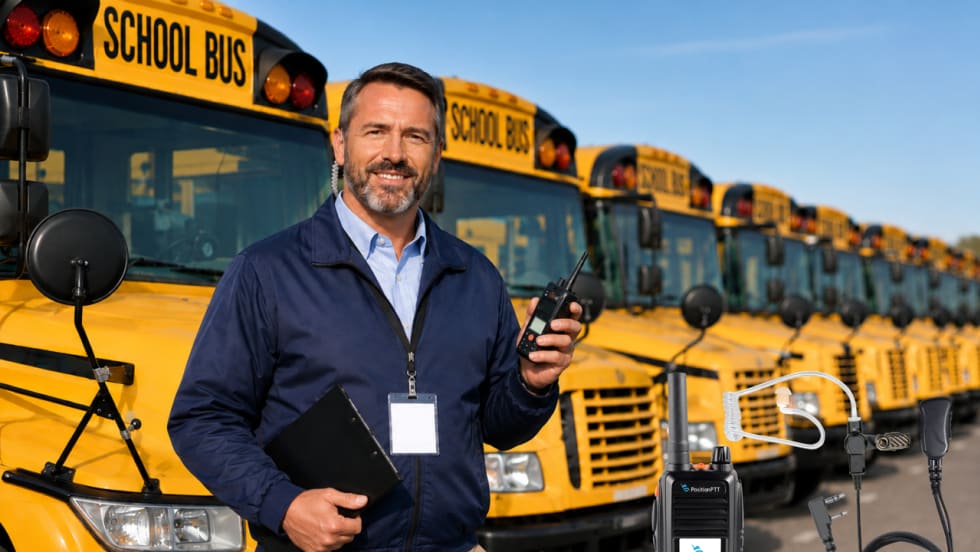
Beyond Two-Way Radios: School Bus Communications Evolve With Push-to-Talk Over Cellular
PRYME Radio and PositionPTT join forces to advance hands-free radio use and reduce distracted driving. See how PoC compares with traditional radios on range, cost, safety, and connectivity.
Read More →
Have School Districts Adapted to Bus Driver Shortages or Simply Accepted Less Service?
According to a recent report from HopSkipDrive, many districts appear to have recalibrated what "normal" transportation service looks like.
Read More →
Reliable Transportation Linked to Better Student Outcomes, New EverDriven Study Finds
See why new research suggests transportation consistency improves student outcomes while influencing attendance, funding, IEP compliance, and family trust.
Read More →
Switzer-CARTY Enters the U.S. with New Acquisition
The Canadian contractor’s acquisition of Minnesota-based Agnes Corporation marks its first cross-border expansion into the United States and adds 350 vehicles.
Read More →