




Iowa District to Test Lap-Shoulder Belts on School Buses
Des Moines Public Schools’ seat belt study will involve two Thomas Built C2 buses equipped with SynTec’s S3C seats.

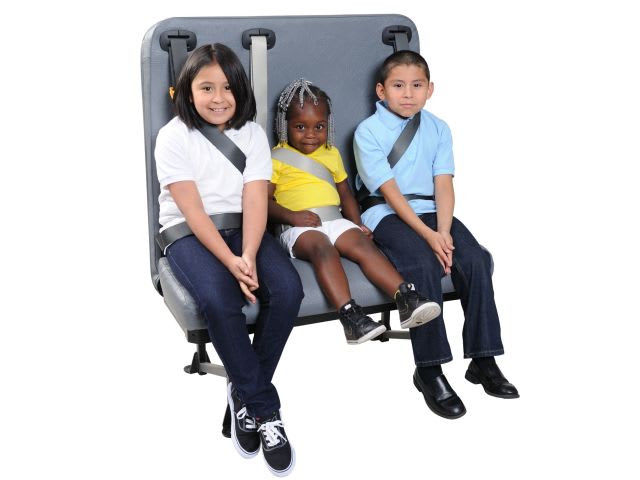
Des Moines Public Schools’ seat belt study will involve two Thomas Built C2 buses equipped with SynTec’s S3C seats, seen here.
Des Moines Public Schools’ seat belt study will involve two Thomas Built C2 buses equipped with SynTec’s S3C seats, seen here.
DES MOINES, Iowa — The effectiveness of lap-shoulder belts on school buses will be evaluated in a new test program at Iowa’s largest school district.
Des Moines Public Schools’ seat belt study will involve two Thomas Built Saf-T-Liner C2 school buses equipped with SynTec Seating Solutions’ S3C seats.
After the new buses are built at the Thomas C2 plant, they will be delivered to SynTec’s facility and converted to lap-shoulder seats as part of SynTec’s Seat Back Exchange Program. The converted buses will arrive at Thomas Bus Sales of Iowa in Des Moines for delivery to Des Moines Public Schools.
The school district will monitor the impact of the lap-shoulder belts during the 2016-17 school year, collecting data on the following questions:
1. Do the children automatically buckle up?
2. Do the lap-shoulder belts keep passengers in their seats?
3. How do the lap-shoulder belts impact discipline inside the bus?
4. What is the drivers' acceptance of lap-shoulder belts on the bus?
5. Do the drivers perceive lap-shoulder belts as helping them to focus on driving?
The project will be led by Todd Liston, director of school transportation for Des Moines Public Schools. Liston said that he plans to use the information collected to gauge the potential benefits of lap-shoulder belts for students and drivers.
“We are very excited to observe the reaction of students and drivers as they use the S3C lap-shoulder seat,” Liston said. “[SynTec's] S3C lap-shoulder seat is incredibly versatile, and we’re confident in the safety their seats will provide our students during this program.”
Max Christensen, state director of pupil transportation at the Iowa Department of Education, was also instrumental in coordinating the project and will monitor the results.
“I'm excited to observe this program, and I'm looking forward to the results,” Christensen said. “This project will give us some real-world experience in regard to the effectiveness of lap-shoulder belts in school buses, and we anticipate some positive results.”
More Safety

Geotab Expands Fleet Safety Tools With Video Coaching, Risk Insights
New safety and video capabilities aim to help fleet managers assess risk, support drivers, and take targeted action through video coaching, red-light violation detection, and more.
Read More →
How to Build a Better School Bus Driver Training Program
Is it time to strengthen your driver training? Here’s how to pick the right talent and improve recruitment, retention, and safety. This video is brought to you by IC Bus.
Read More →
Recent School Bus Accidents Leave 2 Dead, 2 Injured
Four school bus crashes in Florida, Illinois, and Georgia highlight risks in transportation lots, at bus stops, and during student loading and unloading.
Read More →

When Every Second Matters, Clarity Keeps Routes Moving
From routine delays to urgent incidents, strong communication practices help drivers, dispatchers, schools, and families respond with confidence.
Read More →
What Happens When a School Bus Catches Fire — and What Can Help
School bus fires are rare but can be devastating. Learn how advances in fire suppression and asset protection help fleets detect fires earlier, reduce damage, and improve safety.
Read More →
Geotab Launches Tool to Help Fleets Investigate Road Incidents
Geotab Investigations combines telematics data, video, documents, and other evidence to help fleets reconstruct incidents, resolve claims, and determine what happened.
Read More →
Texas Sixth Grader Wins 2026 National School Bus Safety Poster Contest
Sai Darshana Yekolu of Moseley Middle School in Prosper, Texas, was named the newest winner for her artwork, bringing the theme of “Safe Rides, Everyday Heroes” to life.
Read More →
Doing More With Less: How Transportation Directors Can Prioritize Safety Amid Budget Uncertainty
With diesel prices soaring and nearly one-third of transportation directors expecting budget cuts, maintaining student safety has never been more challenging. Download this guide to learn how leading districts are prioritizing risk, funding critical safety technology, and building stronger budget cases with data.
Read More →
Walton County Schools Adds Gatekeeper Stop-Arm Enforcement System
The Florida district will deploy Gatekeeper’s updated Student Protector technology, which now incorporates AI to improve video evidence.
Read More →
How To Build a More Secure School Bus Yard During and After Hours
As thefts and overnight security threats continue, school transportation leaders are combining stronger operational practices with AI-enabled surveillance to better protect buses, facilities, and staff.
Read More →