




Keys to communicating with the hearing impaired
By understanding the various types and degrees of hearing loss, along with the more effective ways of interacting with hearing-impaired passengers, sc...
By understanding the various types and degrees of hearing loss, along with the more effective ways of interacting with hearing-impaired passengers, school bus drivers and assistants can reduce the probability of miscommunication.
Types of hearing loss
Conductive hearing loss involves the outer and middle ear. It can result from a blockage of wax, a punctured eardrum, birth defects, ear infections or heredity. Usually, conductive hearing loss can be corrected medically or surgically.
Sensorineural or "nerve" hearing loss involves damage to the inner ear. It can be caused by prenatal and birth-related problems, viral and bacterial infections, heredity, trauma (such as a severe blow to the head), exposure to loud noises, the use of certain drugs, fluid buildup in the inner ear or a benign tumor in the inner ear. Only in rare cases can sensorineural hearing loss be medically or surgically corrected. It is the type of hearing loss that is most commonly managed with a hearing aid.
Degrees of hearing loss
Hearing loss can range from mild loss to profoundly deaf. It is measured in decibels (dB) from mild (27-40 dB) to moderate (41-55 dB) to moderate/severe (56-70 dB). Anyone with a hearing loss of 71 dB or more is considered deaf.
Those with mild hearing loss have difficulty in hearing faint speech at a distance and are inconvenienced by school settings and background bus noises. Hearing aids and assigned close-in seating helps.
Students with moderate hearing loss understand average conversational speech at a distance of 3 feet and carry on face-to-face conversation on the bus without difficulty, but they are unable to understand if the other person turns away. They may miss as much as 50 percent of a class discussion and nearly 100 percent of any bus team member's directions.
Students with severe to profound hearing loss can understand loud conversations from 3 to 5 feet away. They generally cannot participate in group discussions or hear conversations face-to-face by the driver or assistant while on the bus. They have serious language deficiencies that make them less able to understand spoken directions and more reliant on gestures and American Sign Language from the bus team.
Students with a "less significant" hearing loss may only need an amplification system to fully participate in conversations.
Only 10 percent of all hearing-impaired adults have learned to read lips. The special-education driver team should not expect most deaf or hearing-impaired students to gain information from lip-reading alone.
{+PAGEBREAK+} Recommendations
Always get the student's attention before speaking. Stay at a comfortable distance with good light and keep your head up toward the student.
Be clear — Speak clearly, perhaps a little louder than usual, but don't shout because it only distorts the lips and makes it difficult to lip read. Speak with the ordinary rhythm and flow of speech. As far as possible, cut out any background noise.
Be concise — Speaking plainly to students helps them more easily understand your meaning, your instructions and the bus rules. Make sure that the listener understands the subject at the beginning of the conversation. It is a good idea to write it down. Don't change the subject without warning.
Be patient — Be prepared to repeat things if necessary. A good tip is if you've tried a couple of times and can't get the message across, rearrange the sentence and present it in a different way, perhaps with the key words at the beginning of the sentence.
When these simple, basic points are followed, it should be easier to communicate with hearing-impaired students, but if all else fails, write it down.
Dr. Ray Turner, owner of White Buffalo Press (www.whitebuffalopress.com), is also special-needs transportation coordinator at Northside Independent School District in San Antonio.
More Special Needs Transportation
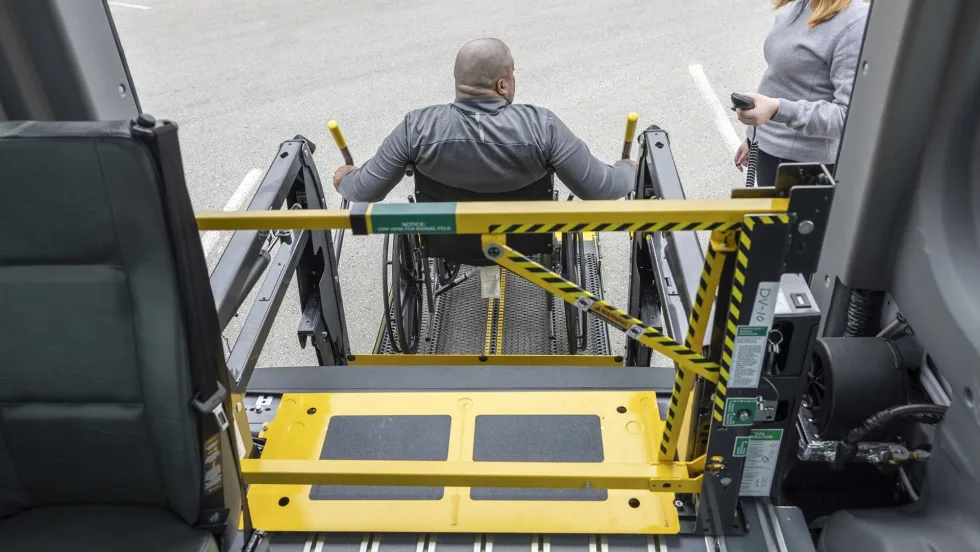
BraunAbility Introduces New Safety Barrier for Wheelchair Lifts
LiftSentinel is designed to add another layer of protection during wheelchair loading and unloading and can be retrofitted to many existing commercial lift installations.
Read More →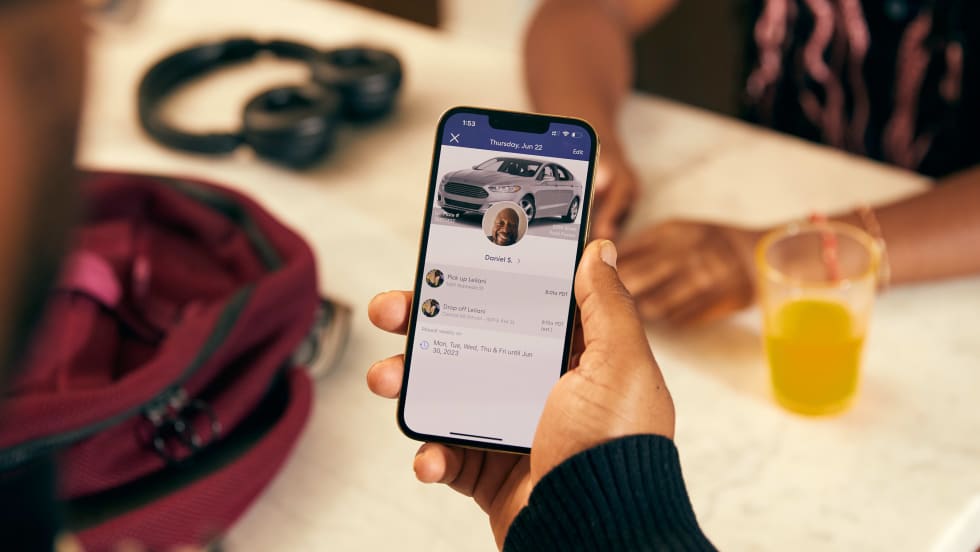
HopSkipDrive Launches New Safety, Driver Consistency Features for 2026-27 School Year
The company’s free ride recording, live ride tracking, and consistent driver assignments aim to improve safety and continuity for diverse student transportation needs.
Read More →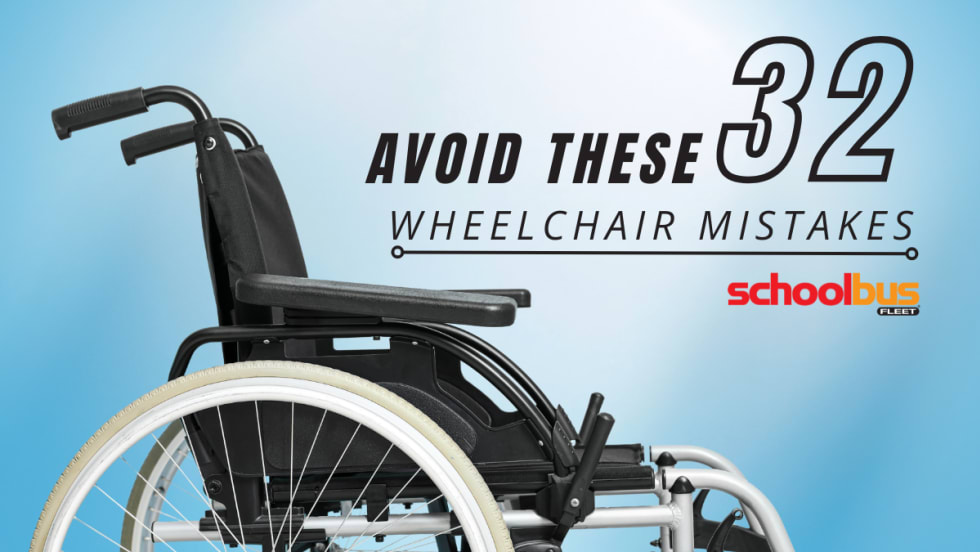
The Most Common Wheelchair Securement Mistakes on School Buses (and How to Fix Them)
Small missteps in wheelchair securement can have serious consequences. Here are 32 tips from experts to reduce risk and increase student safety on the bus.
Read More →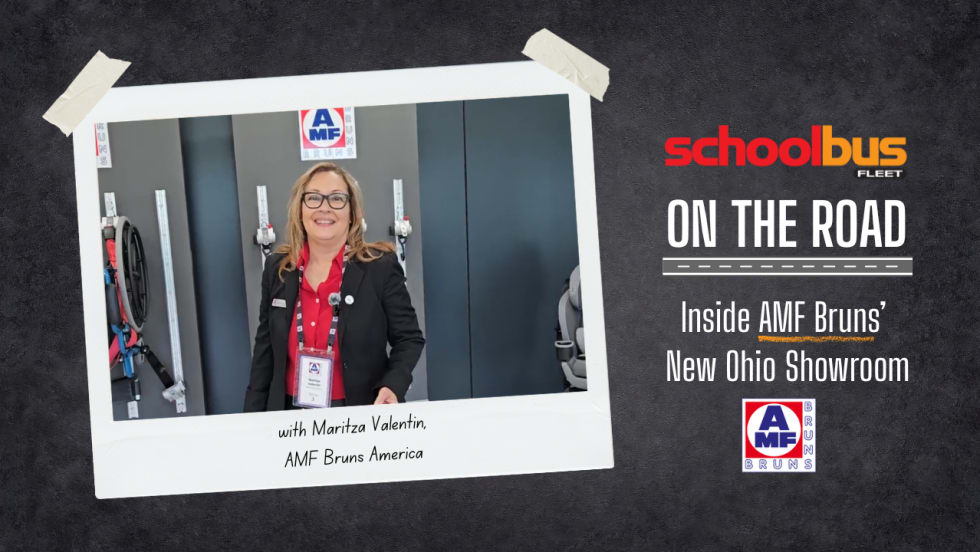
Inside AMF Bruns’ New Showroom: School Bus Securement Solutions Explained
Go inside AMF Bruns America’s new Ohio showroom with Maritza Valentin to see its FutureSafe technology, driver training tools, securement systems, and seating innovations.
Read More →
What AMF Bruns’ New Facility Means for Customers [Video]
Inside AMF Bruns’ new Stow, Ohio, operations: See how expanded space and innovation will enhance customer support and operations.
Read More →
AMF Bruns Expands in Ohio, Investing in Growth and Community
With expanded production space, local investment, and a growing workforce, AMF Bruns is scaling its U.S. presence. Here’s an exclusive first look inside the new Stow, Ohio, HQ.
Read More →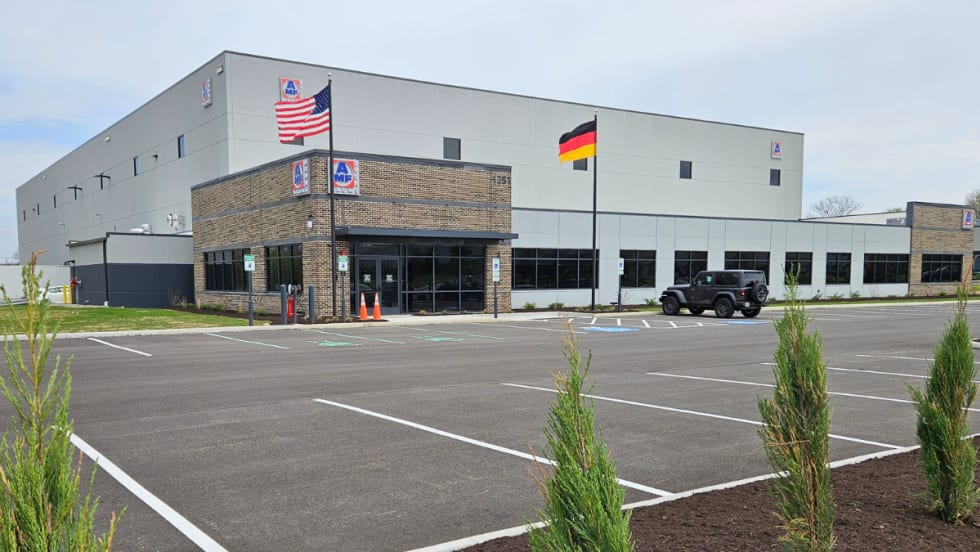
Inside AMF Bruns of America’s New Ohio Manufacturing Facility [Photos]
Take a behind-the-scenes look at AMF Bruns of America’s new 41,000-square-foot Stow, Ohio, headquarters, featuring advanced manufacturing, expanded space, and future-ready mobility solutions.
Read More →
First Student Boosts Student Support in Wichita & Texas
First Student and Wichita Public Schools are using behavioral support strategies to improve student ride experiences, while a separate initiative expands access to after-school programs through a bus donation.
Read More →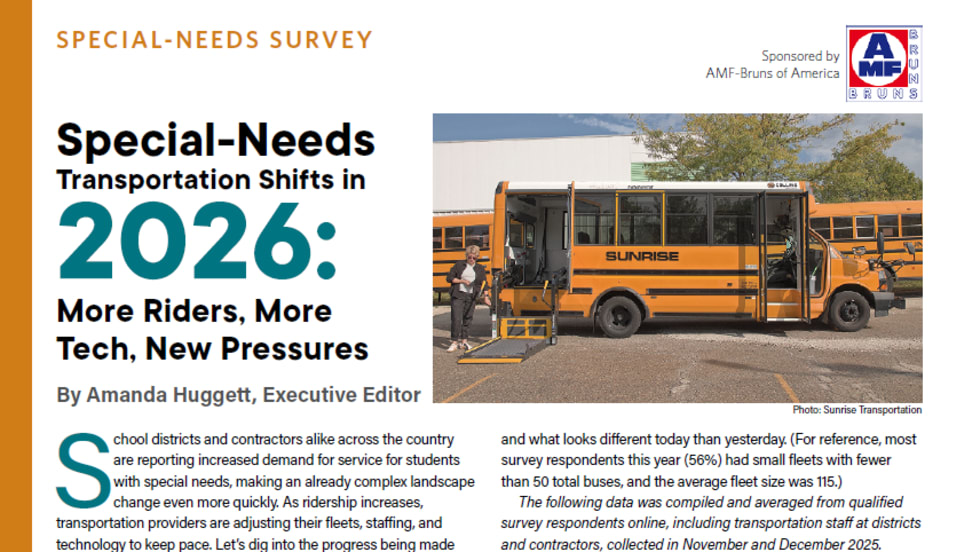
2026 Special-Needs Transportation Survey
What’s changing in special-needs transportation? This year, student transportation operators report a rising need, easing driver shortages, growing tech adoption, and evolving challenges. Sponsored by AMF Bruns of America.
Read More →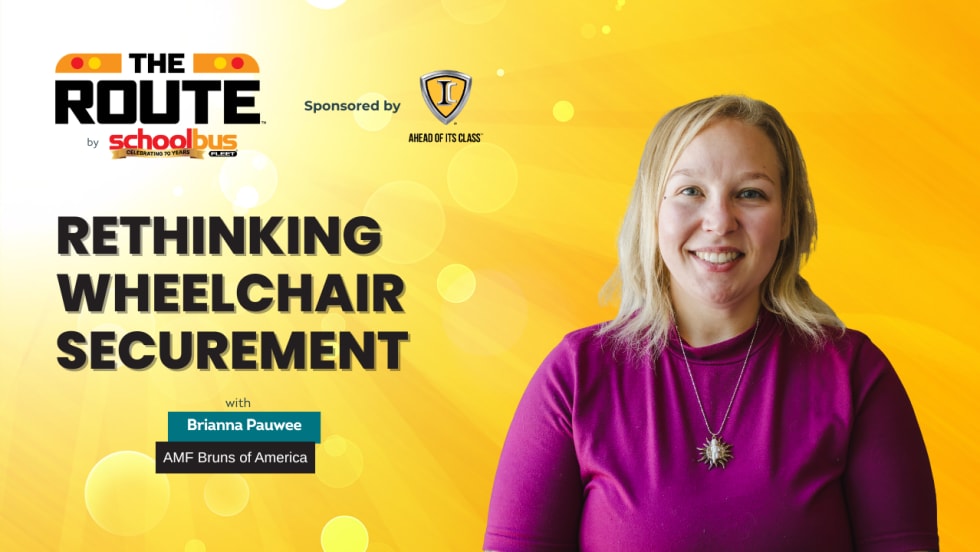
The Lived-Experience Gap in Mobility Tech: An Expert Take on Safe Student Transportation
Brianna Pauwee, a product application specialist at AMF Bruns of America and a wheelchair user, drops in to The Route to share practical securement and training insights, plus the story behind the new “Beyond Mobility” podcast. The Route is sponsored by IC Bus.
Read More →