




Positive experiences with seat belts
In the debate on whether seat belts are a good fit for large school buses, it seems that the best insight comes from those who actually have experience with the restraints in their fleet. SBF Executive Editor Thomas McMahon hit the road in November to visit Buellton USD and another district in Santa Barbara County, Goleta USD. Both had interesting perspectives to share about their fleets and the environments in which they operate.

In the debate on whether seat belts are a good fit for large school buses, it seems that the best insight comes from those who actually have experience with the restraints in their fleet.
Casey Cypert is one such person. As director of operations at Buellton (Calif.) Union School District (USD), Cypert has observed the effects of lap-shoulder belts on the district’s route bus for the past five years.
I hit the road in November to visit Buellton USD and another district in Santa Barbara County, Goleta USD. Both had interesting perspectives to share about their fleets and the environments in which they operate.
Goleta USD has 21 school buses — including some new clean diesel units and two that run on compressed natural gas. The city, in between Santa Barbara and its University of California campus, is in a busy area, so traffic is a key issue for the district’s bus operation.
Buellton USD has two buses, one of which runs a daily route to transport about 70 students. The district, in the bucolic Santa Ynez Valley, has had a big problem with stop-arm running, but local police have been cracking down on it recently.
Belt mandate
California has required lap-shoulder belts on new large school buses since 2005. (The same requirement went into effect for small school buses in 2004.)
Buellton USD bus passengers, the oldest of whom are in eighth grade, began buckling up when the district acquired a 2008 Type D school bus (with the help of a replacement grant of about $100,000). The 79-passenger unit is equipped with three lap-shoulder belts per seat.
Cypert told me that the belts have been “a real positive,” particularly in their impact on student management. He said that having the students buckled up “solves 80 to 90% of problems” related to behavior.
Just for the sake of discussion, I noted a concern that I hear often in the industry: that kids will use the seat belt buckles as weapons. Cypert and bus driver Miguel Garcia said that this isn’t happening. The lap-shoulder belts retract into the seat, so they can’t be swung around like a lap-only belt could.
Another common question: Will the students actually buckle up? They do at Buellton USD. According to Cypert, training is the key. He said that Garcia has been diligent in training and reminding his passengers to wear their seat belts.
Personal experience
At Goleta USD, I got a chance to ride in a school bus with lap-shoulder belts. I was surprised by how easily the shoulder strap could be adjusted to fit me — and how comfortable it was to wear it.
The best part of the experience was that I was sitting next to my 6-year-old son, Tommy. (My wife homeschools our two boys, so they all came along as a field trip.)
When we get in our own vehicles, Tommy is quick to make sure that we’re all wearing our seat belts before the car even starts. With that in mind, it was gratifying to see him board a school bus — the safest vehicle for transporting students — and still be able to buckle up.
My thanks to the fine folks I met with at Goleta USD — Robert Matheny, Jill Walker and Martin Tejeda — and at Buellton USD — Cypert and Garcia — for sharing their time and experiences with us.
More Safety
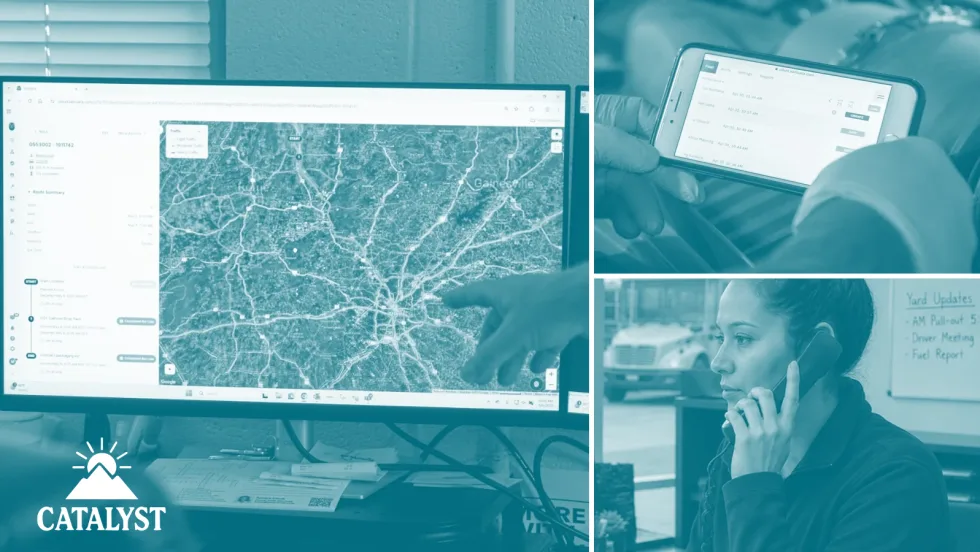
From Reactive to Proactive: Making Every Ride Visible
Smart technology only delivers its full value when it works together. See how Catalyst connects proven industry platforms to move student transportation from reactive to proactive.
Read More →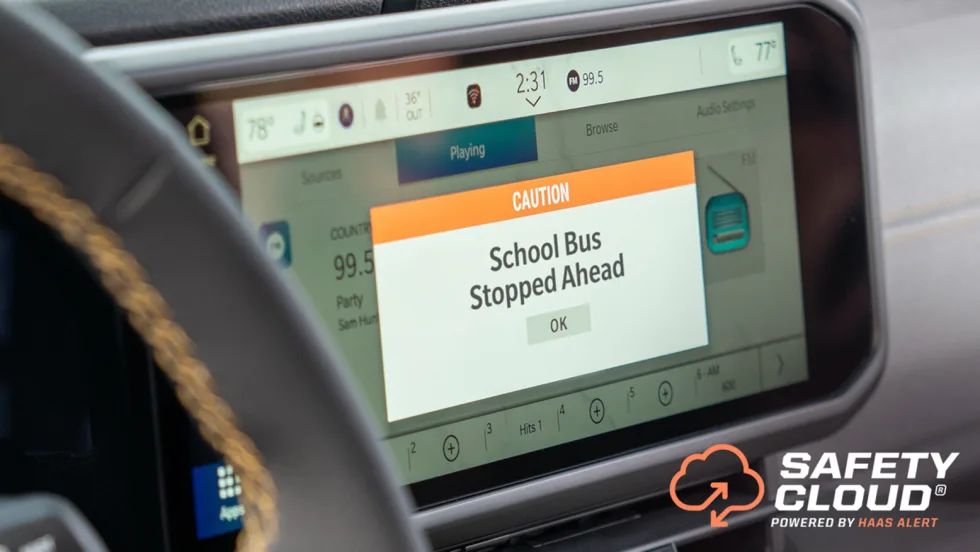
HAAS Alert’s Safety Cloud Warns Motorists of Stopped School Buses
Through a transponder or Samsara connection, the product lets school bus fleets send advance warnings to approaching drivers through in-vehicle alerts.
Read More →
HopSkipDrive Reports Progress on Safety Advisory Council
More than a year after forming the council, independent safety experts have helped shape new rider-safety features and policy progress, with a new goal to address rider behavior.
Read More →
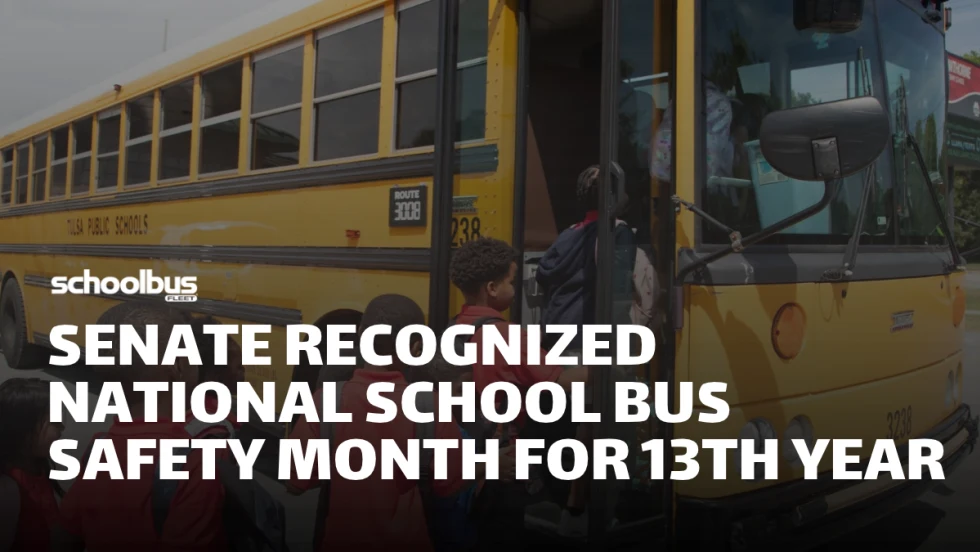
What the 2026 National School Bus Safety Month Resolution Means for Student Transportation
The bipartisan resolution highlights illegal school bus passing, student safety during loading and unloading, and the need for driver training and public education.
Read More →
School Bus Stop-Arm Violations Decline 53% Across Verra Mobility Programs
Verra Mobility shares how school bus stop-arm cameras and school zone safety programs are changing driver behavior, reducing violations, and protecting students.
Read More →
Most Bus Crashes Aren’t Your Fault. Here’s How to Prove It.
A guide for what to do in between a school bus crash and a claim: what to preserve, who to notify, and how to keep the facts available when they matter.
Read More →
National School Bus Safety Week 2026: Tips, Toolkits & Resources to Keep Students Safe
School bus safety takes more than awareness. Explore expert tips, enforcement strategies, and free resources to help protect students on every ride.
Read More →
2 Killed, Dozens Injured in Florida School Bus Crash
A multi-vehicle collision caused a Polk County school bus carrying 37 students to overturn on its way to Winter Haven High School.
Read More →
Illegal School Bus Passing Drops 24% in New York Districts
With fewer than 5% of citations involving repeat offenders, Westchester County officials said enforcement, education, and community partnerships are helping change driver behavior.
Read More →
School's Back. Here's What Happened to Traffic, Speeding & Distraction
What happens to traffic when school resumes? New data analysis examines changes in distracted driving, congestion, and speeding around schools.
Read More →