




A Look Back at the Carrollton, Ky., Tragedy
Ten years ago, a horrifying school bus accident killed 27 youngsters. Since then, emergency exit standards have been upgraded, and a push is being made to reduce the number of pre-1977 buses on the road.
If there is any purpose in tragedy, it lies in its ability to alert concerned people to the need for improvements. On May 14, 1988, a tragedy occurred near Carrollton, Ky., that caused the nation to evaluate the need for improved safety throughout the field of pupil transportation. A bus owned by the First Assembly of God Church in Radcliffe, Ky., carrying 66 passengers, was traveling southbound on Interstate 71. At about 10:55 pm, it was hit on the right front side by a 1987 Toyota pickup traveling northbound in the southbound lane. Gasoline leaking from the punctured fuel tank was ignited. Flames immediately engulfed the bus. Twenty-seven youngsters were fatally injured and 34 others received injuries ranging from minor to critical. Shortly after the accident, the Louisville Courier-Journal wrote, "There are signs the Carrollton accident could forever change government's judgments on these safety issues, and it could change the way school buses are designed and built. In Washington, in Frankfort and across the country, officials are predicting reform." Now, 10 years later, it's time to review and learn what reforms have come about. The specific cause of the Carrollton accident was the alcohol-impaired condition of Larry Mahoney, the pickup truck driver who was driving in the opposing lane of traffic. However, the accident's severity was intensified by the fire engulfing the interior and reduced escape routes hindering evacuation. This prompted the National Transportation Safety Board (NTSB) to make recommendations to three groups.
Churches pose problem
Recommendation was made to various church groups that they purchase only school bus-type vehicles that meet the Federal Motor Vehicle Safety Standards (FMVSS) of April 1, 1977. The Carrollton bus was a 1977 church bus. Although legal in all respects, it conformed to pre-April 1977 standards. This contributed to the accident's severity. When it comes to pupil transportation, communicating with church groups is comparable to fighting feathers. Explains Jean Poole, a highway accident investigator at the NTSB: "The problem in advising church groups about safety problems is that it is hard to reach these groups." It is also difficult to know which groups to contact. NTSB sent letters to more than 60 organizations. But many of these were religious news organizations that can do little more than publish an article. Many more-influential organizations were not contacted. Many of those contacted are no longer in existence. Only seven of the contacts made have been closed with an acceptable response. Eighteen were closed as no longer applicable. Thirty-eight remain open with no response. Contacting the proper group constitutes only one problem. There are other less apparent ones. First, the majority of churches that own buses are independent, belonging to no association. Second, in most cases, those churches that belong to an association are sovereign entities that manage their own affairs. Coupled with this is the fact that when a church purchases a bus, it often does so without the knowledge of any potential governing body. For example, the California Highway Patrol, which is responsible for inspecting all buses in the state, often learns that a church has a new bus only after it shows up in the parking lot.
Pre-77 phase-out urged
To the 50 states, NTSB recommended that they propose legislation establishing a target date for the phase-out of pre-1977 buses. As of this date, the files on 49 of those to whom letters were sent are still open. Twenty have made acceptable responses, indicating plans for implementation. Twenty-nine have made no response. According to Poole, the NTSB has recently added the elimination of pre-1977 buses to its "List of Most Wanted Safety Recommendations." In 1988, according to SCHOOL BUS FLEET's annual survey of state directors of pupil transportation, 22.3 percent of all school buses in operation were pre-1977. By 1997, that percentage had dropped to 2.94. This represents an average drop of about 2 percent per year. Whether due to legislation or otherwise, the pre-1977 school bus is becoming a thing of the past in most states. But another problem lurks in the shadows. Many of these pre-1977 buses are sold to churches or other special-activity groups. Thus, even though they're no longer operated as school buses, they remain on the road. Most states appear to have some regulations that govern non-school buses. Nevertheless, in preparation for this article, a survey was sent to state pupil transportation directors. They were asked: "Does your state have less stringent regulations for non-school buses than for school buses (e.g., bus inspections, driver qualifications, maintenance and service)?" Of the 41 states that responded, all but two indicated that they do indeed have less stringent regulations for non-school buses. Maintenance, inspections and driver training are left primarily to the discretion of the individual owners, who often are not aware of their need. Or, they may be limited in finances or intent on being independent of government control.
NHTSA standards eyed
To the National Highway Traffic Safety Administration (NHTSA), three recommendations were made - that FMVSS 217 (school bus egress), FMVSS 301 (fuel tank integrity) and FMVSS 302 (flammability of interior materials) be revised. The entrance door of the Carrollton bus was rendered unusable by the crash. According to survivors, passengers crawled over seat backs and on top of each other in an effort to reach the only other exit at the rear. But it had become blocked by other passengers and many could not get out before being overcome by smoke. Evacuation was reduced also by the two rear bench seats that encroached the door space to the point of allowing only 12 to 15 inches of opening. The NTSB recommended that FMVSS 217 be revised to require that school bus egress be based on vehicle occupant capacity. NHTSA responded and subsequently upgraded the standard to comply with the recommendation. The final rule became effective in May 1996 requiring that the total area of emergency exits be based on the designated seating capacity. This specified that the total emergency openings, in square inches, be 67 times the number of designated seating positions. The openings figured into the equation are the front entrance door plus the rear emergency exit, or the side door exit plus push-out window. If these are insufficient, manufacturers must provide additional exits in the form of left or right side doors, roof exits or push-out windows. NTSB classified this recommendation as "closed-acceptable action."
Fuel tank upgrade?
Concerning FMVSS 301, NTSB recommended that it be revised to allow additional protection based on an evaluation of fuel tank integrity, even though the standard had already been upgraded April 1, 1977. The NTSB wanted no stone left unturned, given the seriousness of this issue. NHTSA's response was to publish an Advance Notice of Proposed Rulemaking (ANPRM) for possible amendments to the standard. According to NHTSA, comments on this ANPRM did not provide clear enough direction to warrant any additional changes to the April 1, 1977, upgrade. In its letter of October 20, 1995, NHTSA informed NTSB that there was general agreement that the requirements of FMVSS 301 were satisfied by manufacturers adding a cage around the fuel tank. The NTSB agreed and classified the recommendation "closed-acceptable action." After the crash, the damaged right front floor and stepwell area allowed the fire to enter the bus and ignite the seat material, causing the rapid spread of smoke and fire inside the bus. Meanwhile, the National lnstitute of Standards and Technology (NIST) was developing acceptance criteria to limit the rate of fire spread in school buses. The NTSB, therefore, recommended that NHTSA "incorporate the recommendations of NIST in revising FMVSS 302." NIST published its findings in July, 1990, but left many questions unanswered. In October, 1995, NHTSA corresponded with NTSB. In the letter, NHTSA pointed out (1) that the Carrollton accident was unique, being the only known one in which fire was the primary cause of death; (2) that upgrading FMVSS 302 would result in significant cost increases for school buses; and (3) that the upgrade of emergency exit requirements [now] allows for faster evacuation. NHTSA continued, "... upgrading flammability requirements would result in an alternative solution to an extremely rare problem with very high costs with little or no corresponding benefit. [We] believe that upgraded emergency exit requirements for school buses allow for faster evacuation times ... and reduce the need to upgrade the flammability requirements for school bus seats." NHTSA concluded by requesting that the recommendation be closed. The NTSB responded: "The Safety Board is disappointed that NHTSA has taken more than six years to research this important safety issue without increasing the flammability requirements for materials used in school bus seats." The recommendation remains in an "open-unacceptable action status.
Some improvements seen
In retrospect, it's fair to say that everyone involved in pupil transportation is concerned with safety improvements, although there is not always agreement on ways and means. Certainly, improvements have come about because of and since the Carrollton accident. The number of pre-1977 school buses in operation has dropped. Time, itself, has been a factor, but the awareness brought about by the accident has contributed to the drop. In most states, the gap between the regulations that govern school and non-school buses should be narrowed, but most state pupil transportation directors seem to be aware of this and, perhaps in the future will direct their attention toward it. Although it always is within the realm of possibility that another accident might produce extreme situations, the chance that passengers will be trapped by fire, unable to escape, has been reduced by improvements in fuel tank integrity and school bus egress. The NTSB disagreed sharply with NHTSA on seat material flammability. Yet NHTSA's conclusions should not be dismissed without evaluation. Says Charlie Gauthier, executive director of the National Association of State Directors of Pupil Transportation Services, "When it comes to issues of safety in pupil transportation, those that have the responsibility to establish public policy, whether it be in the form of laws, standards or regulations, have an obligation to make their policy decisions based on data and science, not emotion and supposition. Since our society does not have sufficient resources to do everything we would like, we must invest those limited resources in solving problems that can be proven to prevent unreasonable risks to our safety."
Leon Davis is transportation director at Whittier Christian High School in La Habra, Calif.
More Safety
How To Build a More Secure School Bus Yard During and After Hours
As thefts and overnight security threats continue, school transportation leaders are combining stronger operational practices with AI-enabled surveillance to better protect buses, facilities, and staff.
Read More →
FMCSA Names New Chief Safety Officer: What School Bus Operators Should Know
Steve Dowling is set to lead the federal agency's efforts to advance commercial motor vehicle safety and reduce crashes, fatalities, and injuries on the nation's roadways.
Read More →
New Study Finds School Zone Speed Safety Cameras Cut Speeding Violations 97%
A Florida university's research demonstrates that Verra Mobility's automated enforcement changes driver behavior and significantly improves school zone safety.
Read More →
What Changed in DOT’s New National Roadway Safety Strategy?
The federal agency's new plan shifts its focus to safer people, roads and vehicles, with a new three-pronged approach instead of five. One outlined action even addresses a key industry concern around illegal school bus passing.
Read More →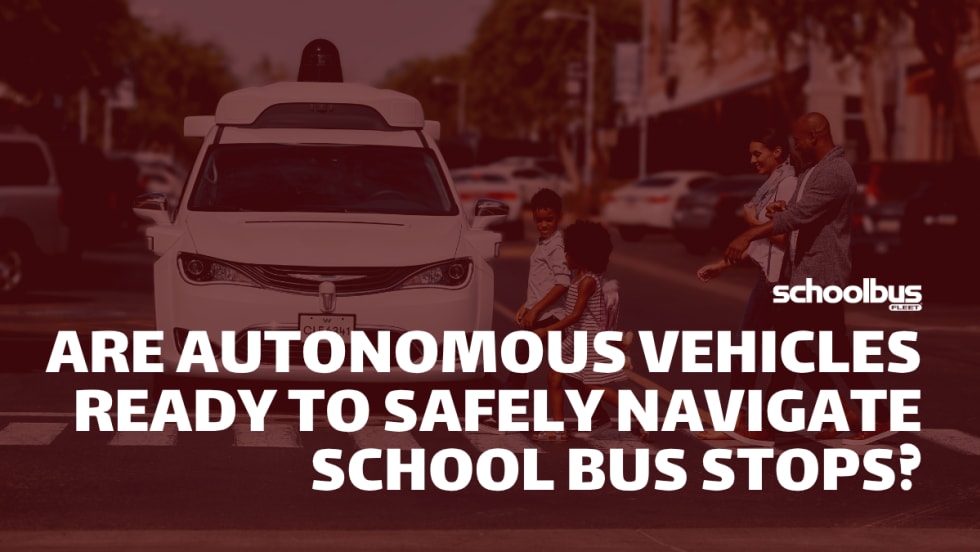
Are Autonomous Vehicles Ready to Safely Navigate School Bus Stops?
NHTSA is accelerating autonomous vehicle deployment through new safety standards and commercial approvals. See why school transportation leaders are watching.
Read More →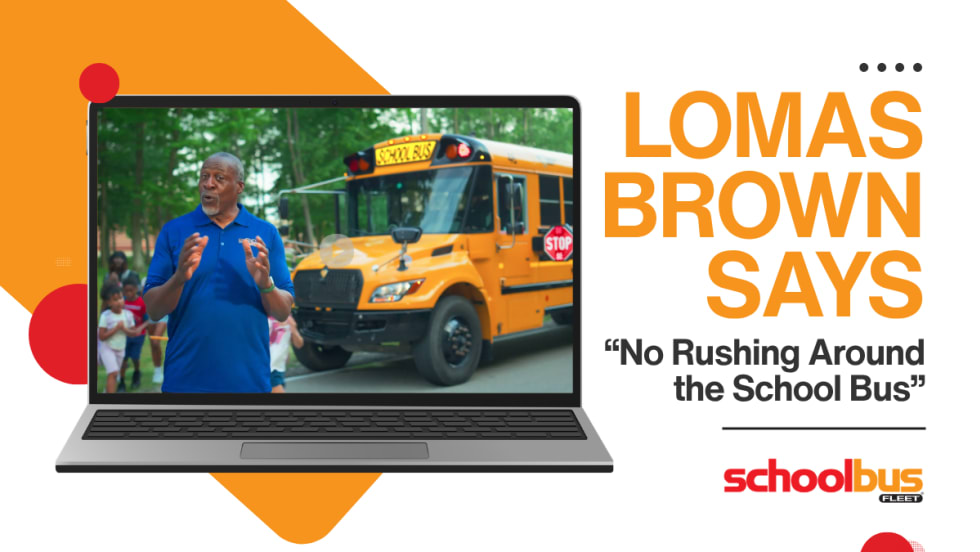
NFL Star Lomas Brown Kicks Off New Illegal School Bus Passing PSA
Just in time for the back-to-school season, the former Detroit Lions offensive tackle took time to record a video encouraging motorists to slow down around school buses.
Read More →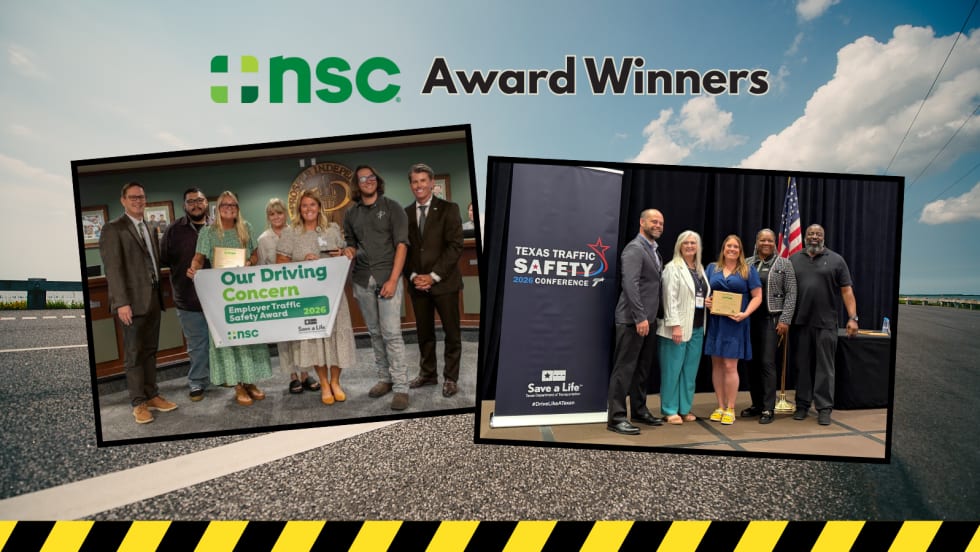
How Two Texas Districts Built Award-Winning Safety Programs
Learn how Prosper ISD and Rockwall ISD earned National Safety Council honors through hands-on training, safety culture, and strategies that reduced transportation incidents.
Read More →
NHTSA Releases 10-Year Review of Fatal School Bus Crashes
The latest federal analysis reinforces the safety of school buses while identifying where school-age pedestrians and other motorists remain most at risk.
Read More →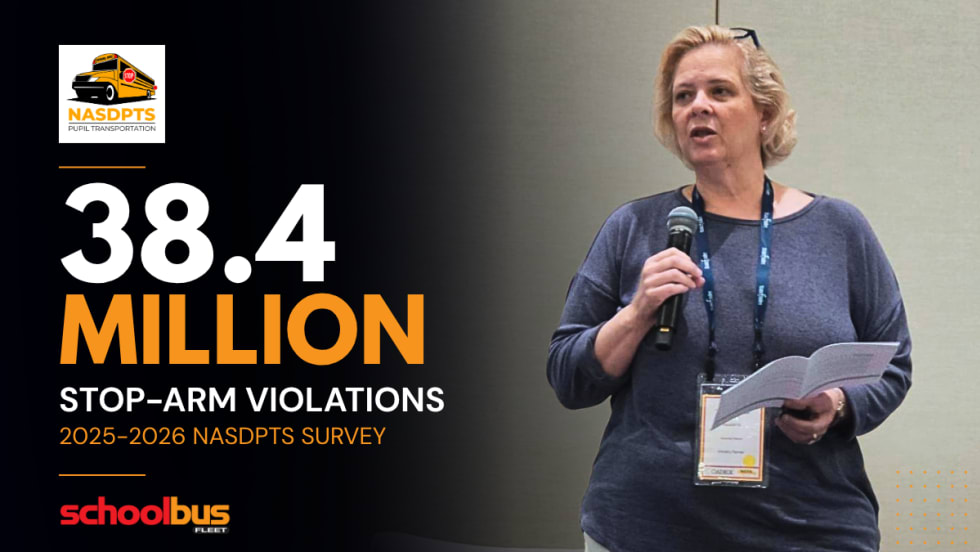
2026 NASDPTS Survey: Data Shows Further Reduction of Illegal Passing
New data is in! School bus stop-arm passings are down to 38.4 million violations per year, about a 2.3% decrease from last school year — but passings on the right side of the bus are higher than ever.
Read More →
Another School Bus Fatality Reported in Monsey, New York
A 7-year-old girl died after being struck by a school bus in Rockland County, New York while crossing the street. Here's what we know.
Read More →