




Feds: Truck, bus standards to save $50 billion in fuel costs
The Obama administration says that under its new standards for fuel efficiency and pollution, trucks and buses built in 2014 through 2018 will reduce oil consumption by a projected 530 million barrels and greenhouse gas by about 270 million metric tons.


President Obama is meeting today with industry officials to discuss new standards on fuel efficiency and pollution for trucks and buses.
WASHINGTON, D.C. — A comprehensive new program that targets fuel efficiency and pollution for trucks and buses is projected to save about $50 billion in fuel costs over the life of the program, according to the Obama administration.
President Obama is meeting today with industry officials to discuss the new standards, which were proposed in October. The U.S. Department of Transportation (DOT) and the EPA developed the standards in coordination with truck and engine manufacturers, fleet owners, the state of California, environmental groups and other stakeholders.
“Thanks to the Obama administration, for the first time in our history we have a common goal for increasing the fuel efficiency of the trucks that deliver our products, the vehicles we use at work and the buses our children ride to school,” Transportation Secretary Ray LaHood said. “These new standards will reduce fuel costs for businesses, encourage innovation in the manufacturing sector and promote energy independence for America.”
The administration said that under the new program, which relies heavily on off-the-shelf technologies, trucks and buses built in 2014 through 2018 will reduce oil consumption by a projected 530 million barrels and greenhouse gas pollution by about 270 million metric tons.
The joint DOT/EPA program will include a range of targets specific to the diverse vehicle types and purposes. Vehicles are divided into three major categories: combination tractors (semi-trucks), heavy-duty pickup trucks and vans, and vocational vehicles (including buses, delivery trucks and refuse trucks). Within each of those categories, even more specific targets are laid out based on the design and purpose of the vehicle.
Vocational vehicles will be required to reduce fuel consumption and greenhouse gas emissions by about 10 percent by model year 2018. According to administration officials, these vehicles could save an average of one gallon of fuel for every 100 miles traveled.
More information is available on the EPA website here and on the National Highway Traffic Safety Administration (NHTSA) website here.
Engine manufacturers quickly confirmed their support for the new standards.
Cummins said in a statement that it has “worked proactively on the regulation with a wide range of stakeholders over the past several years and is already developing the clean and efficient technology that will be needed to comply.”
Rich Freeland, Cummins vice president and president of its engine business, added that the regulation “will add real value for our customers as better fuel economy lowers their operating costs while significantly benefitting the environment."
Navistar Chairman, President and CEO Daniel Ustian commended the EPA and NHTSA for developing a single national standard for greenhouse gas (GHG) and fuel efficiency.
“We were pleased to be part of the process providing the agencies with information on the positive impact of total vehicle technology integration on fuel efficiency and GHG emissions,” Ustian said, adding that Navistar has plans in place to deliver “integrated truck and engine technology solutions that achieve maximum fuel economy for our customers.”
More Safety
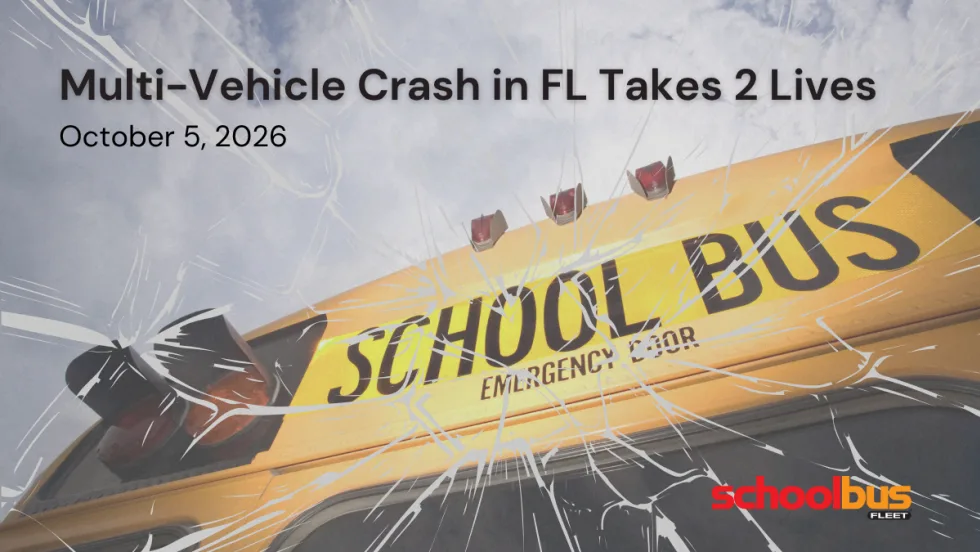
2 Killed, Dozens Injured in Florida School Bus Crash
A multi-vehicle collision caused a Polk County school bus carrying 37 students to overturn on its way to Winter Haven High School.
Read More →
Illegal School Bus Passing Drops 24% in New York Districts
With fewer than 5% of citations involving repeat offenders, Westchester County officials said enforcement, education, and community partnerships are helping change driver behavior.
Read More →
School's Back. Here's What Happened to Traffic, Speeding & Distraction
What happens to traffic when school resumes? New data analysis examines changes in distracted driving, congestion, and speeding around schools.
Read More →
Geotab Expands Fleet Safety Tools With Video Coaching, Risk Insights
New safety and video capabilities aim to help fleet managers assess risk, support drivers, and take targeted action through video coaching, red-light violation detection, and more.
Read More →
How to Build a Better School Bus Driver Training Program
Is it time to strengthen your driver training? Here’s how to pick the right talent and improve recruitment, retention, and safety. This video is brought to you by IC Bus.
Read More →
Recent School Bus Accidents Leave 2 Dead, 2 Injured
Four school bus crashes in Florida, Illinois, and Georgia highlight risks in transportation lots, at bus stops, and during student loading and unloading.
Read More →
When Every Second Matters, Clarity Keeps Routes Moving
From routine delays to urgent incidents, strong communication practices help drivers, dispatchers, schools, and families respond with confidence.
Read More →
What Happens When a School Bus Catches Fire — and What Can Help
School bus fires are rare but can be devastating. Learn how advances in fire suppression and asset protection help fleets detect fires earlier, reduce damage, and improve safety.
Read More →
Geotab Launches Tool to Help Fleets Investigate Road Incidents
Geotab Investigations combines telematics data, video, documents, and other evidence to help fleets reconstruct incidents, resolve claims, and determine what happened.
Read More →
Texas Sixth Grader Wins 2026 National School Bus Safety Poster Contest
Sai Darshana Yekolu of Moseley Middle School in Prosper, Texas, was named the newest winner for her artwork, bringing the theme of “Safe Rides, Everyday Heroes” to life.
Read More →