




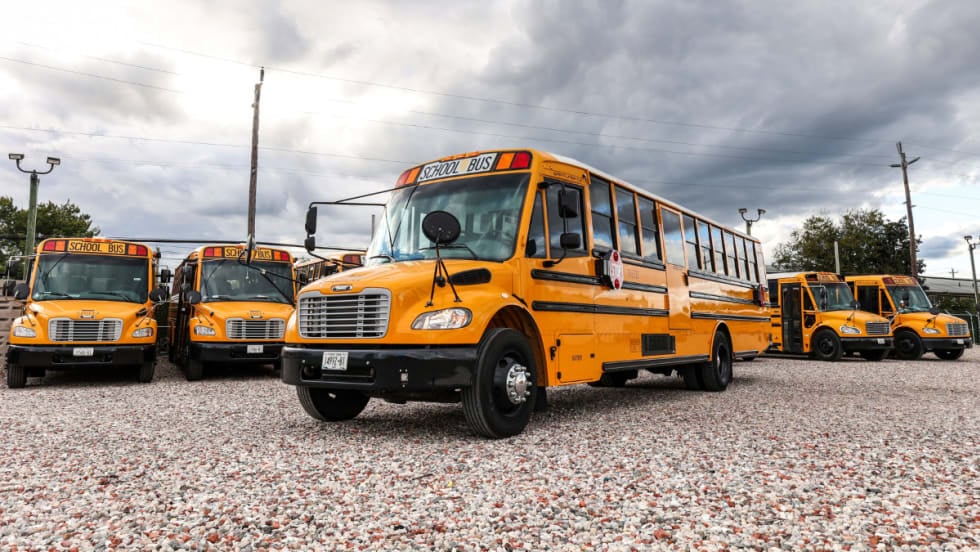
NYC mayor: School bus strike would jeopardize student safety
With the city's biggest school bus driver union set to go on strike Wednesday, education officials put backup measures in place, and Mayor Michael Bloomberg sharply criticizes the union's plan. The strike, he says, "would necessarily jeopardize the education and safety of the more than 150,000 students who take school buses every single day."

NEW YORK — With the city's biggest school bus driver union set to go on strike Wednesday, education officials have put backup measures in place, and the mayor has sharply criticized the union's plan.
The strike "would necessarily jeopardize the education and safety of the more than 150,000 students who take school buses every single day, in a year when our students have already missed a week or more of school because of Hurricane Sandy," New York City Mayor Michael Bloomberg said in a press conference on Monday. "We have told the unions in unequivocal terms: Do not walk out on our students. A strike would be not only unfair to children and families, it would be totally misguided — because the city cannot legally offer what the unions are demanding."
New York City pays $1.1 billion each year for school busing — an average of $6,900 per student, which officials said is higher than any other school system in the country.
To bring down transportation costs, the city is bidding out contracts for 1,100 school bus routes. The current contracts expire on June 30.
Bloomberg said that the driver union, Local 1181 of the Amalgamated Transit Union, "is demanding that the bids include job protections the city is not legally allowed to provide. During a prior bid attempt, under circumstances that were essentially the same as those this year, the New York State Court of Appeals ruled that the city could not legally include the job protection provision the union is demanding."
In a statement on Monday, New York City Central Labor Council President Vincent Alvarez criticized City Hall for "removing contract language that has been in place for 30 years. ... We need to make sure that only the most experienced and highly skilled workforce is responsible for transporting our most precious cargo day in and day out. At the end of the day, that is what this strike is about.”
With the strike threat looming, the New York City Department of Education (DOE) and other agencies have developed plans to help families get their children to and from school.
School offices will distribute MetroCards to students who use yellow bus service, and reimbursements will be available for families who must drive or use a car service.
The New York City Police Department will add more transit officers and more crossing guards to help manage the anticipated increase in students using public transportation and walking to school. Also, the Taxi and Limousine Commission will issue an alert to all licensees to anticipate increased demand and have the maximum number of cars available.
"The city is prepared to provide those who use yellow bus service with the support they need, and put other resources to use if a strike is called," DOE Chancellor Dennis Walcott said. "Our goal is to make sure students get to school, and to pursue contracts that are safe and more reasonably priced, so that we can direct those savings in the classroom where they belong.”
More Management
Logan Bus Company Rolls Out AI Phone System for NYC School Bus Families
A summer pilot found that AI agents could handle most routine calls, freeing up time for customer service staff to focus on emergencies and complex family concerns.
Read More →
From Intent to Impact: What I Learned About Leadership from TAPT
A Texas transportation supervisor shares lessons on self-awareness, accountability, managing stress and building trust — and why investing in leadership development matters at every stage of your career.
Read More →
NAPT Names 2026 Award Recipients
Who earned national recognition for their work in student transportation? This year, NAPT named five recipients of its 2026 awards for service, safety, and leadership.
Read More →

2026 State of Student Transportation Report
Driver shortages. Rising costs. Growing safety expectations. More data, but not enough time to act on it. The 2026 State of Student Transportation Report reveals what transportation leaders say is putting the most pressure on their operations—and where they’re investing next. See how your priorities compare.
Read More →
How to De-Escalate an Angry Person: 5 Steps for Handling Workplace Conflict
What makes emotions run high, and how should you handle an angry colleague or parent? Follow these steps for staying calm, listening, showing empathy, and resolving conflict.
Read More →
What Readiness Looks Like This School Year
Learn about the challenges shaping the 2026–2027 school year, from persistent driver shortages and budget pressure to technology and readiness gaps. See how school districts are responding and adapting in Zonar’s 2026 Back-to-School Readiness Report.
Read More →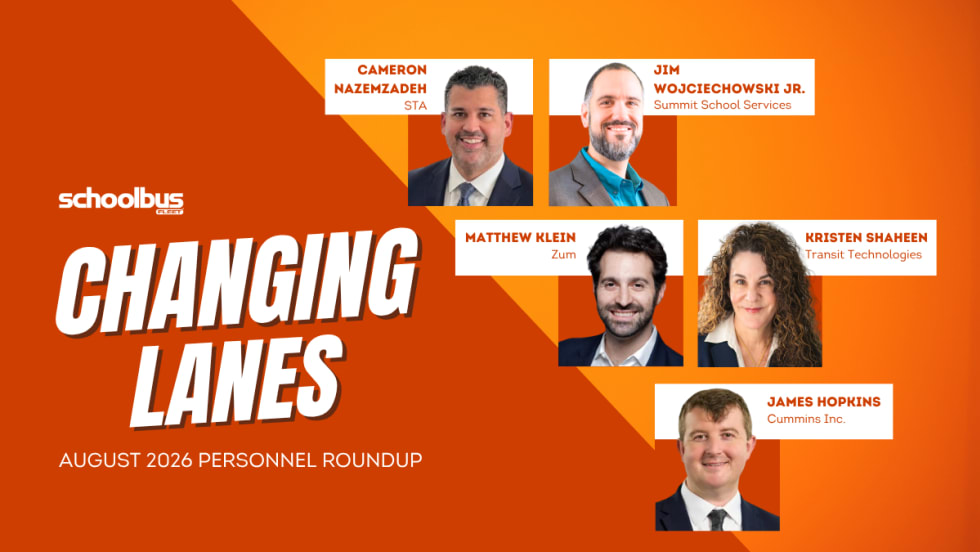
Changing Lanes: Executive Moves at Summit School Services, Zum, STA, Cummins, Transit Technologies, Driventic, & Cadex
See who's been hired, promoted, and appointed to leadership positions at various school transportation industry suppliers and private contractors.
Read More →
Texas Sixth Grader Wins 2026 National School Bus Safety Poster Contest
Sai Darshana Yekolu of Moseley Middle School in Prosper, Texas, was named the newest winner for her artwork, bringing the theme of “Safe Rides, Everyday Heroes” to life.
Read More →
Industry Moves: Companies Expand Fleet Service & EV Infrastructure Footprints
The new facilities and regional hubs could mean faster access to shop equipment, charging support, and transportation technology for fleet operators.
Read More →
Doing More With Less: How Transportation Directors Can Prioritize Safety Amid Budget Uncertainty
With diesel prices soaring and nearly one-third of transportation directors expecting budget cuts, maintaining student safety has never been more challenging. Download this guide to learn how leading districts are prioritizing risk, funding critical safety technology, and building stronger budget cases with data.
Read More →