




Beyond the Resume: 6 Tips for Conducting Effective Interviews
Since a resume may not provide vital information, such as whether an applicant is assertive, has a positive attitude and enjoys working with children, interviewing is a critical component of the hiring process. Pre-screening, taking a conversational tone, and picking the right interview team members help find the right fit.


Pre-screening, taking a conversational tone, and picking the right interview team members help find the right fit. iStock image.
A supervisor in any type of job obviously wants staff members with the necessary skills, but if an interview candidate has a great attitude and you can quickly train him or her in a skill or two, could that be better than the candidate who can check all the boxes skill-wise but has an off-putting attitude or is difficult to work with? And how do you find candidates who are the best fit?
Directors at districts such as Orange (Calif.) Unified School District and Eugene (Ore.) School District 4J hire on average every year half a dozen permanent drivers from substitute lists, and six to 10 substitute drivers, and rely on other staff members to help vet candidates with specific, open-ended questions, in addition to reviewing resumes and cover letters.
Chris Ellison, transportation manager at Eugene (Ore.) School District 4J, says his team first checks resumes for experience with children, such as having been a teacher or worked in a day care center.
“We pull more information out in an interview than what may come out on a resume or cover letter,” he explains. “Somebody could have a flashy curriculum vitae, but it’s only going to go so far when working with students.”
1. Use a pre-screening process.
Nicole Portee, executive director at Denver Public Schools, says that a recent speaker at the district provided an invaluable strategy for selecting the best candidates.
Geoff Smart, one of the authors of Who, a New York Times Best Seller List book, recommends that management get more involved in the process and conduct more conversational-style interviews. The district has adopted some of the methods described in the book as part of a pilot program in transportation.
For example, Portee now handles reference checks instead of depending on the human resources department, and finds the strategy very useful for getting crucial information about the candidates’ work ethic.
She also conducts pre-screen interviews with a list of questions formulated with the hiring manager and transportation department human resources representative. The human resources representative conducts the pre-screen interview over the phone, and looks for professionalism; team players; goals; and efforts to research Denver Public Schools. The representative then recommends some applicants to the hiring manager, weeding down eight to 10 candidates to four or five for an in-person interview with the hiring manager and Portee.

When selecting a new driver, including a lead driver or driver trainer can help in conducting a more conversational-style interview. Pictured here: Don Smith, training supervisor at Orange Unified School District, conducts training for applicants,
2. Carefully plan your interview team.
Orange (Calif.) Unified School District’s Pam McDonald, director of transportation, and Ellen Johnson, transportation supervisor, rely on input from the driver training instructors who conduct classes for many driver applicants, since they quickly learn which candidates are asking good questions and may fit in well. Additionally, they include a union representative during the interview process to get their insight on whether a new applicant will be a good fit.
Richard Skibitski, fleet manager, Wayne (N.J.) Board of Education, Wayne School District, has a mechanic or driver trainer present in interviews to prompt a technical conversation.
“A transportation supervisor, for example, interviewing a mechanic, [may not] be able to ask technical [questions]. It wouldn’t flow,” he explains. “[However], the mechanic can have a casual conversation about different vehicles, body styles, systems, and can get a lot of information just out of that conversation. You can tell right away if an applicant has a clue about what he’s talking about or not.”
Brian Weisinger, director of transportation at Spring Independent School District (ISD) in Houston, forms interview committees with staff members who would work closely with the candidate. In recent interviews for a parts technician position, the committee included the shop foreman, parts manager, shop clerk, and one of the lead technicians.
The interviews, he notes, actually begin when the applicant enters the building and interacts with the receptionist. Between interviews, the receptionist will give the committee a thumbs-up or thumbs-down on each applicant based on friendliness and timeliness.
3. Prepare criteria, questions.
Who you select for your interviewing team can help form your questions. Weisinger says that to help ensure choosing the right candidate, prepare by closely reviewing the job description, determine the best interview questions to capture that information, and review them with your team before the interviews start, so everybody understands the criteria.
Everyone on Weisinger’s interview committee asks the applicants questions and uses a number scoring system to grade the applicants on appearance, poise, assertiveness and responses. Conversely, any committee members who aren’t able to attend an interview have their input removed because they didn’t get the most accurate picture of the candidate.
[PAGEBREAK]

Pete Meslin, director of transportation for Newport-Mesa Unified School District in Costa Mesa, California, says he hires primarily for attitude and trains to build skills. Pictured is Victor Garza, driver instructor at Newport-Mesa, conducting a training class for driver applicants.
4. Take a conversational approach.
As part of Denver Public Schools’ pilot program, Portee says she is conducting conversation-based interviews, particularly for office staff or technician positions, making them a two-way street.
“It’s equally important that while we interview the applicant, they interview us, and ensure that this is a position where they can be successful,” she says.
Pete Meslin, director of transportation for Newport-Mesa Unified School District in Costa Mesa, California, takes a similar approach, saying that engaging candidates in conversations instead of question-and-answer sessions will help pinpoint how they think, and elicit more genuine responses.
“[We ask] ‘How would that make you feel?’ ‘Why do you think that’s important?’ as follow-up questions. We want to get to what they are really like, as opposed to what they have rehearsed.”
Asking the same question in different ways to check for consistency also helps, Meslin adds. “If at first they say they’re all about the kids, but then in [a later] question they’re all about making more money or driving, we see the inconsistency.”
The conversation-style approach also entails asking open-ended questions to prompt discussion. Houston’s Weisinger used this approach when looking for a new parts technician with strong knowledge of inventory control and the ability to stay on task.
“That’s hard to do in an interview, but when you talk with them for a while, they tend to open up,” he says.
5. Schedule enough time, debrief.
Try not to schedule interviews too close together, Skibitski cautions, in case you do end up having an important conversation.
“Give yourself breathing room between interviews,” he advises. “We usually have three or four people apply [for a position] and we may schedule them over a two-day period.”
Meslin says his team debriefs after every interview, rather than scheduling them back to back, to discuss what they liked and didn’t like about the candidate and what they could add to the team, so they don’t forget any details.
6. Hire for attitude, train for experience.
Meslin stresses that while he is looking for the right skills, attitude is more important. He points out that, ideally, you will be working with this applicant for the rest of their career.
“If you don’t have a good attitude, we don’t want you, no matter how skilled you are,” he said. “We can change skill level through training. We can’t change attitude.”
For example, when Newport-Mesa recently hired mechanics, Meslin looked for good communicators, so drivers would feel comfortable explaining a problem to them.
Weisinger agrees, adding that that is especially important for drivers.
“I like to see people come in who have never driven a bus before, and if they have a great attitude and love kids, then that’s the person I want,” he explains. “I want to train them in the way we do things.”
More Management

How to Build a Better Driver Training Program
Ready to boost up your school bus instructor training? Here’s how to pick the right talent and improve recruitment, retention, and safety.
Read More →
CALSTART and Forth Combine to Form Catalyst Mobility
The new name represents a renewed vision for the nonprofit focused on advancing clean, equitable, and affordable transportation solutions that move people and goods.
Read More →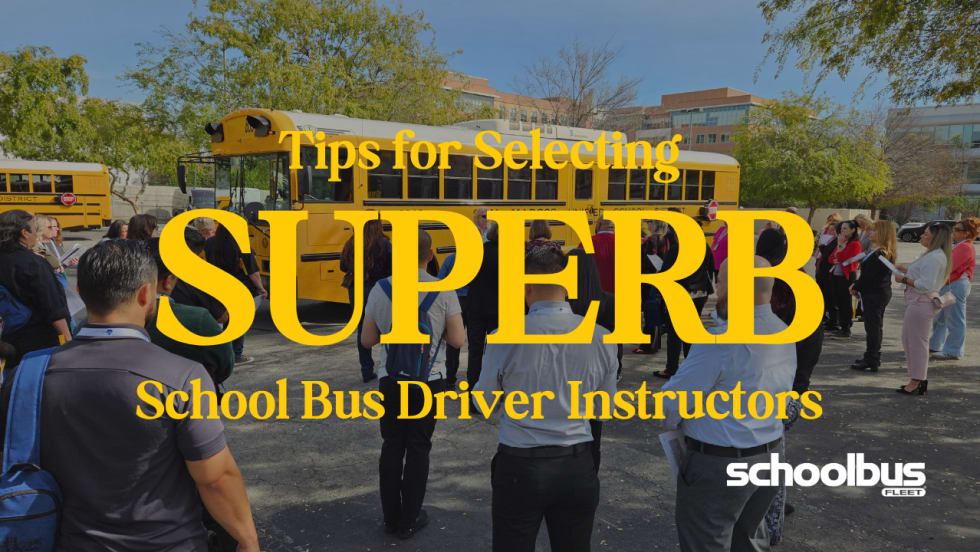
What Makes a Great School Bus Driver Trainer?
Choosing the right school bus driver trainer takes more than experience. Learn six keys to selecting and developing trainers and evaluating program effectiveness.
Read More →

School Bus Contractors Expand Through New Deals, Acquisitions & Partnerships
STA's Canadian division acquires Ontario-based G&L Stevenson Transport while Durham School Services adds a new district contract in California, First Student adds a New Jersey contract, and Minnesota Coaches acquires Halo Transportation.
Read More →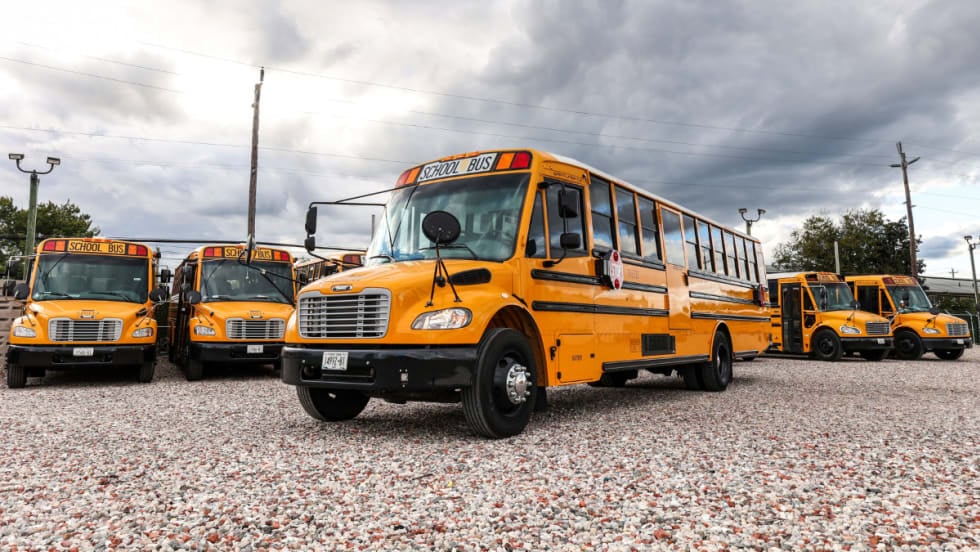
Logan Bus Company Rolls Out AI Phone System for NYC School Bus Families
A summer pilot found that AI agents could handle most routine calls, freeing up time for customer service staff to focus on emergencies and complex family concerns.
Read More →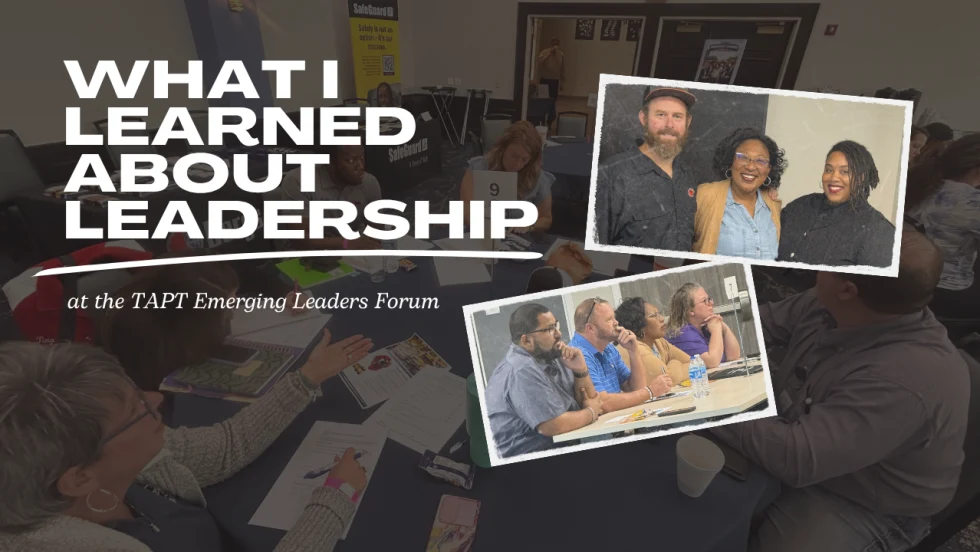
From Intent to Impact: What I Learned About Leadership from TAPT
A Texas transportation supervisor shares lessons on self-awareness, accountability, managing stress and building trust — and why investing in leadership development matters at every stage of your career.
Read More →
NAPT Names 2026 Award Recipients, Hall of Fame Inductee
Who earned national recognition for their work in student transportation? This year, NAPT named five recipients of its 2026 awards for service, safety, and leadership, plus its newest Hall of Famer.
Read More →
2026 State of Student Transportation Report
Driver shortages. Rising costs. Growing safety expectations. More data, but not enough time to act on it. The 2026 State of Student Transportation Report reveals what transportation leaders say is putting the most pressure on their operations—and where they’re investing next. See how your priorities compare.
Read More →
How to De-Escalate an Angry Person: 5 Steps for Handling Workplace Conflict
What makes emotions run high, and how should you handle an angry colleague or parent? Follow these steps for staying calm, listening, showing empathy, and resolving conflict.
Read More →
What Readiness Looks Like This School Year
Learn about the challenges shaping the 2026–2027 school year, from persistent driver shortages and budget pressure to technology and readiness gaps. See how school districts are responding and adapting in Zonar’s 2026 Back-to-School Readiness Report.
Read More →