




6 Tips for School Bus Seat Cover Care and Replacement
Regular cleaning and inspections of school bus seat covers can increase their life expectancy while easing tight budgets and helping to ensure children’s safety. Here’s guidance on how to maintain the seat covers — and when they should be replaced.

According to the American School Bus Council, 480,000 school buses carry approximately 25 million children to and from school each day, with the average school bus logging 12,000 miles a year.
As the price of buses, fuel and insurance continues to increase, so does the cost of providing this service. As a result, fleet managers find themselves in stiff competition with other support services in and out of the classroom as they look for dollars to support their fleets.
Many school districts are choosing to hold onto their buses longer to meet tight budgets. In fact, the Environmental Protection Agency reports that more than half of today’s school buses have been in service for more than 10 years. It makes sense, then, that more attention is being paid to caring for and maintaining buses to extend their useful life — everything from preventive maintenance schedules and daily trip inspections to examining seats for signs of wear.
There is no doubt that school bus seats take a beating, and often they show it. In many cases, the damage is intentional, with vandalism identified as the number one reason for damage to seat covers.
But wear, too, makes a significant contribution to seat damage, with the seat back often showing signs of stress before the seat cushion. That’s because children tend to grab the back of the seat in front of them as they get up, putting extra stress on the cover and the foam underneath. As the seat cover wears, the vinyl begins to crack and flake away (or be picked away by little fingers), exposing the cloth underneath.
The extent of wear damage varies according to a variety of factors. For example, the number of students, their ages and their size can influence the degree of wear. So can the number of runs a bus makes in a defined period of time and the number of days per year a bus is in service.
Weather, too, can impact the life expectancy of a seat cover. Temperature extremes and direct sunlight take a toll, which is why seat manufacturers have introduced vinyl covers that provide protection against the damage caused by ultraviolet rays.
Here are steps that school transportation operations can take to effectively care for and, when needed, replace school bus seat covers:
1. For fleets in areas where sun and heat are a regular occurrence, change the direction a bus is parked so that each day a different side of the bus absorbs the sun’s rays.
2. Nothing takes the place of a regular cleaning schedule when the goal is to extend the life of a bus seat cover. A simple monthly regimen requires nothing more than mild soap and water. Anything harsher and you run the risk of damaging the vinyl.
3. As you clean the seat cover, it’s also a good idea to inspect it for damage or signs of wear. Look for blisters, cracks and torn seams. Pay particular attention to whether any foam is visible. This indicates that the fire block capability of the cover has been destroyed, and the seat cover should be replaced as soon as possible.
4. Most damage that is detected should result in a new seat cover. While it’s true that repair kits are available, it’s difficult to vouch for the consistency of the chemicals they use. Many new seat covers are designed to fit over existing covers, making installation easy.

Tony Everett is vice president of transportation solutions at HSM.
5. When replacing school bus seat covers, be sure to use a reputable supplier, and always ask that materials be authenticated. Materials should meet the criteria of the school bus upholstery fire block test established by the National School Transportation Specifications and Procedures.
6. An inspection of the seat cover may reveal damage to the foam. Like a seat cover, foam can be replaced without purchasing an entire seat. However, when the decision is made to replace the foam, it often makes financial sense to replace the seat cover at the same time. Again, turn to a reputable supplier who can verify the integrity of the foam.
Seat cover manufacturers are always looking for new technologies and new manufacturing processes that will result in materials better able to withstand the ravages of time, sun and busy children. In the meantime, regular cleaning and inspections of the covers can increase their life expectancy while easing tight budgets and helping to ensure the safety of the children who use the seats every day.
More Maintenance
The Essential Guide to School Bus Maintenance and Student Safety
Your district's buses carry students to school every day. This guide shows how predictive maintenance powered by fleet data helps keep buses reliable, drivers accountable and students safer from the first bell to the last stop.
Read More →
Kerry Brothers Grows Michigan School Bus Repair Network
The acquisition of Downriver Truck and Bus expands Kerry Brothers’ school bus maintenance footprint across southeast Michigan, adding repair capacity, diagnostic resources, and state inspection support.
Read More →
Noregon Introduces CAN Bus Diagnostic Tool, Expands JPRO Features
CAN Mentor and the latest JPRO update aim to simplify vehicle network diagnostics and improve repair efficiency for technicians of all experience levels.
Read More →
Cummins on Smarter, Simpler Engine Innovation
Cummins discusses its first-ever gasoline engine for school buses, EPA 2027, and why bus fleets still want durable, simpler internal combustion options.
Read More →
Report: 72% of Diesel School Buses Now Use Advanced Low-Emission Engines
New data shows advanced low-emission diesel technology continues expanding across school bus fleets, even as electric bus adoption gains momentum.
Read More →
Vampire Tools' CAIMAN 7.5-Inch Multi-Purpose Screw Extractor Long-Nose Pliers with Crimper
Vampire Tools introduced the VAMPLIERS Caiman 7.5-inch multi-purpose pliers, combining screw extraction, cutting, crimping, and gripping functions into a single tool designed for fleet maintenance professionals.
Read More →
How Advanced Diagnostics Helps Bus Fleets Stay Ahead of Repairs
Chat with Noregon’s Kevin Smallhorn at ACT Expo about bus diagnostic tools, telematics integration, CNG maintenance support, and strategies to help reduce downtime and improve uptime.
Read More →
How School Bus Fleets are Getting Ahead of Breakdowns
Don’t let bus downtime wear you down. Here’s how bus operators are shifting from manual processes to AI-powered, data-driven maintenance systems for improved reliability and safety.
Read More →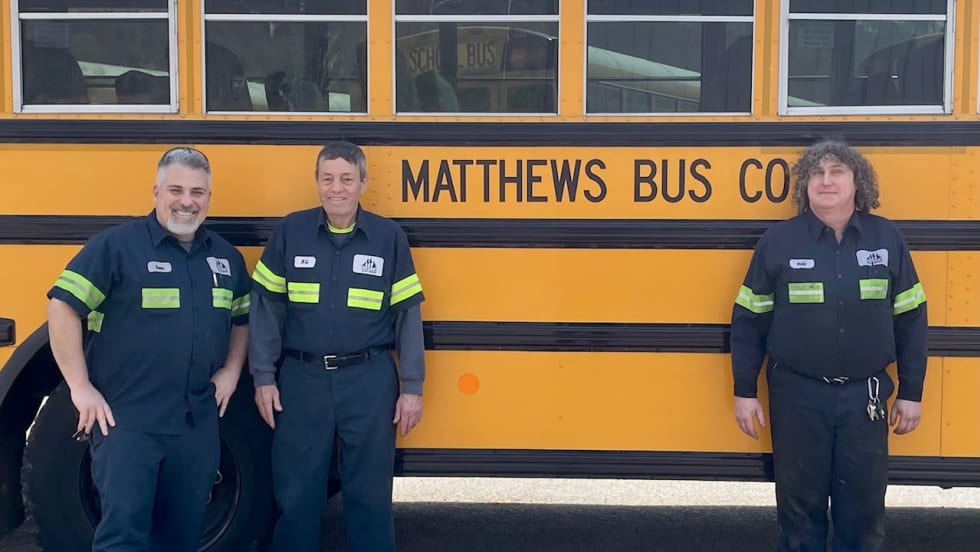
Pennsylvania School Bus Maintenance Team Praised for Dedication to Safety
Matthews Bus Company’s West Jefferson received a letter of commendation from the Pennsylvania State Police for their fleet inspections.
Read More →
From Chaos to Clarity: How School Districts Are Running Leaner Transportation Operations
Covering 38 routes on a Friday afternoon. Buses idling while routes overlap. Parents calling nonstop about late arrivals. Sound familiar? This whitepaper explores how district transportation leaders solved these exact problems — and what measurable results followed.
Read More →