




Cummins offers new 5-liter V8 diesel
The engine manufacturer holds a press event to share details on the new ISV5.0 and to show it running in a Type C school bus and several other test vehicles. Cummins officials discuss the engine's benefits, including low total cost of ownership and quieter operation.

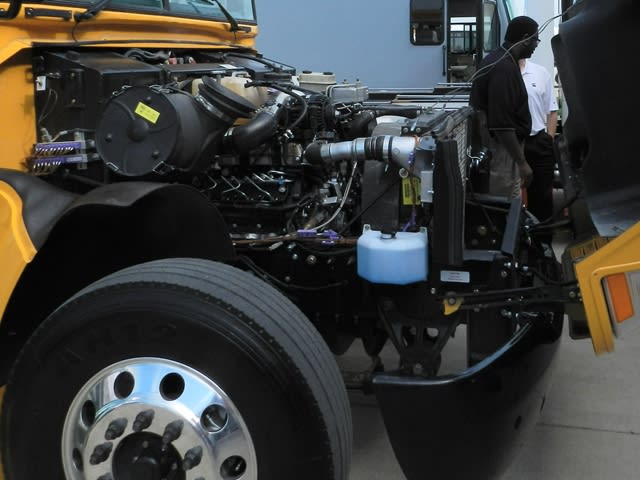
Cummins showed its new ISV5.0 running in a Type C school bus and other test vehicles. Officials noted that the presence of certain OEMs' vehicles did not indicate engine availability.
COLUMBUS, Ind. — Cummins on Thursday unveiled a new 5-liter V8 diesel engine, which company officials said will be a strong fit for school buses, among other applications.
The company held a press event at an airplane hangar in Columbus, home of the manufacturer's headquarters and its Columbus Engine Plant, to share details on the new ISV5.0 and to show it running in a Type C school bus and several other test vehicles.
Dave Crompton, vice president of Cummins and general manager of its engine business, told SBF that with many school districts facing funding shortfalls, the ISV5.0 can provide advantages with a lower initial purchase price and a "significant improvement in fuel economy," leading to a low total cost of ownership.
"You get the lower cost, but the durability is still there," Crompton said as he sat aboard the test school bus, which was loaded with sandbags to simulate a full passenger load.
Jeff Caldwell, general manager of Cummins' global pickup business, said that the ISV5.0 is a quieter-running engine, which can enhance the driving experience for school bus drivers and help in managing student behavior.
Caldwell noted that the lower price of the engine will be attractive to school districts with limited funding for capital purchases. Caldwell has firsthand experience with district budgets and decision making — he serves on the board of the local school district, Bartholomew Consolidated School Corp.
He added that Cummins has taken the ISV5.0-equipped test school bus to the Bartholomew district shop and had staff members try it out.
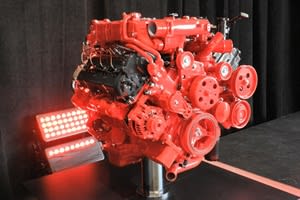
A display model of the ISV5.0 on stage at the Cummins press event in Indiana.
During the press event, Jim Katzenmeyer, executive engineer for Cummins' V8 program, described notable features of the ISV5.0. Among them: a compacted graphite iron cylinder block, a forged steel crankshaft, high-strength aluminum alloy heads and composite valve covers to offer maximum durability in a lightweight package. Those features, along with dual overhead camshafts, also contribute to the engine's reduced noise, vibration and harshness characteristics.
The Bosch High Pressure Common Rail fuel system and the Cummins VGT Variable Geometry Turbocharger contribute to a peak torque of 560 lb.-ft. and quick throttle response. Ratings from 200 (149 kW) to 275 horsepower (205 kW) are available.
Cummins officials also said that in cold weather, the advanced ceramic glow plug system significantly reduces start time and electrical current draw, reducing vehicle charging system requirements.
The ISV5.0 will be manufactured at the Columbus Engine Plant. Production will start during the fourth quarter of 2014.
For more on the ISV5.0, go here.
More Maintenance
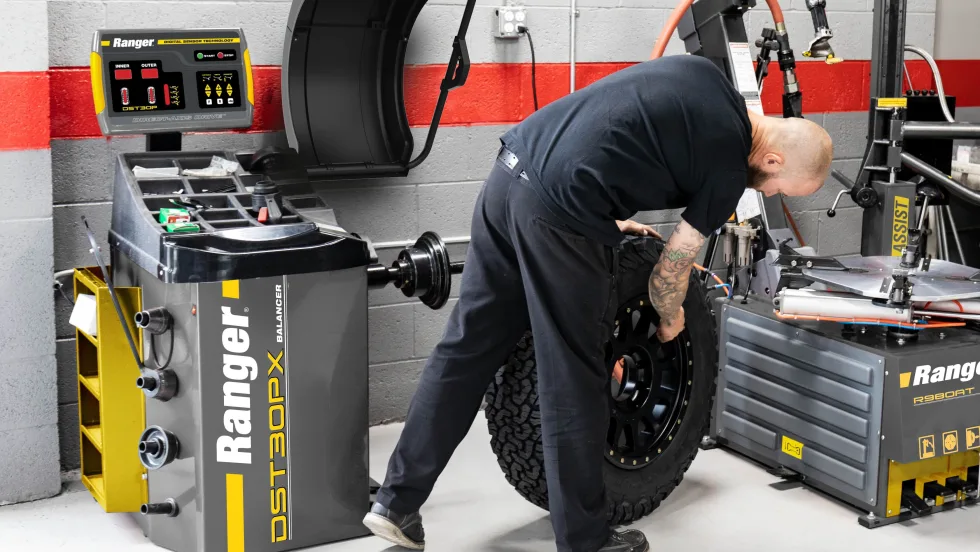
BendPak Launches Ranger DST30PX Wheel Balancer
BendPak's new wheel balancer handles tires up to 43 inches in diameter, with a reinforced design, precise weight placement, and faster service cycles.
Read More →
Tips for Ensuring School Bus Garages Are Safe and Warm Year-Round
Cold maintenance bays and rising heating costs? Learn how school bus garages can improve comfort with targeted heating, better airflow, and winter preparation.
Read More →
ASE Highlights School Bus Technician Certification Requirements
ASE is encouraging school bus maintenance professionals to maintain their certifications, highlighting seven specialized tests and five-year renewal requirements.
Read More →
International Adds E-Commerce Capabilities to Fleetrite.com
IC Bus customers can now browse, buy, and track shipments for more than 400,000 aftermarket parts online.
Read More →
The Most Expensive Thing You Do Before Selling a School Bus: Wait
When should you sell an aging school bus? Learn how maintenance, mileage, corrosion, specifications, and timing can affect resale value long before the auction.
Read More →
The Evolution of DEF Header Technology: What School Bus Operations Should Know at Replacement Time
See what school bus fleets should consider when replacing DEF headers to improve reliability, reduce repeat repairs, and control maintenance costs.
Read More →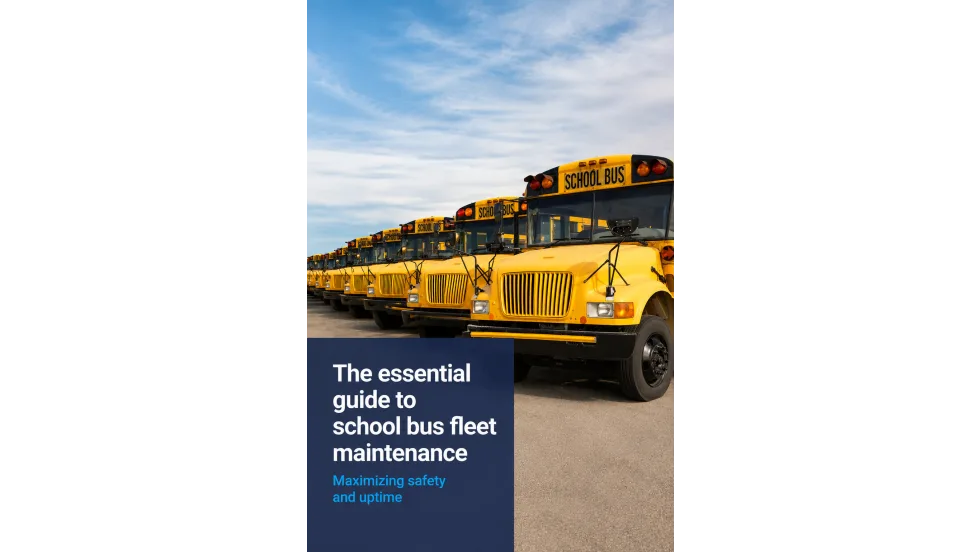
The Essential Guide to School Bus Maintenance and Student Safety
Your district's buses carry students to school every day. This guide shows how predictive maintenance powered by fleet data helps keep buses reliable, drivers accountable and students safer from the first bell to the last stop.
Read More →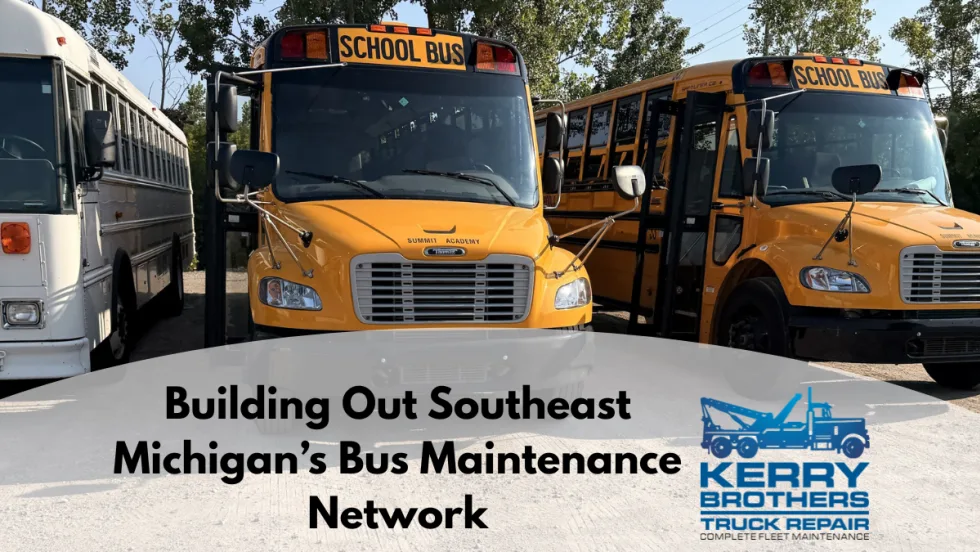
Kerry Brothers Grows Michigan School Bus Repair Network
The acquisition of Downriver Truck and Bus expands Kerry Brothers’ school bus maintenance footprint across southeast Michigan, adding repair capacity, diagnostic resources, and state inspection support.
Read More →
Noregon Introduces CAN Bus Diagnostic Tool, Expands JPRO Features
CAN Mentor and the latest JPRO update aim to simplify vehicle network diagnostics and improve repair efficiency for technicians of all experience levels.
Read More →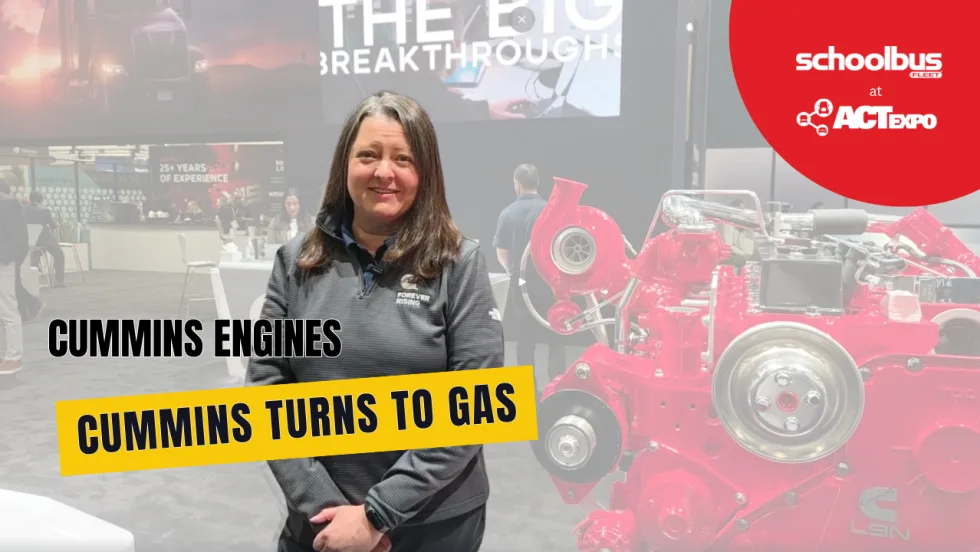
Cummins on Smarter, Simpler Engine Innovation
Cummins discusses its first-ever gasoline engine for school buses, EPA 2027, and why bus fleets still want durable, simpler internal combustion options.
Read More →