




How to Pinpoint and Prevent Common Brake Problems
Brake experts give guidance on conducting thorough inspections, servicing the brake systems and teaching school bus drivers what to watch out for.

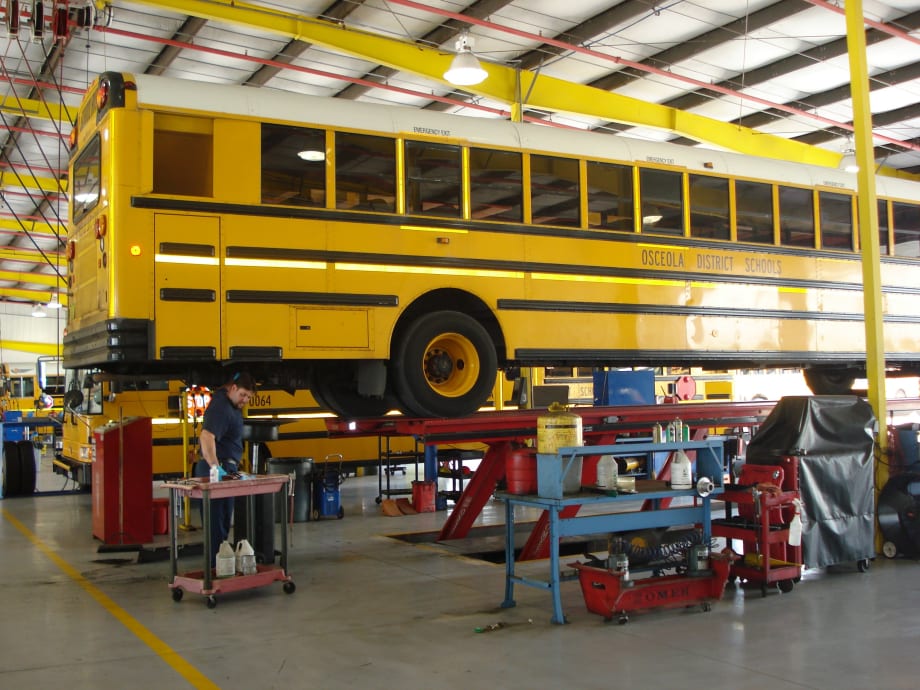
School buses face a variety of challenging operating conditions — frequent stops, hilly terrain, road salts, traffic, rural roads, etc. — that put stress on their braking systems, making preventive maintenance all the more important. Here, brake suppliers share best practices in inspecting and maintaining school bus brakes.
Thorough inspections
Complete brake inspections are essential to keeping school buses running safely. Lining condition, rotor plate thickness, brake hose flexibility and brake fluid condition are examples of service-related items that need to be inspected regularly, according to Wally Marciniak, director of training for Brake Parts Inc, supplier of the Raybestos brand of brake products.
“For example, brake fluid is hygroscopic — meaning it is intended to absorb moisture,” Marciniak says. “Too much moisture is problematic and could affect the overall integrity of the brake system.”
He adds that manufacturers’ recommendations and procedures should be practiced for all brake service work and component replacement.
Earl Gesch, original equipment (OE) sales and development engineering manager for Performance Friction, says that school bus technicians should also check the tone ring on a regular basis, looking out for corrosion.
Jim Baldwin, director of fleet sales for Marathon Brake Systems, provides some pointers for the inspection of air brakes:
• Look for cracked or bent brake chamber and camshaft support brackets.
• Check air line hoses for kinks, chafing and cracks, and replace as needed.
• Remove and check the operation of the automatic brake adjusters to make sure they are operating properly. Refer to the manufacturer’s manual.
• Remove the camshaft and check the head for wear or flat spots. Check the bearing journals for rusting, pitted surfaces or excessive wear. Also, check the condition of the splines. Replace as necessary.
Common issues
Alexandra Cuthbert, bus sales manager for Performance Friction, says that common issues seen in school buses include unequal, uneven wear on brake pads and rotors due to calipers hanging up or pin sliders seizing. Another key issue is pads crumbling, which can be brought on by road de-icing agents such as magnesium chloride and calcium chloride.
“If you choose a brake pad that isn’t compatible with proper protection from debris and salts used to de-ice roads in your area, you can lose braking performance,” Cuthbert says.
Performance Friction uses an anti-corrosive coating on its brake pad backing plates to prevent issues with road salts. Gesch says those salts “can really accelerate the process of pad corrosion and rust jacking. Other than more frequent inspection, there’s not a whole lot you can do once that process starts.”
Brakes being out of adjustment is another common problem. Troy Flodin, foundation drum brake engineering manager for Bendix Spicer Foundation Brake, notes that various items can cause out-of-adjustment brakes: slacks, broken brake components, actuator issues, drum/hub issues, etc.
“Routine inspection of free stroke will help identify the issue,” Flodin says.
[PAGEBREAK]
"The driver is the first line of defense in identifying braking issues since they are the closest to the vehicle on a daily basis."
Troy Flodin
Foundation Drum Brake Engineering Manager
Bendix Spicer Foundation Brake
Service tips
When service work is required, stopping distance should be measured, the brake system should be balanced and all components should be replaced for maximum safety, according to Marciniak of Brake Parts Inc.
“After any service work, the vehicle needs be test-driven to ensure safe and smooth operation,” Marciniak adds.
For air brake maintenance, Marathon’s recommendations include:
• Replace camshaft bushings.
• Replace the brake shoes with a premium friction material using new attaching hardware kits, which will include stainless steel anchor pin bushings, heavy duty return springs and new rollers.
• Install a new brake drum, making sure it is properly seated and centered on the hub tabs, and install the wheels/studs starting at the 12 o’clock position.
• To adjust the brakes, turn the adjusting bolt clockwise to “touch” the drum. Then back the adjuster away from the brake drum a half turn. Check for a free wheel rotation.
Kevin Pfost, who specializes in technical service at Bendix Spicer Foundation Brake, offers these tips for air brakes:
• Proper lubrication ensures proper function of the components and helps with the life and ease of disassembly. Do not over-grease.
• Perform air dryer maintenance once a year.
• Do not adjust automatic slack adjusters.
• Do not use any additives in the air system.
• Replace linings with OE replacement linings and new brake drums.
Drivers’ role
In addition to the shop staff, school bus drivers can play a key role in keeping brakes operating properly.
Marciniak of Brake Parts Inc says that drivers need to let technicians know if they notice any braking issues. Examples include a difference in pedal feel, excessive pedal travel, increased stopping distance, noise issues (including grinding or squealing) and brake-related warning lights. Any of those types of conditions should be referred to a technician for inspection and service.
Gesch of Performance Friction says that if a driver sees brake fluid on any brake components, “it’s an emergency situation. It could be caused by faulty seals or a compromised caliper. … That should be pretty rare, but it’s definitely cause for immediate attention.”
For buses with air brakes, drivers should be taught to drain the air tanks daily. They should also look and listen for air leaks and brake issues during their pre-trip inspection.
“The driver is the first line of defense in identifying braking issues since they are the closest to the vehicle on a daily basis,” Flodin of Bendix says. “Daily checks are important, as well as paying attention to changes in how the brakes are functioning — reduction in torque, leaking air or hot brakes could all be indications of a problem.”
Choosing friction material
Suppliers note that the selection of brake lining for school buses should be based on more than price. Baldwin of Marathon Brake says that many school districts purchase brake lining by competitive tenders with no specifications.
“Even spec’ing the OEM brake lining may not be the most effective method,” Baldwin says. “Axle manufacturers supply axles to school bus manufacturers that may only be fitted with truck brake lining. Such on-highway truck lining is not well suited for the rigors of frequent stopping, which creates high brake temperatures, and many buses are operated in rural roads with lots of contamination.”
Baldwin recommends spec’ing a brake lining that is rated for the gross axle weight rating and designed for high heat applications. Friction materials that are designed for school buses are available; they are quiet and durable, and they maintain consistent braking at all operating temperatures.
Another important factor is flexural strength. “A high flexural strength product,” Baldwin explains, “will not crack as the brake temperatures rise and the shoe flexes as the brake drum expands and contracts with heat and pressures.”
More Maintenance
The Essential Guide to School Bus Maintenance and Student Safety
Your district's buses carry students to school every day. This guide shows how predictive maintenance powered by fleet data helps keep buses reliable, drivers accountable and students safer from the first bell to the last stop.
Read More →
Kerry Brothers Grows Michigan School Bus Repair Network
The acquisition of Downriver Truck and Bus expands Kerry Brothers’ school bus maintenance footprint across southeast Michigan, adding repair capacity, diagnostic resources, and state inspection support.
Read More →
Noregon Introduces CAN Bus Diagnostic Tool, Expands JPRO Features
CAN Mentor and the latest JPRO update aim to simplify vehicle network diagnostics and improve repair efficiency for technicians of all experience levels.
Read More →
Cummins on Smarter, Simpler Engine Innovation
Cummins discusses its first-ever gasoline engine for school buses, EPA 2027, and why bus fleets still want durable, simpler internal combustion options.
Read More →
Report: 72% of Diesel School Buses Now Use Advanced Low-Emission Engines
New data shows advanced low-emission diesel technology continues expanding across school bus fleets, even as electric bus adoption gains momentum.
Read More →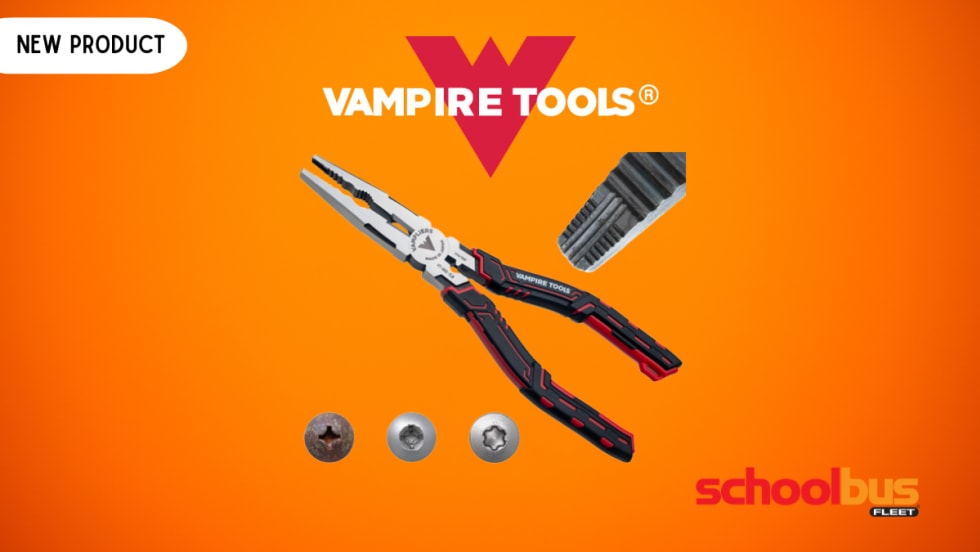
Vampire Tools' CAIMAN 7.5-Inch Multi-Purpose Screw Extractor Long-Nose Pliers with Crimper
Vampire Tools introduced the VAMPLIERS Caiman 7.5-inch multi-purpose pliers, combining screw extraction, cutting, crimping, and gripping functions into a single tool designed for fleet maintenance professionals.
Read More →
How Advanced Diagnostics Helps Bus Fleets Stay Ahead of Repairs
Chat with Noregon’s Kevin Smallhorn at ACT Expo about bus diagnostic tools, telematics integration, CNG maintenance support, and strategies to help reduce downtime and improve uptime.
Read More →
How School Bus Fleets are Getting Ahead of Breakdowns
Don’t let bus downtime wear you down. Here’s how bus operators are shifting from manual processes to AI-powered, data-driven maintenance systems for improved reliability and safety.
Read More →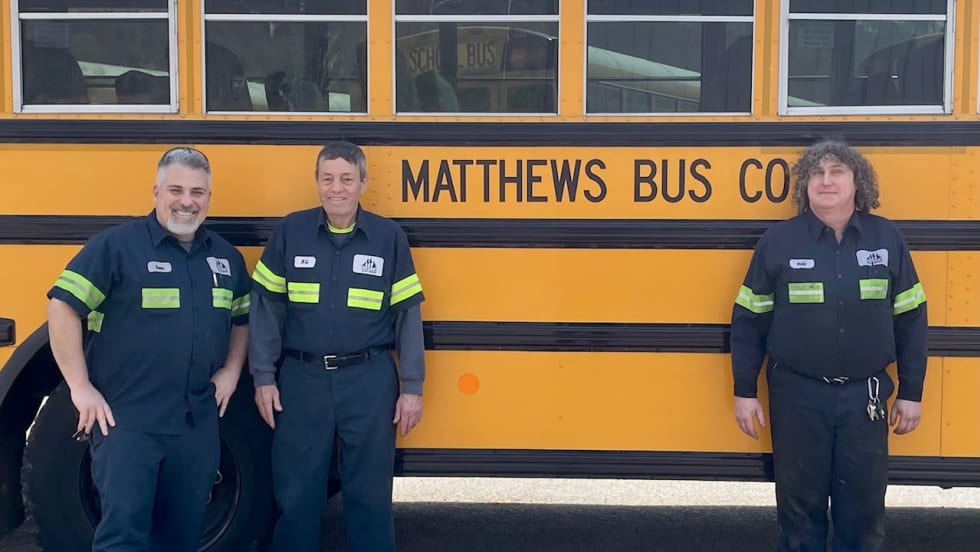
Pennsylvania School Bus Maintenance Team Praised for Dedication to Safety
Matthews Bus Company’s West Jefferson received a letter of commendation from the Pennsylvania State Police for their fleet inspections.
Read More →
From Chaos to Clarity: How School Districts Are Running Leaner Transportation Operations
Covering 38 routes on a Friday afternoon. Buses idling while routes overlap. Parents calling nonstop about late arrivals. Sound familiar? This whitepaper explores how district transportation leaders solved these exact problems — and what measurable results followed.
Read More →