




NAPT News & Views — Driver Shortage Demands Innovative Thinking
The current shortage is so severe that it requires new thinking. Paying more per hour without considering other factors may not be the best long-term strategy.
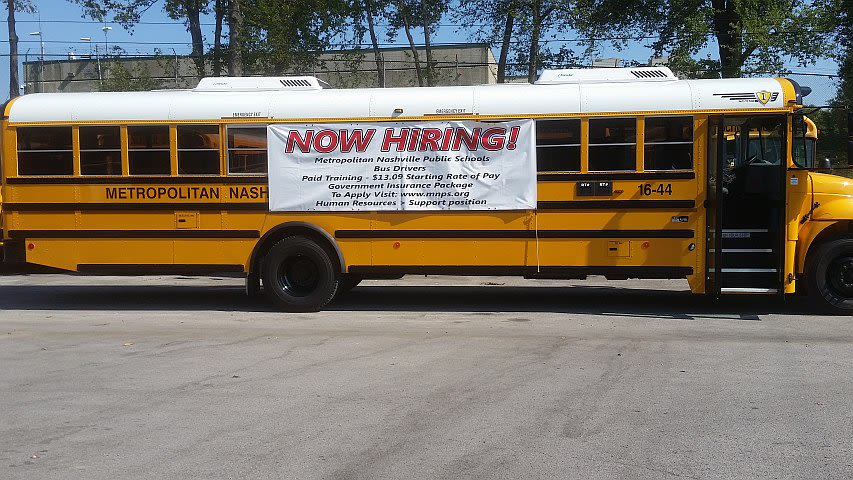
The recent back-to-school news cycle had numerous stories about school districts struggling with driver shortages and schedule delays at a time when student transportation demands are, in some communities, continuing to grow at exponential rates.
The recent back-to-school news cycle had numerous stories about school districts struggling with driver shortages and schedule delays at a time when student transportation demands are, in some communities, continuing to grow at exponential rates.
Management and leadership courses usually urge you not to bring up a problem unless you also have a solution.
That’s sage advice, but sometimes problems need to be brought up so many voices and perspectives can weigh in with potential solutions. That’s especially true in our industry, because challenges invariably have a local flavor, and what works in one district may or may not make sense in another.
But more often than not, shared thinking among school bus professionals yields useful information and common denominators applicable to all circumstances. The NAPT board is hoping that’s the case with the driver shortage affecting our industry.
The recent back-to-school news cycle had numerous stories about school districts struggling with driver shortages and schedule delays at a time when student transportation demands are, in some communities, continuing to grow at exponential rates.
A 2015 survey by School Bus Fleet magazine showed that only 8% of responding districts had no shortage of school bus drivers (meaning 92% did!). Meanwhile, 30% reported a mild shortage, 36% moderate, 18% severe, and 8% desperate.
If there were a simple answer to the shortage, or one dimension to it, I’d be laying it out now and this would be a very short article! But it’s not only about having a full complement of drivers, but also backups when drivers are sick or don’t show up for work.
As the 2016-17 school year kicked off in McLean County, Illinois, the district had what amounted to an “all-points bulletin” out for more drivers. According to news accounts, as many as 1,000 kids had no school bus transportation, and those who did sometimes arrived at school 30 to 90 minutes late.
An ongoing driver dispute with the company operating the buses is behind the shortages in that community, manifesting itself in as many as 20 drivers a day not reporting for work. Without substitute drivers, the school district had to scramble, pulling extra drivers from neighboring districts.
Money is always the first topic to come up when talking about driver shortages. But merely paying more per hour without considering other factors affecting the shortage may not be the best long-term strategy.
Driving a school bus is typically a part-time job, unlike most other commercial driving. School bus drivers not only must have a CDL; they must pass repeated drug screens and criminal background checks, and some districts have even more requirements. And, unlike driving your average commercial truck, the school bus “cargo” is as special as it gets.
Plus, the job is getting more complex all the time. In addition to driving safely and meeting a schedule, drivers must handle disciplinary issues, be vigilant about security along their routes, make sure seat belts are used (and used correctly), and more.
A school bus driver has very consequential responsibilities every day. It takes a level of dedication and skill at interpersonal relations not required in most other commercial driving situations.
But other drivers typically earn more (some of the disparity certainly involves the fact that driving a school bus is part-time work). Recent data from the U.S. Bureau of Labor Statistics reported the average hourly wage for school bus drivers in 2014 at $14.38, compared to $18.95 for intercity and transit drivers.
But, again, I caution against solely focusing on hourly pay. In fact, the current shortage is so severe that I believe it requires new thinking.
For those who missed it, the September issue of School Bus Fleet had an excellent article documenting steps taken by one school district: Salem-Keizer Public Schools in Salem, Oregon. It should be a must-read for any district with a driver shortage.
In a nutshell, Salem-Keizer decided to take a fresh approach to their driver shortage, and they began the process with a very introspective discussion where everything was on the table and creative thinking was encouraged.
What’s particularly noteworthy about their work is that they put aside the old way of thinking, which is typically “We need drivers? Let’s put an ad in the paper.” Instead, the Salem-Keizer team began by asking themselves, in essence, “What do we need to do to make this a more attractive place to work?”
The Salem-Keizer team decided that to compete successfully against other community employers, they had to create an attractive overall package that makes driving a school bus a profession with a clear future, and it has to dovetail to drivers’ personal lives and expectations.

Mike Martin is executive director of NAPT.
To be sure, pay and other benefits are included in the Salem-Keizer plan, along with aggressive advertising. But they are primarily focused on changing the way school bus drivers — particularly potential school bus drivers — think about the job and the district as an employer. In my view, that’s just plain smart.
One of the important questions at the heart of this matter is “Why are recruiting and retention always lumped together?” To me, they are two distinctly different things, so we have to approach them as two distinctly different problems. What do you think?
That question is not rhetorical. NAPT and SBF have embarked on a collaborative effort intended to help everyone better understand the national school bus driver shortage. The first step is to get feedback from as many people as possible.
We recently sent out a school bus driver recruitment survey and are now analyzing the results. Thanks to everyone who gave us their input.
We really do want to know what you think so we can all try to get to the bottom of a very vexing challenge.
More Management
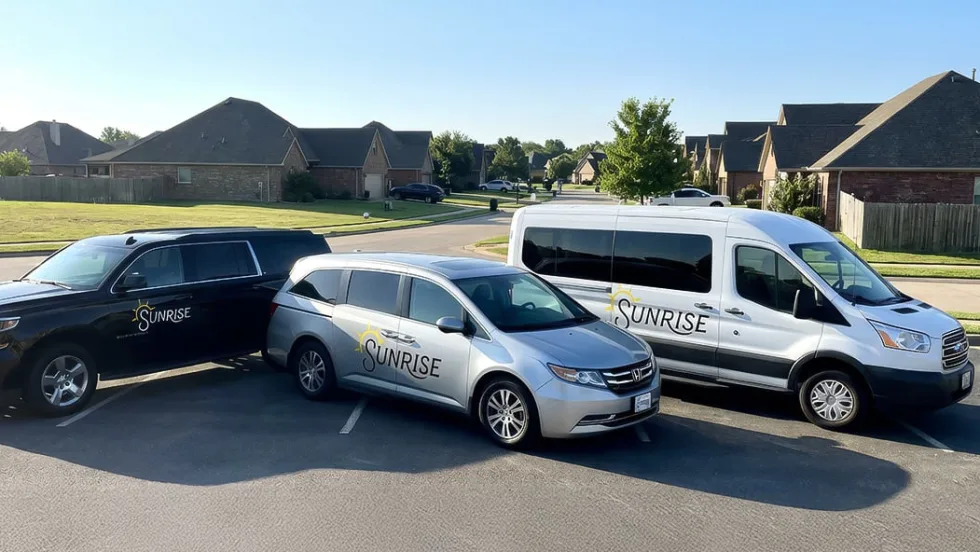
STA Acquires Sunrise Transportation
Student Transportation of America expands in Illinois and Connecticut through Sunrise's fleet of nearly 1,000 vehicles.
Read More →
EPA Opens $180M DERA Funding Round for Diesel Upgrades
The 2026 Diesel Emissions Reduction Act program seeks applications from eligible organizations to accelerate the retirement of legacy diesel vehicles.
Read More →
HopSkipDrive’s CareEngine Targets the ‘Exceptions’ in Student Transportation
The new platform works alongside districts’ existing transportation management systems to coordinate specialized rides, automate last-minute changes, and turn ride data into operational improvements.
Read More →


The Right Ride for Every Student: Navigating the New Student Transportation Ecosystem
How should districts blend school buses with small-vehicle transportation and other options? EverDriven CEO Mitch Bowling discusses safety, costs, partnerships, and strategy.
Read More →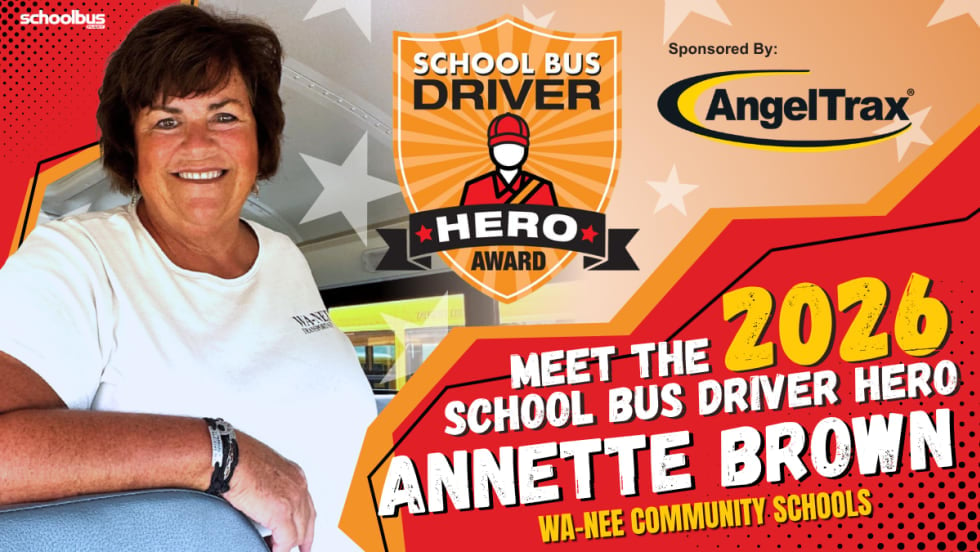
Annette Brown Always Takes the Extra Time: Meet Our 2026 School Bus Driver Hero
For more than 30 years, the Wa-Nee Community Schools driver has treated students like family, combining safety, compassion, and servant leadership to make a lasting difference on and beyond the school bus.
Read More →
How to Build a Better Driver Training Program
Ready to boost up your school bus instructor training? Here’s how to pick the right talent and improve recruitment, retention, and safety.
Read More →
CALSTART and Forth Combine to Form Catalyst Mobility
The new name represents a renewed vision for the nonprofit focused on advancing clean, equitable, and affordable transportation solutions that move people and goods.
Read More →
What Makes a Great School Bus Driver Trainer?
Choosing the right school bus driver trainer takes more than experience. Learn six keys to selecting and developing trainers and evaluating program effectiveness.
Read More →
School Bus Contractors Expand Through New Deals, Acquisitions & Partnerships
STA's Canadian division acquires Ontario-based G&L Stevenson Transport; Durham School Services adds a new district in California; First Student expands in New Jersey; and Minnesota Coaches rebrands and acquires Halo Transportation.
Read More →
Logan Bus Company Rolls Out AI Phone System for NYC School Bus Families
A summer pilot found that AI agents could handle most routine calls, freeing up time for customer service staff to focus on emergencies and complex family concerns.
Read More →