




How Planning for Missed Bus Stops Can Prevent Tragedies
When a student or a school bus driver misses a stop, what happens next? Three common scenarios show the dangers that students can face if there’s no plan in place.
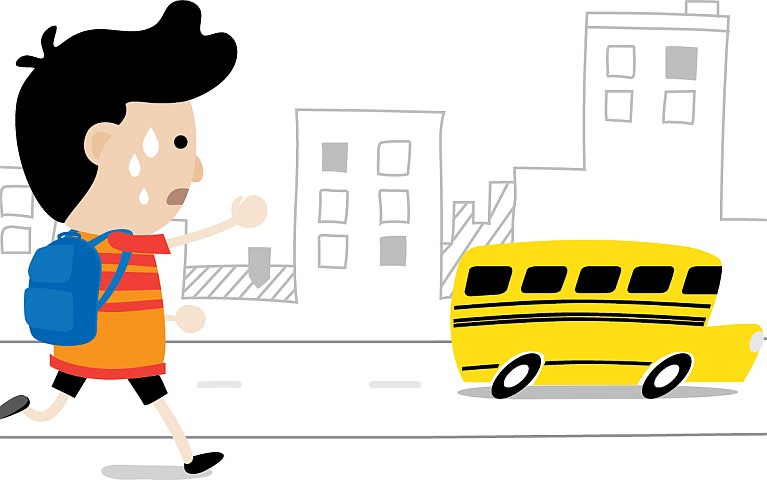
Illustration by Yuda Chen
Illustration by Yuda Chen
Those of us in the pupil transportation community who have been working to perfect the process of loading and unloading students at school bus stops for the past 40 years or so have been wildly successful, but is there more room for improving safety?
The national school bus loading and unloading fatality survey — now compiled by the Kansas State Department of Education’s School Bus Safety Unit — identified as many as 75 students killed in the loading zone in one year in the early 1970s. Today, the annual number hovers around 10, even though the total number of students transported has more than doubled.
This accomplishment has been a joint effort of school bus driver and student training and equipment improvements. (Efforts to change the behavior of other motorists have not been so successful.) School buses are equipped with stop arms, crossing gates, improved mirror systems, eight-light warning systems, and radically redesigned hoods that create exceptional visibility.
The federal CDL supplement, the National Congress on School Transportation, the National Highway Traffic Safety Administration’s driver in-service, the National Safety Council, and the training programs of major contractors as well as many states — the latest being North Carolina — are integrating driver signals to children as a part of the safe crossing process.
If zero fatalities and injuries is the ultimate goal, then this success leads us to ask, “What’s next?” The expert witness work that I do gives me an insight into what is going wrong out there in the yellow bus world.
Common cases
One recent trend that I have observed is missed bus stops, which are planned stops that don’t happen for one reason or another.
Often the child misses the bus because he or she is late to the stop or the driver is early. Sometimes the driver just misses the stop — maybe it was the first day for that pickup, or the child often isn’t there. Whatever the reason, the stop doesn’t happen the way it was planned.
What happens next is anybody’s guess, because we haven’t given our drivers and students any training about what to do. The only counsel I have seen is direction to the driver to not back up at the stop, but to instead go around the block.
Backing has obvious dangers, but it has not been a part of any of the scenarios I have become familiar with. Going around the block can be a simple solution in some areas, but it can be very complicated in many situations.
In the cases for which I was an expert witness, students were struck by another motorist. The three variations that lead to such a crash are:
• A student was running late and crossed the street to get to a neighborhood stop or to a stop farther along the route, and the school bus was not even in sight.
• The school bus was returning to the stop, and neither the student nor the driver had a plan for how they would negotiate that pickup.
• Students were going to a “makeup” bus stop that the school bus driver created because he or she was sorry for the kids missing the bus.
Here’s a closer look at those three types of scenarios and the risks they present.
1. The student rushing to the next stop
For the student rushing to another school bus stop who is struck crossing a road, there needs to be a plan for her to get to school if she misses the bus, because it is her fear of missing the bus that is making her abandon her normal pedestrian skills.
Of course, this means the school also has to have a plan. Is there a number that can be called to have a bus swing back by and pick up the student? Has that number been disseminated to parents and students?
What are your policies and procedures for this situation? Is there a “What to do if your child misses the bus” section in your transportation information that is shared with parents at the beginning of the school year?
I’m not suggesting that you open a taxi service. If children miss the bus regularly, then conversations need to take place and consequences need to be enforced. But the bottom line is that if there isn’t a plan that has been disseminated to students, parents, and drivers, then your school bus driver might make up his or her own plan, which is seldom a good idea.
There needs to be a plan for the student to get to school if she misses the bus, because it is her fear of missing the bus that is making her abandon her normal pedestrian skills.
2. The driver returning to the stop
The second scenario is the most common. The school bus goes by the stop because the child is not at the stop, or because the driver forgot to make the stop, and then the driver goes back.
If the driver can go around the block and re-approach the stop from the same direction, the probability of success is highest, because what the student observes as the bus approaches is the same as what he normally sees.
If the school bus driver returns in the opposite direction (rather than going around the block) because of distance or a major obstacle like a river or railroad tracks — or because their route takes them back down the same road in the opposite direction — then the stop situation is reversed. Instead of the bus approaching from the student’s left, it is approaching from the right.
The student sees the school bus — or he may even see a bus that isn’t his own but doesn’t know whether it will stop for him — and he runs into the road, hoping to get across and get on that bus.
Perhaps the driver wants to go past the stop and turn around to approach the stop from the normal direction, but the student doesn’t understand that and rushes into the road as the bus drives by. If the school bus driver is planning to go by the stop and return, then he or she won’t even have the loading lights engaged.
This could put the student at serious risk, especially if this road is not safe for students to cross due to heavy traffic and multiple lanes.
3. The ‘makeup’ bus stop
Finally, what if the school bus driver makes up stops to accommodate his or her (usually middle and high school) students who like to sleep in?
One of the most common stops that drivers make up is to allow a student to cross the road and get on the bus when it is coming back toward school, even though the transportation department has carefully routed the bus stop to take place on the way out so that the student can board without crossing.
Even if the parent has given you a signed affidavit, you are still responsible for that child’s safety — you will hear from their lawyers.
Another thing drivers might do is create a makeup stop to serve the children in a neighborhood. They might all have their appointed stops, but if they don’t get to their stop in time, there might be a place that the driver will be passing later. The driver might have told the students, “Be here and I’ll pick you up.”
Unfortunately, this can lead students into hazardous crossing situations in order to get to the makeup stop.
When a situation like this results in a tragedy, what generally comes out during the process of the investigation is that this was not the first time. It wasn’t just a situation where the school bus driver was trying to pick up a student who happened to be walking along the side of the road to school. This is a plan that has been implemented many times before.
Drivers and students knew about it, parents might have been aware of it, but the person sitting behind the desk in the transportation office is seldom aware of what is transpiring. You, the transportation director, had no idea.

Ted Finlayson-Schueler, president of Safety Rules in Syracuse, New York, is a pupil transportation safety consultant and expert witness. He can be reached at SchoolBusTed@SafetyRules.net.
Planning and training
Any time school bus drivers try to rectify a missed-stop situation — unless they go around the block and perform the stop in exactly the same way that it’s always done — they are performing an unauthorized bus stop and are putting their operation at risk.
If they can’t go around the block to do the stop in the regular way, they need to call in to base and make a plan. The plan might include calling the student’s home to inform them of how the stop, now authorized, will be made.
Drivers need to be trained to understand the risk of the unstable situation that is created by returning to a stop in a different way.
Students need to understand that there will be a way for them to get to school, and running into the road or running after a departing bus puts them at incredible risk.
Until you have a plan and everyone understands the plan, the unsettling experience of missing the bus can create a moment of panic that will not end well.
More Safety
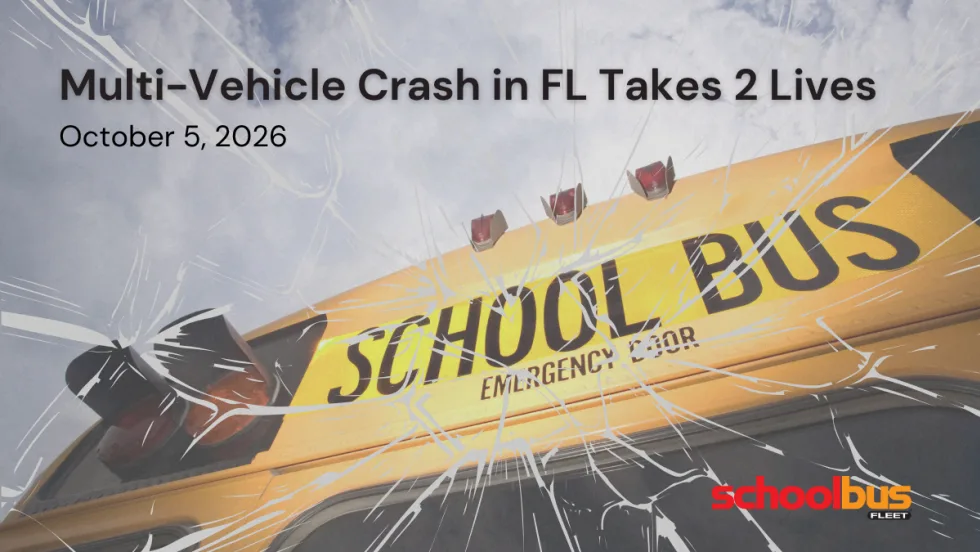
2 Killed, Dozens Injured in Florida School Bus Crash
A multi-vehicle collision caused a Polk County school bus carrying 37 students to overturn on its way to Winter Haven High School.
Read More →
Illegal School Bus Passing Drops 24% in New York Districts
With fewer than 5% of citations involving repeat offenders, Westchester County officials said enforcement, education, and community partnerships are helping change driver behavior.
Read More →
School's Back. Here's What Happened to Traffic, Speeding & Distraction
What happens to traffic when school resumes? New data analysis examines changes in distracted driving, congestion, and speeding around schools.
Read More →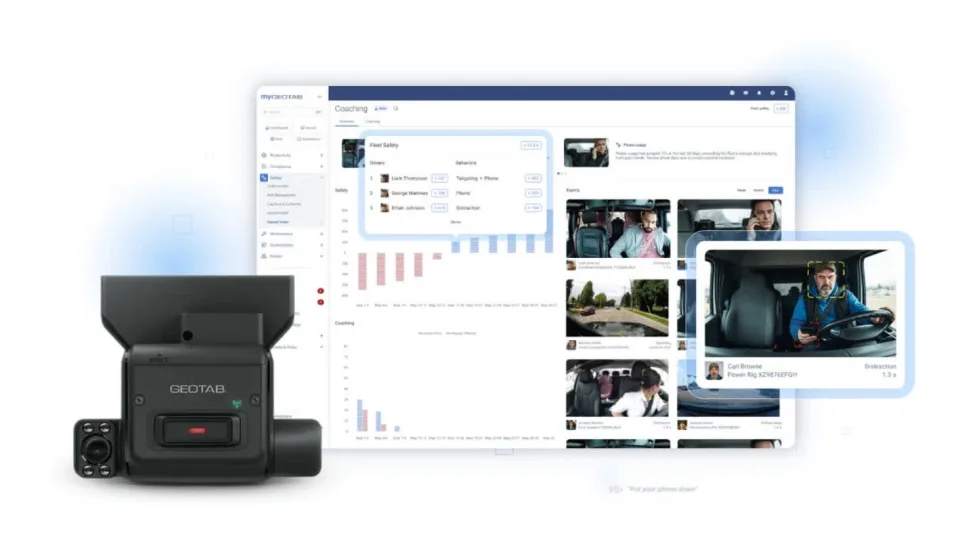
Geotab Expands Fleet Safety Tools With Video Coaching, Risk Insights
New safety and video capabilities aim to help fleet managers assess risk, support drivers, and take targeted action through video coaching, red-light violation detection, and more.
Read More →
How to Build a Better School Bus Driver Training Program
Is it time to strengthen your driver training? Here’s how to pick the right talent and improve recruitment, retention, and safety. This video is brought to you by IC Bus.
Read More →
Recent School Bus Accidents Leave 2 Dead, 2 Injured
Four school bus crashes in Florida, Illinois, and Georgia highlight risks in transportation lots, at bus stops, and during student loading and unloading.
Read More →
When Every Second Matters, Clarity Keeps Routes Moving
From routine delays to urgent incidents, strong communication practices help drivers, dispatchers, schools, and families respond with confidence.
Read More →
What Happens When a School Bus Catches Fire — and What Can Help
School bus fires are rare but can be devastating. Learn how advances in fire suppression and asset protection help fleets detect fires earlier, reduce damage, and improve safety.
Read More →
Geotab Launches Tool to Help Fleets Investigate Road Incidents
Geotab Investigations combines telematics data, video, documents, and other evidence to help fleets reconstruct incidents, resolve claims, and determine what happened.
Read More →
Texas Sixth Grader Wins 2026 National School Bus Safety Poster Contest
Sai Darshana Yekolu of Moseley Middle School in Prosper, Texas, was named the newest winner for her artwork, bringing the theme of “Safe Rides, Everyday Heroes” to life.
Read More →