




School Bus Safety Week: Can we talk?
Should we move National School Bus Safety Week to late August or early September to dovetail with the national and local back-to-school news cycle?
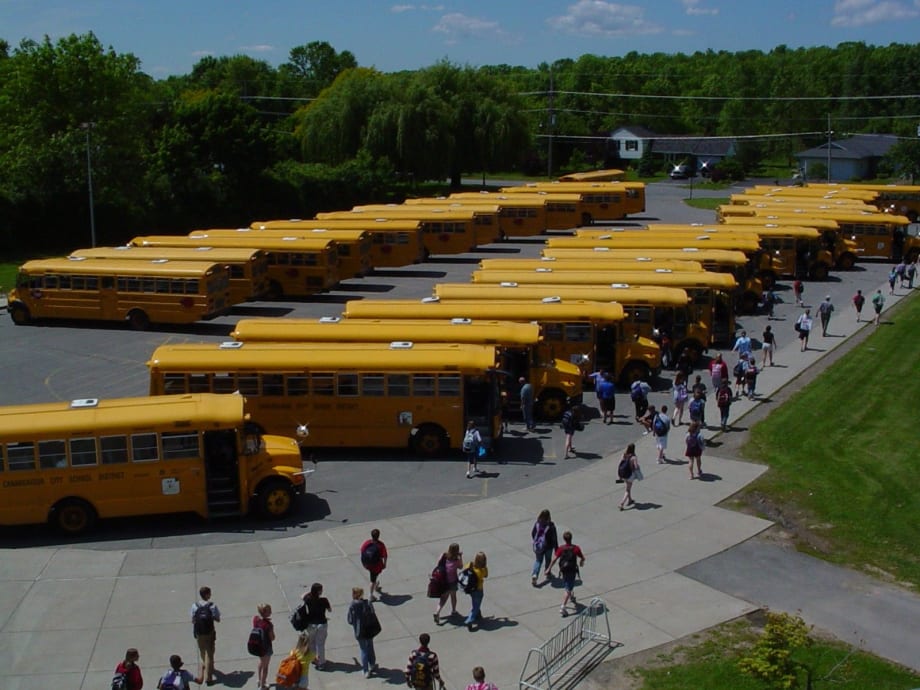
Should National School Bus Safety Week be moved to late August or early September to dovetail with the back-to school news cycle? Photo by Scott Goble
As the late comedian Joan Rivers would have said, “Can we talk?” … about National School Bus Safety Week?
As you read this collaboratively written op-ed piece, the roughly month-long annual back-to-school news cycle is winding down. You know — that time of year when we all could kick ourselves for not inventing the backpack — de rigueur for every school-age child in the country!
But it’s not the backpack or the loose-leaf notebook paper we also failed to invent that’s the subject of this article. It’s how we can better leverage this annual event to tell our story.
Media interest in back-to-school stories comes predictably from about mid-August until mid-September. Assignment editors know that families are consumed with back-to-school rituals: buying school supplies, clothing and backpacks (lots of backpacks!), traffic changes in the community and more as summer ends and kids everywhere head back to the classroom.
This should be a good opportunity for us to promote the benefits of yellow school bus transportation, but we mostly don’t take advantage of it. After all, it’s a busy time for us, too.

Michael Martin is executive director of NAPT.
But reporters are hungry for back-to-school news angles. And in a vacuum where they mostly have to dig up leads, it’s easy to default to what they hear about, the often-negative stories that come with school start up: Late buses. New routes and drivers and maybe a few bugs to work out with schedules. Overcrowded buses — hopefully only temporarily. Angry parents who expected a different experience.
The point being that at the very time when the news media is most interested in what we do, we are not doing the job we should to help them better understand our outstanding safety record, the service we provide to our communities and the challenges we face.
Instead of trying to make news a month after the news establishment has already invested a lot of energy on school topics, what if we ride the wave that exists a month earlier? Dare we say it, but should we move National School Bus Safety Week to late August or early September to dovetail with the national and local back-to-school news cycle and community awareness?
We could do this easily — National School Bus Safety Week is our equity. NAPT, NSTA and NASDPTS own the copyrights to the term “National School Bus Safety Week.” We have been working together on this event for nearly 40 years.
Each year, we distribute nearly 100,000 posters, which feature the winner of our annual poster contest, to promote the event — and we do it free of charge.
Now, we want to put even more focus and energy into it.
We have an impressive story to tell in terms of safety performance; service to parents, students and the communities we serve; and how the yellow school bus is the vital link between neighborhoods and classrooms, facilitating a well-structured school day.
It’s easy to simply say that a school bus is the safest way to get to and from school, because it’s an irrefutable fact. But we should be doing more, such as inviting reporters to look behind the scenes, meet the people, and see firsthand the passion and focused operations that make this a reality. That’s the way to make interesting news!
Among the topics that school bus operators, business partners and educators in local communities should be encouraged to discuss are the extensive screening and training of school bus drivers; steps to deter bullying and other bad behavior at bus stops, on buses and at school; the dangers of passing a stopped school bus; and, in the post-9/11 reality, promoting higher levels of security awareness.

Ronna Weber is executive director of the National School Transportation Association.
And we should be honest about the reality that sometimes there are scheduling issues and other hiccups, especially at the start of the school year. It’s a human enterprise. But even at our worst, we are better than most other industries, and our culture is to identify problems and remedy them.
A fender-bender always makes news if a school bus is involved. But rarely are children hurt seriously, and often these stories fail to point out that there is no safer way for children to get to and from school. Contrary to what some try to argue, walking, bicycling, being driven to school by parents, and especially teens driving themselves and others, are not as safe.
When it comes to protecting occupants, school buses are usually compared to the family car as if they were equals. There’s no comparison. A school bus is much bigger and heavier, and that gives it a huge advantage in crashes. It also meets more federal safety requirements than any vehicle on the road. And school bus drivers are screened and highly trained. Parents need to know this.
Statistics from the National Highway Traffic Safety Administration show that of the 32 million children who get to and from school by some means other than a school bus, several hundred are killed each year. That compares to 16 fatalities in school bus-related tragedies.
These and other important facts about school bus safety are available and easily accessible online at www.schoolbusfacts.com.
All parents need to know this information so they can make informed decisions about their child’s school transportation options. And, local officials need to be aware of these statistics before they determine education budgets.
Reporters will better understand these facts and do fewer superficial stories if we are proactive — if we’re not afraid to welcome them into our world. They’ll treat us even more fairly and accurately if we help them at the time of year when they are most interested in our stories, rather than when we would like them to be interested.
But there is another side of this coin.
School startups (and the media coverage of them) vary across the country from sometime in August through sometime in September, with some schools in operation year-round. If we move National School Bus Safety Week to sometime in September, how would that affect those that start school in August? Conversely, if we move National School Bus Safety Week to sometime in August, what effect would that have on those who start school in September?

Charlie Hood is executive director of the National Association of State Directors of Pupil Transportation Services.
School startup is the busiest time of year. Adding this to the first week or two (and the second week is often worse, right?) might just be too much. Some school districts do training drills during School Bus Safety Week. There wouldn’t be much time for that in the first week of school.
Others hold School Bus Safety Week events to appreciate their staff. That would also be tricky in the beginning of school, as there is simply not enough time for something like that.
Having School Bus Safety Week in the third week in October allows for a second bite at the apple on safety at a time when students and parents have figured everything else out and have time to focus on this. Putting it during school startup may cause it to be lost.
Many schools have already worked this into their schedules and curricula. What effect would moving it have? Would they still do the same events, or would School Bus Safety Week lose its luster?
We see both sides and are honestly not sure what we should do. We are trying to think this through carefully, and we realize that those of you in the field may have a totally different perspective.
So, “Can we talk?” We’d like to know what you think. We encourage you to contact any or all of us via email to share your thoughts.
Mike Martin: mike.martin@napt.org
Ronna Weber: rweber@yellowbuses.org
Charlie Hood: execdir@nasdpts.org
More Safety
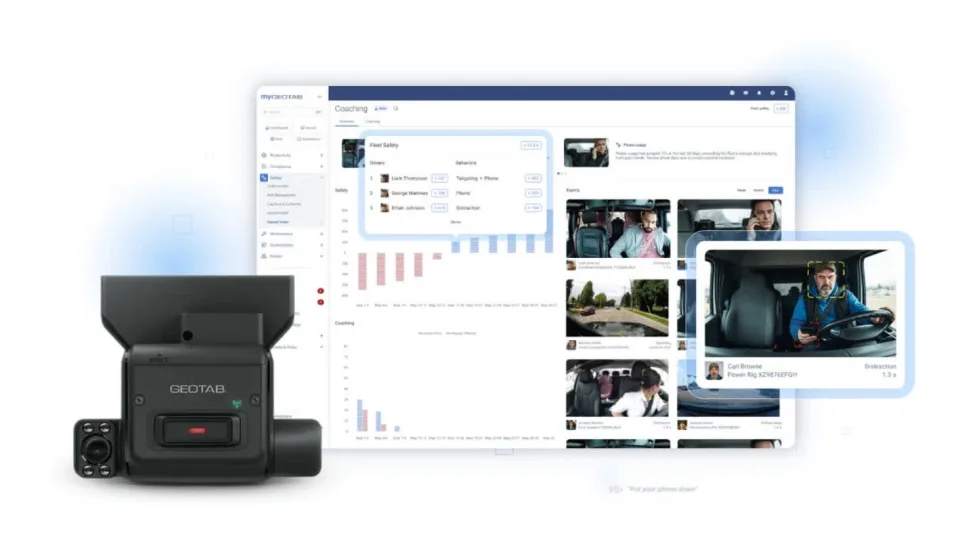
Geotab Expands Fleet Safety Tools With Video Coaching, Risk Insights
New safety and video capabilities aim to help fleet managers assess risk, support drivers, and take targeted action through video coaching, red-light violation detection, and more.
Read More →
How to Build a Better School Bus Driver Training Program
Is it time to strengthen your driver training? Here’s how to pick the right talent and improve recruitment, retention, and safety. This video is brought to you by IC Bus.
Read More →
Recent School Bus Accidents Leave 2 Dead, 2 Injured
Four school bus crashes in Florida, Illinois, and Georgia highlight risks in transportation lots, at bus stops, and during student loading and unloading.
Read More →

When Every Second Matters, Clarity Keeps Routes Moving
From routine delays to urgent incidents, strong communication practices help drivers, dispatchers, schools, and families respond with confidence.
Read More →
What Happens When a School Bus Catches Fire — and What Can Help
School bus fires are rare but can be devastating. Learn how advances in fire suppression and asset protection help fleets detect fires earlier, reduce damage, and improve safety.
Read More →
Geotab Launches Tool to Help Fleets Investigate Road Incidents
Geotab Investigations combines telematics data, video, documents, and other evidence to help fleets reconstruct incidents, resolve claims, and determine what happened.
Read More →
Texas Sixth Grader Wins 2026 National School Bus Safety Poster Contest
Sai Darshana Yekolu of Moseley Middle School in Prosper, Texas, was named the newest winner for her artwork, bringing the theme of “Safe Rides, Everyday Heroes” to life.
Read More →
Doing More With Less: How Transportation Directors Can Prioritize Safety Amid Budget Uncertainty
With diesel prices soaring and nearly one-third of transportation directors expecting budget cuts, maintaining student safety has never been more challenging. Download this guide to learn how leading districts are prioritizing risk, funding critical safety technology, and building stronger budget cases with data.
Read More →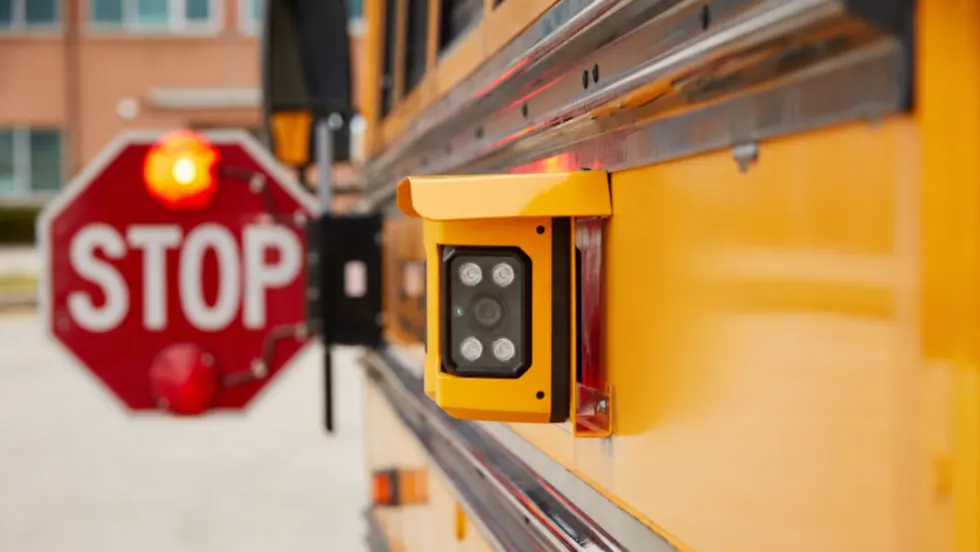
Walton County Schools Adds Gatekeeper Stop-Arm Enforcement System
The Florida district will deploy Gatekeeper’s updated Student Protector technology, which now incorporates AI to improve video evidence.
Read More →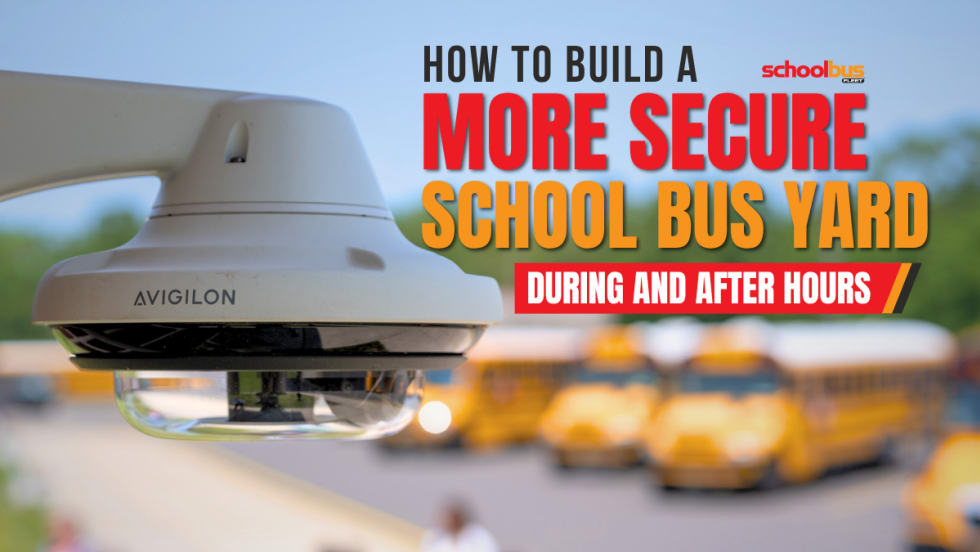
How To Build a More Secure School Bus Yard During and After Hours
As thefts and overnight security threats continue, school transportation leaders are combining stronger operational practices with AI-enabled surveillance to better protect buses, facilities, and staff.
Read More →