




NTSB Chief Discusses Seat Belts, Safety Technologies
In this Q&A, Christopher Hart discusses with SBF the Chesterfield and Port St. Lucie crash investigations, lap belts and lap-shoulder belts for school buses, driver fatigue and other safety issues.

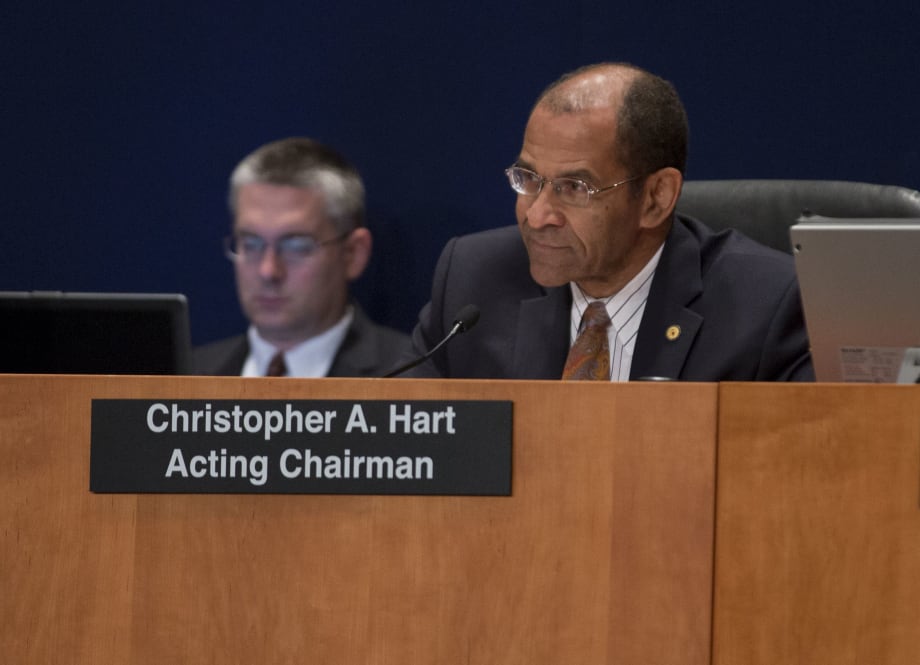
Christopher Hart is a familiar face to many in the school bus community. At the 2013 National Association for Pupil Transportation (NAPT) Summit in Grand Rapids, Michigan, he discussed the National Transportation Safety Board (NTSB)’s investigations of two similar school bus accidents in 2012 — one in Chesterfield, New Jersey, and the other in Port St. Lucie, Florida.
Last year, President Obama nominated Hart for a two-year term as chairman of NTSB, succeeding Deborah Hersman, who resigned from the position in April.
Hart previously held the role of vice chairman of NTSB since 2009. (At press time, his nomination to be chairman was awaiting Senate confirmation.)
Hart has had a long career in transportation safety, including an earlier term as an NTSB member from 1990 to 1993. He has also held leadership positions at the Federal Aviation Administration and the National Highway Traffic Safety Administration.
Hart addressed pupil transportation professionals again at the 2014 NAPT Summit in Kansas City, Missouri, in November.
SBF Executive Editor Thomas McMahon recently spoke with Hart about the Chesterfield and Port St. Lucie crash investigations, lap belts and lap-shoulder belts for school buses, driver fatigue and other safety issues.
SBF: After the investigation of the Chesterfield, New Jersey, crash involving a school bus in 2012, NTSB made several recommendations to the school bus industry, among others. How has the industry responded?
CHRISTOPHER HART: The response has been very positive. The industry has been very alert to the need to protect students. We know that school buses are by far the safest way to take students to and from school, but there is always room for improvement. So the industry has been very responsive to our recommendations.
One of the things that was of interest to a lot of people in the school bus industry was that in the Chesterfield crash and in the Port St. Lucie [Florida] crash, also in 2012, both of the school buses were equipped with lap belts. What did NTSB find in terms of the performance of the lap belts?
Well, we found two things. One was that the lap belts, if buckled, helped a lot. The problem is that there were several students who hadn’t buckled their belts. But the second thing that was confirmed by those accidents is that the lap-shoulder belt is much more effective than the lap belt alone.
That leads into my next question: When comparing lap belts to lap-shoulder belts, what are the advantages and disadvantages?
The point of the lap-shoulder belt is that it prevents flailing of the upper body, both forward and aft, and also sideways. In both of those crashes, we really saw the result of heavy side impact. So the lap-shoulder belt helps to prevent flailing in the case of a side impact.
Are there any new or upcoming vehicle safety technologies that NTSB is looking at that might help to improve the safety of school buses in the future?
We’re looking at several technologies that aren’t specific to school buses, but for driving in general. For example, you know that the whole industry is moving toward vehicle-to-vehicle technology to help prevent collisions between vehicles. But long before we get to that, we’re already looking at speeding detection devices, lane departure warning systems, forward collision avoidance systems, stability control systems and others that are already available in new cars today. These would also be beneficial to school buses. One that is specific to school buses is the cameras that catch cars that illegally pass school buses, to improve the safety of the students getting on and off the bus. The rest [of the technologies] are for vehicles in general and present a lot of opportunities for improving safety long before we get to vehicle-to-vehicle, next-generation technology.
[PAGEBREAK]
Hart says that NTSB investigates crashes “with an eye toward prevention, to keep it from happening again.” He is pictured here talking with teens from the Aviation Career Education Summer Camp.
Yes, the stop-arm cameras on school buses have really taken off in the industry. It certainly addresses one of the big safety issues for school transportation.
It probably wasn’t a surprise to school bus drivers, but I think it was a surprise to the general public how much that [illegal passing of school buses] is happening.
There was an incident in the news recently in which a school bus driver in South Carolina told police that she fell asleep at the wheel before crashing into a building. That made me think about the issue of driver fatigue. Is NTSB seeing a high number of crashes that are related to driver fatigue?
Fatigue is a big issue for us in all of the modes [of transportation] for the very simple reason that most commercial transportation — this isn’t necessarily true of school buses — but most commercial transportation is 24/7, and humans are not 24/7. So that’s a basic disconnect that makes fatigue a big, big problem for us. Unlike blood alcohol content, which we can measure, we can’t measure fatigue. We can’t measure it as accident investigators, and employers wouldn’t be able to measure it when the driver shows up for work. We also don’t have ways of detecting deterioration due to fatigue in operation that would warrant stopping. There are lots of issues associated with fatigue that are making it a major challenge for us.
Hart discussed school bus crash investigations at the 2013 NAPT Summit in Grand Rapids, Michigan.
I want to also talk about distracted driving. That’s a safety issue that has been in the national spotlight a lot recently, and NTSB has been looking into it and promoting it as a concern. Are you seeing progress being made in curbing distracted driving, or is the problem only getting worse as drivers have more devices in their vehicles?
Distracted driving has been a problem ever since there’s been driving, going back to a “Wow, look at that ‘55 Thunderbird” kind of distraction. But you’re right: More recently, distraction from handheld devices has become a much more serious and growing problem. It has resulted in most states enacting legislation against texting, because that’s by far the most insidious problem. According to NHTSA [National Highway Traffic Safety Administration] statistics, texting increases the likelihood of a crash by a factor of 23. Not 23%, but a factor of 23.
Forty-four states and D.C. ban texting while driving. Fewer states ban the use of cell phones in general while driving, and about 20 states ban the use of cell phones by school bus drivers in particular. So, yes, that has been a big issue for us, and we’re pleased to see the advances in legislation, but we’d like to see a lot more of it. In fact, we have recommended that even hands-free cell phones be prohibited while driving because even though you’re not using your hands for the call, your cognition is still not on your driving, where it needs to be — it’s on your phone conversation.
It sort of takes you away from the task at hand.
Correct.
Can you tell me about how NTSB decides which crashes to investigate?
That’s a good question, because as you know, there are many more crashes than we have the resources to investigate. It’s not a science; it’s an art. We look at a number of factors. We look at whether it can help us with major safety issues. Does it have national interest? Can we help restore the public’s confidence in the transportation mode?
Those are some of the issues we look at, in conjunction with what resources we have available, to determine case by case which ones we’re going to investigate ourselves and which ones we’ll have to let the local authorities investigate, and then we’ll learn from what they do.
If there’s a school bus involved in the accident, then that certainly increases the interest, in terms of learning from the accident.
Correct. And the difference between our investigation and what the local authorities do is that the local authorities are doing it primarily for the purpose of determining whether punishment is warranted — whether some citations are going to be issued.
Whereas we do it with an eye toward prevention, to keep it from happening again. So it’s a very different focus on the investigation. We wish we had more resources, but we have to go with what we’ve got.
More Safety
How To Build a More Secure School Bus Yard During and After Hours
As thefts and overnight security threats continue, school transportation leaders are combining stronger operational practices with AI-enabled surveillance to better protect buses, facilities, and staff.
Read More →
FMCSA Names New Chief Safety Officer: What School Bus Operators Should Know
Steve Dowling is set to lead the federal agency's efforts to advance commercial motor vehicle safety and reduce crashes, fatalities, and injuries on the nation's roadways.
Read More →
New Study Finds School Zone Speed Safety Cameras Cut Speeding Violations 97%
A Florida university's research demonstrates that Verra Mobility's automated enforcement changes driver behavior and significantly improves school zone safety.
Read More →
What Changed in DOT’s New National Roadway Safety Strategy?
The federal agency's new plan shifts its focus to safer people, roads and vehicles, with a new three-pronged approach instead of five. One outlined action even addresses a key industry concern around illegal school bus passing.
Read More →
Are Autonomous Vehicles Ready to Safely Navigate School Bus Stops?
NHTSA is accelerating autonomous vehicle deployment through new safety standards and commercial approvals. See why school transportation leaders are watching.
Read More →
NFL Star Lomas Brown Kicks Off New Illegal School Bus Passing PSA
Just in time for the back-to-school season, the former Detroit Lions offensive tackle took time to record a video encouraging motorists to slow down around school buses.
Read More →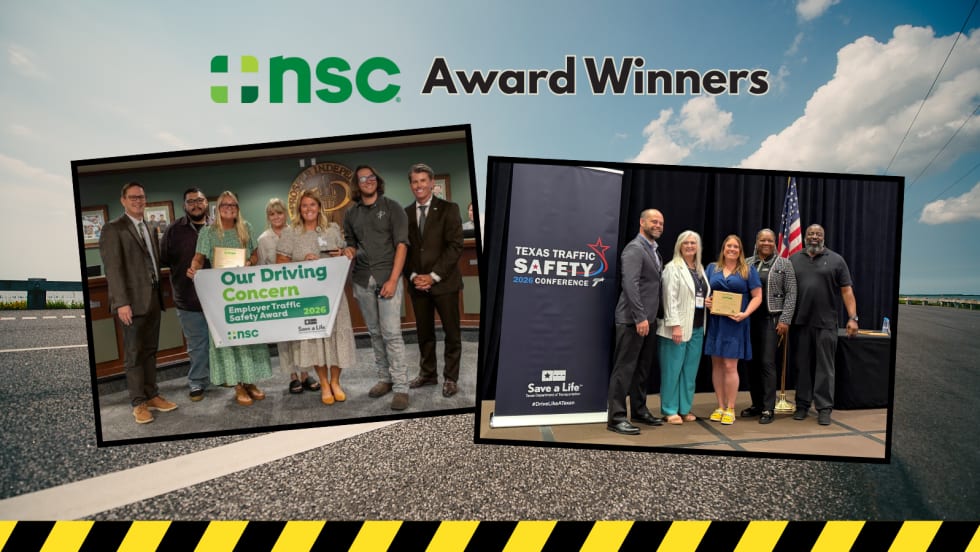
How Two Texas Districts Built Award-Winning Safety Programs
Learn how Prosper ISD and Rockwall ISD earned National Safety Council honors through hands-on training, safety culture, and strategies that reduced transportation incidents.
Read More →
NHTSA Releases 10-Year Review of Fatal School Bus Crashes
The latest federal analysis reinforces the safety of school buses while identifying where school-age pedestrians and other motorists remain most at risk.
Read More →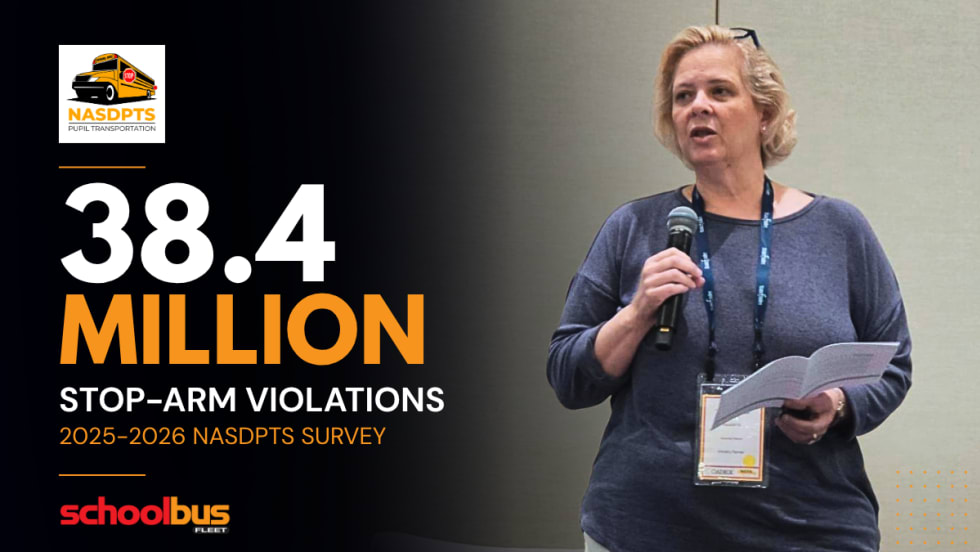
2026 NASDPTS Survey: Data Shows Further Reduction of Illegal Passing
New data is in! School bus stop-arm passings are down to 38.4 million violations per year, about a 2.3% decrease from last school year — but passings on the right side of the bus are higher than ever.
Read More →
Another School Bus Fatality Reported in Monsey, New York
A 7-year-old girl died after being struck by a school bus in Rockland County, New York while crossing the street. Here's what we know.
Read More →