




Q&A: NASDPTS' Mike Simmons strives for team efforts
Kicking off his second year as NASDPTS president, Mike Simmons focuses on promoting pupil transportation with other associations and the feds. He also aims to get more states involved in a national stop-arm running survey.

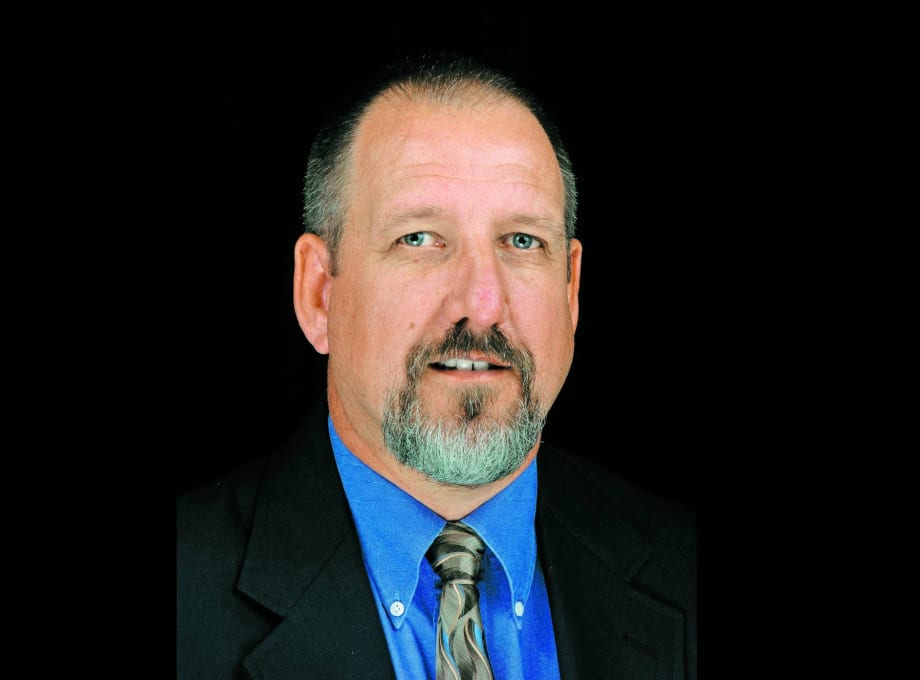
NASDPTS President Mike Simmons says the most surprising finding of a national survey was the number of illegal passes on the right side of the bus.
Mike Simmons' first year as president of the National Association of State Directors of Pupil Transportation Services (NASDPTS) saw some new initiatives on timely topics, including school bus advertising and stop-arm running.
In the spring, the association launched the first national survey of stop-arm violations, finding that more than 76,000 vehicles illegally passed school buses in a one-day snapshot. While more than half of states participated, Simmons says the association will work on getting more on board for the next survey.
In the second year of his two-year term as president, Simmons also plans to continue collaborations with federal agencies and other national industry groups, namely the National Association for Pupil Transportation (NAPT) and the National School Transportation Association (NSTA). The three groups, along with school bus manufacturers and other industry entities, have been working to promote pupil transportation under the banner of the American School Bus Council (ASBC).
Simmons discussed the results of the stop-arm survey, the effects of budget cuts on school busing and other issues in an interview with SBF Executive Editor Thomas McMahon.
SBF: What were some of the key developments in your first year as president of NASDPTS?
MIKE SIMMONS: Part of it has been our work with ASBC, and the work with Kevin Jennings [of the U.S. Department of Education] and NAPT on anti-bullying programs.
We've gone back and redone our position paper on advertising on school buses. We've had a lot of states that have been wrestling with that.
We're in the process right now, with ASBC, of working with NHTSA [the National Highway Traffic Safety Administration] on its public awareness campaign.
We also redesigned our website. It's a definite improvement. We made it much more user-friendly and easier to navigate. Hopefully, it will be a work in progress — we'll continue to update and upgrade content. Charlie Hood [Florida state director] and Derek Graham [North Carolina state director] have to be given credit for most of the work on that project.
NASDPTS conducted the first national survey of stop-arm running earlier this year. What are your thoughts on the results?
I don't think any of us were really surprised with the total numbers. But the one number that sticks out was that 3 percent of the illegal passes were on the right side of the bus.
We are kind of disappointed with the response, even though we got 28 states to respond. We definitely want to get more states involved next year. I think we will. Our communication will be a little better next time. A lot of states are changing their normal [stop-arm violation count] dates that they've done over the years to coincide with ours.
I know AAA has been interested in our results. I really want to see us get this thing moving and get some major network awareness out of it. I think as we move forward, we'll learn from the past.
What are your expectations for your second year as president?
Well, Alex Robinson is coming in as president of NAPT. We've always had a good working relationship. And Magda Dimmendaal is the new president of NSTA. So far, we've had a great relationship. We hope to continue building on what we've done together. Part of that is through ASBC.
It's no secret that [the national associations] have all had our issues with one another. But over the last four or five years, we've mended some fences and built our working relationships, and we've come a long way. I would hope to build on that and expand our mutual campaigns together.
What are some of the top challenges that many state pupil transportation directors are facing right now?
I think it's first and foremost budget. Our industry as a whole is facing that challenge. For the manufacturers, their sales are down. And when that happens, our fleets get older and we have more maintenance issues that we have to deal with.
Being in Arkansas, a state that doesn't categorically fund school transportation, our districts are having to run their operations out of their own pockets. It will be interesting for me as a state director to see what effect this has on our preventive maintenance and our inspection results. I think there will be an effect, as far as buses being placed out of service.
Are the districts shorthanded on maintenance staff?
I think some of them are shorthanded. But mainly what I'm talking about is, in Arkansas, transportation is not mandated, and we don't fund it. So when budgets get tight, new buses aren't purchased, parts aren't purchased. You try to run those tires a little longer and get more out of what you have. And we'll see that in our inspections. The inspections are out of my office. I have six inspectors who inspect all 6,700 buses.
Also, in Arkansas, all out-of-state travel is cut, except for travel with extenuating circumstances. I hope being president of the association is an extenuating circumstance.
Any other school transportation issues in your state right now?
We're doing pretty good other than that — other than money.
Has the advertising issue come up recently in Arkansas?
Luckily, it has not. We had a relatively quiet legislative session this past year. We had one [school bus] seat belt bill come up. It was very poorly written, so it was beaten down. I resign myself to the fact that we'll have seat belts eventually, but this bill was poorly written, and it didn't specify lap or lap-shoulder belts. And it would have taken the school bus exemption out of the Child Passenger Protection Act, which would have meant that any child under 6 years old or under 60 pounds would have to be in a car seat in a school bus.
Anything else you'd like to mention?
We're excited about this year's conference in Cincinnati. Max Christensen [Iowa state director and NASDPTS president-elect] has done a tremendous job in putting the program together. He got Mark Eaton, the former NBA player, as our keynote speaker. And we'll have NHTSA Administrator David Strickland and Deborah Hersman, chairman of the National Transportation Safety Board. And, of course, our usual lineup of feds. We're looking forward to a good conference.
More Management

How to Build a Better Driver Training Program
Ready to boost up your school bus instructor training? Here’s how to pick the right talent and improve recruitment, retention, and safety.
Read More →
CALSTART and Forth Combine to Form Catalyst Mobility
The new name represents a renewed vision for the nonprofit focused on advancing clean, equitable, and affordable transportation solutions that move people and goods.
Read More →
What Makes a Great School Bus Driver Trainer?
Choosing the right school bus driver trainer takes more than experience. Learn six keys to selecting and developing trainers and evaluating program effectiveness.
Read More →

School Bus Contractors Expand Through New Deals, Acquisitions & Partnerships
STA's Canadian division acquires Ontario-based G&L Stevenson Transport while Durham School Services adds a new district contract in California, First Student adds a New Jersey contract, and Minnesota Coaches acquires Halo Transportation.
Read More →
Logan Bus Company Rolls Out AI Phone System for NYC School Bus Families
A summer pilot found that AI agents could handle most routine calls, freeing up time for customer service staff to focus on emergencies and complex family concerns.
Read More →
From Intent to Impact: What I Learned About Leadership from TAPT
A Texas transportation supervisor shares lessons on self-awareness, accountability, managing stress and building trust — and why investing in leadership development matters at every stage of your career.
Read More →
NAPT Names 2026 Award Recipients, Hall of Fame Inductee
Who earned national recognition for their work in student transportation? This year, NAPT named five recipients of its 2026 awards for service, safety, and leadership, plus its newest Hall of Famer.
Read More →
2026 State of Student Transportation Report
Driver shortages. Rising costs. Growing safety expectations. More data, but not enough time to act on it. The 2026 State of Student Transportation Report reveals what transportation leaders say is putting the most pressure on their operations—and where they’re investing next. See how your priorities compare.
Read More →
How to De-Escalate an Angry Person: 5 Steps for Handling Workplace Conflict
What makes emotions run high, and how should you handle an angry colleague or parent? Follow these steps for staying calm, listening, showing empathy, and resolving conflict.
Read More →
What Readiness Looks Like This School Year
Learn about the challenges shaping the 2026–2027 school year, from persistent driver shortages and budget pressure to technology and readiness gaps. See how school districts are responding and adapting in Zonar’s 2026 Back-to-School Readiness Report.
Read More →